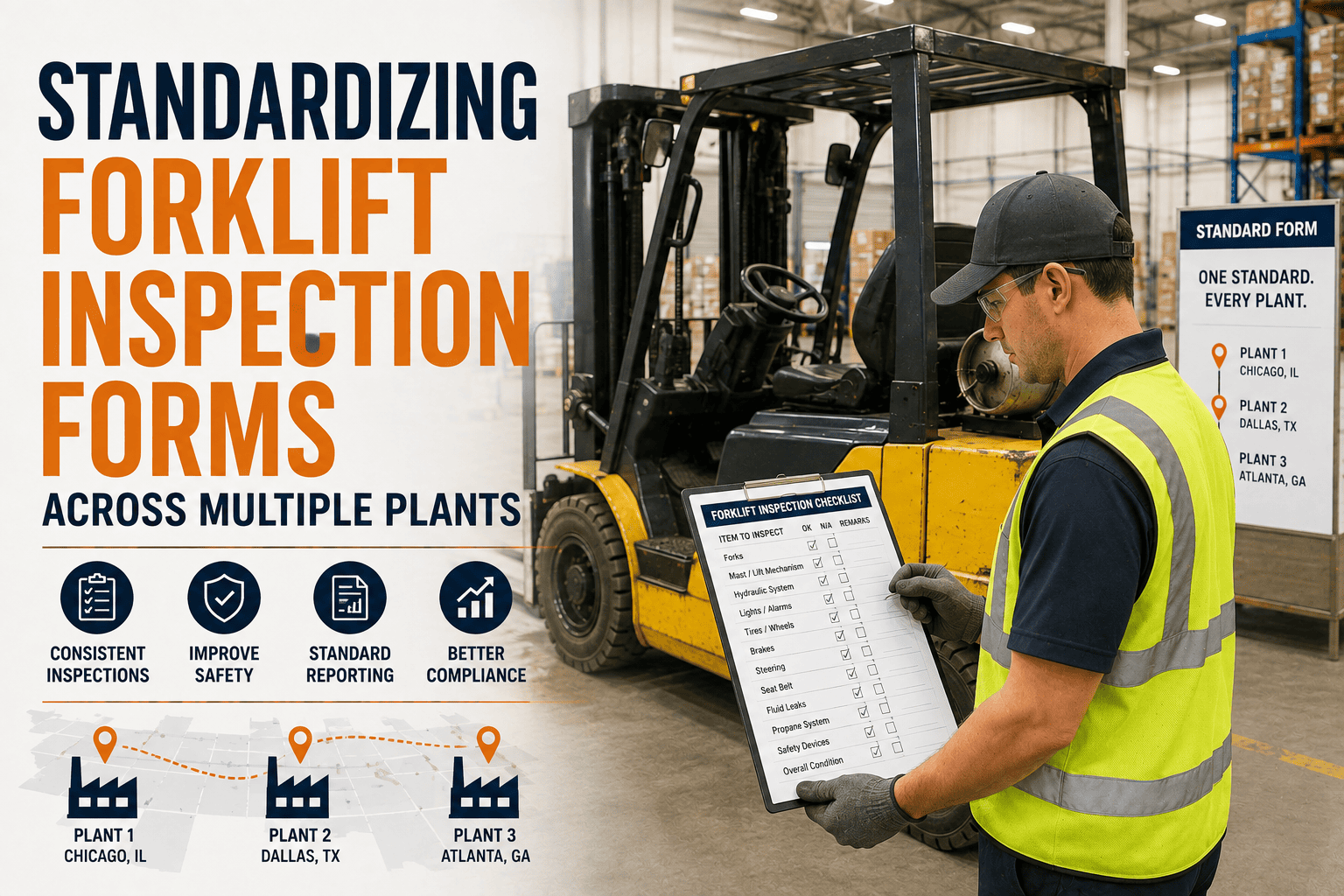
Walk into three different plants at the same company and you will likely find three different forklift inspection forms. One plant checks tire condition first, another buries it on page two, and a third does not ask about it at all. None of these forms are necessarily wrong on their own. The problem shows up at the corporate level, when a safety director tries to compare fail rates across sites and realizes the numbers are not measuring the same thing.
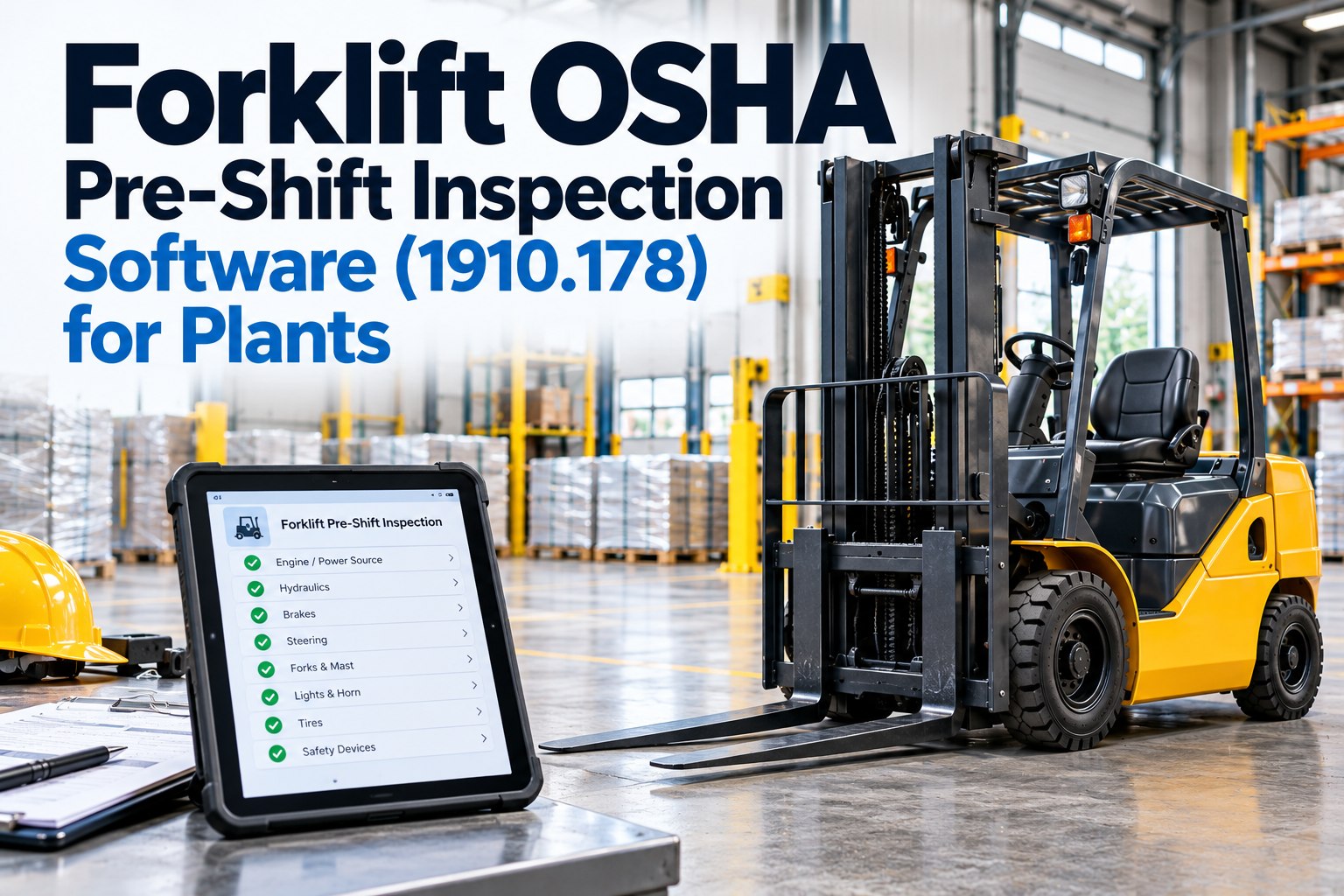
OSHA requires every forklift to be examined before each shift under 29 CFR 1910.178(q)(7), but it does not mandate a specific checklist format. That gap is exactly why inspection forms drift apart across plants over time. A standardized digital form, built once per forklift class and deployed everywhere, closes that gap while still allowing each site to add the local fields it needs.
Why Inspection Forms Drift Apart Across Plants
Most multi-plant inspection programs did not start out inconsistent. They became that way one small edit at a time. A site safety lead adds a field after a near-miss. A plant manager removes a step that operators complained about. A new location copies a form from a sister site and changes half of it. None of these decisions are documented centrally, and within a year or two, no two plants are inspecting the same way.
The Compliance Blind Spot
OSHA does not prescribe an exact checklist layout, which means the standard itself will never force consistency. What it does require is that every forklift be examined before each shift, and that any unit found unsafe be immediately removed from service. When forms vary by plant, it becomes far harder to confirm that every site is actually meeting that bar in the same way, or to produce a clean audit trail if an inspector asks for one.
The Reporting Blind Spot
Inconsistent forms also break comparison. A fail rate of 8 percent at one plant and 3 percent at another looks like a performance gap, but it may simply reflect that one form has twice as many checkpoints. Without a shared structure, fleet-wide dashboards end up comparing apples to oranges, and the plants that genuinely need attention can hide behind the numbers.
- Every plant edits its own paper or PDF form
- Field order and wording vary site to site
- Fail data cannot be compared across locations
- Corporate safety team has no single audit trail
- One core digital form per forklift class, used everywhere
- Local fields added without touching the core structure
- Fail rates and defect trends compare cleanly across sites
- Every inspection is timestamped and searchable in one system
What a Standardized Form Actually Needs to Cover
A usable inspection form has two parts every shift: a pre-start visual check performed with the key off, and a powered-on functional test. Collapsing these into one generic list is the most common mistake plants make, and it is also the easiest one to fix once every site is working from the same template.
| Form Element | Why It Matters | Standardized Approach |
|---|---|---|
| Pre-start visual check | Catches leaks, cracked forks, and tire damage before the engine ever starts | Fixed field order, identical across every plant using that truck class |
| Powered-on functional test | Confirms brakes, steering, horn, and lights actually work under load | Separated clearly from the visual section, never combined into one list |
| Class-specific fields | A clamp truck, reach truck, and counterbalance unit fail in different ways | One base template per truck class, not one form for the entire fleet |
| Defect and pass or fail logic | A checked box with no threshold tells a supervisor nothing useful | Every item carries a clear pass or fail rule and a required action on fail |
| Site-level custom fields | Some plants have local requirements the core form should not carry everywhere | Added on top of the core structure without altering shared fields |
FleetRabbit lets you build one digital inspection form per forklift class and roll it out to every plant, while still leaving room for the local fields each site actually needs.
Building One Core Structure With Site-Level Flexibility
Full uniformity across every plant is rarely realistic, and it is not actually the goal. The goal is a shared core that every site inherits, with a controlled way to add local variation on top of it without breaking comparability. You can sign up for FleetRabbit to see how that core-plus-local structure works against your own fleet of forklift classes.
Start From Truck Class, Not From Plant
Instead of building a form for each location, build one base template per forklift class, such as counterbalance, reach truck, or clamp truck. Every plant operating that class starts from the same base, which means a fail rate reported from one site means exactly the same thing as a fail rate reported from another.
Example: Rolling Out a Reach Truck Form
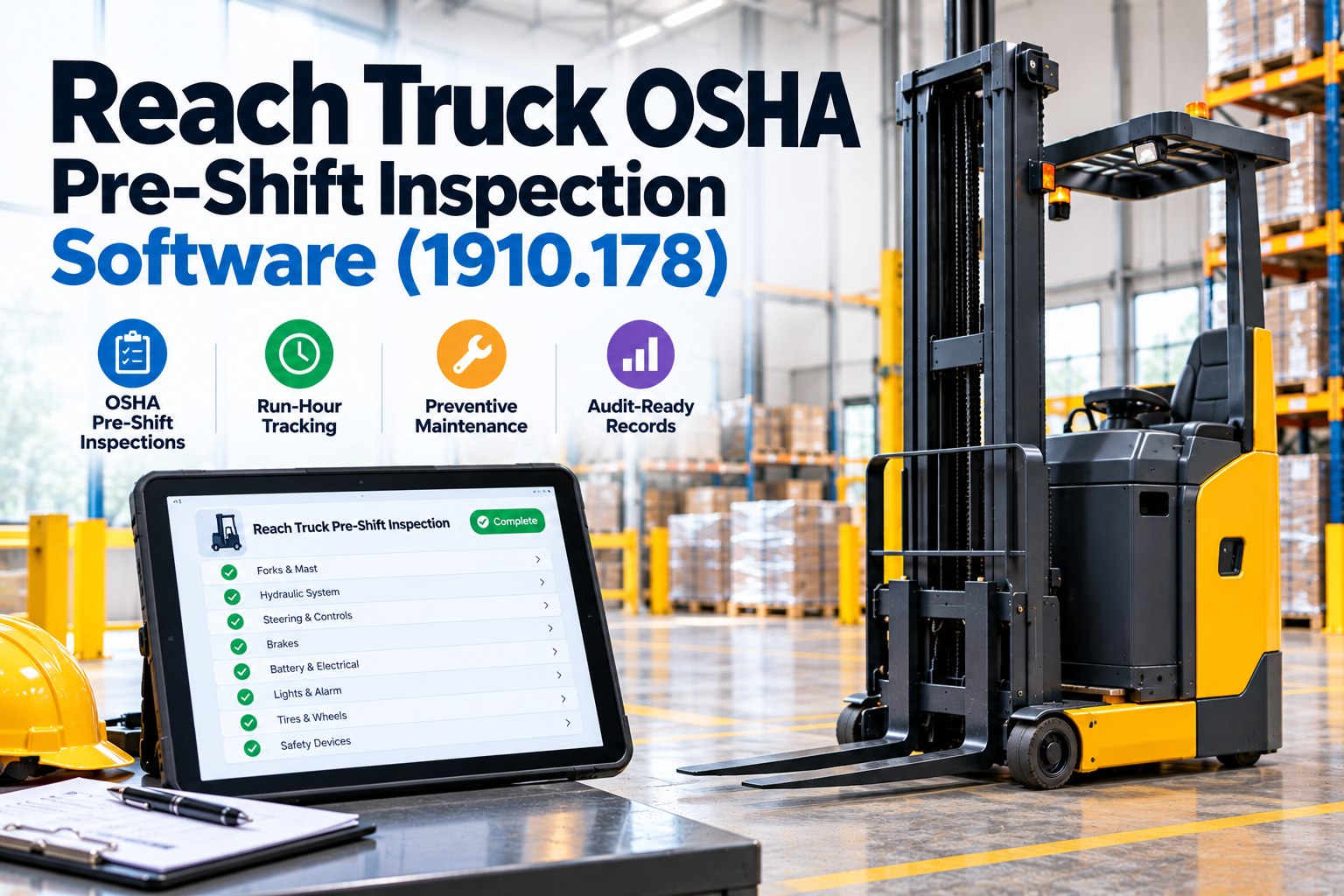
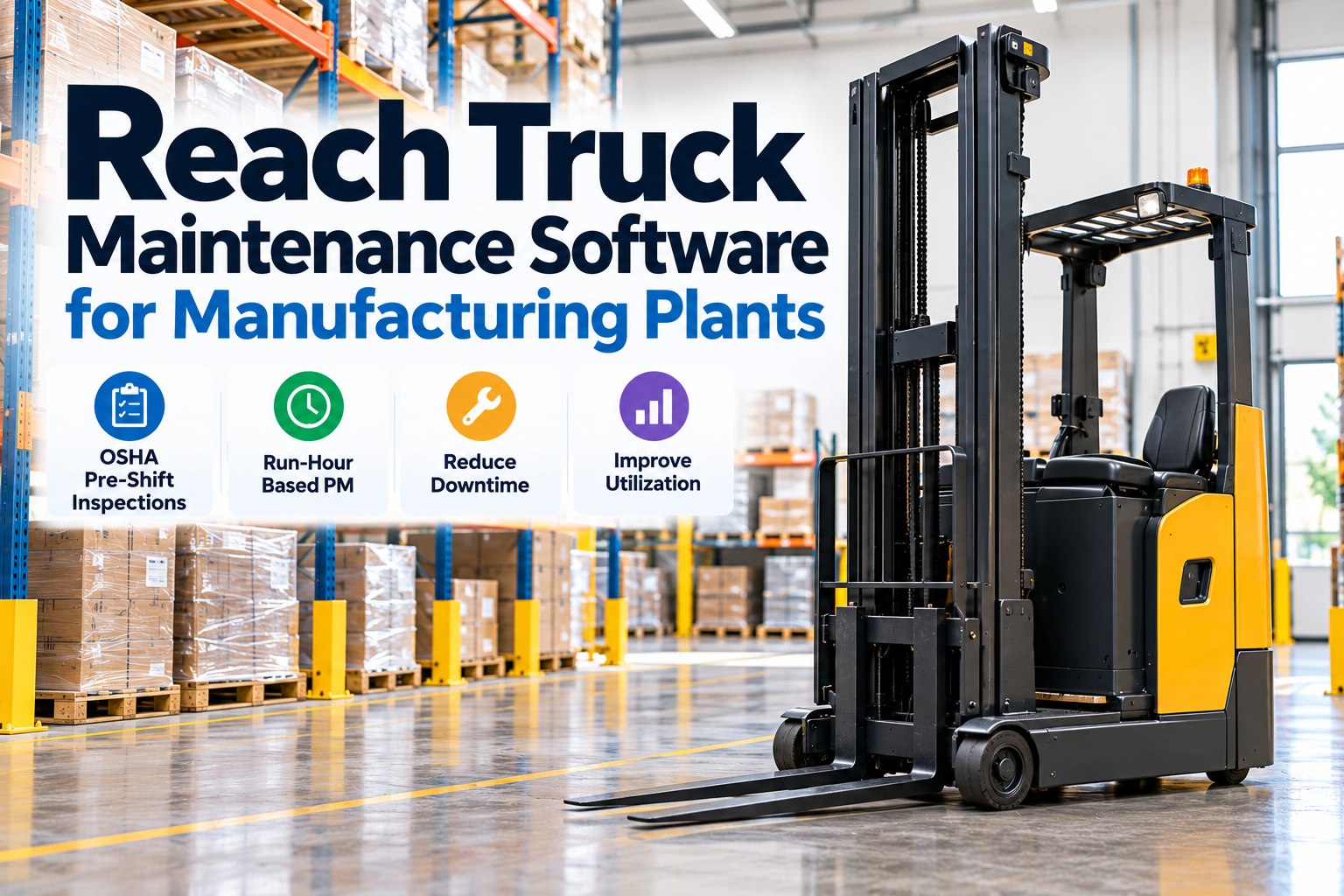
A corporate safety team defines one reach truck inspection template covering mast condition, fork alignment, battery connections, and horn function. Every plant running reach trucks deploys that same template. A regional plant with narrow-aisle requirements adds two extra fields for aisle guide wheels, without changing anything in the shared structure underneath.
Keep Naming and Retention Consistent
Use one naming standard for forms and fields so supervisors can pull comparable reports across every site. Pair that with consistent retention, keeping completed inspections and defect records searchable for at least two to three years, so any plant can produce a clean history the moment it is requested.
What Goes Wrong When Every Plant Uses Its Own Form
The cost of inconsistent forms rarely shows up as a single dramatic failure. It shows up as a string of smaller problems that compound across a multi-plant operation.
How FleetRabbit Standardizes Inspection Forms Across Sites
Build Once, Deploy Everywhere
FleetRabbit lets a corporate safety team design one digital inspection form per forklift class, with the pre-start and functional sections clearly separated, then push that same form to every plant operating that class.
Local Fields Without Losing Comparability
Individual sites can layer on their own additional fields for local requirements, while the shared core fields stay identical everywhere, so fleet-wide reporting always compares like with like. To see this applied to your own plant list, you can book a demo with the team.
FleetRabbit gives every plant the same core inspection structure per forklift class, so your fail-rate data, defect trends, and audit trail finally mean the same thing across every site.