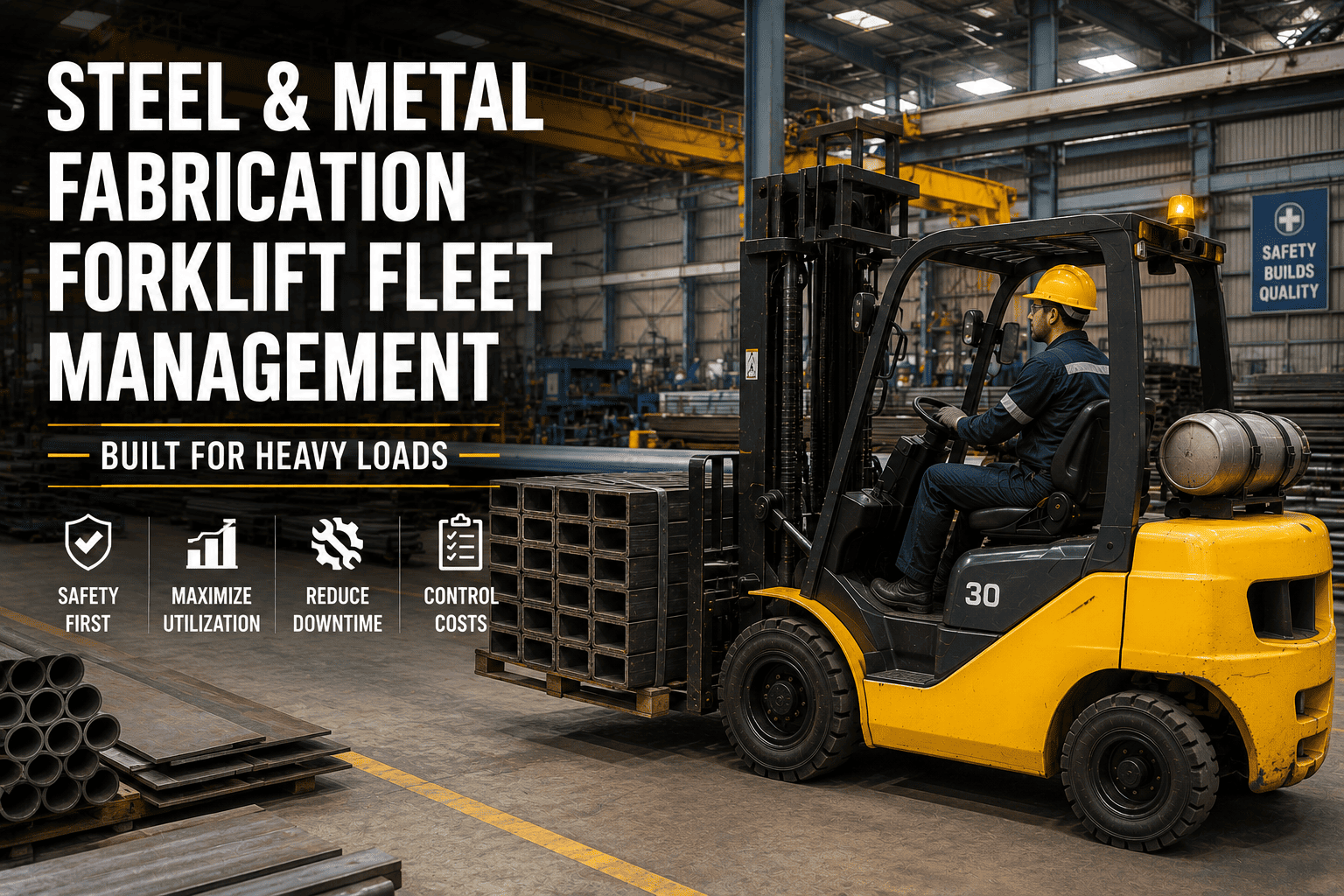
A forklift lifting steel coils, hot billets, or plate bundles isn't doing the same job as one moving cardboard boxes in a distribution center, even though it might look similar from across the yard. Every load carries concentrated weight, sharp edges, or radiant heat that standard equipment was never built to survive. In a steel or metal fabrication plant, the fleet takes a beating that most industries never see, and the maintenance program has to account for it or the breakdowns become constant.
Forklifts handling steel coils, slabs, and billets face torsional stress from dense, uneven loads, abrasive metal dust that clogs standard filters within hours, and radiant heat that hardens hydraulic seals faster than in any typical warehouse. A forklift built for general warehousing can fail within weeks in a steel mill environment. Plants that track heat exposure, filter condition, and mast stress on a heavy-duty maintenance schedule keep fleets running instead of cycling through constant repair.
What Makes Steel and Metal Loads So Hard on a Fleet
The physical properties of the material being moved dictate almost everything about how a forklift wears out on a metal fabrication floor. Weight, heat, and abrasiveness attack different parts of the truck in different ways.
Where Breakdowns Actually Start
Most forklift failures in a steel or fabrication plant trace back to one of three stress points that generic maintenance schedules routinely underestimate.
Mast and Chassis Fatigue
Repeated cycles of uneven, high-tonnage loads create stress cracks in the mast and chassis long before the truck shows any obvious performance loss. Left unchecked, that fatigue becomes a structural failure risk, not just a maintenance item.
What Gets Missed
Stress cracks often start in weld points and stress-bearing cross beams that a routine walk-around inspection doesn't examine closely enough to catch early.
Filtration and Cooling Breakdown
Standard filters saturate with metal dust in hours rather than weeks, which lets contaminants reach the engine and hydraulic system, driving overheating and premature component failure.
What Gets Missed
A filter that "still looks fine" on the outside can already be restricting airflow enough to push the engine toward overheating under sustained heavy load.
Hydraulic Seal and Hose Hardening
Sustained radiant heat from hot product hardens rubber seals and hoses faster than temperature alone would suggest, leading to leaks and pressure loss that show up suddenly during a lift.
What Gets Missed
Heat-related hardening develops gradually and rarely causes a visible leak until the seal has already failed, which is why scheduled fitting checks matter more than reactive ones.
FleetRabbit tracks heat exposure, filter condition, and structural inspection history for every heavy-duty truck in your fleet. Start your free trial or book a demo to see predictive alerts built around metal handling stress points.
Matching Truck Configuration to Load Type
A 20-ton coil, a 20-ton plate bundle, and a 20-ton pipe load put very different demands on a truck even at the same rated capacity. Configuration has to follow the product, not just the tonnage.
| Load Type | Primary Stress | Configuration Need |
|---|---|---|
| Steel Coils | Concentrated weight, rollover risk on lift | Coil ram attachments, reinforced counterweight, stability control |
| Hot Billets / Slabs | Radiant heat exposure to hoses, seals, and cabin | Heat shielding, protected wiring and hoses, temperature-resistant seals |
| Long Pipes and Bars | Load flex, lateral clearance, restricted visibility | Sideloader or multidirectional configuration, extended visibility aids |
| Scrap and Debris Zones | Abrasive dust, sharp metal fragments, tire damage | Solid or puncture-resistant tires, sealed wet-disc brakes, multi-stage filtration |
Building a Heavy-Duty Maintenance Program
Generic preventive maintenance intervals built for standard warehouse forklifts don't hold up against steel handling stress. A program built for the environment catches problems while they're still cheap to fix.
Track Filter and Cooling Condition Continuously
Since standard filter change intervals are meant for far cleaner environments, tracking actual filter condition rather than a fixed calendar date prevents both premature changes and dangerous overuse.
Practical Step
Flagging trucks working the dustiest zones for more frequent filter checks keeps the highest-risk units from becoming the ones that fail first.
Log Heat Exposure by Truck and Route
A truck that briefly crosses a warm area has very different wear than one repeatedly approaching a furnace or hot slab. Recording actual exposure, not just general zone assignment, tells you which units need closer seal inspection.
Practical Step
Reviewing which routes generate the most hydraulic repairs usually points straight at the trucks absorbing the most radiant heat.
Schedule Structural Inspections, Not Just Fluid Checks
Mast and chassis fatigue doesn't show up in an oil analysis. It needs a dedicated visual and, where warranted, non-destructive testing schedule separate from routine fluid and filter maintenance.
Practical Step
Keeping structural inspection history tied to each truck's load history makes it easier to justify a closer look at units handling the heaviest or most uneven loads.
Quick Benchmarks for Heavy Metal Fleets
Frequently Asked Questions
Steel and metal fabrication push forklifts harder than almost any other environment. FleetRabbit gives your fleet team visibility into filter condition, heat exposure, and structural wear before a truck ends up sidelined mid-shift. Start your free trial with no credit card required, or book a demo to see it running against your heaviest routes.