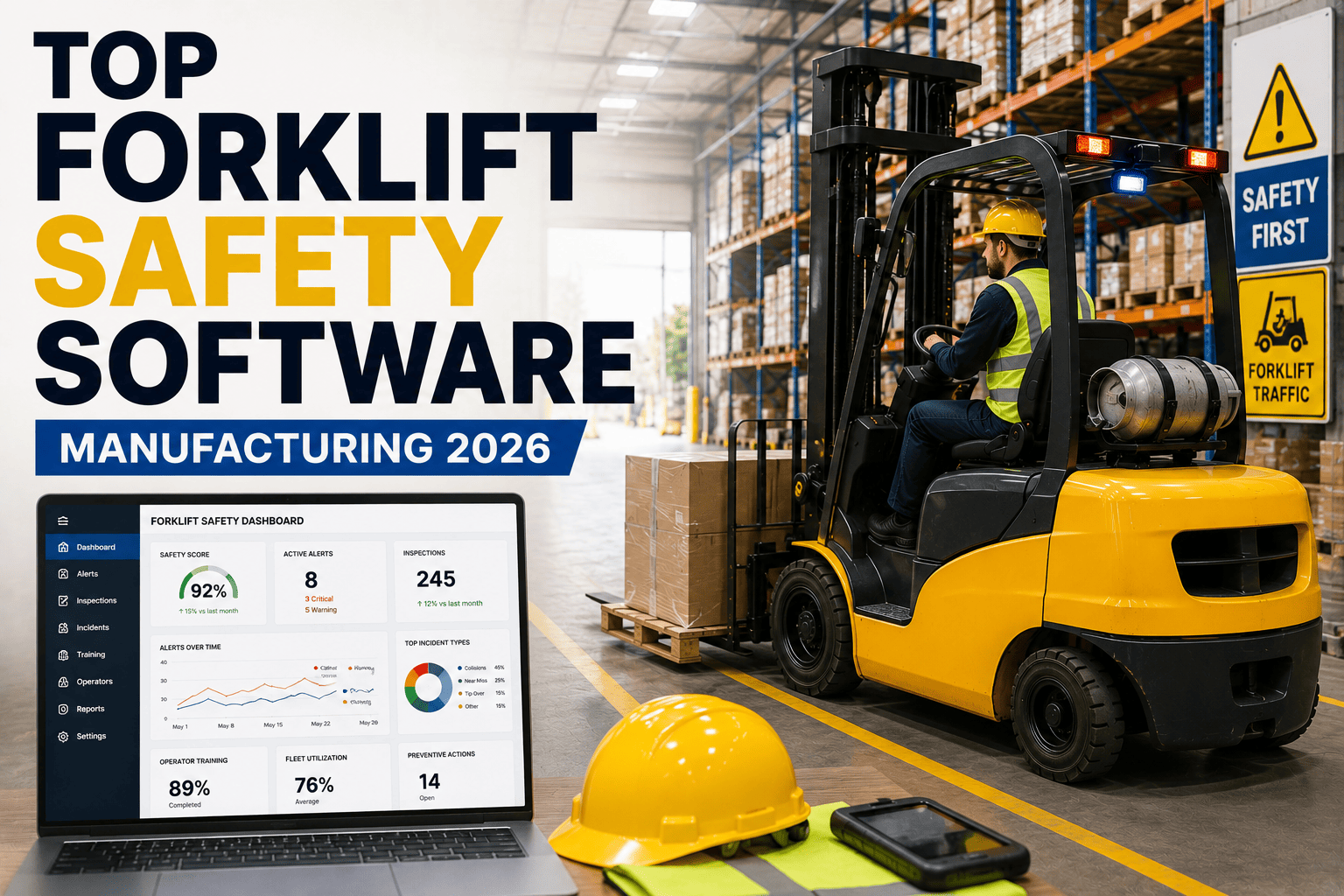
Forklifts cause an estimated 85 fatalities and roughly 34,900 serious injuries across U.S. workplaces every year, and most manufacturing safety teams are still trying to prevent the next one with a paper inspection sheet and a certification binder in a filing cabinet. OSHA's powered industrial truck standard demands daily inspections, documented operator evaluations, and immediate removal of defective equipment from service, yet uncertified operators and failed inspections remain among the most common citations plants face. Forklift safety software closes that gap by connecting impact detection, operator certification, and digital inspections into one system that catches problems before an inspector, or worse, an accident, finds them first.
Top forklift safety software for manufacturing plants combines real-time impact detection, certification-linked access control, and digital pre-shift inspections in one platform. Facilities using this combined approach have reported incident reductions of up to 30 to 35 percent, along with cleaner OSHA audit trails that eliminate the paperwork gaps that lead to citations averaging over 15,000 dollars per serious violation.
The Safety Reality on Every Plant Floor
Forklift incidents are rarely a single failure. They are usually the result of a small gap that went unnoticed: an uncertified operator who started a shift, a hydraulic hose that failed a check nobody logged, or an impact that nobody reported until damage showed up weeks later. Regulatory penalties have climbed alongside the risk, with serious violations now reaching well over 15,000 dollars and willful violations climbing into six figures.
Why Paper-Based Safety Programs Keep Failing Audits
A paper inspection sheet can be signed without the inspection actually happening, and a certification binder does not stop an uncertified operator from climbing onto a truck during a busy shift. These are not rare exceptions. They are the predictable result of a system that depends entirely on individual memory and honesty across every shift, every day, with no automatic check built in.
What Digital Safety Software Changes
When inspections, certifications, and impact data move into one connected system, each piece reinforces the others. A flagged defect locks the truck. An expired certification blocks truck access. A logged impact automatically triggers a post-incident inspection before the vehicle goes back into service. Plants ready to close these gaps can start a free trial and see their current compliance gaps mapped within days.
FleetRabbit connects impact detection, operator certification, and digital inspections so a defective truck or an uncertified operator is stopped automatically, not caught after the fact during an OSHA walkthrough.
Paper-Based Safety Programs vs Connected Safety Software
The table below lays out exactly where paper-based safety programs break down and what a connected software platform does differently at each step.
| Safety Area | Paper-Based Approach | Connected Software Approach | Risk Removed |
|---|---|---|---|
| Pre-Shift Inspections | Paper checklist, signed regardless of whether every item was checked | Mobile checklist with photo capture and automatic defect flagging | Skipped or falsified inspections going unnoticed |
| Operator Certification | Paper card or spreadsheet, rarely checked in real time before operation | Digital certification tied directly to vehicle access controls | Uncertified or expired operators starting equipment |
| Impact and Incident Logging | Reported only if an operator chooses to mention it | Automatic sensor-based logging with vehicle, operator, and location | Undetected damage returning trucks to service unsafely |
| Audit Readiness | Records scattered across binders, spreadsheets, and filing cabinets | One-click compliance reports generated on demand | Missing records surfacing during a surprise OSHA inspection |
How Connected Safety Software Reduces Incidents Step by Step
Turning Compliance Into an Audit-Ready System
OSHA's programmed inspections can arrive without warning and cover every major hazard area, not just the one that triggered a complaint. Facilities that can produce organized inspection logs, certification records, and impact history in minutes, rather than searching through binders, are the ones that walk away from a surprise inspection without a citation. Safety teams evaluating their current audit readiness can book a demo to see how quickly a full compliance report can be generated on demand.
What auditors typically ask for first
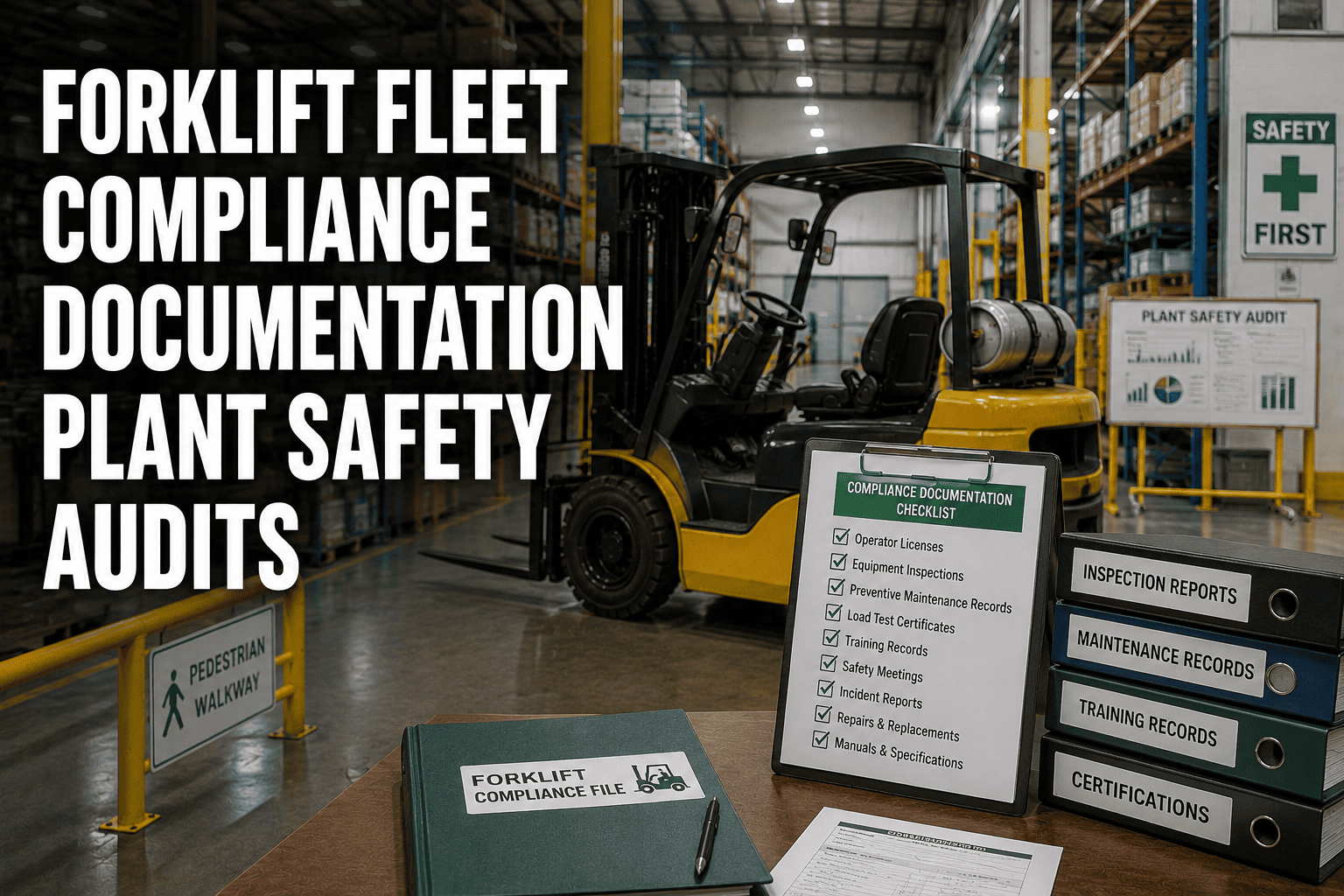
Recent pre-shift inspection logs, current operator certification records for every truck in use, and documentation showing defective equipment was removed from service immediately, not repaired days later while still in operation.
FleetRabbit keeps inspection logs, certification records, and impact history organized and ready to export, so your team can produce a complete audit trail in minutes instead of searching through paperwork under pressure.
Frequently Asked Questions
FleetRabbit brings impact detection, certification-linked access, and digital inspections into one platform so incidents drop and audits stop being stressful. Start seeing your plant's safety data within days, no credit card required.