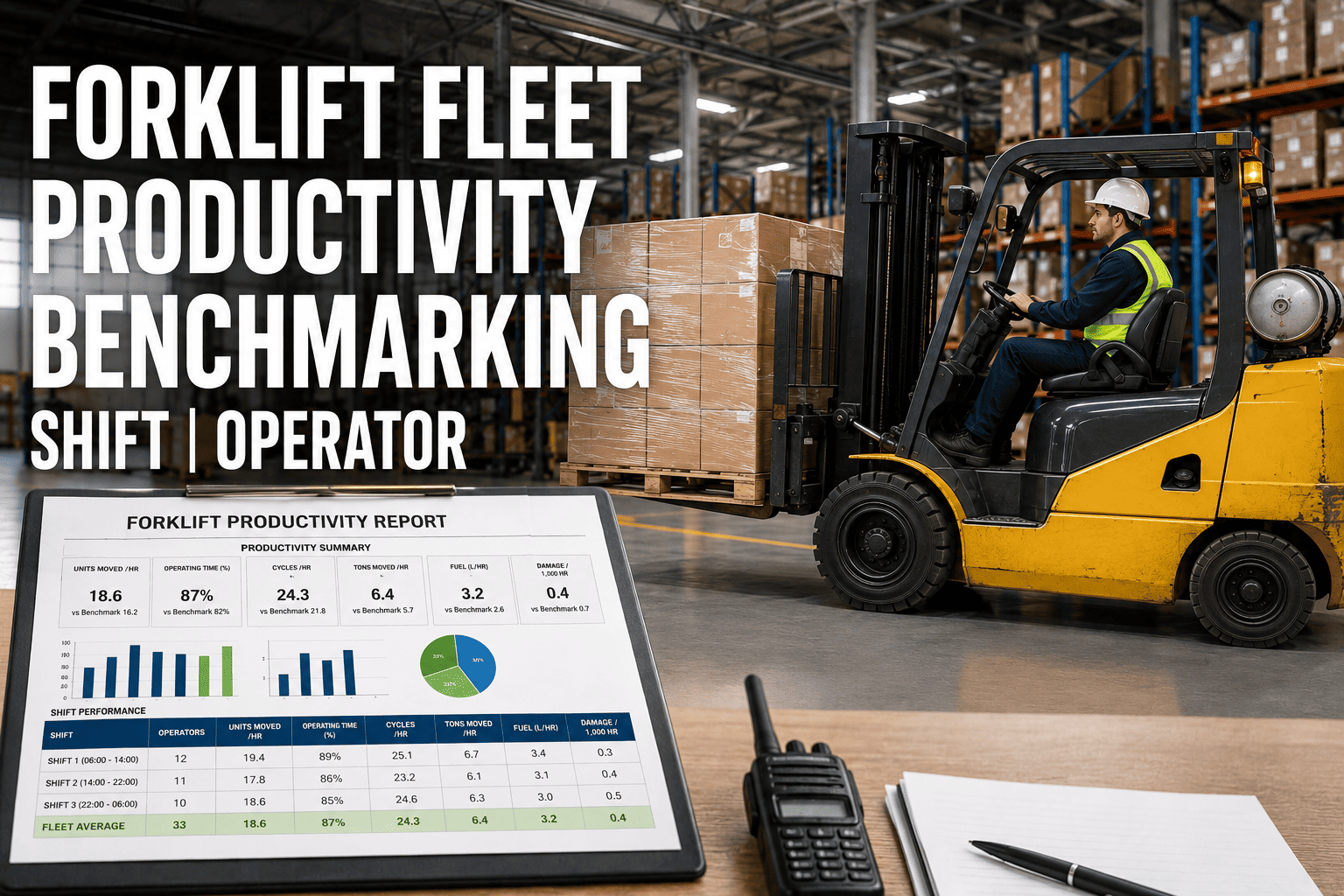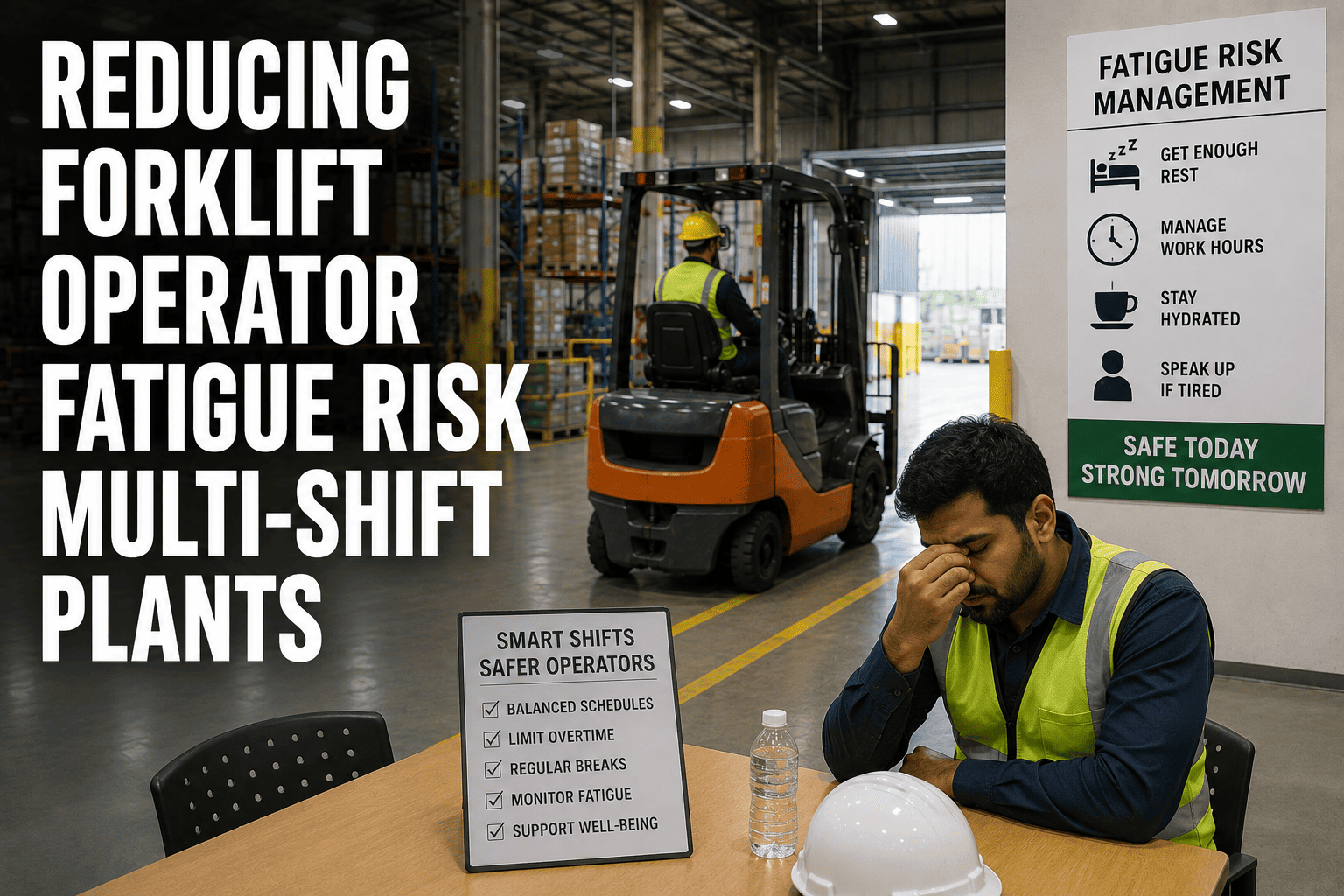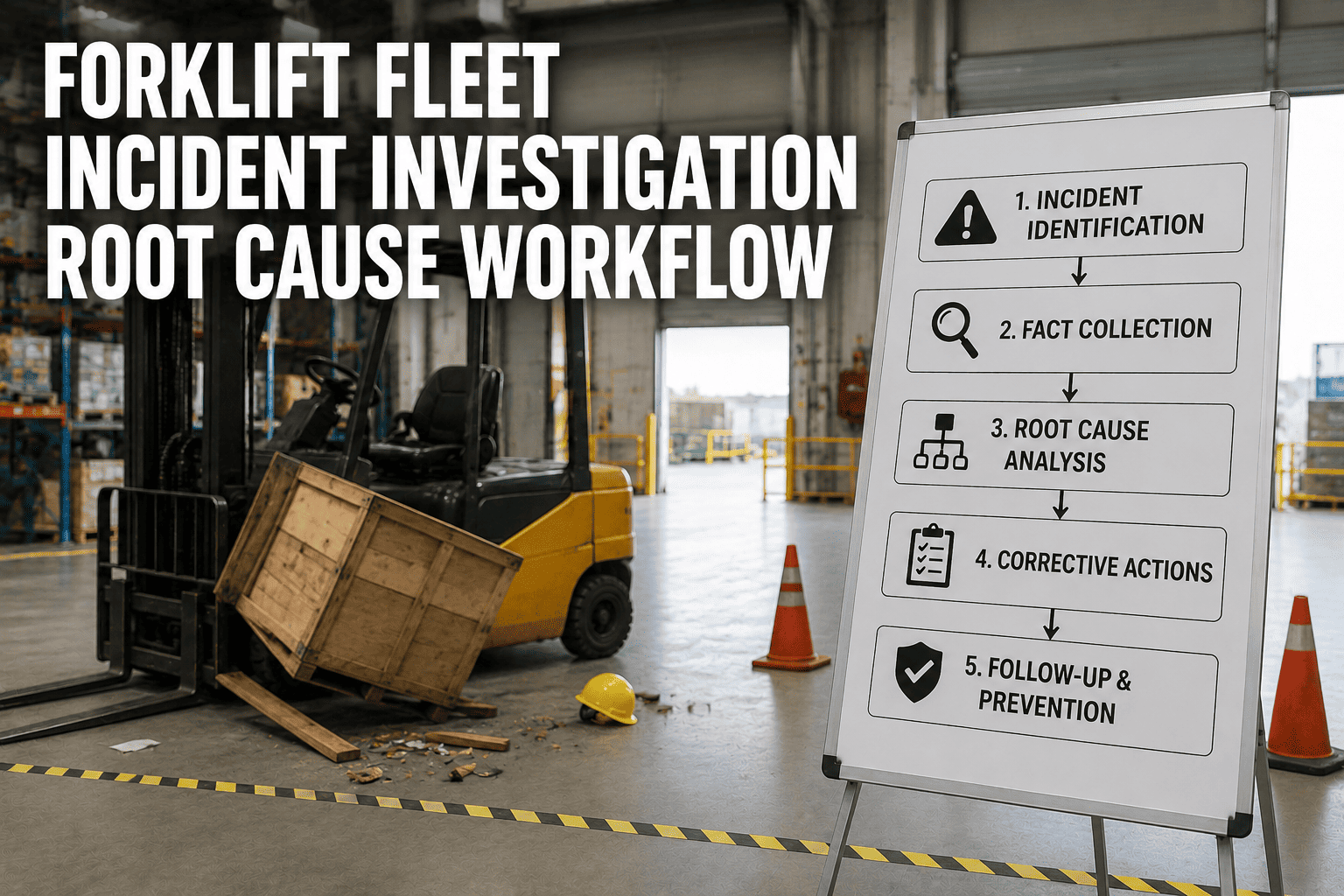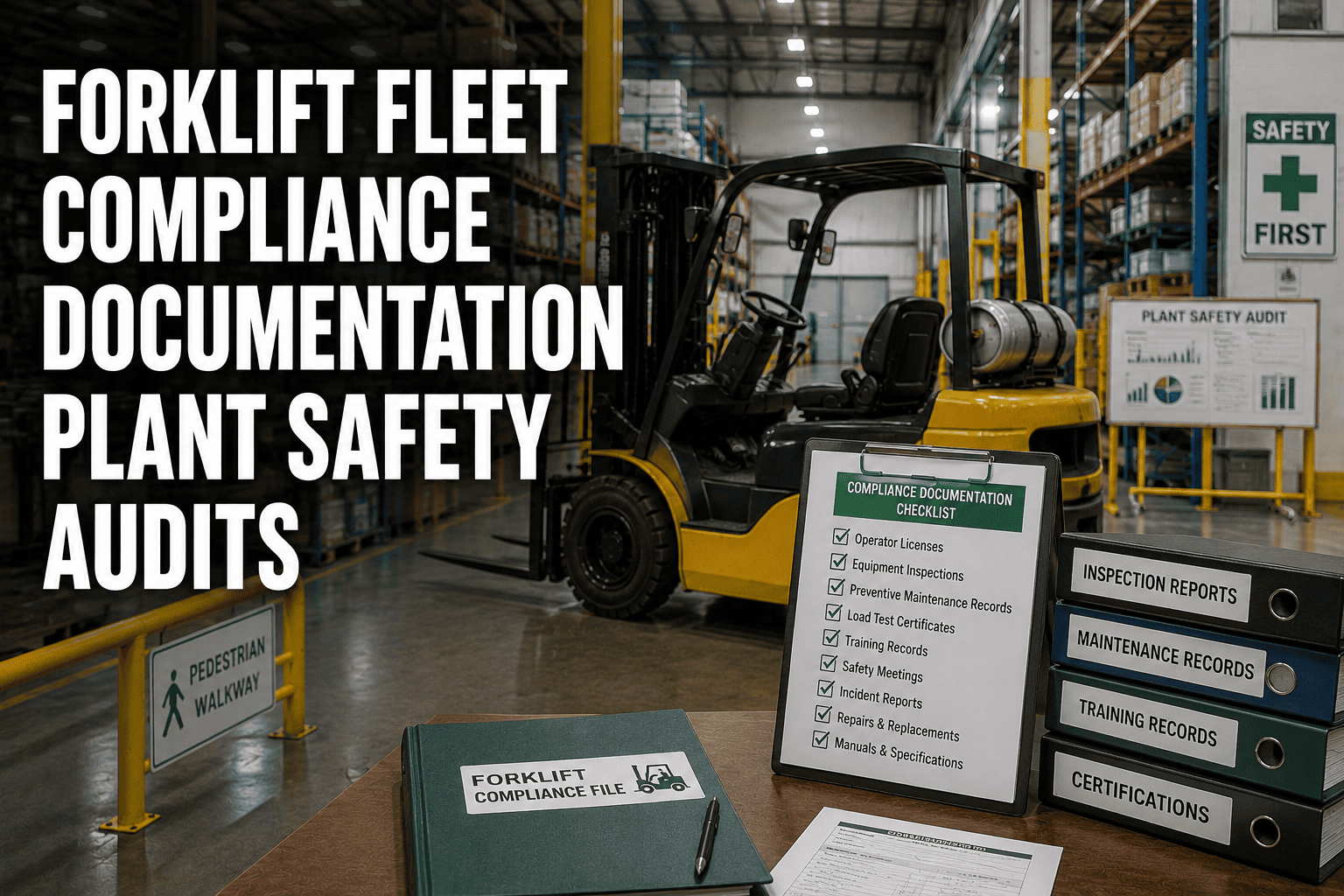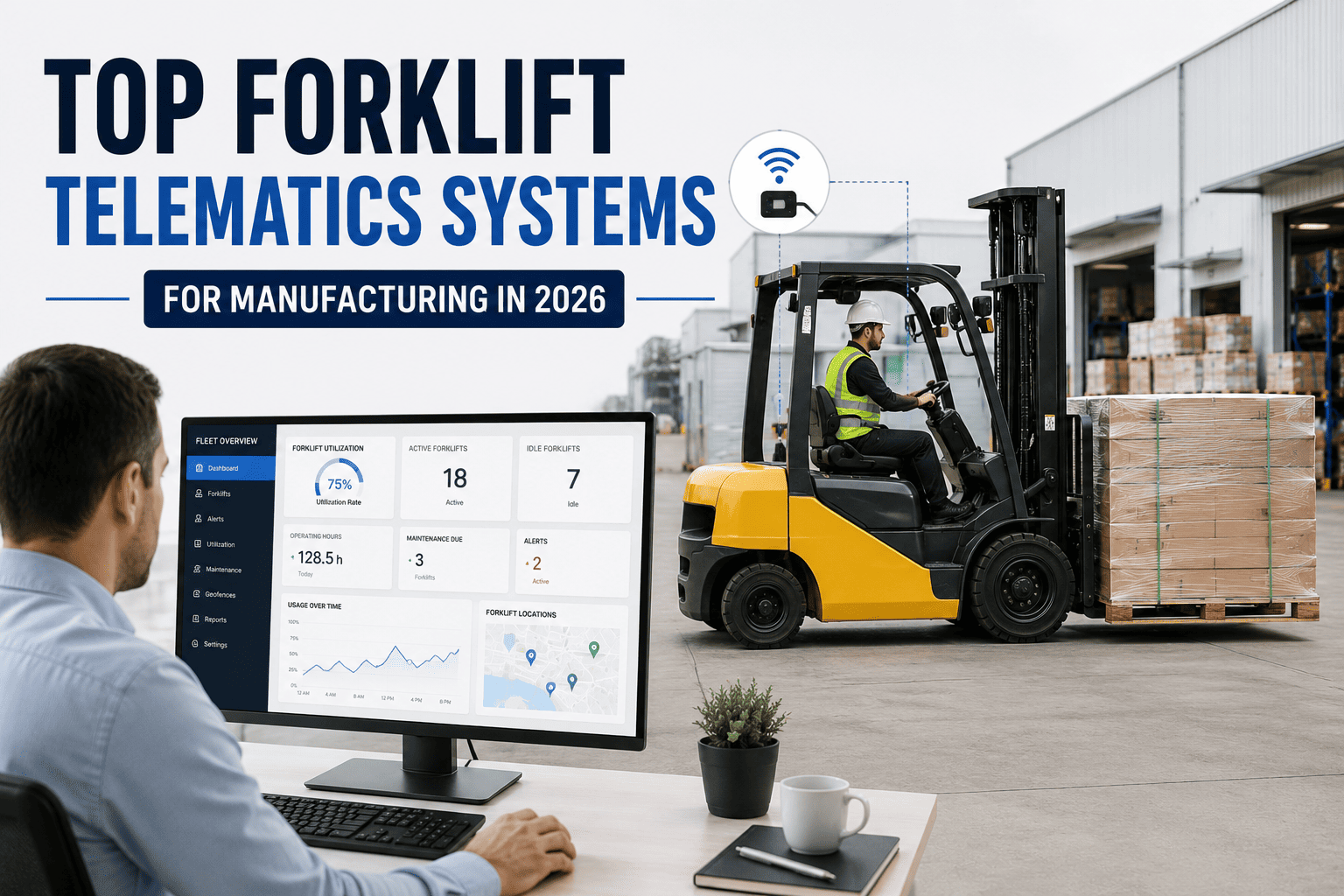
Walk any manufacturing plant floor and ask the operations manager how many forklifts are actually being used right now, and most will guess. Forklift telematics systems replace that guess with a number, along with location, impact, and maintenance data streaming in continuously from every truck on the floor. The technology has moved well past simple GPS dots on a screen. Here is what the top forklift telematics systems for manufacturing fleets actually track in 2026, and why standard GPS alone falls short the moment a truck rolls through a steel-framed building.
Top forklift telematics systems combine indoor positioning, impact detection, utilization tracking, and predictive maintenance triggers in one platform. Standard GPS does not work reliably inside steel and concrete structures, so manufacturing plants need BLE or UWB-based indoor tracking for aisle-level accuracy. Plants using full telematics typically uncover 15 to 25 percent underutilized equipment and cut operational costs by up to 30 percent.
The Four Data Layers of Forklift Telematics
A telematics system is really four separate data streams working together. Most plants start with one layer, usually location, and only discover the other three once they see how much they were missing.
Why Standard GPS Fails Inside a Manufacturing Plant
GPS was built for open sky, not steel roofing and concrete floors. Signal penetration through an industrial building is unreliable at best, which is why forklift telematics for indoor fleets relies on different technology entirely.
Outdoor Yards Still Use GPS
For forklifts operating in outdoor lumber yards, container ports, or open lots, a hardwired GPS tracker connected to the vehicle's electrical system works fine and needs no additional infrastructure.
Indoor Floors Need BLE or UWB
Inside the building, plants switch to BLE beacon zones or ultra-wideband positioning. BLE zones show which aisle or dock a truck is working in at low cost. UWB delivers tighter accuracy, often within 30 to 50 centimeters, which matters most in dense, high-traffic manufacturing floors where aisle-level precision changes dispatch decisions.
| Technology | Best For | Typical Accuracy |
|---|---|---|
| Hardwired GPS | Outdoor yards, lots, and container ports with open sky exposure | 3 to 5 meters outdoors, unreliable indoors |
| BLE Zone Tracking | Warehouse and plant floors where zone-level location is enough | Aisle or zone level, low-cost tag deployment |
| Ultra-Wideband (UWB) | High-density manufacturing floors needing precise dispatch decisions | 30 to 50 centimeters, near real-time positioning |
FleetRabbit supports BLE, UWB, and hybrid indoor tracking alongside outdoor GPS, so your telematics system matches your facility instead of forcing one technology on every truck. Sign up for a free trial and connect your first three forklifts today, or book a demo to see live location and utilization data on a real plant layout.
What Telematics Reveals That Nobody Was Tracking Before
The most common reaction plants have after switching on a telematics system is surprise, usually about how little of the fleet was actually earning its place on the floor.
Impact Detection Removes the Guesswork
Self-reported collisions vary by how comfortable an operator feels admitting fault. Automatic impact sensors record every hard hit the same way every time, which both protects operators from unfair blame and gives maintenance teams an honest damage record.
Fleet Right-Sizing Pays for Itself
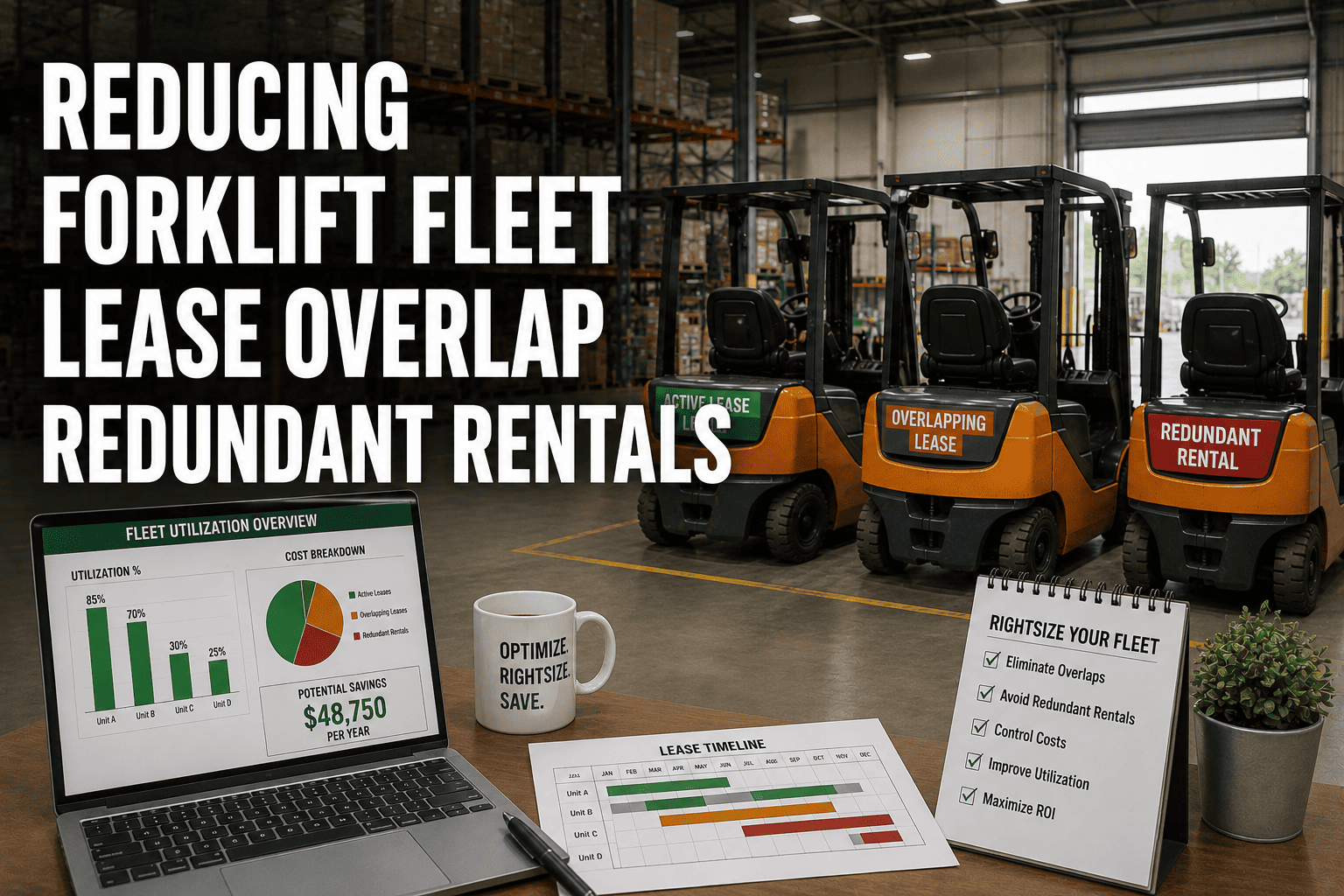
Once utilization data shows which trucks rarely move, plants can defer new purchases, return leased units, or reassign trucks to busier zones instead of renting extra equipment out of habit.
Choosing the Right Telematics System for Your Plant
Not every manufacturing floor needs the same setup. The right system depends less on brand reputation and more on how your fleet actually operates.
Mixed-Brand Fleets Need Brand-Agnostic Software
OEM telematics systems from individual forklift manufacturers only see their own trucks. A plant running Toyota, Hyster, and Crown equipment side by side needs a platform that pulls data from all three into one dashboard.
High-Density Floors Need Precise Positioning
A sparse warehouse can get by with zone-level BLE tracking. A tightly packed manufacturing floor with narrow aisles and constant cross-traffic benefits from UWB precision, where knowing the exact bay a truck occupies changes real-time dispatch decisions.
Every Plant Benefits From the Maintenance Link
Location and utilization data are only half the value. The best systems feed that same data directly into predictive maintenance, so a truck flagged for heavy use also gets flagged for earlier service. If you want to see how that connection works with your fleet size, a quick demo call is the fastest way to find out.
Frequently Asked Questions
Telematics stopped being a nice-to-have the moment manufacturing plants realized how much of their fleet, budget, and safety risk was invisible without it. The systems worth adopting in 2026 do more than plot a dot on a map. They turn location, utilization, and impact data into decisions your operations team can act on the same shift they happen.
FleetRabbit gives manufacturing plants indoor and outdoor forklift tracking, automatic impact detection, and utilization analytics connected directly to predictive maintenance. Start your free trial today with no credit card required, or book a short demo and see your fleet on the map.