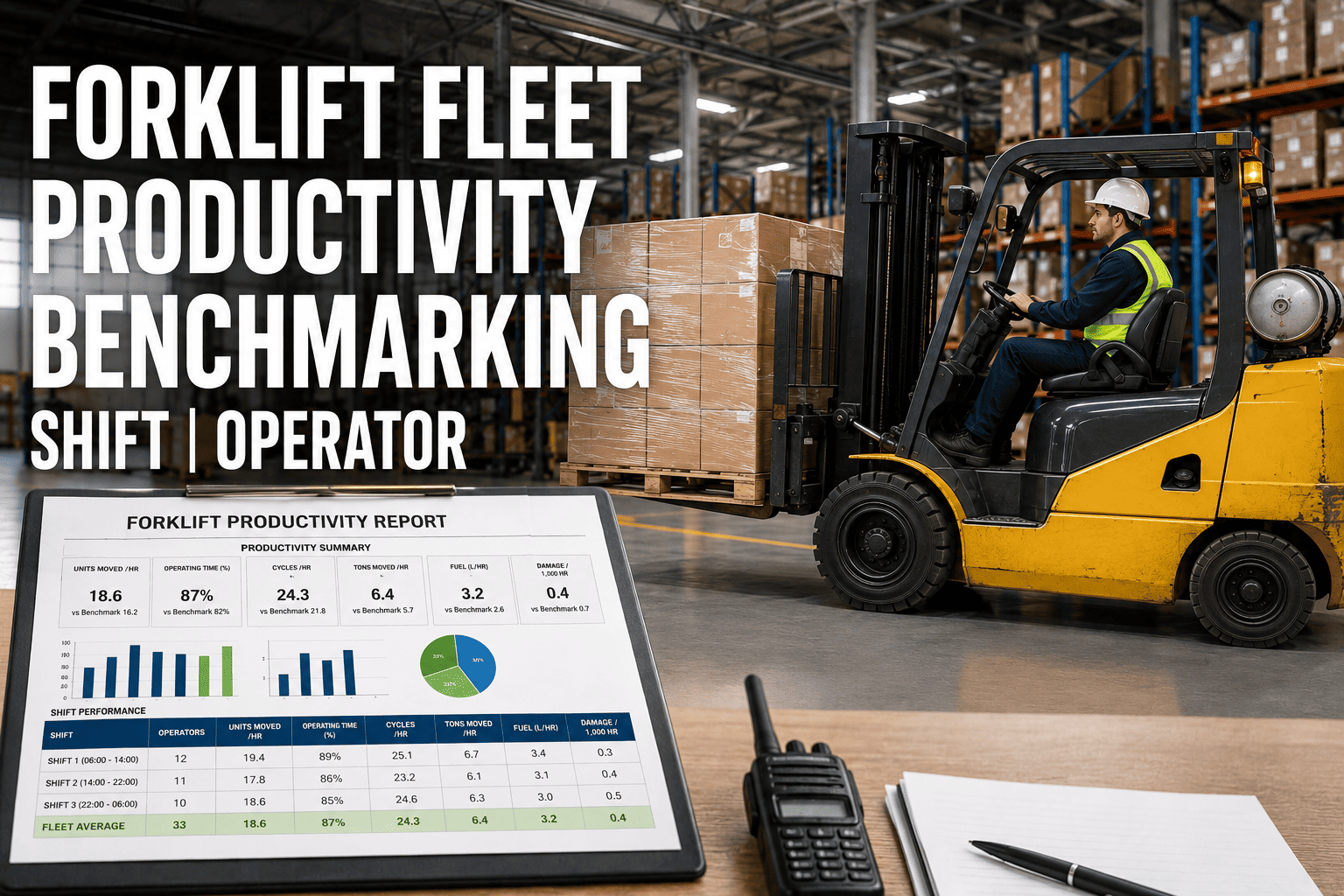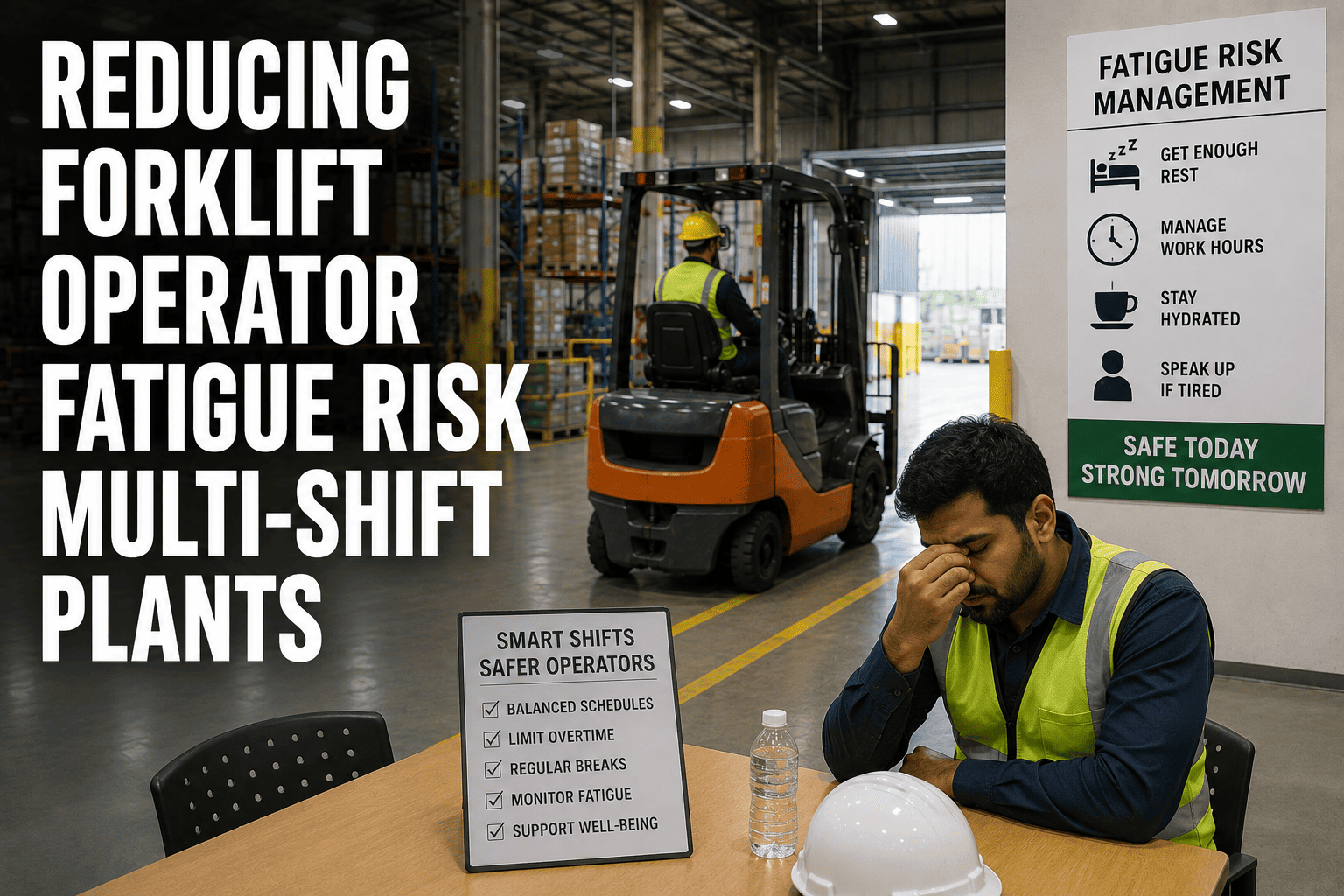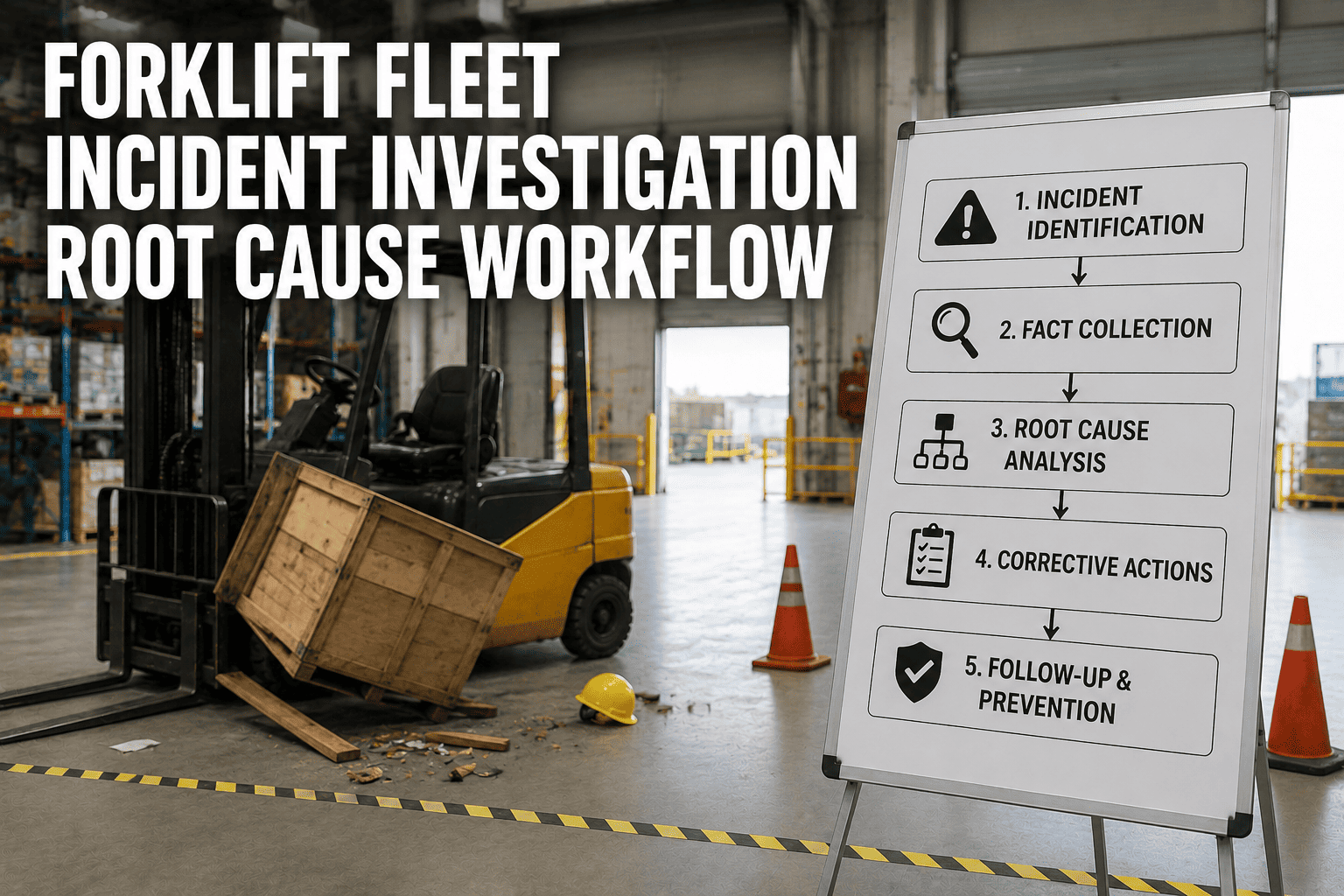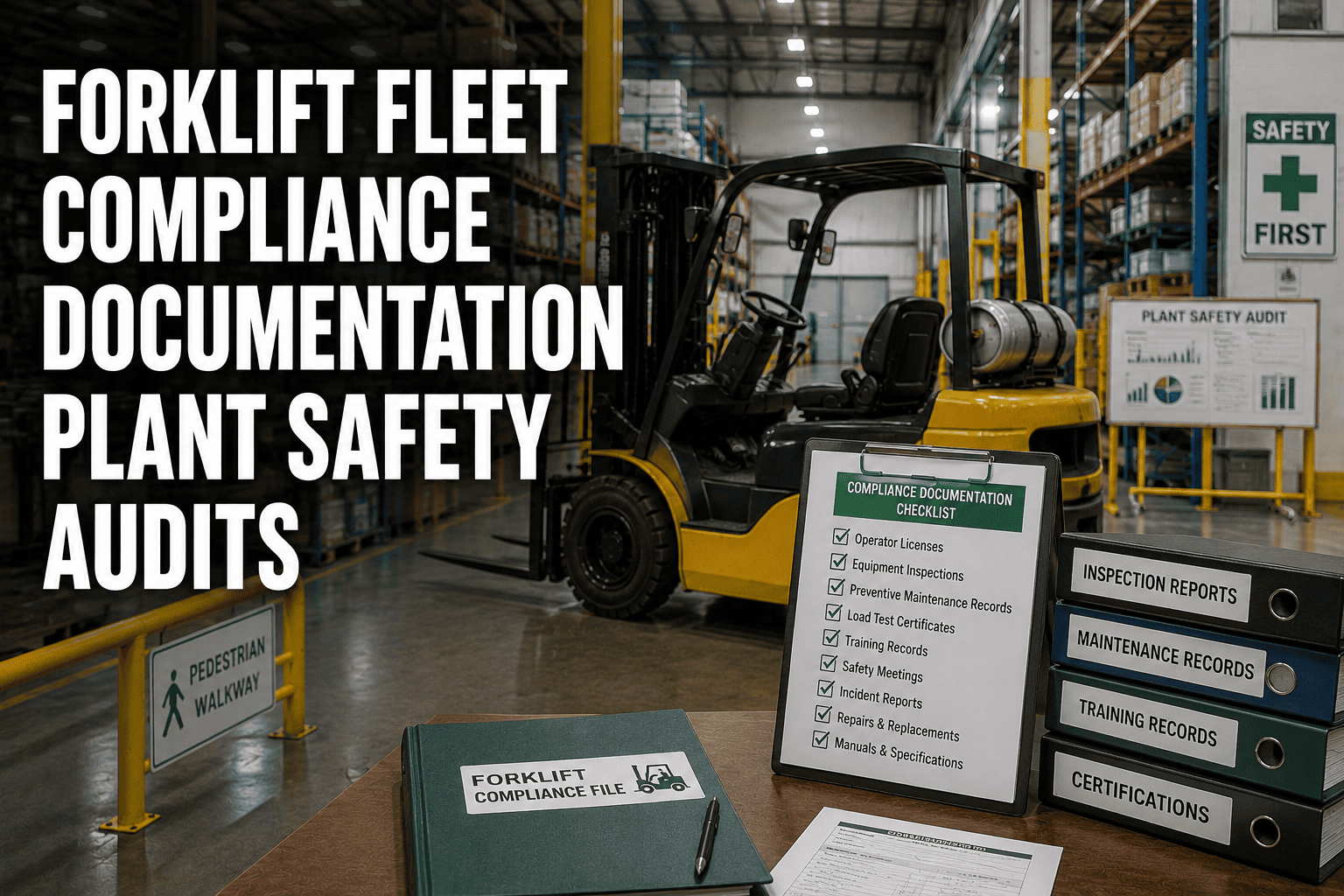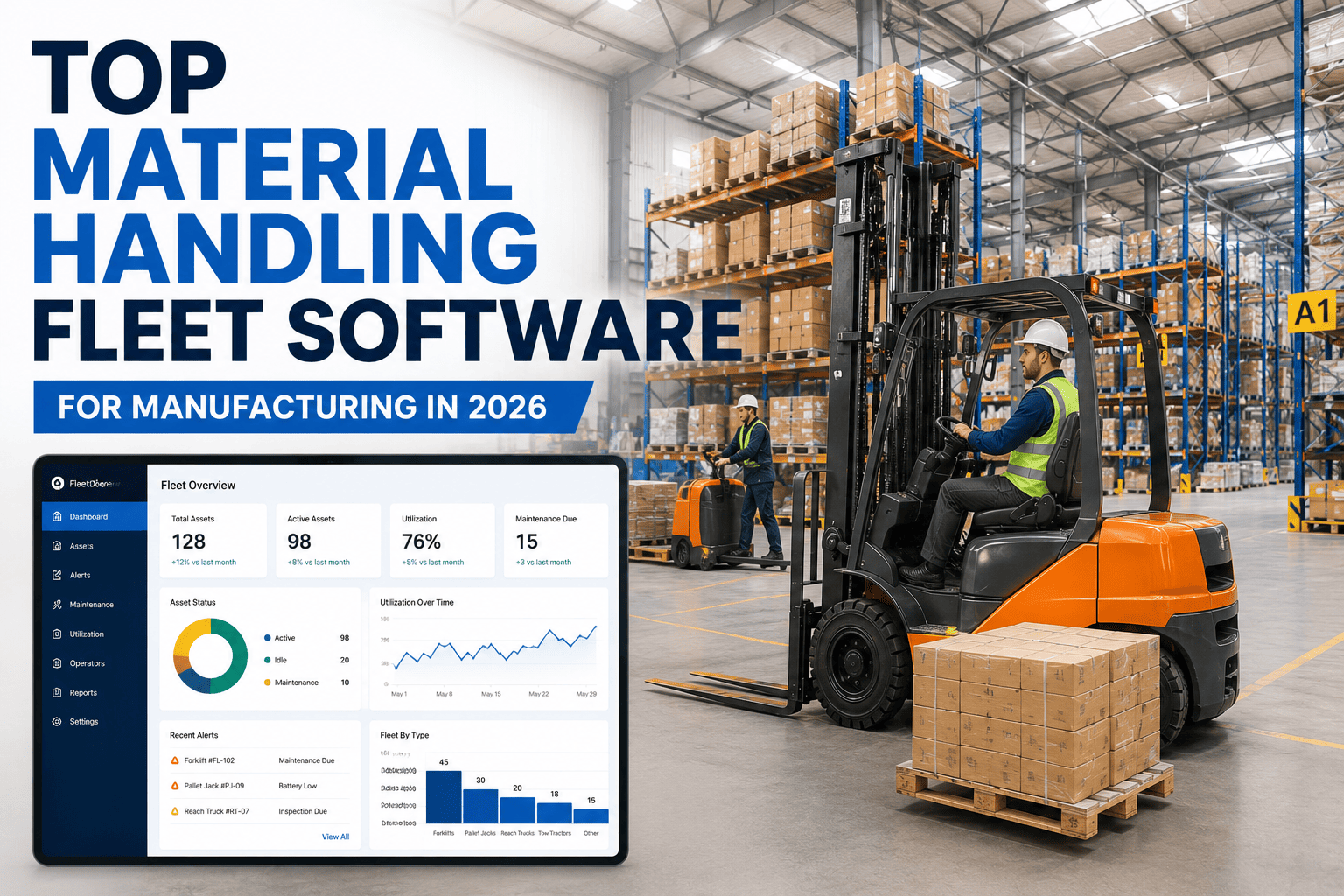
Walk the floor of most manufacturing plants and you won't find just forklifts. You'll find counterbalance trucks unloading trailers, reach trucks working the racking, tow tractors pulling carts between production cells, and a dozen electric pallet jacks moving finished goods to shipping. Each of those asset types often lives in its own spreadsheet, its own maintenance log, or worse, nobody's log at all. Material handling fleet software exists to pull every one of those vehicle types into a single system. Here is what the top platforms actually do differently in 2026, and why treating your material handling fleet as one connected system changes what you can see and fix.
Top material handling fleet software tracks forklifts, reach trucks, order pickers, tow tractors, and pallet jacks in one unified platform instead of separate logs per equipment type. It manages battery charge cycles for electric fleets, enforces digital start-inhibitor checklists, and tracks run hours against lease and warranty terms. Plants using a unified system avoid the blind spots that come from managing five equipment types five different ways.
The Mixed Fleet Problem Manufacturing Plants Actually Face
A material handling fleet is rarely one type of vehicle. Different tasks on the floor call for different equipment, and each type wears differently, costs differently, and needs its own maintenance rhythm. Software built only around counterbalance forklifts misses most of the fleet.
One Platform vs Five Separate Tracking Methods
Most plants end up managing each equipment type differently by default, not by design. It happens gradually as different vehicles get added to the fleet over time. Here is how that default compares to a unified platform.
| What Happens | Separate Tracking Per Type | Unified Material Handling Platform |
|---|---|---|
| Maintenance Scheduling | Each equipment type follows a different log, some on paper, some untracked entirely | Every asset type scheduled by run hours in the same system, regardless of vehicle class |
| Fleet-Wide Visibility | No single view of total fleet health, utilization, or cost across equipment types | One dashboard showing every forklift, reach truck, tow tractor, and pallet jack together |
| Battery Management | Electric equipment charge cycles rarely tracked, shortening battery life without anyone noticing | Charging cycles logged automatically, protecting an asset that represents a large share of truck value |
| Lease and Warranty Tracking | Hour thresholds tracked manually or missed, risking voided warranties on leased equipment | Run hours tracked against lease and warranty terms automatically for every unit |
FleetRabbit brings forklifts, reach trucks, tow tractors, and pallet jacks into a single connected platform, with maintenance, utilization, and battery tracking built for every equipment type. Sign up for a free trial and connect your first mixed assets today, or book a demo to see how your full equipment mix looks in one dashboard.
What Unified Material Handling Software Actually Tracks
Bringing every equipment type into one platform only helps if the platform tracks the details specific to each one. The strongest systems handle the following without treating every vehicle like a generic forklift.
Digital Start-Inhibitor Checklists
Instead of a clipboard zip-tied to the roll cage that operators sign without looking, a digital checklist can require a photo of the forks or tires and block the vehicle from starting until the inspection is complete, across every equipment type on the floor.
Battery Charge Cycle Management
On electric fleets, the battery can represent close to a third of the truck's total value. Poor charging discipline, like skipping watering or equalizing cycles, destroys that investment early. Tracking charge cycles automatically protects an asset most plants otherwise manage by habit.
Run-Hour Tracking Against Lease Terms
Leased equipment often comes with hour thresholds tied to warranty coverage. Missing those thresholds voids protection nobody realizes is gone until a major repair bill arrives. Automated hour tracking flags the threshold before it's crossed, not after.
Cross-Equipment Utilization Comparison
Seeing utilization for forklifts alone tells you half the story. A unified view across tow tractors, reach trucks, and pallet jacks shows where the whole fleet, not just one vehicle class, is over or under capacity.
Why This Matters More As Fleets Get More Diverse
Manufacturing plants keep adding specialized equipment as production lines get more complex, and each addition makes a fragmented tracking approach harder to sustain. A tow tractor bought two years after the last forklift purchase rarely ends up in the same maintenance system, and that gap compounds every time new equipment joins the floor. Consolidating everything into one platform now is far less disruptive than trying to unify five years of scattered records later. If you want to see what that consolidation looks like with your current equipment mix, a quick demo call is the easiest way to find out.
Frequently Asked Questions
A manufacturing floor rarely runs on one type of equipment, and the software managing it shouldn't force that assumption either. The plants getting the most out of material handling fleet software in 2026 are the ones that stopped treating forklifts, reach trucks, tow tractors, and pallet jacks as five separate problems and started managing them as one connected fleet.
FleetRabbit unifies forklifts, reach trucks, tow tractors, and pallet jacks in one platform, with maintenance, battery, and lease tracking built for every equipment type. Start your free trial today with no credit card required, or book a short demo and see your full fleet in one dashboard.