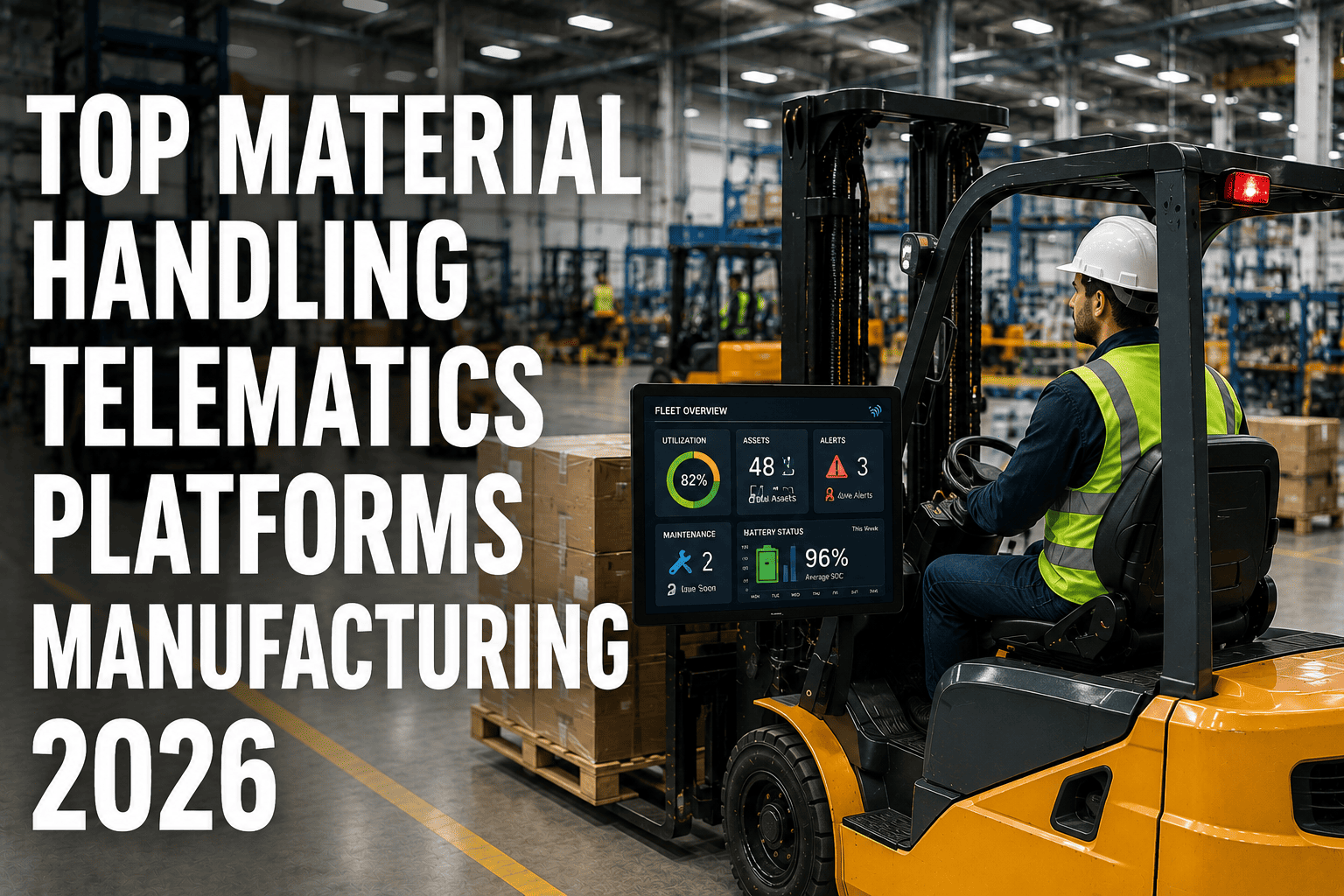
Every manufacturing plant floor runs on forklifts, tuggers, and reach trucks that rarely get the same scrutiny as the production line itself, even though a single truck going down can stall an entire cell for hours. Material handling telematics platforms exist to close that visibility gap, streaming location, impact, run-hour, and maintenance data off every truck so operations teams stop guessing which units are actually working and which are quietly bleeding money. Heading into 2026, the platform landscape has split into three distinct camps, and picking the wrong one means paying for software that only sees part of your fleet. This guide compares the leading material handling telematics platforms for manufacturing, breaks down what actually matters when you evaluate one, and shows why plants running more than one forklift brand keep landing on a unified system like FleetRabbit. You can sign up for a free trial to connect your first trucks in minutes, or book a demo to map your current equipment list against the platform first.
The top material handling telematics platforms for manufacturing in 2026 split into three groups. Manufacturer-specific systems like Yale Vision, Crown InfoLink, Toyota T-Matics, and Linde myLinde work best on single-brand fleets. Independent point solutions cover one feature well, such as impact detection or GPS tracking, but skip inspections and maintenance workflows. Brand-agnostic platforms like FleetRabbit unify predictive maintenance, digital OSHA inspections, operator tracking, and ERP integration across every forklift brand in one dashboard.
Comparing the Top Material Handling Telematics Platforms
Most manufacturing plants did not plan to run five forklift brands at once. It happened gradually, through leases signed years apart, acquisitions that brought in someone else's fleet, and whichever dealer had inventory when an old truck finally gave out. That gradual history is exactly why the choice of platform matters so much heading into 2026. A system optimized for one manufacturer's trucks will always leave gaps once your fleet grows past that single brand, and those gaps are usually where the most expensive breakdowns hide.
Manufacturer Telematics at a Glance
Yale Vision pairs wireless impact monitoring with its Reliant pedestrian-awareness camera and works well for plants running mostly Yale warehouse trucks. Crown InfoLink offers deep integration with Crown's own equipment and strong access-control features. Toyota T-Matics focuses on utilization and safety reporting across Toyota fleets, and Linde's newer myLinde platform combines safety metrics, service scheduling, and energy performance in a single cloud dashboard. Each of these systems is genuinely strong within its own brand, which is precisely the limitation, since none were designed to ingest data from a competitor's truck sitting three aisles away.
| Platform | Type | Best Fit | Standout Strength | Manufacturing Limitation |
|---|---|---|---|---|
| Yale Vision | OEM | Single-brand Yale fleets | Pedestrian detection camera integration | Coverage narrows once non-Yale trucks join the floor |
| Crown InfoLink | OEM | Single-brand Crown fleets | Deep native integration and access control | Cross-brand reporting needs manual workarounds |
| Toyota T-Matics | OEM | Single-brand Toyota fleets | Mature utilization and safety reporting | Not built to ingest competitor truck data |
| Linde myLinde | OEM | Single-brand Linde fleets | Safety, service, and energy data in one view | Newer platform with narrower brand coverage |
| Independent point tools | Third-party | Plants needing one capability fast | Quick deployment, low setup effort | Skips inspections, maintenance, and ERP data |
| FleetRabbit | Brand-agnostic | Mixed-brand manufacturing fleets | Predictive maintenance, OSHA inspections, operator tracking, and ERP integration together | Best value once fleet data is onboarded across brands |
FleetRabbit unifies telematics data from every truck on your floor, regardless of manufacturer, into one predictive maintenance and inspection system. Sign up and connect your first three trucks today, or book a demo to see how it maps to your current fleet mix.
What Manufacturing Plants Should Actually Compare
Feature checklists make every platform look similar on paper. The real differences show up in how each system handles the specific conditions of a manufacturing floor, where steel structures, mixed equipment ages, and shift-based operator turnover create problems a warehouse-only platform rarely faces.
Indoor Positioning Accuracy
Standard GPS loses accuracy inside steel-framed buildings, so a platform that only offers outdoor GPS dots is of limited use once a truck rolls past the dock doors. Look for BLE or UWB-based indoor positioning that holds aisle-level accuracy, since that is what actually tells you whether a truck sat idle in receiving all shift or was working the production line as scheduled.
Predictive Maintenance Depth
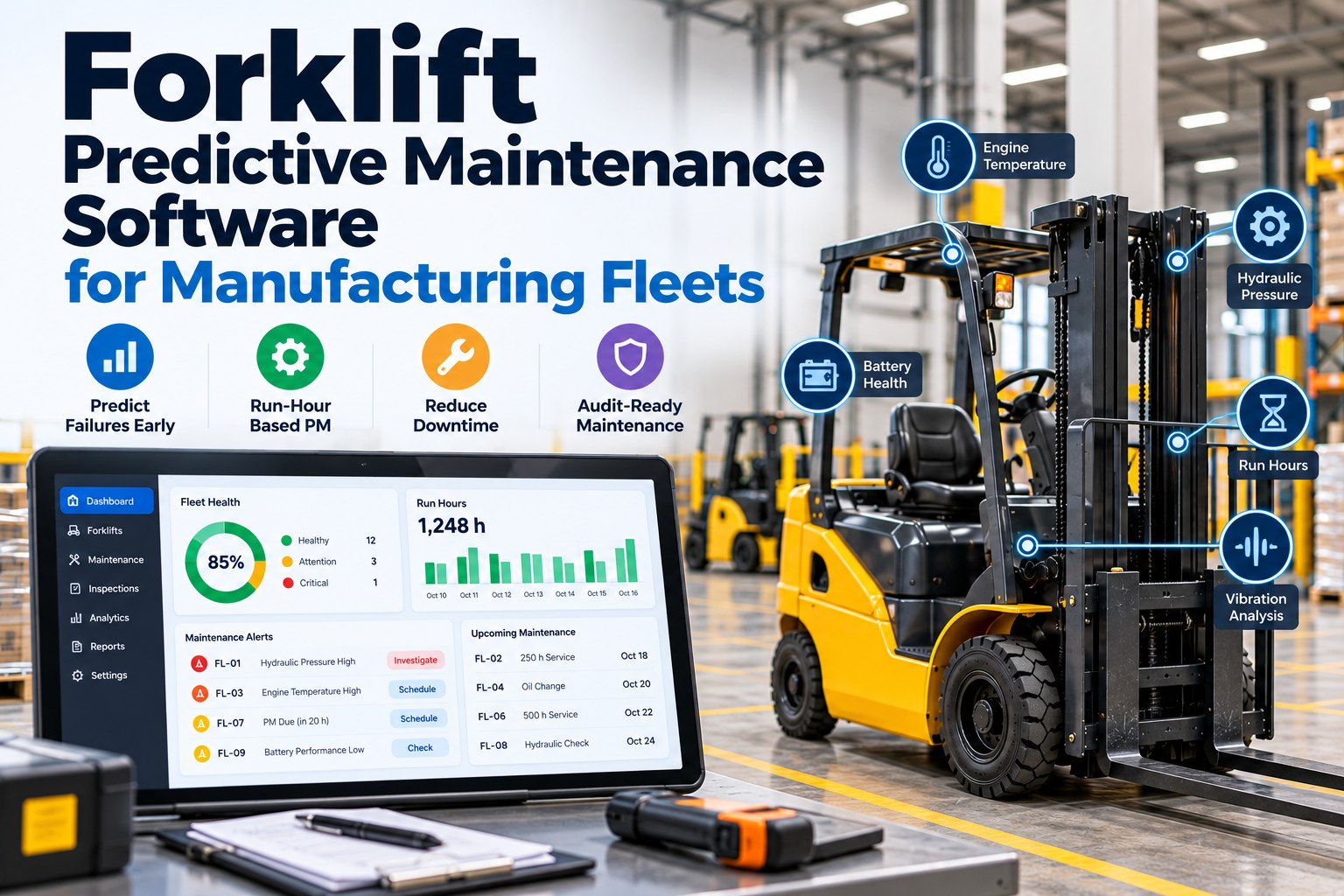
Some platforms stop at sending an alert when a fault code appears. A stronger platform ties run-hours, impact history, and component wear patterns together to trigger service before a failure happens, catching issues while they are still inexpensive repairs rather than emergency shutdowns.
Digital OSHA Inspection Workflows
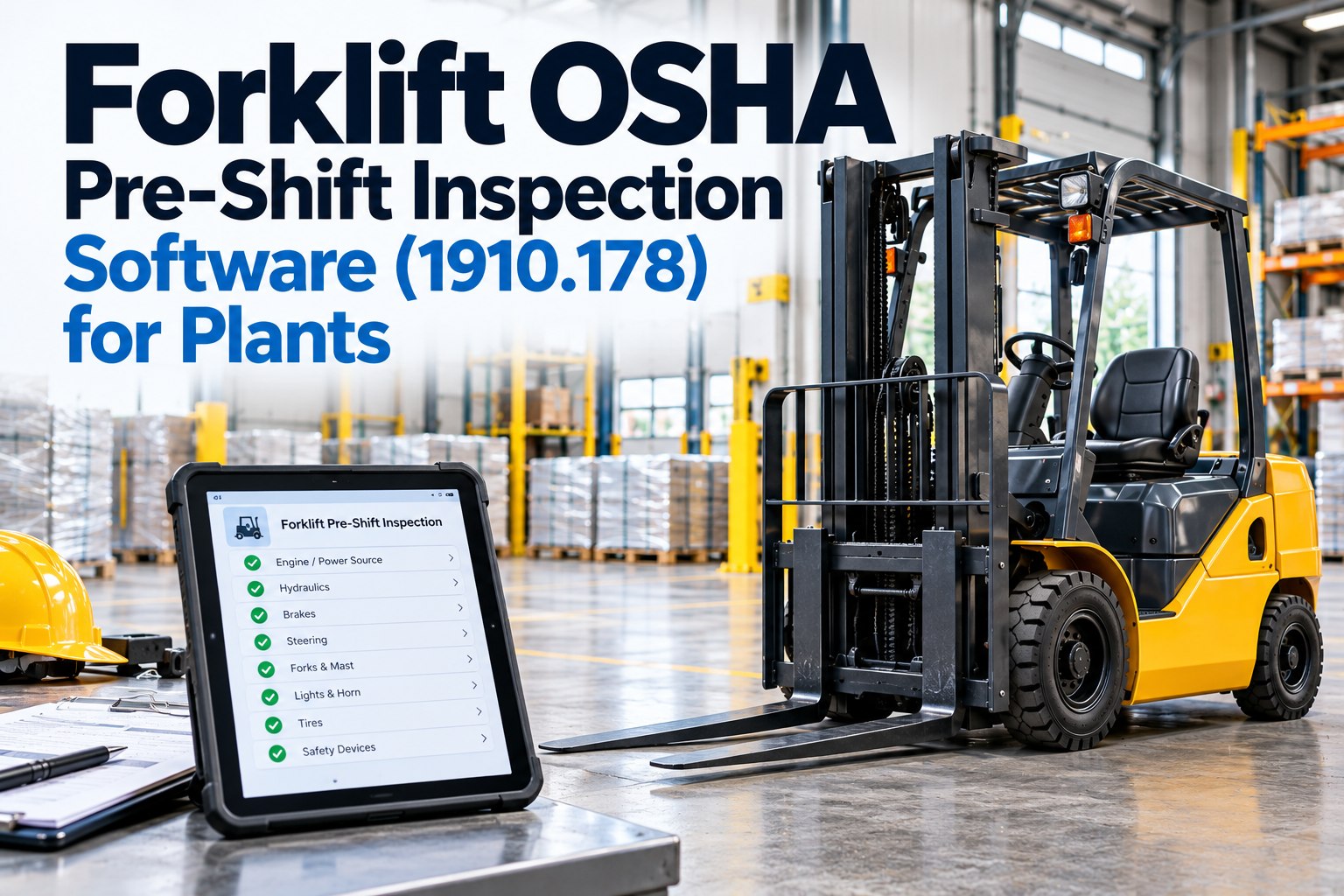
Manufacturing plants are held to daily pre-shift inspection requirements, and platforms that tie those checklists to individual operators, not just to the truck, create a much cleaner compliance record. This also surfaces which operators are skipping steps before it becomes a safety incident.
Operator Certification Tracking
Certification expiration dates get missed on spreadsheets constantly. A platform that flags an operator whose certification is about to lapse prevents an uncertified operator from ever being assigned to a truck in the first place.
ERP and Mixed-Brand Integration
A telematics platform that cannot pass utilization and maintenance data into your existing ERP or CMMS system creates a second silo instead of removing one. Brand-agnostic platforms are generally built with this integration in mind from the start, since their entire value proposition depends on connecting to systems the customer already runs.
Data Ownership and Reporting
Confirm whether historical fleet data stays accessible and exportable if you ever change providers. Plants that skip this check sometimes discover years of maintenance history are locked inside a platform they are trying to leave.
Benchmarking Platform Performance
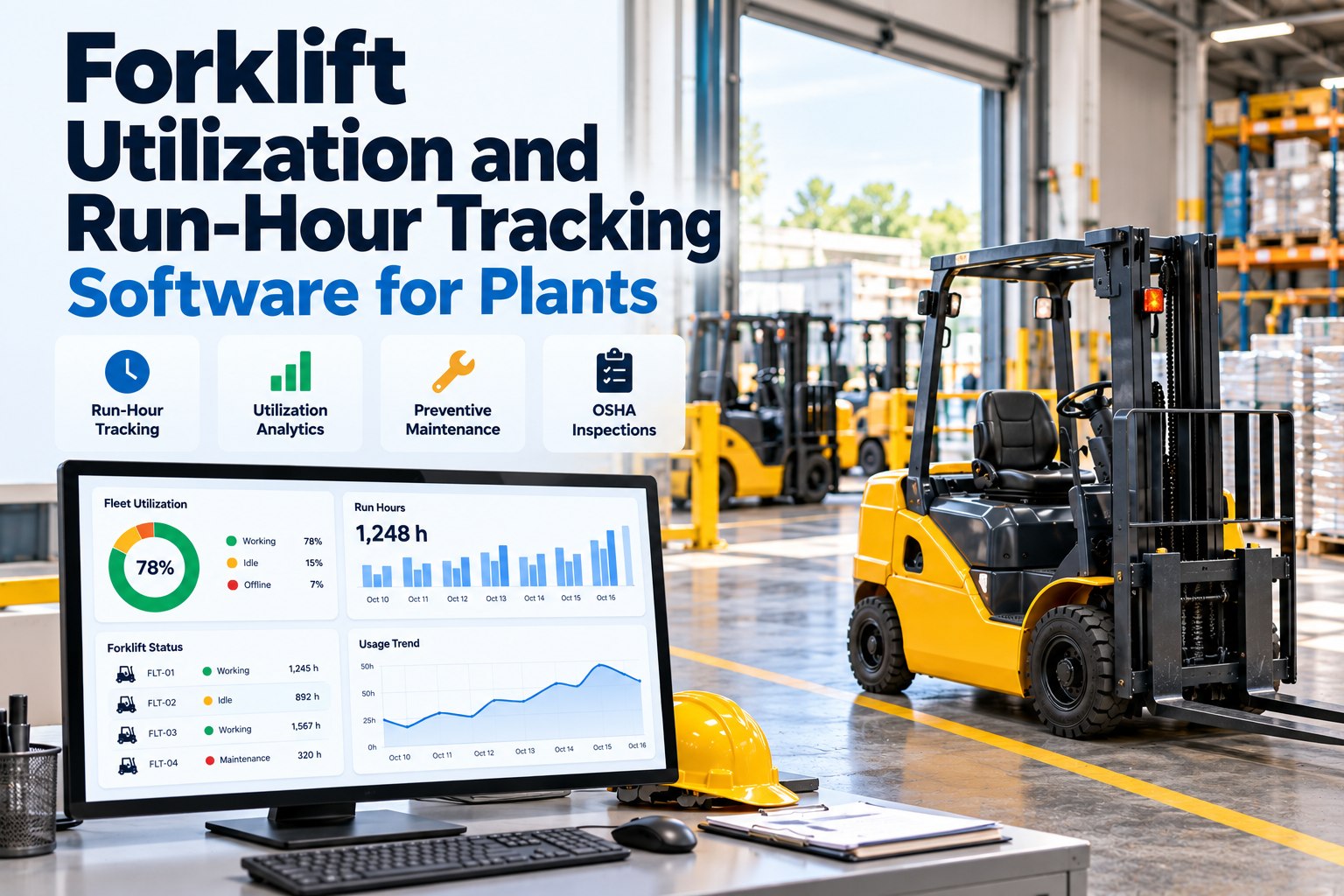
Once a platform is live, a few metrics reveal whether it is actually earning its cost. Fleet visibility coverage measures what percentage of your total truck count is reporting live data, and mixed-brand plants running an OEM-only system typically see this number stall well below full fleet coverage. Time to detect a developing fault matters just as much, since platforms with deeper predictive analytics routinely flag issues days or weeks before a component fails, compared to systems that only alert after a fault code has already triggered.
Plants that move from fragmented, brand-specific tools to a single unified platform commonly report meaningfully faster maintenance response times within the first few months, along with a cleaner audit trail for OSHA inspections that used to live across several paper logs and separate logins.
Frequently Asked Questions
Choosing a material handling telematics platform comes down to one honest question: how many forklift brands does your plant actually run today, and how many will it run two years from now. Single-brand fleets can lean on their manufacturer's own system with confidence. Everyone else is better served by a platform built to see the whole floor at once, catch developing problems before they become downtime, and keep inspection and maintenance records in a single place instead of scattered across logins. FleetRabbit was built for exactly that second group, and getting started takes less time than most plants expect.
Stop switching between separate logins for every forklift brand on your floor. FleetRabbit brings predictive maintenance, digital OSHA inspections, and operator tracking together in one platform built for manufacturing fleets. Start your free trial today with no credit card required.