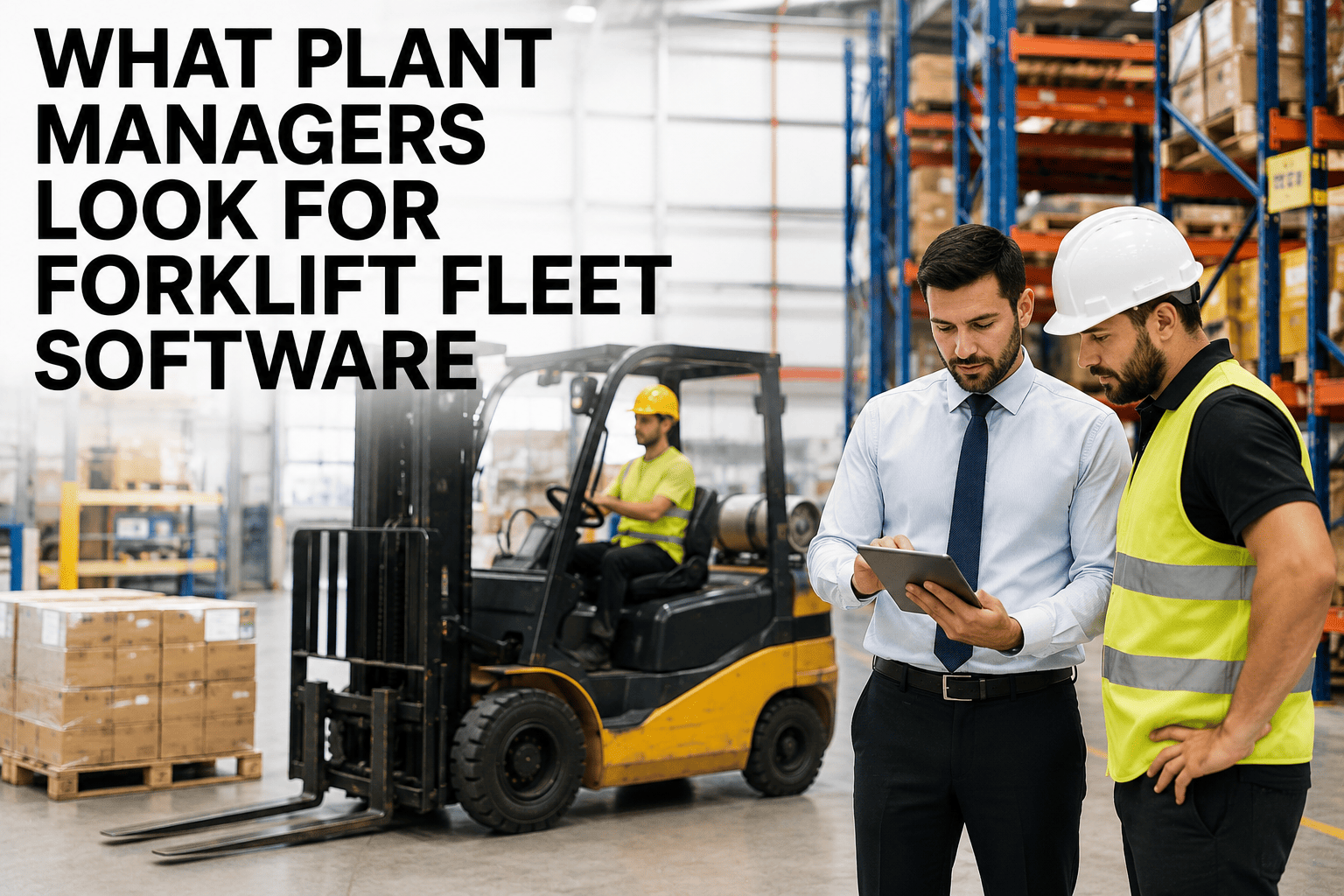
Ask ten plant managers what they want from forklift software and most won't start with a feature list. They'll start with a memory: an auditor asking for two years of inspection records that lived on a clipboard in the maintenance shed, or a line that stopped because nobody knew a reach truck's hydraulics had been failing for weeks. Forklift fleet software gets bought to close those exact gaps. The plants that choose well end up with fewer surprises, cleaner audits, and forklifts that run when they're needed. The ones that choose poorly end up with another dashboard nobody opens. Here's what actually separates the two, based on what plant managers consistently rank as non-negotiable in 2026.
Plant managers evaluating forklift fleet software prioritize five things: maintenance triggered by run-hours instead of the calendar, digital OSHA 1910.178 pre-shift inspections with photo evidence, operator certification enforcement, native ERP or WMS integration, and audit-ready records that survive a surprise inspection. A platform missing any one of these usually gets replaced within a year. Sign up free to test these against your own fleet, or book a demo to walk through them with our team.
Why Plant Managers Evaluate Forklift Software Differently Than IT Does
Most software buying happens top-down, driven by cost and integration ease. Forklift software gets evaluated bottom-up, driven by what happens when it fails on the floor. A plant manager isn't asking whether the dashboard looks modern. They're asking whether a defective forklift can still get driven tomorrow morning, whether an OSHA inspector will find a gap in the paperwork, and whether the maintenance team finds out about a failing component before it stops a line. That operational lens is what separates a genuinely useful platform from a generic asset tracker with a forklift icon bolted on.
The Five Filters Plant Managers Actually Use
Strip away the marketing pages and the same five questions come up in nearly every plant manager's evaluation, regardless of industry or fleet size.
Maintenance Logic: Run-Hours, Not the Calendar
Truck fleet software tracks mileage. Forklift fleet software has to track something else entirely, because forklifts don't drive routes, they work shifts. A reach truck running two hard shifts a day accumulates wear far faster than one parked in a slow corner of the warehouse. Software that still schedules service off a fixed calendar date treats both trucks the same, which means one gets serviced too early and the other too late.
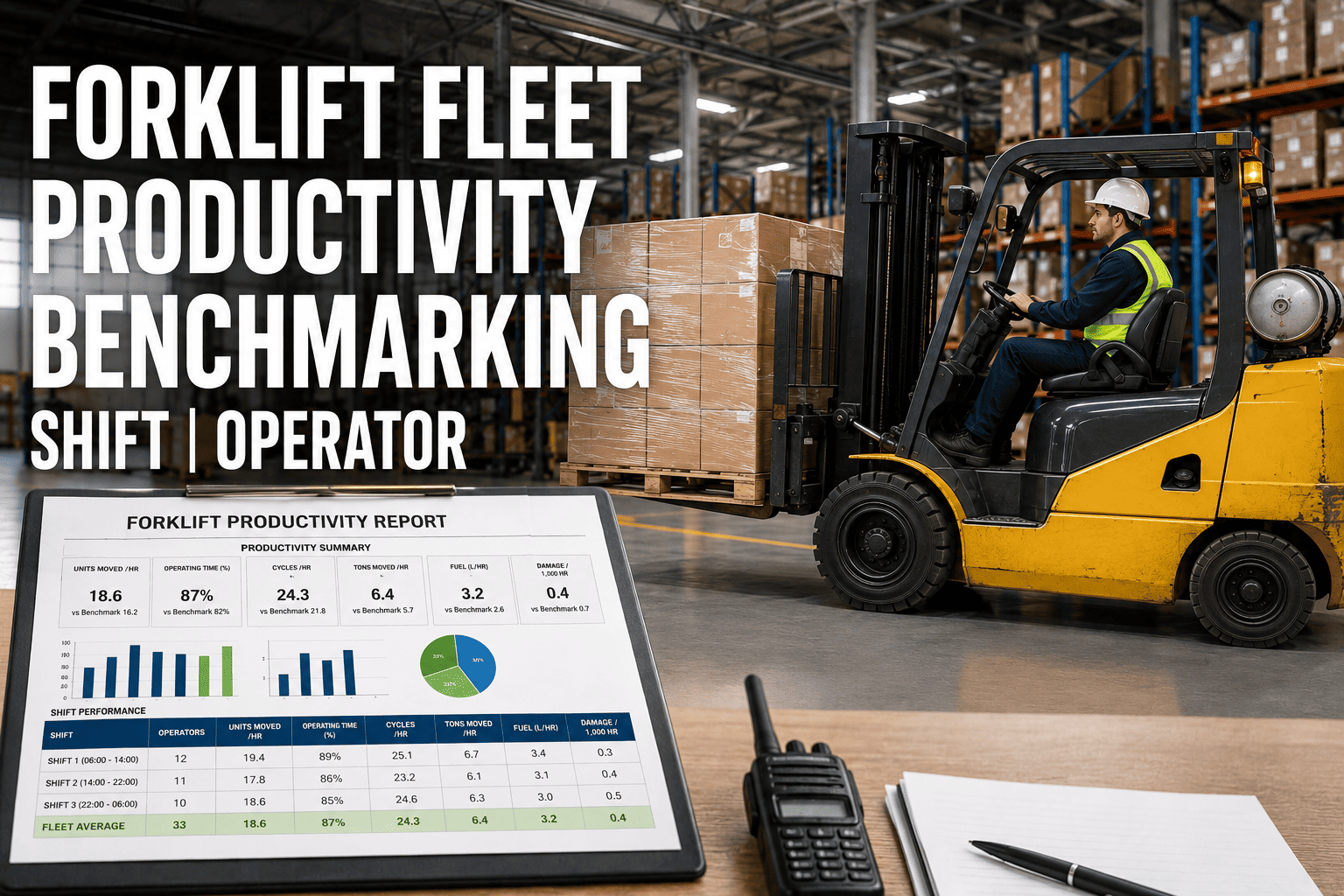
What plant managers actually want is condition-based maintenance built on real engine hours, idle time, and battery cycle data, with predictive alerts that catch a developing hydraulic or battery issue weeks before it turns into a breakdown on the floor. Plants running this kind of software report 30 to 42 percent less unplanned downtime once maintenance stops guessing and starts responding to actual usage.
Why This Matters More In Manufacturing Than Warehousing
A stalled forklift in a distribution center delays an order. A stalled forklift feeding a manufacturing line can stop the entire line. That's why plant managers in manufacturing environments weigh run-hour based maintenance more heavily than almost any other feature, and why it's usually the first thing tested in a trial.
FleetRabbit tracks actual engine hours, idle time, and battery cycles across your fleet and flags developing issues before they reach the floor. Sign up to connect your fleet, or book a demo to see it against your own maintenance data.
The Compliance Checklist That Keeps Auditors Satisfied
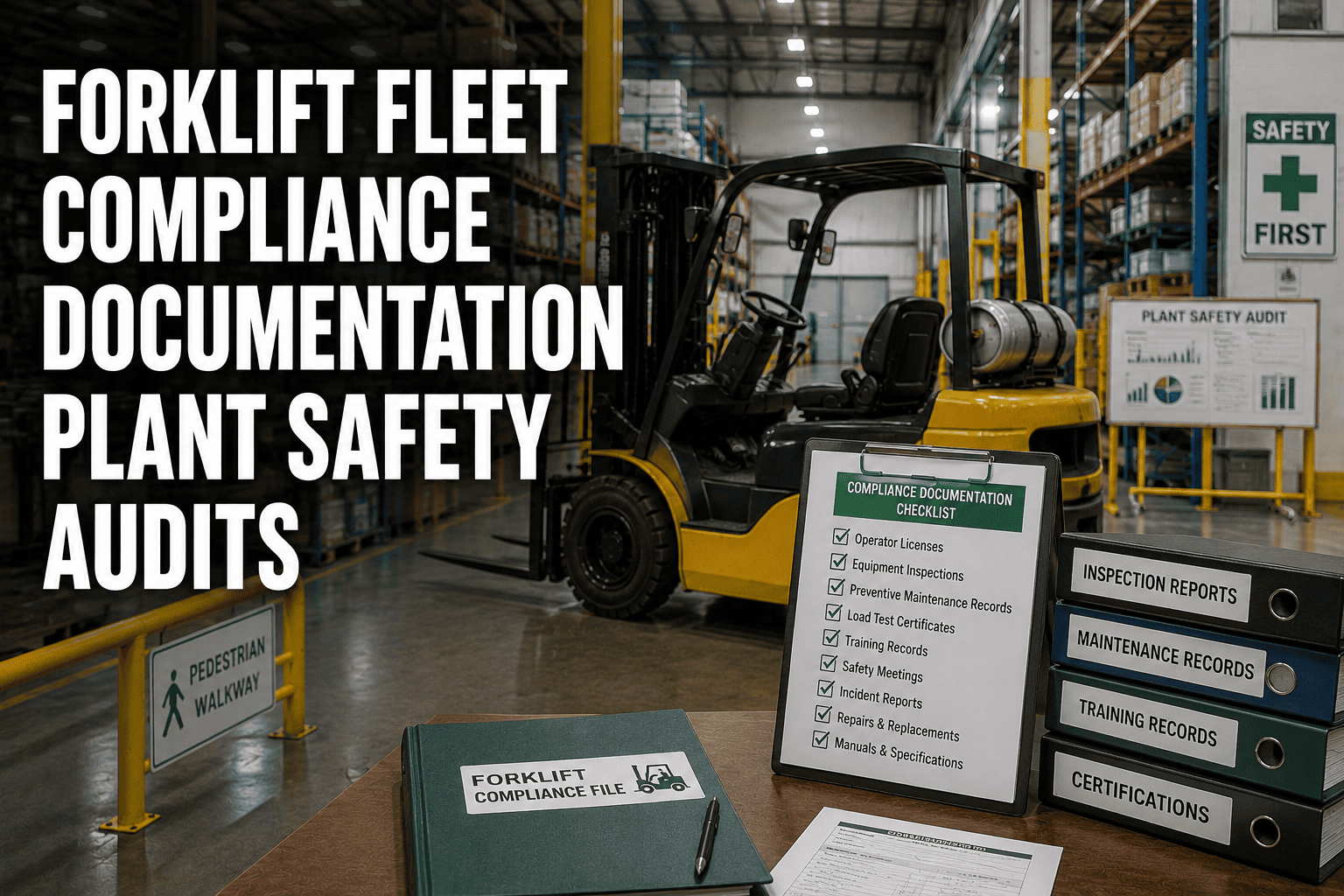
OSHA requires a documented pre-shift inspection on every powered industrial truck, every shift, before it's driven. Roughly 85 forklift-related deaths and close to 35,000 serious injuries happen every year, and powered industrial trucks consistently sit among the most-cited OSHA standards. Paper logs get lost, smudged, or filled out after the fact, which is exactly the gap an auditor is trained to find.
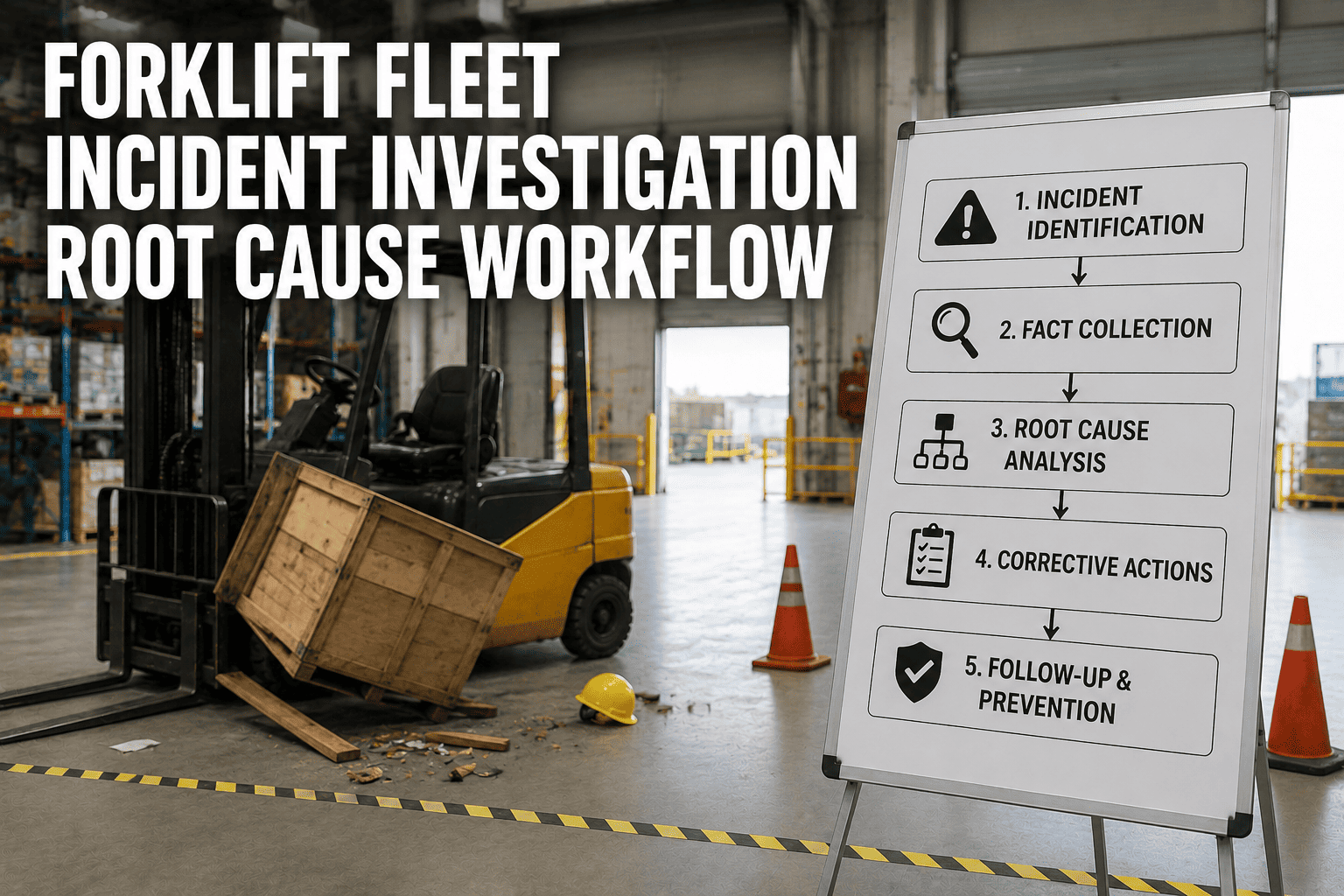
Plant managers now expect inspections to happen on a mobile device, with a photo attached to any flagged defect and an automatic work order generated the moment something fails. The equipment should also be locked out of service instantly, not manually, so a truck with a frayed seatbelt or a hydraulic leak can't get driven on the next shift by accident.
| Compliance Requirement | Paper-Based Process | Software-Based Process |
|---|---|---|
| Pre-Shift Inspection | Handwritten, easy to skip or backdate | Mobile checklist, timestamped, cannot be skipped |
| Defect Reporting | Verbal handoff, often forgotten | Photo-attached, auto-generates work order |
| Operator Certification | Tracked in spreadsheets, expiry missed | Digital records with expiry alerts and lockouts |
| Audit Readiness | Searching filing cabinets under time pressure | Two years of records pulled in seconds |
Operator Certification Enforcement
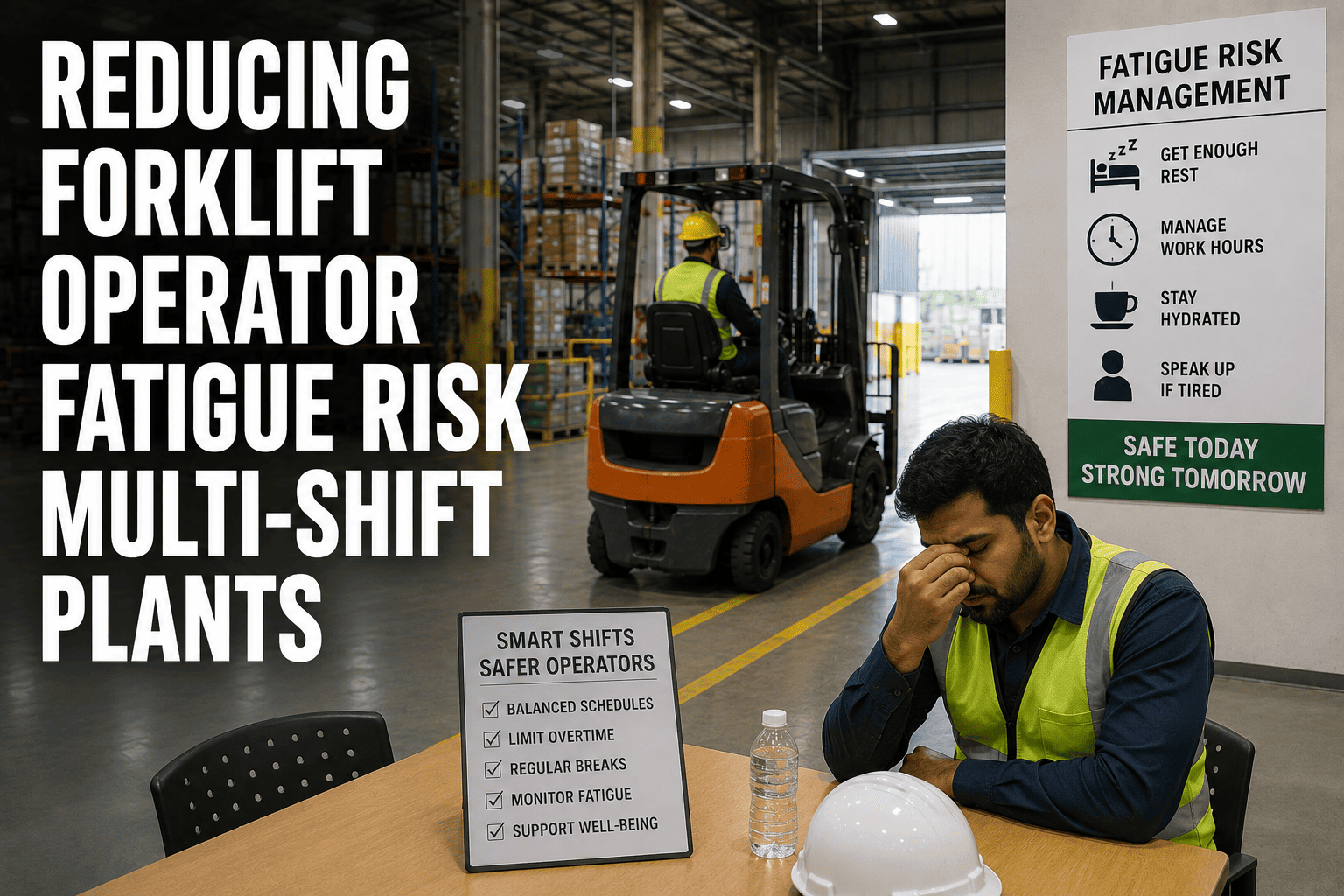
A forklift can be perfectly maintained and still create liability if an uncertified operator drives it. Plant managers increasingly want software that ties every inspection, defect, and utilization record back to the operator, not just the vehicle, and locks a truck out automatically if the assigned operator's certification has lapsed.
ERP and WMS Integration: Where Most Platforms Fall Short
A forklift platform that lives entirely on its own is a platform that eventually gets ignored. Maintenance costs, parts usage, and utilization data need to flow into the systems the plant already runs on, whether that's SAP, Oracle, or a warehouse management system. Without that bidirectional sync, someone ends up manually re-entering data between two systems, and the software becomes one more thing to maintain rather than something that saves time.
This is also where brand-agnostic platforms pull ahead of manufacturer-specific telematics. A plant running Toyota, Crown, and Hyster trucks side by side doesn't want three separate logins and three sets of reports that never reconcile. A single platform covering the mixed fleet, connected to one ERP, is what plant managers consistently describe as the tipping point in a final decision.
What The Numbers Look Like In Practice
One global automotive parts manufacturer running an 85-asset forklift fleet moved from paper DVIRs and reactive repairs to a connected platform and saw a 42 percent reduction in unplanned downtime within six months, along with an estimated 720,000 dollars in savings from eliminated emergency repairs and reduced rental equipment. When their ISO auditor visited, two years of photo-verified maintenance history came up in seconds instead of a search through filing cabinets.
That kind of result isn't unusual once a plant stops treating forklift management as a spreadsheet problem and starts treating it as an operational system. The pattern shows up across manufacturing sites of very different sizes: less downtime, fewer compliance gaps, and a maintenance team that reacts to real data instead of a hunch.
FleetRabbit digitizes OSHA pre-shift inspections, enforces operator certification, and syncs everything to your ERP automatically. Start your free trial today, or book a 30-minute demo to see your compliance data in one place.
Run-hour maintenance, digital OSHA inspections, operator certification, and native ERP integration, all in one platform built for manufacturing forklift fleets. See what it looks like on your own floor.