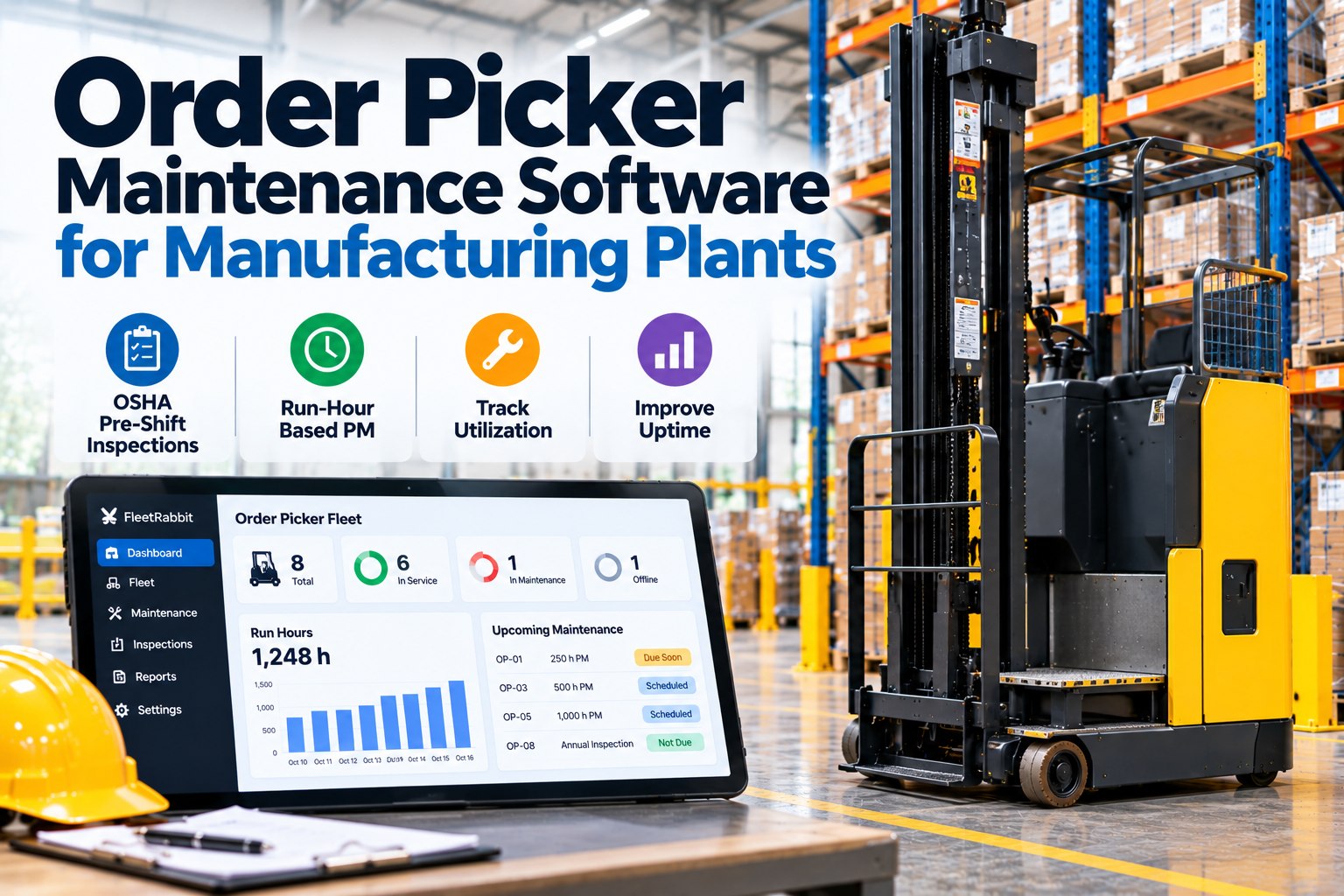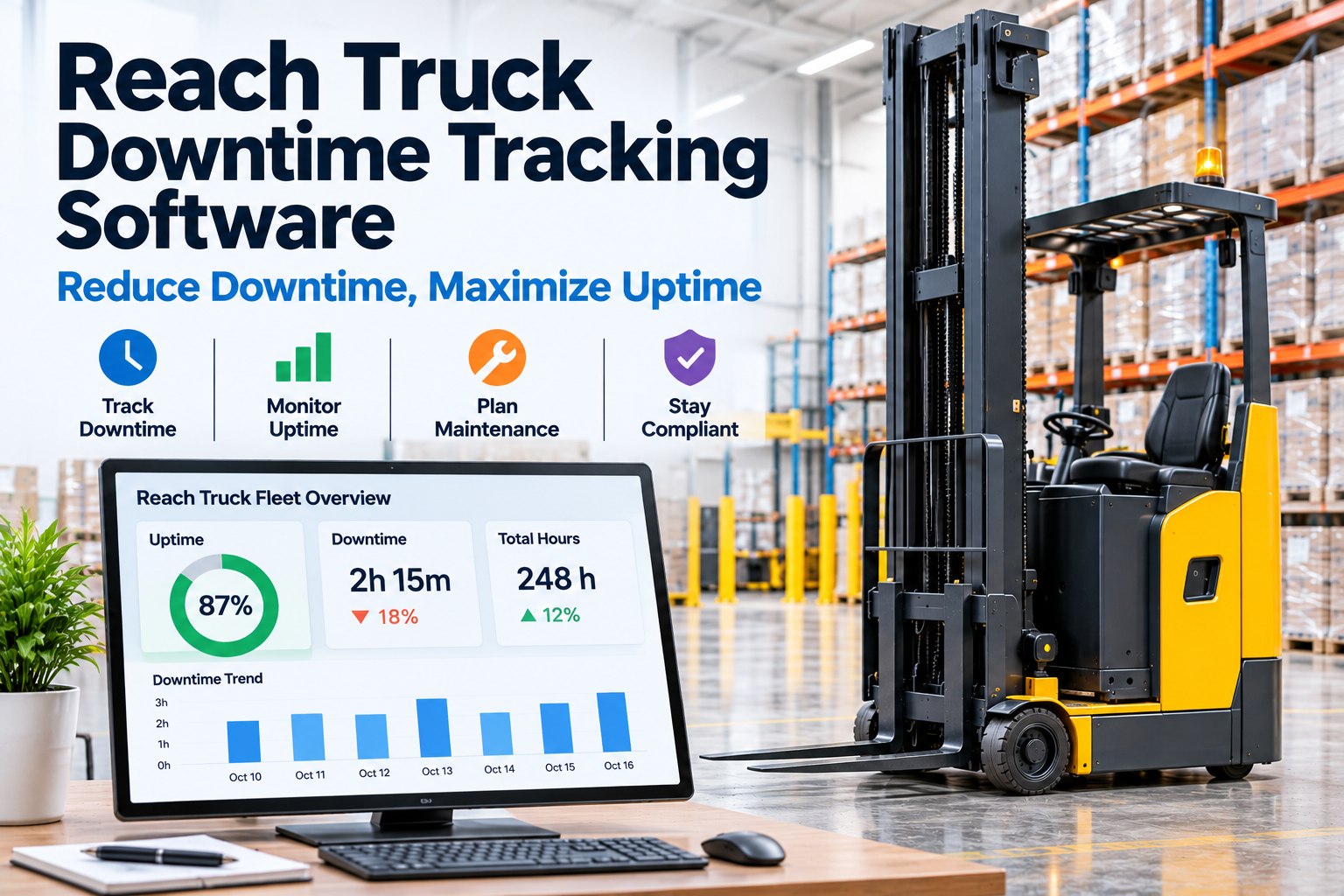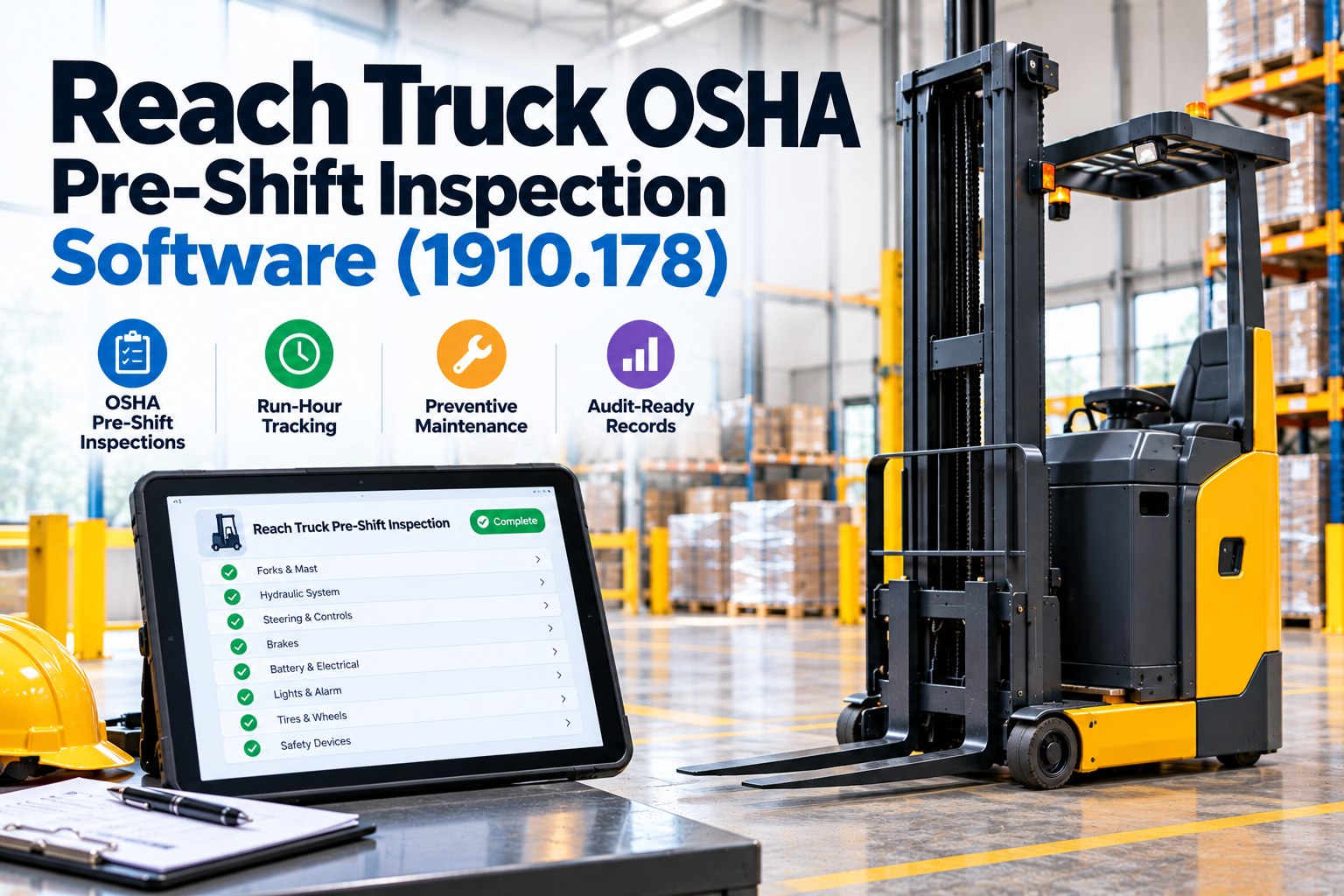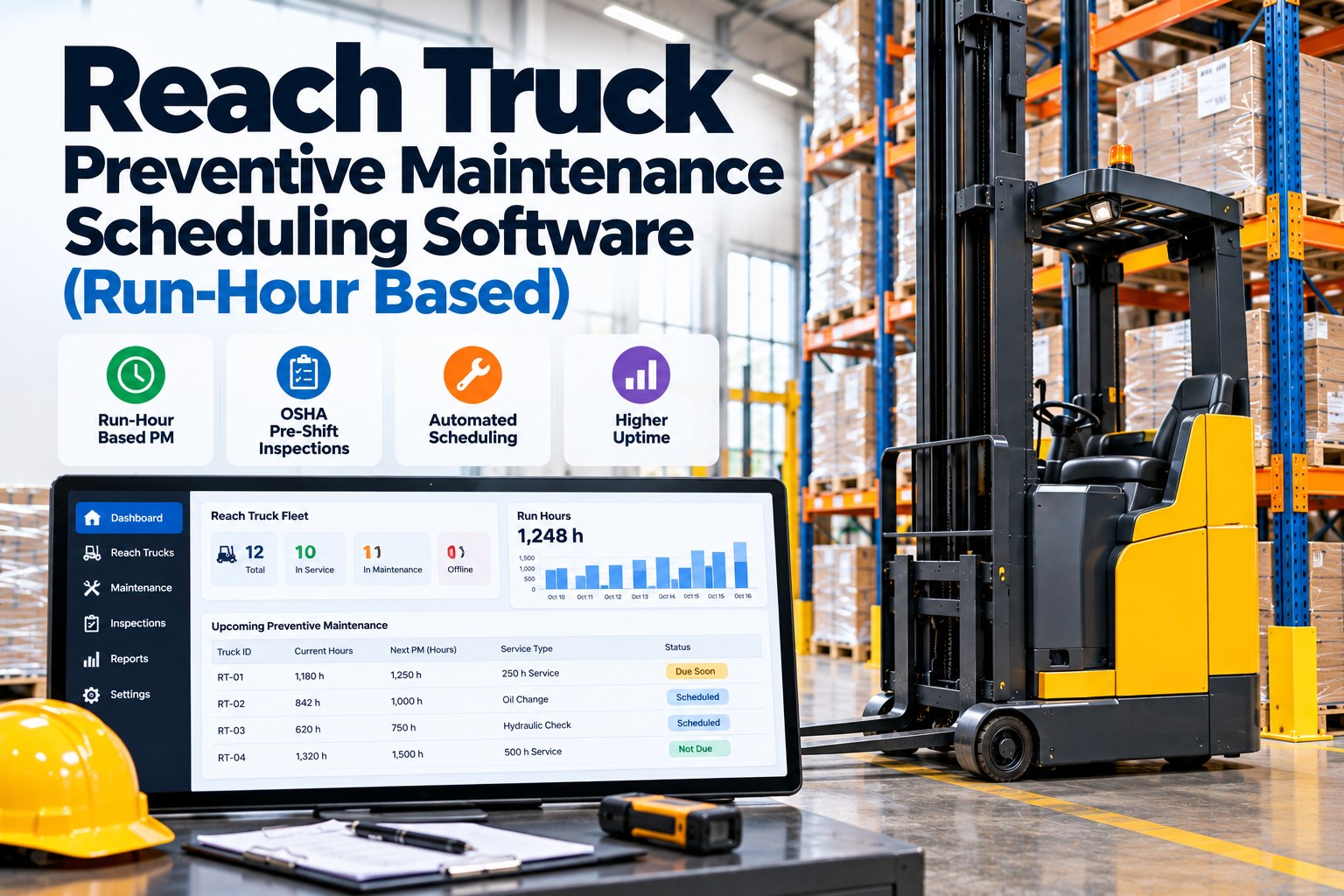
Two forklifts sit on the same maintenance calendar. Truck A ran 800 hours last month on the night shift. Truck B ran 200 hours covering a slow line two aisles over. Both get serviced on the same date because that is what the calendar says. Truck A should have been in the shop three weeks ago. Truck B still had six weeks of service life left when it got pulled off the floor for no reason. This is the quiet failure hiding inside almost every manufacturing maintenance program, and it is costing plants far more than anyone tracks on a spreadsheet.
Calendar-based maintenance fails forklifts because wear comes from run-hours and duty intensity, not the passage of time. A truck running three shifts wears out far faster than one used occasionally, yet a calendar schedule treats them identically, leading to breakdowns on the heavy-use truck and wasted service on the light-use one. Sign up for a free trial or book a demo to see how FleetRabbit switches your fleet to run-hour and condition-based scheduling.
The Math Calendars Ignore
A forklift running eight hours a day across three shifts racks up service hours roughly six times faster than one used an hour a day in a quiet corner of the warehouse. Manufacturers like Toyota, Hyster, Yale, and Crown build their service recommendations around hour-meter readings for exactly this reason, the same way an aircraft is maintained by flight hours rather than the calendar on the wall.
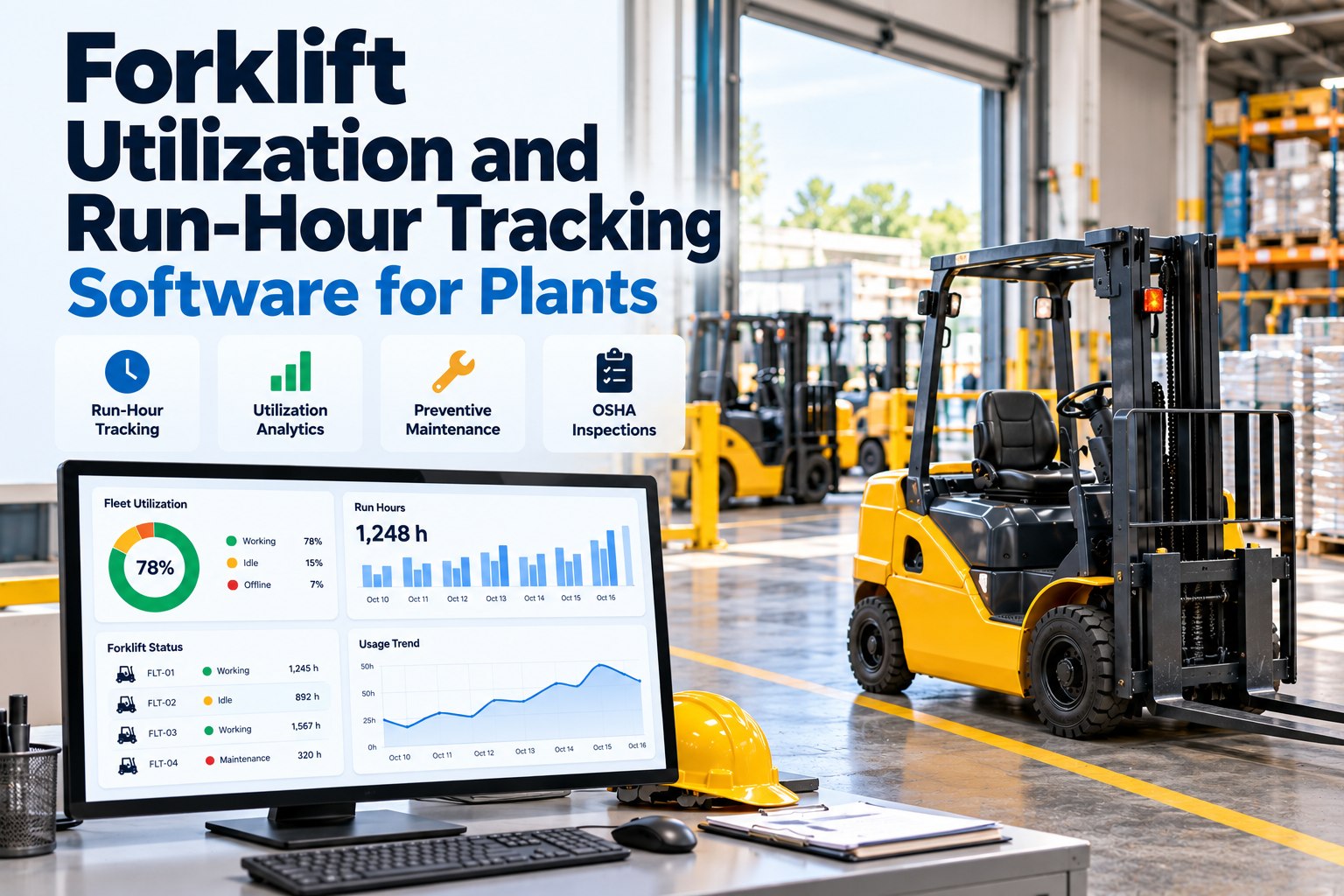
FleetRabbit reads hour-meter data automatically and triggers service the moment a truck actually needs it, not when a date on a calendar says so. Start your free trial and connect your fleet in minutes, or book a demo to see it against your own hour-meter data.
Three Ways Forklifts Actually Wear
The best maintenance programs do not throw the calendar out entirely, they just stop treating it as the only trigger. Real preventive maintenance combines three distinct signals, and each one catches a different kind of failure.
Hours-Based Triggers
Wear on a hydraulic pump, tilt cylinder, or starter motor is a function of use, not time. Standard service intervals commonly fall at 250, 500, and 1,000 hours, and these are the checks that catch the friction, heat, and vibration damage that builds up during actual operation.
Calendar-Based Triggers
Some components degrade whether a truck moves or not. Hydraulic fluid and coolant break down over 12 to 24 months from age alone, and brake fluid absorbs moisture over time. Calendar triggers still matter for these items and for rarely used backup units.
Condition-Based Triggers
Heat, dust, corrosive environments, and severe duty accelerate wear beyond what either hours or the calendar predict alone. Condition-based checks shorten service windows automatically when the operating environment is harder on the equipment than normal.
| Trigger Type | Best For | What It Misses Alone |
|---|---|---|
| Calendar Only | Fluid aging, backup units, rarely used trucks | Heavy-use trucks wear out between service dates and fail unexpectedly |
| Run-Hours Only | Drivetrain, hydraulics, brakes, mechanical wear items | Time-based fluid degradation on low-use trucks goes unchecked |
| Condition-Based Only | Harsh environments, dust, heat, corrosive duty cycles | Requires sensor data and can miss routine wear on standard-duty trucks |
| Blended Scheduling | Every truck, every duty cycle, whichever trigger fires first | Requires software that reads hour meters and conditions automatically |
What This Actually Costs A Plant
Over-maintaining equipment in good condition wastes technician hours, burns through parts prematurely, and pulls trucks out of service for no operational reason, with over-PM waste running 15 to 25 percent of many maintenance budgets. Under-maintaining the trucks working the hardest does the opposite kind of damage. Small issues like a stretching chain or a loosening electrical connection keep running until they become a breakdown, usually during the busiest shift of the week.
Why Hour-Meter Discipline Matters More Than Software Alone
The cornerstone of a working schedule is accurate hour-meter tracking, with every service logged against the actual reading rather than a date on the wall. Manual logs fail the moment someone forgets to write down a number. Automated tracking removes that single point of failure and keeps the data honest even across multiple shifts and buildings.
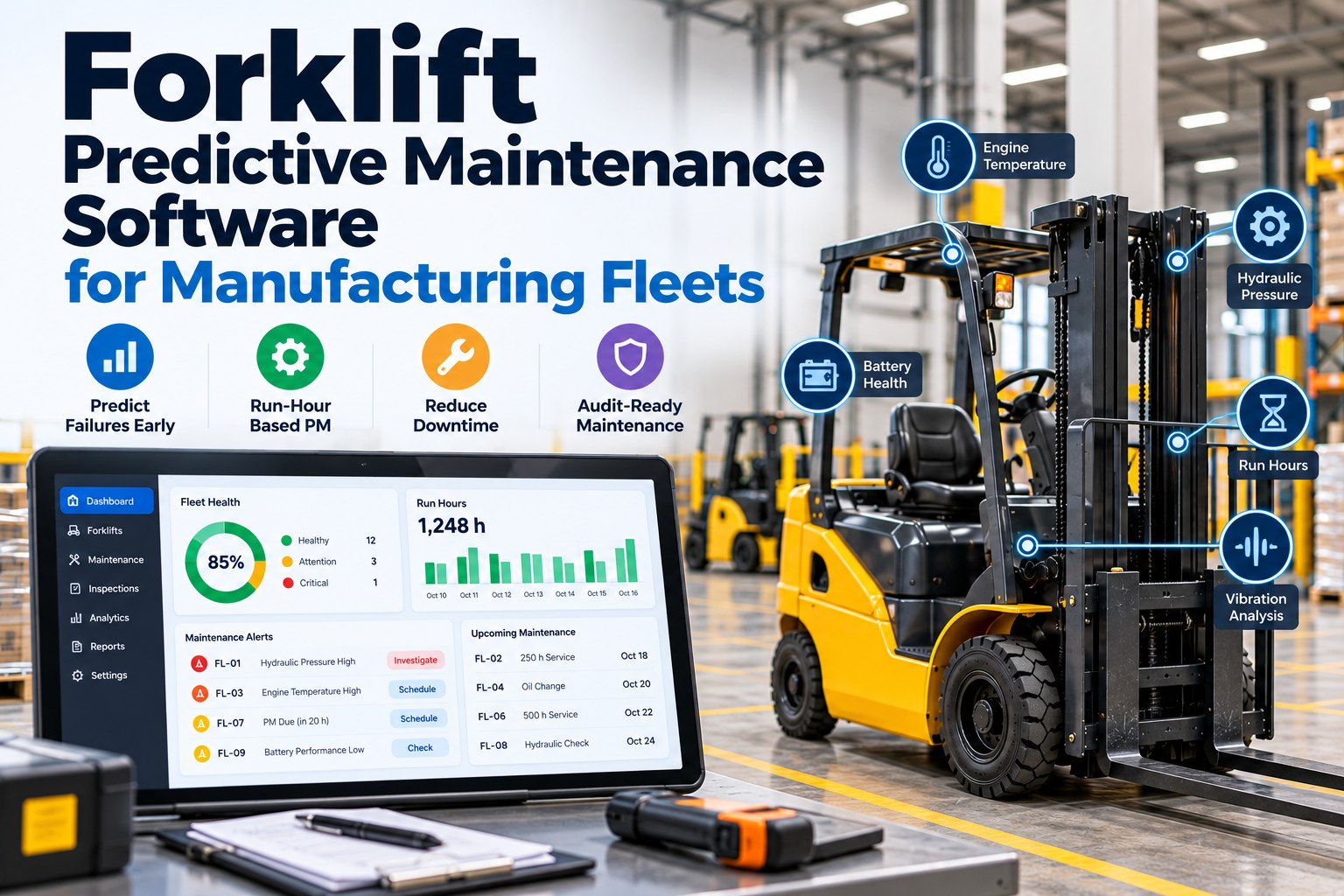
FleetRabbit combines run-hours, calendar aging, and condition data into one blended schedule, so service fires whichever trigger hits first. Sign up free to load your fleet, or book a demo and we will walk through your current PM gaps together.
Frequently Asked Questions
Every month a plant runs on fixed service dates, the hardest-working forklifts edge closer to an unplanned breakdown while the idle ones get serviced for nothing. FleetRabbit blends run-hours, calendar aging, and condition data into one automatic schedule built around how forklifts actually wear.