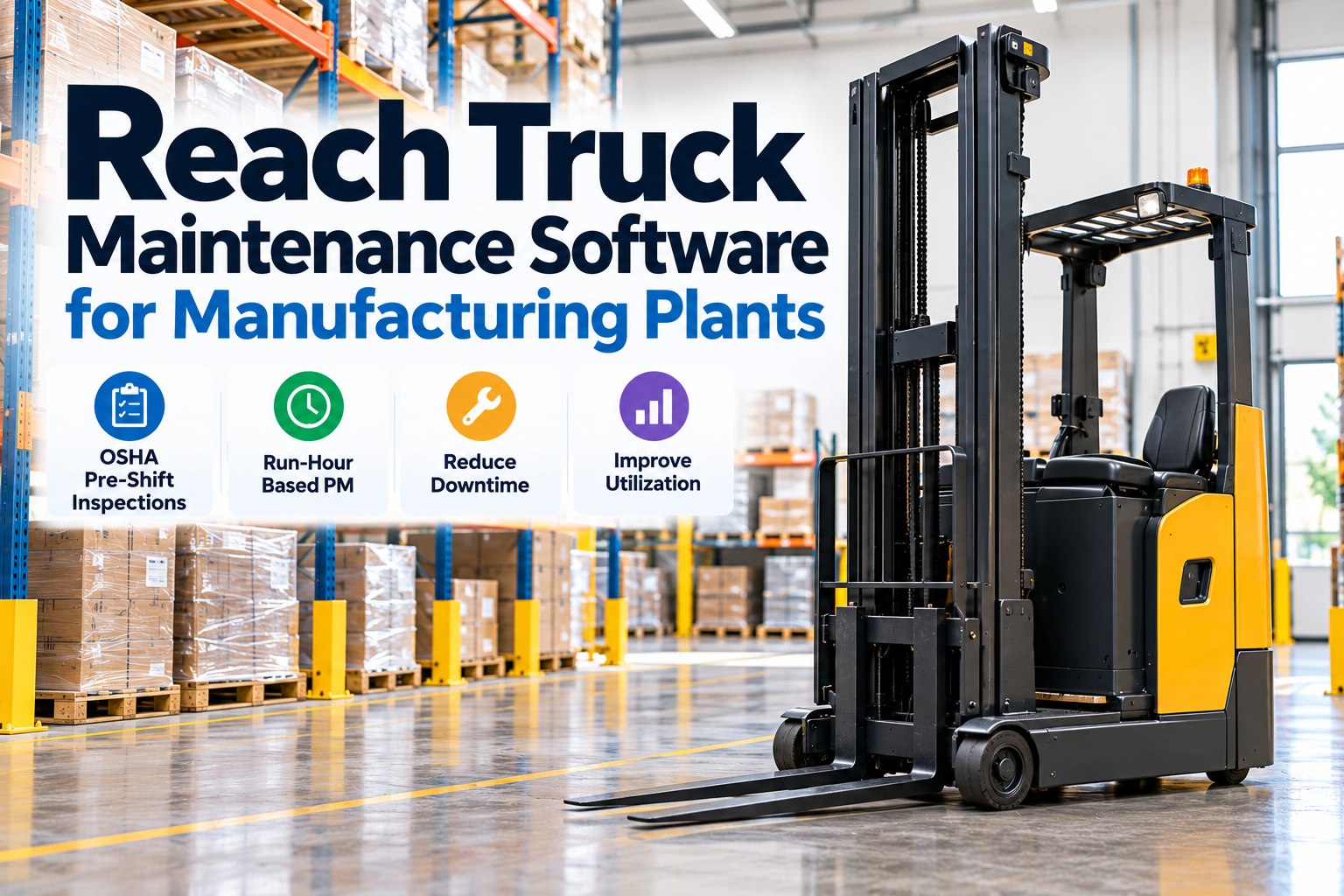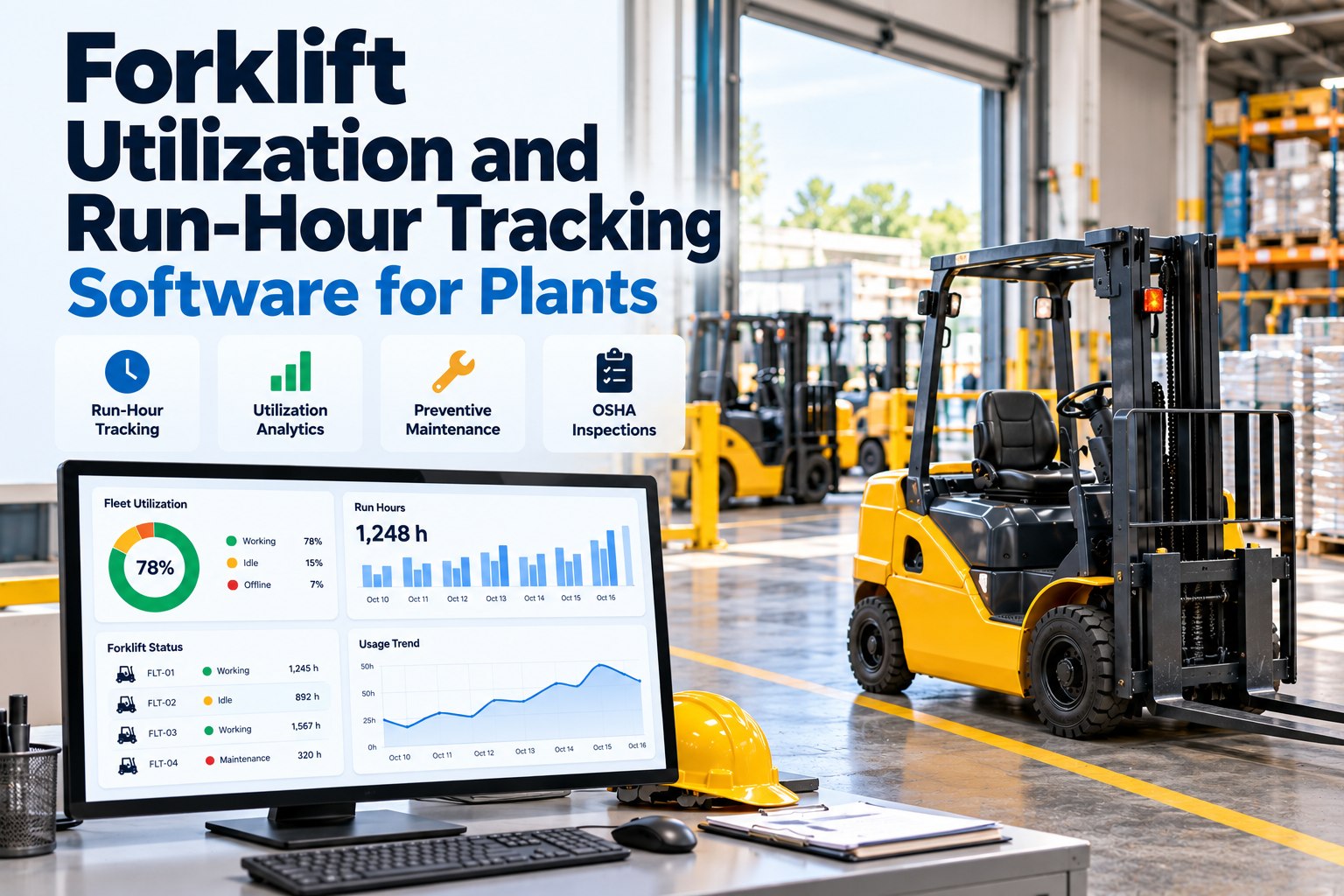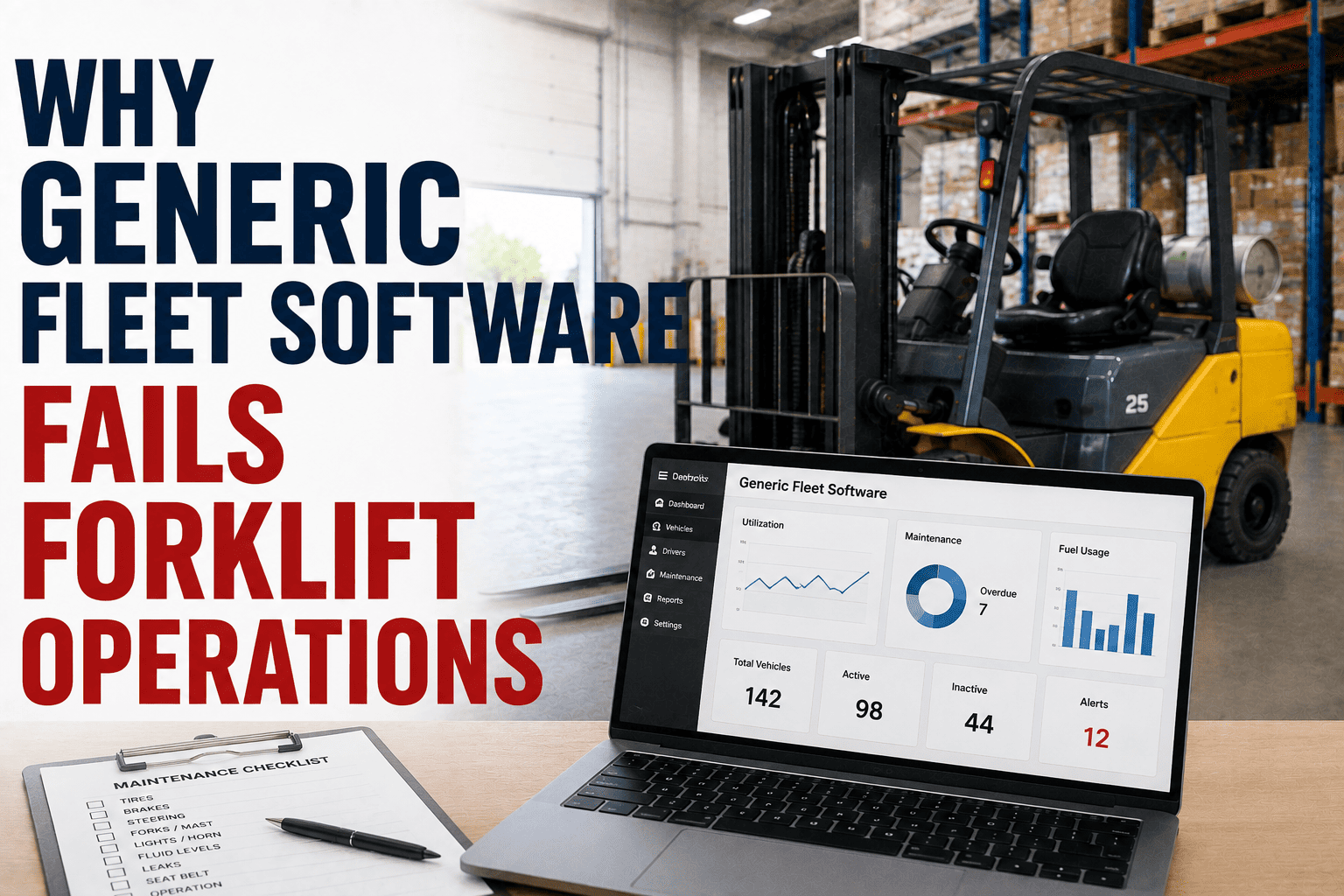
Most fleet software on the market was built to solve a road problem: where is my truck, how far has it driven, and when does it need an oil change based on mileage. That works fine for a delivery van. It falls apart the moment you point it at a forklift. A reach truck does not drive a route, it does not accumulate miles, and it gets handed off between three or four certified operators in a single shift. Plants that sign up for a generic GPS fleet platform usually discover the gap within the first month, right around the time an OSHA inspection or a mystery breakdown exposes what the software was never built to track.
Generic fleet software fails manufacturing forklift operations because it schedules maintenance by mileage instead of run-hours, has no built-in OSHA pre-shift inspection workflow, and tracks the vehicle instead of the operator. Purpose-built industrial truck software solves all three from day one. Sign up for a free trial or book a demo to see FleetRabbit built specifically for forklift fleets.
Built For The Road, Not The Warehouse Floor
Generic GPS fleet platforms were designed around road vehicles that travel point to point on public streets. Forklifts operate inside a single facility, often never leaving the building, which breaks the core assumptions the software was built on.
FleetRabbit was designed around run-hours, OSHA checklists, and per-operator accountability from the ground up, not retrofitted from a trucking platform. Start your free trial and load your fleet in minutes, or book a demo to see the difference on your own trucks.
Generic Fleet Software Versus Purpose-Built Forklift Software
The feature list on a sales page can look almost identical between the two categories. The difference shows up in how each platform behaves once it is running against a real forklift fleet.
| Capability | Generic Fleet Software | Purpose-Built Forklift Software |
|---|---|---|
| Maintenance Trigger | Mileage or fixed calendar date | Run-hours, load cycles, and condition data |
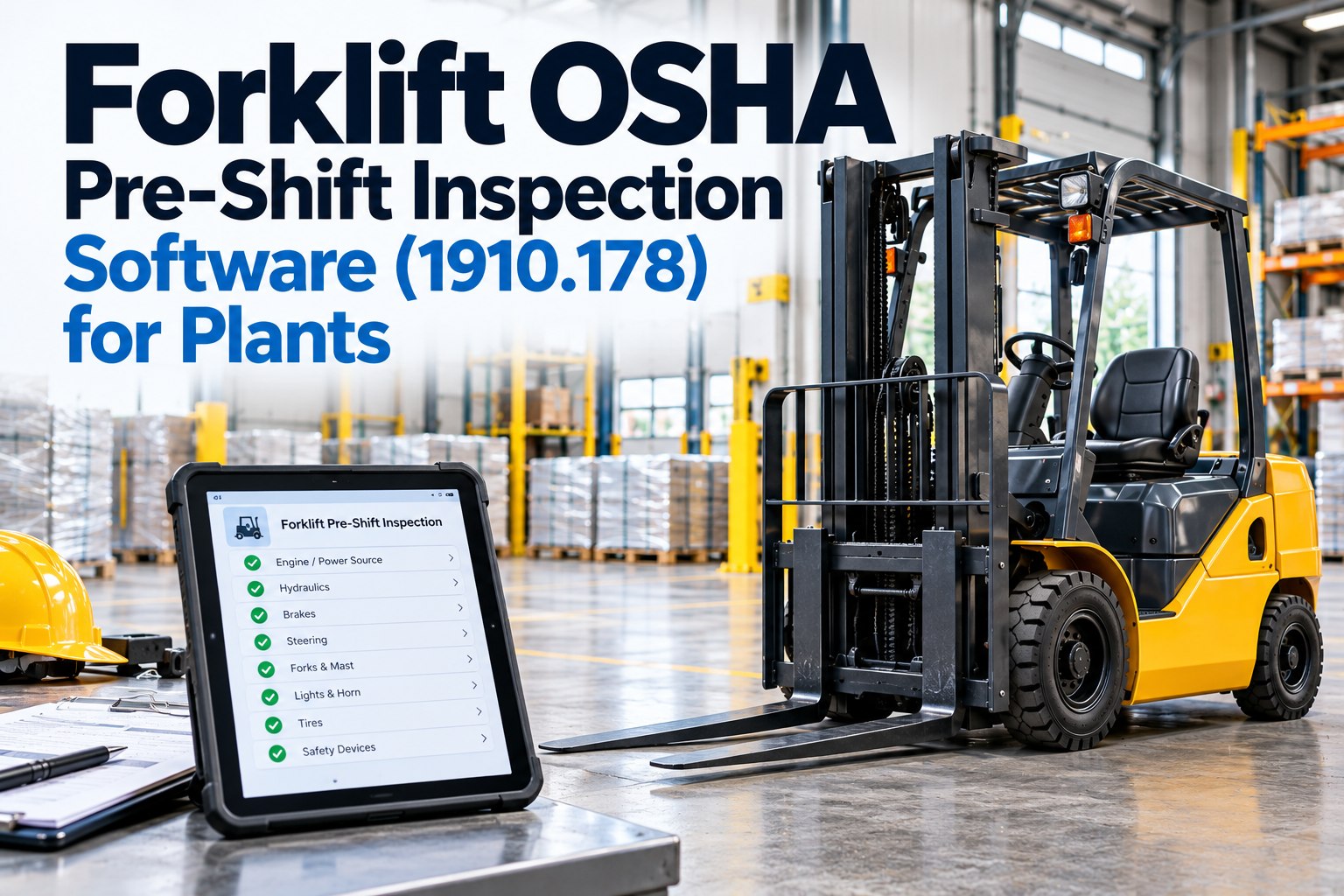
| Inspection Enforcement | No built-in OSHA checklist or lockout logic | Mandatory pre-shift inspection tied to ignition lockout |
| Operator Attribution | Tracks the vehicle as a single asset | Ties utilization, damage, and inspections to each certified operator |
| Impact Detection | Basic harsh-braking alerts built for road driving | Impact force monitoring calibrated for warehouse collisions |
| Mixed Brand Support | Generic across vehicle types but shallow on any one | Deep support across Toyota, Hyster, Crown, Linde, and more |
Five Gaps That Show Up After You Sign The Contract
Maintenance Alerts That Never Fire Correctly
Because the platform was tuned for mileage, a forklift running three shifts a day slips past its real service point while the software still shows it as current, since the odometer barely moved.
An OSHA Audit With No Real Trail
When an inspector asks for pre-shift inspection records, a generic platform typically has nothing built in, forcing the plant back onto a paper binder that the software was supposed to replace.
Damage Disputes With No Operator Record
A dented mast gets discovered days later with no way to tie it to the operator who caused it, since the platform never separated vehicle data from the person driving it that shift.
Reporting That Does Not Map To Your Floor
Dashboards built for route optimization and delivery windows do not translate to aisle congestion, dock dwell time, or pick-cycle intensity, the metrics that actually matter on a plant floor.
A Second Vendor Search Within A Year
Plants that discover these gaps after go-live usually end up running a second software search within twelve months, this time evaluating platforms built specifically for industrial trucks from the start.
Why Telematics Alone Is Not The Same As Fleet Management
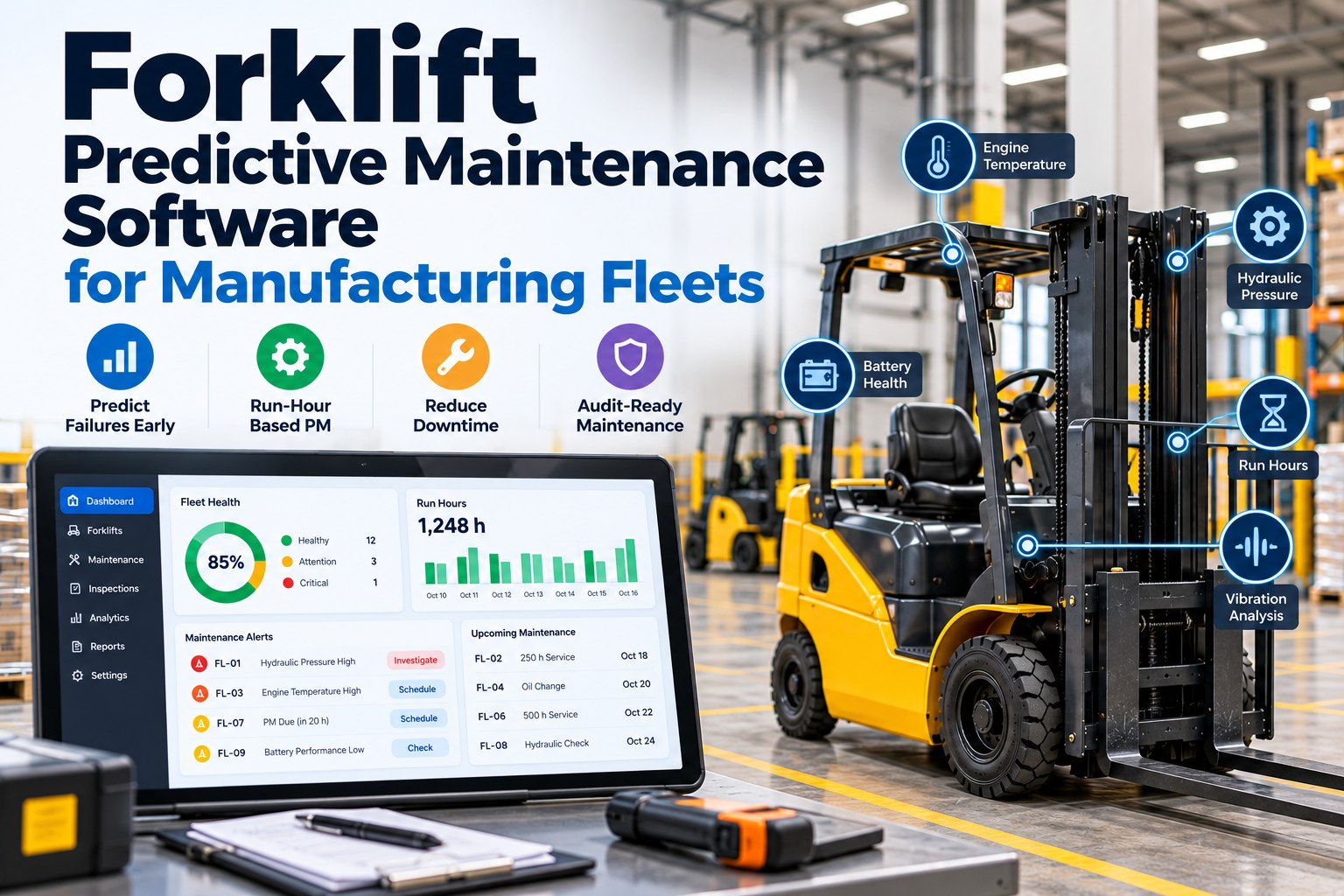
GPS tracking tells you where a truck is. A full telematics layer goes further, monitoring speed, lift height, impact force, and engine hours. But raw data is not the same as a decision. The value only shows up when that data is organized into work orders, OSHA records, and operator accountability, which is exactly where generic platforms stop and purpose-built forklift software starts.
FleetRabbit turns run-hour data, impact events, and inspection findings into maintenance action automatically, so nothing gets lost between the sensor and the shop floor. Sign up free to see it on your own fleet, or book a demo and bring your current platform's gaps to the call.
Frequently Asked Questions
A platform built for trucks on the road will always be a step behind on a warehouse floor. FleetRabbit was built specifically for forklift fleets, with run-hour maintenance, enforced OSHA inspections, and per-operator accountability from day one.