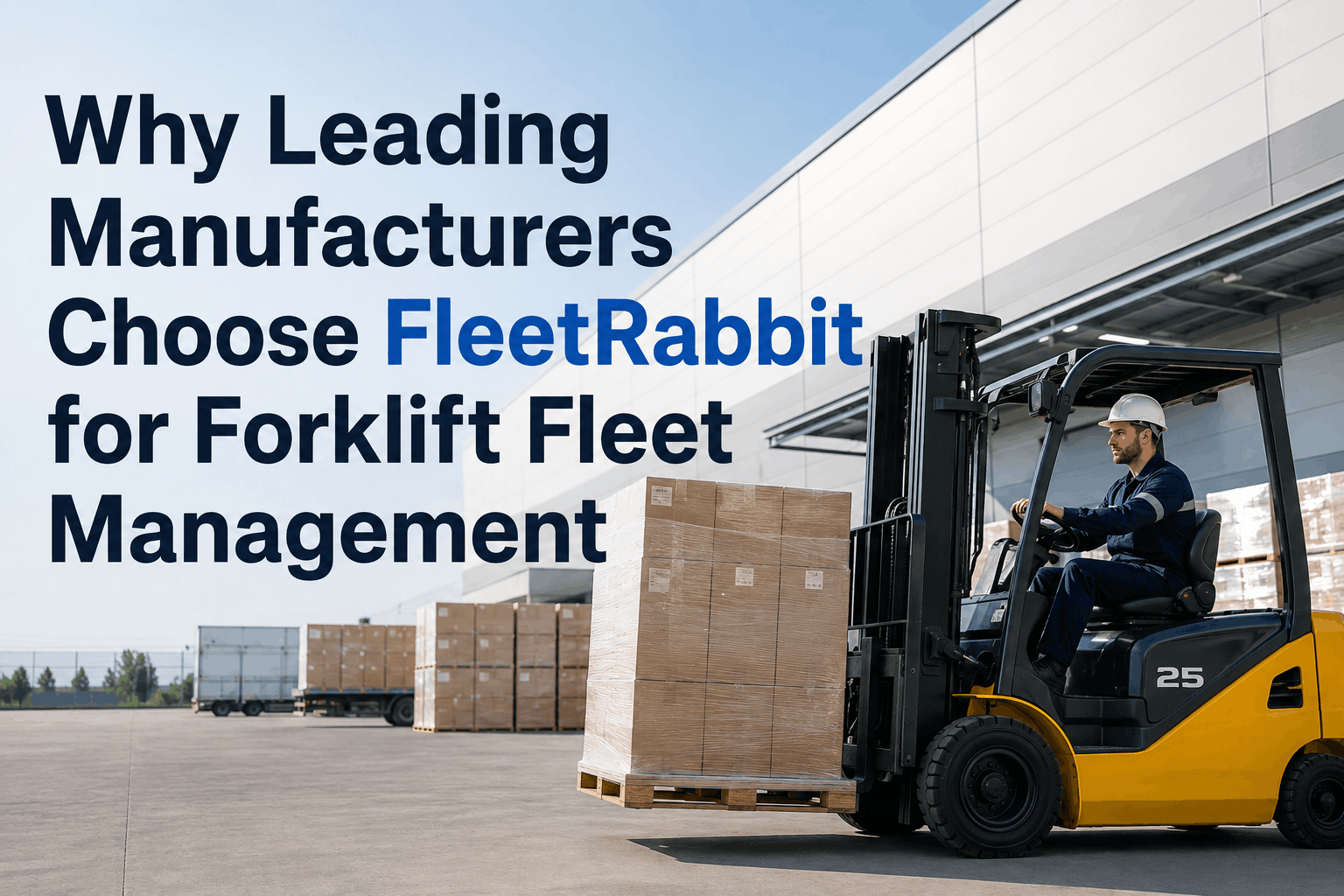
Why Leading Manufacturers Choose FleetRabbit for Forklift Fleet Management
Every plant manager evaluating a forklift fleet management platform eventually arrives at the same question: why do manufacturers who have tried two or three systems before consistently choose FleetRabbit and stay? The answer is not a single feature. It is the combination of uptime-focused maintenance intelligence, audit-ready compliance infrastructure, predictive fault detection before breakdowns reach the production floor, and total cost visibility that most platforms promise in sales demonstrations but fail to deliver once the real fleet complexity of a multi-shift manufacturing environment is introduced. Forklifts are not peripheral assets in a manufacturing operation — they are the circulatory system of the plant. When a counterbalance truck goes down unplanned during a peak shift, the ripple effect reaches inbound receiving, outbound despatch, line replenishment, and warehouse put-away simultaneously. The manufacturers who choose FleetRabbit choose it because it is built around that operational reality — not around a generic fleet management template that happens to support forklifts as one of many asset types. Book a FleetRabbit forklift fleet management demo.
FleetRabbit Fleet Intelligence
Why Leading Manufacturers Choose FleetRabbit for Forklift Fleet Management
Real reasons plants switch to FleetRabbit for uptime, ISO compliance, predictive maintenance, and cost savings. How manufacturing operations across warehousing, logistics, and production use FleetRabbit to eliminate unplanned forklift downtime, satisfy ISO 9001 audit requirements, reduce maintenance cost per operating hour, and achieve the complete fleet visibility that older platforms could not deliver.
34%Average Reduction in Unplanned Forklift Downtime After FleetRabbit Deployment
ISO 9001Audit-Ready Records Generated Automatically for Every Asset
6 BrandsAverage Forklift OEM Mix in a Mid-Size Manufacturing Fleet
<8 minAverage Time to Pull Complete Asset History for Auditor Review
The Real Cost of Getting Forklift Fleet Management Wrong
The financial case for upgrading forklift fleet management is rarely built from the maintenance budget alone. Direct maintenance costs — parts, labour, breakdown call-out fees — are visible in the accounts and are the numbers most fleet managers cite when justifying a platform investment. The costs that dwarf them are the indirect ones: production line stoppages caused by unavailable lift trucks, overtime labour costs to recover despatch schedules after a breakdown shift, expedited parts freight because no advance warning system flagged the impending failure, and insurance premium increases following incidents that a pre-shift inspection system would have detected and quarantined. Manufacturers who have calculated the full cost of unplanned forklift downtime — including the production impact, not just the workshop bill — consistently find that the indirect costs run at three to five times the direct maintenance cost. FleetRabbit's value is measured against that full number, not just the parts and labour line.
Unplanned Downtime Cost
Why Reactive Maintenance Costs More Than It Appears
A forklift breakdown during a peak production shift costs far more than the repair invoice suggests. Production line stoppages waiting for replenishment, despatch delays that trigger penalty clauses, redeployment of operators to cover missing equipment, and emergency technician call-out rates at weekend or after-hours rates combine to create a total incident cost that routinely exceeds the annual maintenance budget for the affected asset. Predictive maintenance that detects fault signatures before failure — through telematics fault code monitoring, hour-based interval alerts, and inspection trend analysis — converts unplanned breakdown events into scheduled maintenance windows that cost a fraction of the reactive equivalent and preserve production continuity.
Compliance Exposure Cost
What Poor Records Cost in Audit and Incident Outcomes
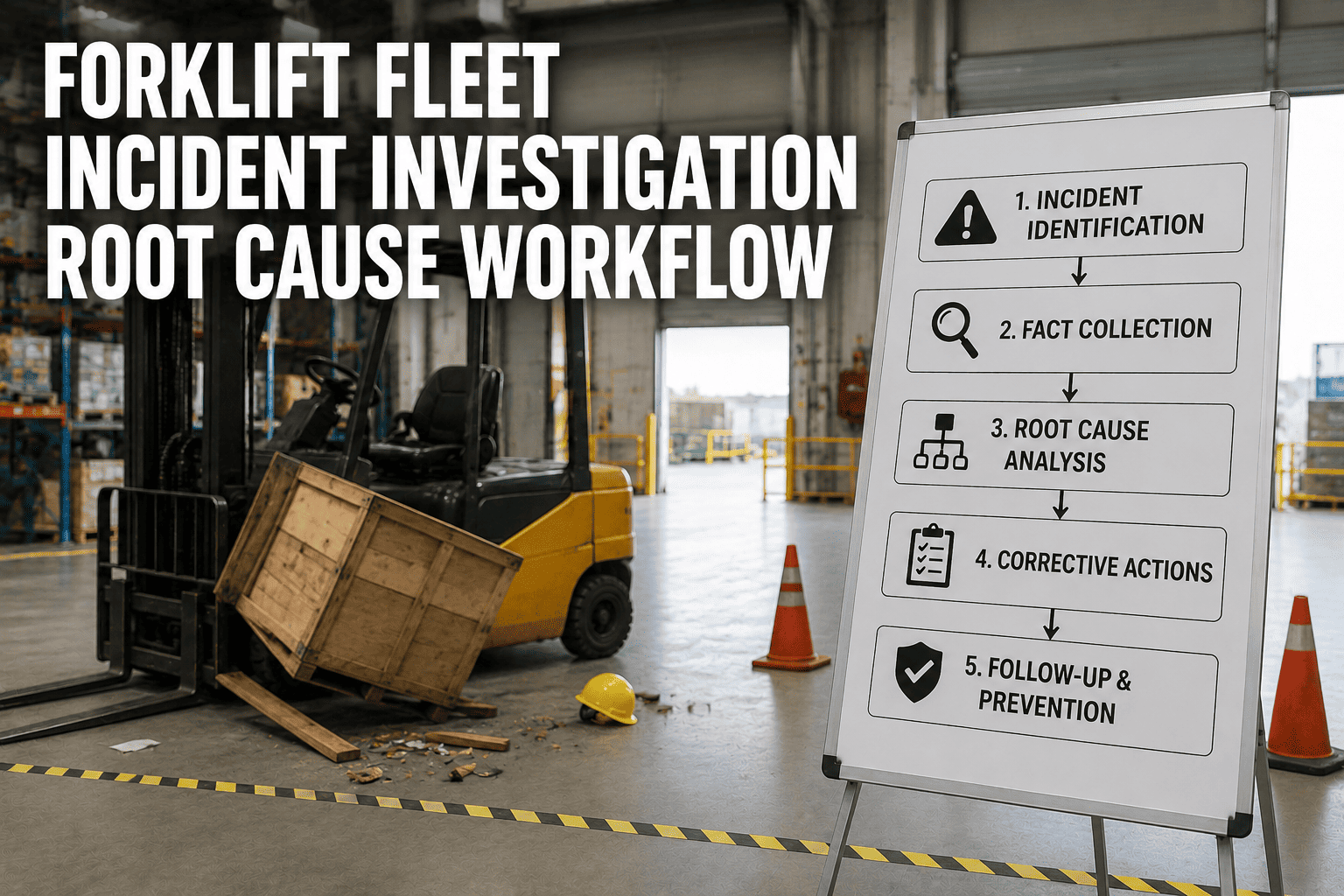
ISO 9001 nonconformances related to incomplete maintenance records trigger corrective action cycles that consume quality management time for months after the audit finding. Workplace safety incidents involving forklifts with incomplete pre-shift inspection records create regulatory exposure that extends well beyond the direct incident cost — investigation requirements, potential prosecution, insurance implications, and reputational consequences with principal contractors who audit supplier safety management systems as a condition of continued supply arrangements. Digital inspection records, corrective action trails, and calibration tracking that are maintained automatically as part of normal operations eliminate both audit exposure and incident documentation gaps before they become liability events.
Visibility Gap Cost
What You Cannot See Costs Money Every Shift
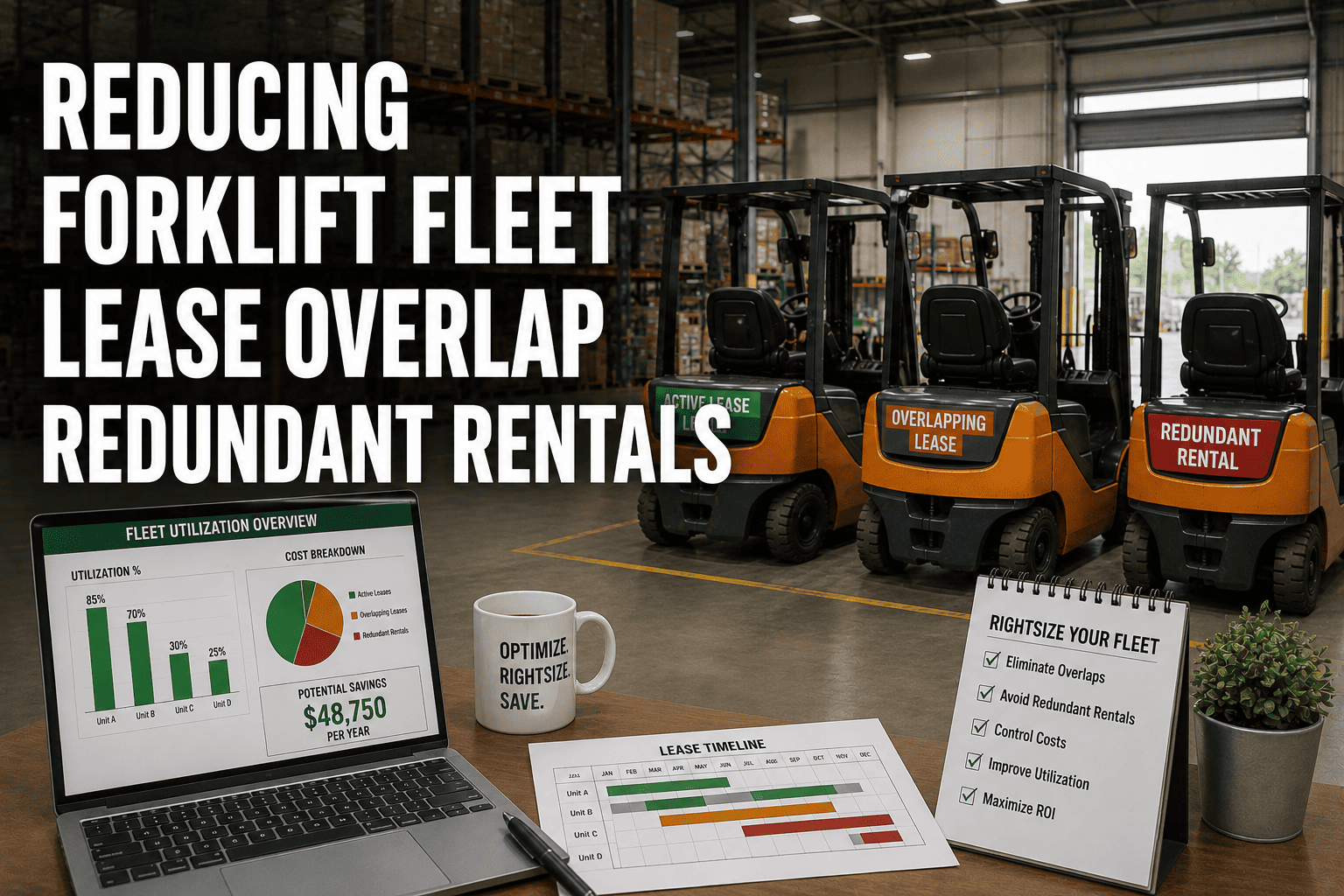
Forklift fleets operating without real-time utilisation data accumulate invisible costs that compound across every billing period: underutilised assets that are drawing maintenance and depreciation costs without contributing proportional operational value, overworked assets that are accumulating hours faster than scheduled maintenance intervals can track, and operator behaviour patterns — excessive idle time, impact events, speed exceedances — that increase maintenance frequency and insurance risk without appearing in any report. FleetRabbit's utilisation intelligence surfaces these patterns in the first 30 days of deployment, typically identifying immediate fleet right-sizing and reallocation opportunities that generate cost savings within the first quarter of operation.
Six Reasons Manufacturing Operations Choose FleetRabbit Over Competing Platforms
The decision to switch forklift fleet management platforms is not made lightly — data migration, operator retraining, and integration with existing maintenance workflows represent real transition costs that plant managers weigh carefully against the expected operational improvement. The six reasons below reflect the consistent feedback from manufacturing operations that evaluated multiple platforms before selecting FleetRabbit — and from operations that switched to FleetRabbit after a previous platform failed to deliver against these specific performance dimensions in a real manufacturing environment.
01
Predictive Maintenance That Works in a Multi-Brand Forklift Fleet
Most manufacturing plants run forklifts from three to six different OEM brands — Toyota, Linde, Crown, Hyster, Yale, Jungheinrich — acquired across different budget cycles, from different dealers, and with different telematics capabilities depending on age and model. Competing fleet management platforms either require full OEM telematics integration that excludes older assets, or rely on generic GPS tracking that misses the engine and drivetrain data needed for predictive maintenance intelligence. FleetRabbit's hybrid approach integrates OEM telematics feeds via AEMP 2.0 for newer assets while extending identical maintenance scheduling and fault monitoring to older machines through aftermarket CAN bus devices — delivering predictive maintenance capability across the full fleet regardless of brand, age, or factory telematics status. Hour-based PM alerts, fault code trend monitoring, and inspection-triggered work orders apply uniformly across every forklift in the fleet from a single platform.
02
Pre-Shift Inspection Enforcement That Closes the Safety and Compliance Gap
Pre-shift forklift inspections are legally required in most manufacturing jurisdictions and are a specific audit evidence point under ISO 9001, ISO 45001, and workplace safety legislation — yet they are the most consistently incomplete element of forklift compliance programmes when managed on paper. Operators sign blank checklists, submit forms for shifts they weren't on, or skip inspections entirely during production pressure without any systemic detection mechanism. FleetRabbit's digital pre-shift inspection system requires checklist completion on the operator's mobile device before the forklift's operational status is updated in the platform — with mandatory fields, photographic evidence capture for identified defects, and automatic work order generation when a safety-critical item is flagged. Inspection completion rates, defect identification trends, and operator compliance metrics are visible in real time to supervisors and fleet managers, converting pre-shift inspection from a paper compliance exercise into a genuine fault detection mechanism.
03
ISO 9001 Audit Readiness Built Into Daily Operations
Manufacturing operations certified to ISO 9001 face a recurring audit preparation problem: the maintenance records, corrective action trails, and calibration documentation that auditors request under Clause 7.1.3 exist across multiple systems — workshop job cards, spreadsheet PM schedules, email chains about fault repairs, and scanned paper inspection forms — and cannot be consolidated into an auditor-ready evidence package without days of manual compilation. FleetRabbit eliminates this problem by generating ISO 9001-compliant documented information automatically as part of normal fleet operations. Every maintenance activity, inspection, corrective action, and calibration event creates a structured digital record with technician identification, timestamp, asset linkage, and outcome documentation. Complete asset histories retrievable in under eight minutes, compliance summary reports exportable by date range and asset group, and corrective action registers with structured closure trails satisfy Clause 7.1.3 and Clause 10.2 audit evidence requirements without pre-audit document scrambles.
04
Operator Behaviour Intelligence That Reduces Impact Damage and Insurance Cost
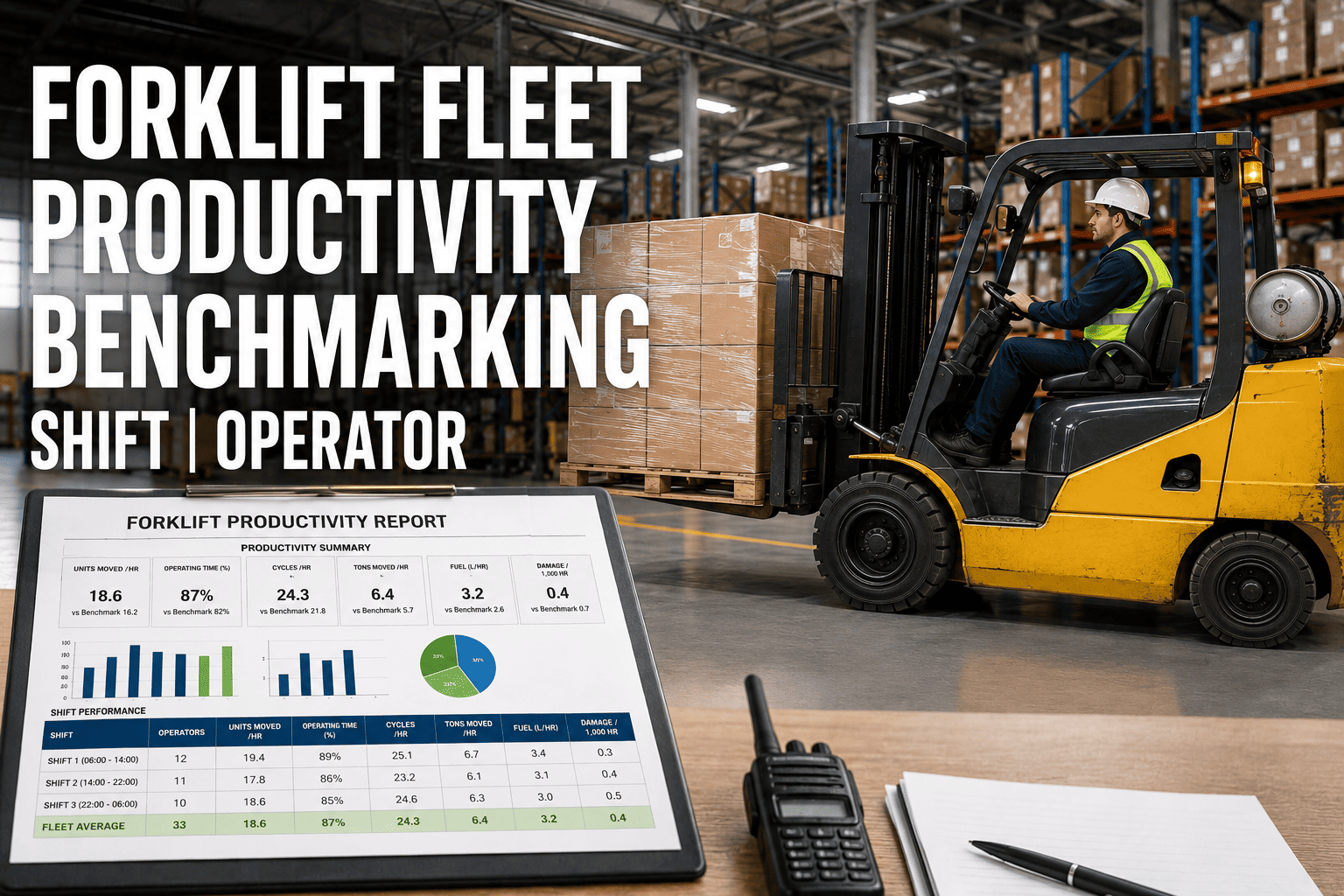
Impact events — forklifts striking racking, pedestrians, vehicles, or infrastructure — represent the largest single category of forklift-related insurance claims in manufacturing environments, and the most controllable cost in a forklift fleet with the right monitoring in place. FleetRabbit's operator behaviour monitoring captures speed exceedance events, impact shock signatures, excessive idle time, and aggressive acceleration and braking patterns — generating operator scorecards that identify individuals whose operating behaviour correlates with higher maintenance costs and incident risk before those incidents occur. Fleet managers using FleetRabbit's operator behaviour data consistently report reductions in racking damage incidents within the first 90 days of monitoring, driven by operator awareness that behaviour is recorded rather than by punitive management — the monitoring effect that reduces risk before intervention is required.
05
Fleet Right-Sizing Intelligence That Reduces Rental and Lease Cost
Manufacturing operations consistently over-fleet their forklift allocation — maintaining assets on long-term lease or rental arrangements that data shows are underutilised while simultaneously renting additional units during peak periods without accurate baseline utilisation evidence to justify the fleet size adjustment. FleetRabbit's utilisation reporting shows engine hours, shift utilisation percentages, and idle time ratios for every forklift across every shift pattern — identifying which assets are consistently below 40% utilisation and which are running above 85% and approaching accelerated maintenance intervals. Fleet managers who act on FleetRabbit's utilisation data within the first quarter of deployment typically identify two to four assets suitable for return or reallocation, generating lease cost savings that exceed the annual platform cost within the first six months of operation.
06
Implementation Speed That Delivers Value in Weeks, Not Quarters
Enterprise fleet management platform implementations in manufacturing environments have a reputation for extended deployment timelines — six to twelve month rollouts that delay value realisation, consume internal IT resources, and require extensive customisation before the platform reflects the operation's actual asset structure. FleetRabbit's manufacturing deployment model is designed around the operational reality that plant managers need results before the next maintenance budget review, not after a multi-quarter implementation project. Standard deployment for a manufacturing forklift fleet of 10 to 50 assets completes within two to four weeks from contract to live data — including telematics device installation, historical record migration, PM schedule configuration, inspection checklist setup, and user training. The first predictive maintenance alert, compliance report, and utilisation dashboard are available within the first operational week, giving fleet managers evidence of platform value before the first invoice arrives.
FleetRabbit for Manufacturing
Predictive Maintenance. ISO 9001 Compliance. Operator Intelligence. Full Fleet Visibility.
FleetRabbit is built for the multi-brand, multi-shift complexity of real manufacturing forklift fleets — delivering predictive maintenance, audit-ready compliance records, and utilisation intelligence that reduces downtime and cost from the first operational week.
How FleetRabbit Performs Across Manufacturing Fleet Types
Manufacturing forklift fleets vary significantly by operation type — a high-throughput FMCG distribution centre running 40 electric counterbalance trucks across three shifts has different platform requirements than a heavy engineering fabrication shop running eight diesel reach trucks and four rough terrain forklifts on a single day shift. FleetRabbit's platform configuration adapts to both — and to every fleet composition between them — without requiring separate product tiers or custom development for operation-specific requirements.
Warehouse & DC
High-cycle electric counterbalance and reach truck fleets with intensive multi-shift utilisation require battery management tracking, hour-based PM scheduling calibrated to high-usage intervals, and operator behaviour monitoring focused on speed compliance and impact detection in high-pedestrian-traffic environments. Pre-shift inspection enforcement and real-time availability status by shift support warehouse management system integration and despatch schedule coordination.
Heavy Manufacturing
Diesel and LPG counterbalance fleets in heavy fabrication, foundry, and processing environments generate higher maintenance frequency, more complex fault patterns, and greater operator exposure risk than light-duty warehouse operations. FleetRabbit's CAN bus fault monitoring provides early warning of drivetrain and hydraulic issues before they progress to catastrophic failure, while structured corrective action workflows satisfy the ISO 9001 and ISO 45001 documentation requirements that heavy manufacturing quality and safety audits consistently test.
Cold Storage & Food
Cold store forklift operations present accelerated battery degradation, condensation-related electrical fault patterns, and strict hygiene inspection requirements that differ from ambient warehouse environments. FleetRabbit's inspection checklist builder supports cold store-specific inspection items — battery condition, seal integrity, temperature rating compliance, cleaning verification — while maintenance interval scheduling accounts for the higher service frequency that cold store operating conditions require compared to manufacturer standard intervals.
Multi-Site Operations
Manufacturing groups operating forklift fleets across multiple plants, DCs, or processing sites typically manage each site's fleet independently — with no cross-site visibility of utilisation imbalances, no consolidated compliance reporting for group-level ISO audits, and no mechanism to redeploy underutilised assets from low-demand sites to high-demand operations. FleetRabbit's multi-site dashboard consolidates all sites into a single fleet intelligence view, enabling group fleet managers to identify redeployment opportunities, benchmark maintenance cost per hour across sites, and generate consolidated compliance reports for multi-site certification audits from one platform.
From the Field
"We had been running our forklift fleet on a combination of paper job cards, a spreadsheet PM schedule that the workshop supervisor updated when he had time, and a basic GPS system that told us where the machines were but nothing about their condition. We had three unplanned breakdowns in a six-week period that each took a production line down for between two and four hours — and the total cost when we added up the production loss, overtime, and emergency technician rates was more than double the annual cost of the fleet management platform we'd been putting off implementing. After going live with FleetRabbit, the first thing that changed was pre-shift inspections — completion rate went from about 60% to 98% in the first two weeks because operators couldn't just tick a paper form and move on. The second thing was that our next ISO 9001 surveillance audit was the smoothest we've had in seven years. The auditor asked for maintenance histories on four specific assets going back two years — I pulled them up on screen while she was sitting in front of me. She commented that our documented information management had significantly improved since the previous audit. That alone justified the platform cost for the year."
The FleetRabbit Advantage: Platform Capabilities Compared
Manufacturing operations evaluating forklift fleet management platforms typically compare FleetRabbit against legacy enterprise CMMS systems that were designed for fixed plant maintenance rather than mobile fleet management, against OEM-native telematics portals that only cover assets from a single manufacturer, and against generic GPS fleet tracking platforms that provide location data without the maintenance intelligence that drives uptime improvement. The comparison below reflects the capability dimensions that matter most to manufacturing fleet managers — not feature lists, but operational outcomes.
01
vs Legacy CMMS Platforms
Traditional CMMS platforms were designed for fixed plant maintenance management — they handle work order creation and parts inventory well but lack the mobile data capture, telematics integration, and real-time fleet visibility that forklift fleet management requires. FleetRabbit combines the structured maintenance workflow of a CMMS with live telematics data, mobile inspection capture, operator behaviour monitoring, and pre-built ISO 9001 compliance reporting in a platform that deploys in weeks rather than the multi-month CMMS implementation timelines that manufacturing IT teams have learned to dread. The operational result is a maintenance management system that operators, technicians, and fleet managers actually use daily rather than a system that is technically configured but avoided in practice because the interface was built for desktop data entry rather than floor-level mobile use.
02
vs OEM Telematics Portals
OEM telematics portals — Toyota I_Site, Linde connect:, Crown InfoLink, Hyster Tracker — provide deep native data for assets from their respective manufacturer but create the multi-portal management burden that characterises every mixed-brand forklift fleet in manufacturing. A plant running Toyota, Linde, and Crown equipment manages three separate logins, three separate PM schedule configurations, three separate alert systems, and three separate report formats — with no cross-fleet consolidated view and no coverage for older assets that pre-date factory telematics. FleetRabbit integrates OEM telematics feeds from all participating manufacturers via AEMP 2.0 alongside aftermarket device data on older or non-connected assets, delivering unified cross-brand fleet intelligence from one platform without requiring separate OEM portal access for daily fleet management operations.
03
vs Generic GPS Fleet Tracking
Generic GPS fleet tracking platforms provide location data and basic utilisation metrics — hours on, hours off, distance travelled — but lack the maintenance scheduling, fault code monitoring, inspection workflow, and compliance reporting that manufacturing forklift fleet management requires. Knowing where a forklift is does not prevent the hydraulic failure that shuts down inbound receiving at peak shift. FleetRabbit's platform starts where GPS tracking ends: live fault code monitoring from the forklift's CAN bus, hour-triggered PM work order generation, structured pre-shift inspection with defect escalation, corrective action workflow with ISO 9001 closure documentation, and operator behaviour scoring — all built on the same location and utilisation data foundation that generic tracking platforms stop at.
04
vs Doing Nothing — The True Cost of the Status Quo
The most common alternative to FleetRabbit is not a competing platform — it is the combination of paper inspection forms, spreadsheet PM schedules, and reactive maintenance that most manufacturing operations run today. The true cost of this status quo is rarely calculated in full: unplanned breakdown costs at three to five times the preventive maintenance equivalent, ISO 9001 audit preparation time measured in person-days per audit cycle, lease costs for underutilised assets that utilisation data would identify for return, and insurance premiums that reflect the impact and incident history that operator behaviour monitoring would reduce. Manufacturing operations that calculate these costs honestly find that FleetRabbit's annual platform cost is typically recovered within the first two quarters of deployment from downtime reduction alone — before compliance, utilisation, and insurance benefits are included in the return calculation.
Frequently Asked Questions
QHow quickly can FleetRabbit be deployed across a manufacturing forklift fleet, and what internal resources does the implementation require?
Standard FleetRabbit deployment for a manufacturing forklift fleet of 10 to 50 assets completes within two to four weeks from contract execution to live operational data — including telematics device installation, historical record migration, PM schedule configuration, pre-shift inspection checklist setup, user account creation, and training for fleet managers, supervisors, and operators. Internal resource requirements are minimal: a primary fleet manager contact who owns the asset register and PM schedule information, and site access coordination for device installation. FleetRabbit's onboarding team manages the technical deployment, data migration, and training delivery as a managed service — the fleet manager's involvement is concentrated in a two to three hour onboarding session and the first-week configuration review rather than a sustained internal project management commitment. The first predictive maintenance alerts, compliance reports, and utilisation dashboards are typically available within the first five operational days of go-live.
QDoes FleetRabbit integrate with our existing ERP or warehouse management system, and can maintenance data flow into our existing accounting system?
FleetRabbit supports integration with major ERP and warehouse management systems through its API and pre-built connector library — enabling maintenance cost data, asset utilisation metrics, and work order status to flow into existing business systems without manual re-entry. Common integration use cases in manufacturing environments include maintenance cost export to ERP for job costing and asset depreciation tracking, work order status synchronisation with production planning systems to coordinate maintenance windows with production schedules, and asset availability status feeds to warehouse management systems for shift-level lift truck allocation. FleetRabbit's integration team assesses the specific ERP and WMS environment during onboarding and configures the appropriate connection method — API, webhook, or scheduled data export — based on the receiving system's integration capability. Custom integration requirements are scoped as part of the deployment engagement rather than as post-go-live professional services additions.
QWe have forklifts from five different manufacturers, some over ten years old. Can FleetRabbit cover all of them from one platform?
Yes — mixed-brand, mixed-age forklift fleets are FleetRabbit's primary use case in manufacturing environments. Newer assets with factory telematics connect via OEM API or AEMP 2.0 feed, exposing native fault codes, engine hours, and operational data directly into the platform. Older assets without factory telematics receive aftermarket CAN bus telematics devices that access the J1939 diagnostic bus available on most diesel and LPG forklifts from 2000 onwards — providing fault code monitoring, engine hour tracking, and operational data through the same FleetRabbit interface as OEM-connected assets. Assets with no accessible CAN bus — very old machines or electric forklifts without J1939 connectivity — receive GPS-only aftermarket devices that provide location, utilisation hours via ignition signal, and geofence monitoring. All three device types appear in the same fleet dashboard, participate in the same PM scheduling system, and contribute to the same compliance record infrastructure — the platform does not differentiate between asset types or ages in its maintenance, inspection, or reporting functionality.
FleetRabbit for Manufacturing
Predictive Maintenance. ISO 9001 Compliance. Operator Behaviour. Full Fleet Visibility. One Platform.
FleetRabbit delivers the uptime, compliance, and cost intelligence that leading manufacturers rely on — across every forklift brand, every asset age, and every operational shift pattern — from a platform that deploys in weeks and delivers measurable value before the first invoice arrives.
Why Leading Manufacturers Choose FleetRabbit for Forklift Fleet Management
When a plant manager walks the floor and asks "Can you tell me which of our 54 forklifts is due for a 250-hour service, which two have open defect tags from last shift, and which operator is currently running a unit they haven't been certified for?"—the answer should take seconds, not a shift. In most manufacturing facilities, it takes days, involves three spreadsheets and two filing cabinets, and still comes back incomplete. The difference between world-class manufacturing operations and those grinding through reactive equipment failures, missed ISO audit windows, and ballooning maintenance spend is almost always the quality of their forklift fleet management system—a centralized digital platform that tracks every asset, predicts every failure, enforces every compliance requirement, and delivers the cost intelligence to make better capital decisions. Start managing your forklift fleet with a platform built for manufacturing operations.
Manufacturing Fleet Intelligence — 2026 Edition
Why Leading Manufacturers Choose FleetRabbit for Forklift Fleet Management
Discover why top plants switch to FleetRabbit for maximum forklift uptime, strict ISO compliance, predictive maintenance, and measurable cost savings — all in one industrial-grade platform
Average reduction in unplanned forklift downtime within 90 days of FleetRabbit deployment
$94K
Average annual savings per manufacturing facility through predictive maintenance and fleet right-sizing
97%
PM compliance rate achieved by FleetRabbit customers within 60 days of automated scheduling activation
100%
ISO and OSHA audit readiness when every asset record is tracked, maintained, and documented digitally
Why Manufacturing Forklift Fleets Underperform Without a Digital Management System
A 40-unit forklift fleet operating across two shifts generates thousands of data points every week—maintenance events, operator assignments, inspection findings, fuel consumption, idle hours, defect reports, and compliance due dates. Without a centralized system to capture, organize, and act on that data, plant managers make decisions based on incomplete information, technicians react to failures rather than prevent them, and finance teams have no visibility into which assets cost three times the fleet average to run. The result is chronic underperformance: higher downtime, inflated maintenance spend, compliance exposure, and a fleet that ages faster than it should.
What FleetRabbit Forklift Fleet Management Delivers
Real-Time Asset Visibility
Know the exact status, location, utilization rate, and maintenance health of every forklift, reach truck, and pallet jack on the floor — across every building and every shift.
Predictive Maintenance
Automated PM triggers based on engine hours, mileage, and calendar intervals prevent failures before they happen — eliminating the reactive break/fix cycle that drains maintenance budgets.
ISO & OSHA Compliance
Digital pre-shift inspection forms, operator certification tracking, and automated compliance records satisfy OSHA 29 CFR 1910.178 and ISO 9001 documentation requirements on demand.
Cost Intelligence
Cost-per-asset and cost-per-hour reporting exposes your most expensive forklifts. Repair-vs-replace analysis tells you exactly when an aging unit costs more to keep than to replace.
Fleet Right-Sizing
Utilization dashboards reveal which forklifts sit idle and which are chronically overworked. Stop paying lease costs for assets you don't need — and stop burning out assets you do.
Operator Qualification Control
Track every operator certification, flag expired credentials before dispatch, and ensure only qualified personnel operate specific equipment classes — eliminating OSHA violation exposure at the source.
Forklift Fleet Asset Categories: What FleetRabbit Manages
Manufacturing floor fleets are not monolithic — they include a diverse mix of asset types with different maintenance requirements, operator qualification demands, compliance standards, and utilization patterns. A credible forklift fleet management platform manages the full spectrum of material handling equipment in a single asset registry, with category-specific PM schedules, inspection forms, and compliance rules applied automatically to each asset type.
Material Handling Equipment Categories Managed by FleetRabbit
Put Every Forklift on a Managed Maintenance Schedule
FleetRabbit's forklift fleet management platform tracks every asset by class, automates PM scheduling by engine hours or calendar, deploys digital inspection forms to operators, and delivers cost intelligence that manufacturing finance teams actually use.
The 1–5 Fleet Health Score: Rating Your Forklift Fleet's Operational Status
Effective forklift fleet management requires a standardized way to communicate asset health status across maintenance teams, operations managers, and plant leadership. A consistent 1–5 fleet health scoring system translates the complex state of any forklift's maintenance, compliance, and utilization profile into a clear, actionable status — enabling faster dispatch decisions, smarter maintenance prioritization, and cleaner audit reporting.
FleetRabbit Forklift Asset Health Score Scale
5
Fully Operational — All Systems Green
All PMs current, no open defects, operator certifications valid, inspection records complete. Asset is cleared for all shift assignments and all load classes. No action required beyond routine monitoring.
Action: Routine monitoring — next PM at scheduled interval
Production Ready
4
Watch Status — PM Due Within 30 Days
Asset is fully operational but approaching a scheduled PM interval or has a minor open item with low safety impact. Continue deploying on standard assignments while scheduling maintenance within the current planning cycle.
Action: Schedule PM — monitor daily until completed
Monitor
3
At Risk — Open Defect or Overdue PM
Asset has an unresolved inspection defect or an overdue PM with no confirmed booking. May be restricted from specific load types or environments. Work order must be created and assigned within 24 hours. Deployment limited to non-critical assignments.
Action: Create work order — restrict heavy-load assignments
At Risk
2
Non-Compliant — Safety Defect or Multiple Overdue PMs
Asset has an open safety-critical defect or multiple overdue maintenance items. Must not be assigned to regulated loads or operations where failure could cause injury or production impact. Tagged out-of-service pending corrective maintenance.
Action: Tag out-of-service — emergency maintenance required
Restricted
1
Critical — Equipment Grounded or Recall Status
Asset has failed in service, triggered a safety incident, or received a manufacturer recall notice. Removed from service pending full inspection, root cause analysis, and executive approval to return. All associated operator incidents documented for OSHA reporting.
Action: Full grounding — executive sign-off required to return
Grounded
The Cost of Reactive Forklift Fleet Management
Reactive fleet management — servicing equipment only after it breaks down — is the most expensive way to run a manufacturing forklift fleet. The cost differential between proactive predictive maintenance and reactive break/fix is not linear; it compounds with every delayed intervention. Understanding the true cost multiplier at each stage of fleet management maturity is the business case for digital fleet management that pays for itself, typically within the first quarter of deployment.
Cost of Reactive vs. Predictive Forklift Fleet Management
Total cost multiplier relative to proactive digital fleet management baseline
5 Predictive Digital Management
$300/mo (Platform)
0.1x
4 Scheduled PM (Manual Tracking)
$1.5K (Admin + Missed PMs)
0.4x
3 Reactive Maintenance Cycle
$8K/yr per asset (Repairs)
1.0x (baseline)
2 Mid-Shift Breakdown + Downtime
$1,200–$4,800/day (Downtime)
4.5x
1 OSHA Citation + Production Halt
$63K–$280K (Fine + Lost Output)
22x+
Investing in predictive digital fleet management (Level 4–5) prevents the compounding costs of reactive failure and regulatory crisis (Level 1–2).
Move From Reactive Chaos to Predictive Control
FleetRabbit helps manufacturing maintenance teams eliminate unplanned downtime with automated PM scheduling, real-time defect tracking, parts inventory management, and the cost reporting that makes the ROI immediately visible to plant leadership.
The FleetRabbit Implementation Lifecycle: From Day One to ISO Audit Ready
FleetRabbit is not a software license that comes with a PDF manual. It is a structured implementation program that takes manufacturing forklift fleets from their current state — whatever that is — to full predictive management in a matter of weeks, not months. The implementation lifecycle follows a disciplined sequence that mirrors your maintenance operations and builds compliance infrastructure without disrupting production schedules.
Every forklift, reach truck, pallet jack, tugger, and AGV entered into FleetRabbit using bulk import templates. Asset specs, serial numbers, current hour-meter readings, maintenance history, and operator assignments captured. Baseline health scores and cost-to-date established for each asset in the fleet registry.
Week 1–2
2
PM Schedule Configuration & Work Order Automation
Preventive maintenance intervals programmed by asset class, manufacturer specification, and facility usage intensity. Work order templates created with parts lists, labor hour estimates, and required sign-offs. Technician assignments and shift-based escalation paths configured. First automated work orders generated and dispatched.
Digital pre-shift inspection forms (OSHA 29 CFR 1910.178 compliant) deployed to operator mobile devices. Operator certification database populated with credential types, issue dates, and expiry dates. ISO 9001 documentation templates activated. First compliance dashboard delivered to plant managers with fleet-wide status view.
Week 3–4
4
Cost Intelligence & Fleet Optimization Analysis
First 30-day cost reports generated showing cost-per-asset and cost-per-hour across the fleet. High-cost assets flagged for repair-vs-replace analysis. Utilization data identifies idle assets eligible for right-sizing or lease termination. Parts inventory gaps surfaced. Budget variance reports shared with operations and finance leadership.
Day 30–60
5
Continuous Improvement & Audit Readiness
Monthly KPI reviews with operations leadership covering downtime trends, PM compliance rates, and cost performance by department and shift. PM intervals adjusted based on real failure data. Operator certification renewals managed automatically. ISO and OSHA audit packages exportable on demand. Fleet strategy aligned with production capacity and capital planning cycles.
Ongoing
Plant Manager Perspective: What FleetRabbit Changes on the Floor
"
We had 62 forklifts across three buildings and our maintenance team was running on instinct and sticky notes. Every time we had an OSHA inspection or an ISO audit, it was a two-day scramble pulling paper records together and hoping nothing was missing. We had a near-miss incident in building two that could have been prevented if we'd had visibility into the inspection defect that was sitting on a clipboard for nine days. After deploying FleetRabbit, we cut unplanned downtime by 41% in the first 90 days, identified four forklifts that were costing three times the fleet average in repairs, passed our ISO 9001 recertification audit with zero equipment findings, and haven't had an OSHA violation in two years. The platform paid for itself in the first month just from downtime avoided.
Reduction in unplanned downtime within 90 days of FleetRabbit deployment
Zero
ISO and OSHA equipment findings in post-FleetRabbit audits
$94K
Average annual facility savings through predictive maintenance and fleet right-sizing
The manufacturing plants that lead their industries in uptime, compliance, and cost performance share one operational truth: they treat their forklift fleet as a managed asset portfolio — not a collection of machines that get fixed when they break. By deploying predictive maintenance, centralizing compliance documentation, tracking utilization, and integrating fleet intelligence with production planning, these facilities eliminate the most costly forms of operational waste before they reach the floor. Start building your forklift fleet management program with the platform designed for manufacturing operations.
The Best Forklift Fleet Management Software. Proven in Manufacturing.
FleetRabbit gives plant managers, maintenance teams, and operations leaders one platform for predictive maintenance, ISO compliance, cost intelligence, and material handling fleet optimization. Be audit-ready and production-ready — every shift, every day.
What types of forklifts and material handling equipment does FleetRabbit support?
FleetRabbit supports the full spectrum of industrial material handling equipment used in manufacturing environments: sit-down counterbalanced forklifts (LPG, diesel, and electric), reach trucks, order pickers, powered and manual pallet jacks, walkie stackers, tuggers, tow tractors, and automated guided vehicles (AGVs). Any asset with a serial number, maintenance schedule, or operator assignment can be managed in FleetRabbit's asset registry, with class-specific PM schedules and inspection forms applied automatically to each equipment type.
How does FleetRabbit support ISO 9001 and OSHA compliance for forklift fleets?
FleetRabbit digitizes OSHA-required pre-shift inspections (29 CFR 1910.178(q)) with mobile forms that capture operator sign-off, defect findings, and photo evidence — all timestamped and stored against the specific asset record. For ISO 9001 compliance, the platform maintains complete, auditable maintenance histories, work order records with technician sign-off, and calibration or certification documentation. When an ISO auditor or OSHA inspector requests records, FleetRabbit generates a complete, organized documentation package in minutes — not the hours or days a paper-based system requires.
What does predictive maintenance actually mean for forklift fleets in practice?
For forklift fleets, predictive maintenance means scheduling service interventions based on actual usage data — engine hours, lift cycles, mileage — rather than fixed calendar dates or waiting for failures. FleetRabbit tracks each asset's hour-meter data and triggers PM work orders automatically when thresholds are reached, whichever comes first (hours or calendar). This prevents the two most common failures: over-maintaining underutilized assets (wasting maintenance budget) and under-maintaining high-use assets (causing breakdowns). Facilities using FleetRabbit's PM automation typically achieve a 97% PM compliance rate within 60 days, compared to industry averages of 60–70% for manual tracking systems.
How does FleetRabbit help manufacturing facilities identify which forklifts to repair versus replace?
FleetRabbit's cost intelligence module tracks the total cost of ownership for every asset individually — including all parts costs, labor hours, downtime events, and rental costs for replacement equipment during repairs. After 30–60 days of data collection, the platform generates cost-per-asset and cost-per-hour reports that immediately surface outliers: forklifts costing two or three times the fleet average in maintenance spend. The repair-vs-replace analysis module applies your facility's cost thresholds and depreciation curves to flag assets where continued investment no longer makes economic sense, enabling capital planning decisions backed by actual operating data rather than estimates.
How long does it take to get a manufacturing facility fully operational on FleetRabbit?
Most manufacturing facilities achieve full fleet visibility within two weeks of onboarding and complete compliance layer activation within three to four weeks. The implementation begins with asset data entry using FleetRabbit's bulk import templates, followed by PM schedule configuration, operator certification database setup, and mobile inspection form deployment to technicians and operators. FleetRabbit's implementation team supports every phase — your team is not handed a software license and left to configure it independently. Facilities with existing maintenance data in spreadsheets or prior CMMS systems can typically migrate that data during onboarding, preserving historical maintenance records in the new platform.