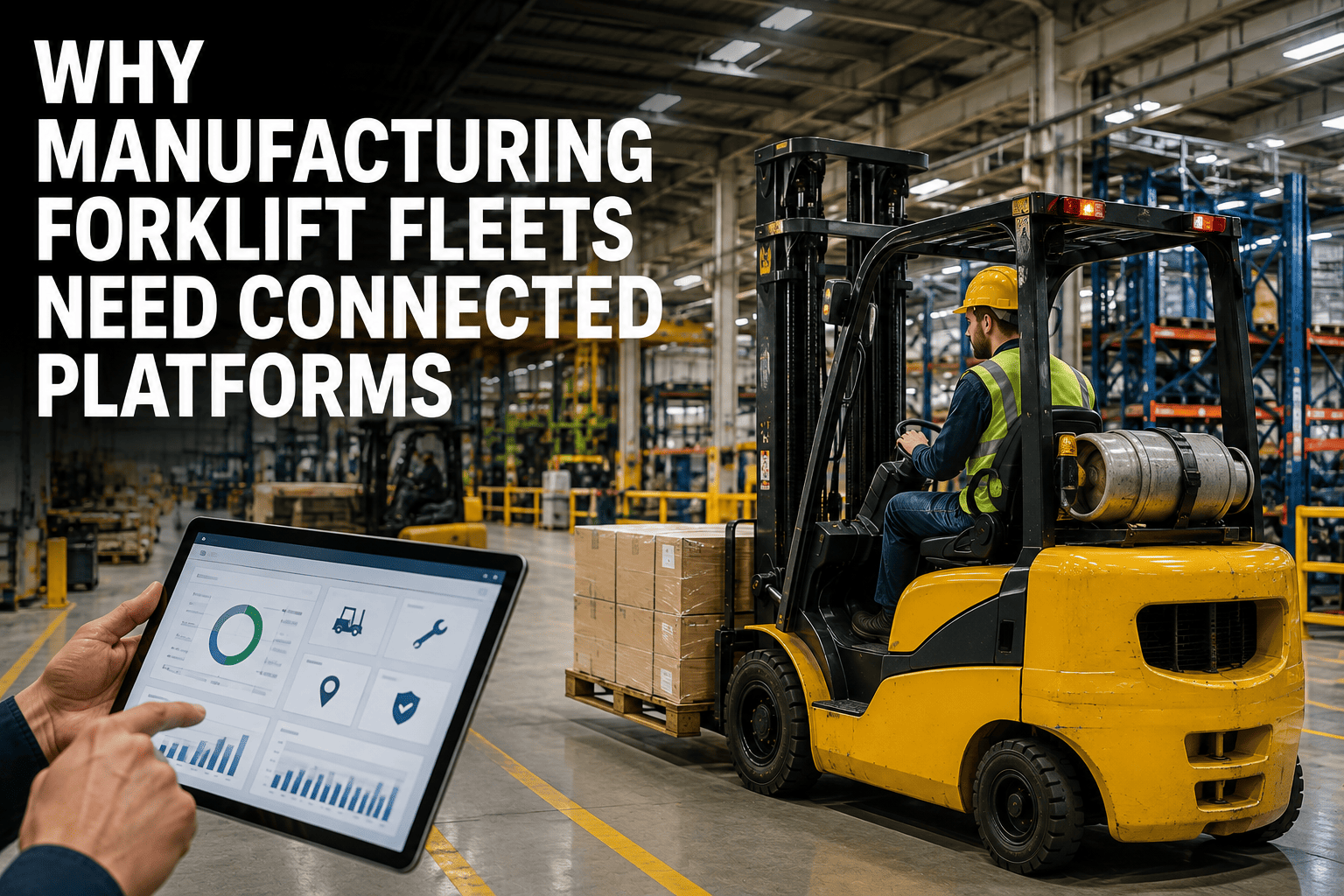
Walk into most manufacturing plants and count the logins. One system for maintenance work orders. Another for OSHA inspections, usually a spreadsheet. A third for telematics, if the fleet has it at all. A fourth, unofficial one, is whatever the maintenance lead keeps in their head. None of these talk to each other, and every gap between them is where a breakdown, a compliance violation, or a wasted rental truck quietly slips through. That's exactly why forklift fleets across manufacturing are consolidating everything onto a single connected platform in 2026, and why the plants that haven't yet are starting to feel the cost of staying fragmented.
Manufacturers are standardizing on connected forklift platforms because disconnected tools for maintenance, inspections, and utilization create data silos that hide risk and inflate cost. Fleets without integrated telematics-to-maintenance workflows experience roughly 41 percent more unplanned breakdowns than those running a unified system. Sign up free to connect your fleet data in one place, or book a demo to see it mapped to your current stack.
The "Too Many Tabs" Problem Is Now a Cost Problem
Fleet technology teams have started calling it the too-many-tabs era. A telematics tool here, a maintenance system there, a compliance spreadsheet nobody trusts, and a separate app for utilization if anyone bothered to buy one. Two of them might even share a login, but they still don't talk to each other. For years this was treated as an inconvenience. In 2026, plants are recognizing it as an operating cost, because every disconnected tool is a place where data goes to die instead of turning into a decision.
The pressure to consolidate isn't coming from a preference for tidier software. It's coming from the fact that running leaner, safer, and faster no longer leaves room to manually reconcile four systems that were never designed to agree with each other.
What Fragmentation Actually Costs A Plant
The damage isn't abstract. It shows up in specific, measurable ways across a plant floor.
What "Connected" Actually Means On The Floor
A connected platform isn't just fewer logins, it's one continuous chain from sensor to decision. Telematics data flows directly into maintenance triggers instead of sitting in a report nobody opens. A failed OSHA inspection generates a work order automatically instead of a phone call that might get forgotten. Utilization data feeds fleet-sizing decisions instead of a guess about whether the plant needs another leased truck. Each layer strengthens the others, which is exactly why leaving even one of them siloed reduces the value of the rest.
The Four Data Layers That Have To Talk To Each Other
Most manufacturing forklift fleets generate the same four categories of data. The question isn't whether a plant has this data, it's whether the four layers are connected or scattered.
| Data Layer | What It Captures | What Happens If It's Siloed |
|---|---|---|
| Telematics | Location, engine hours, impact events, idle time | Real-time rerouting and audits both fall apart |
| Maintenance | Fault codes, battery status, service history | Servicing reverts to a fixed calendar, not real condition |
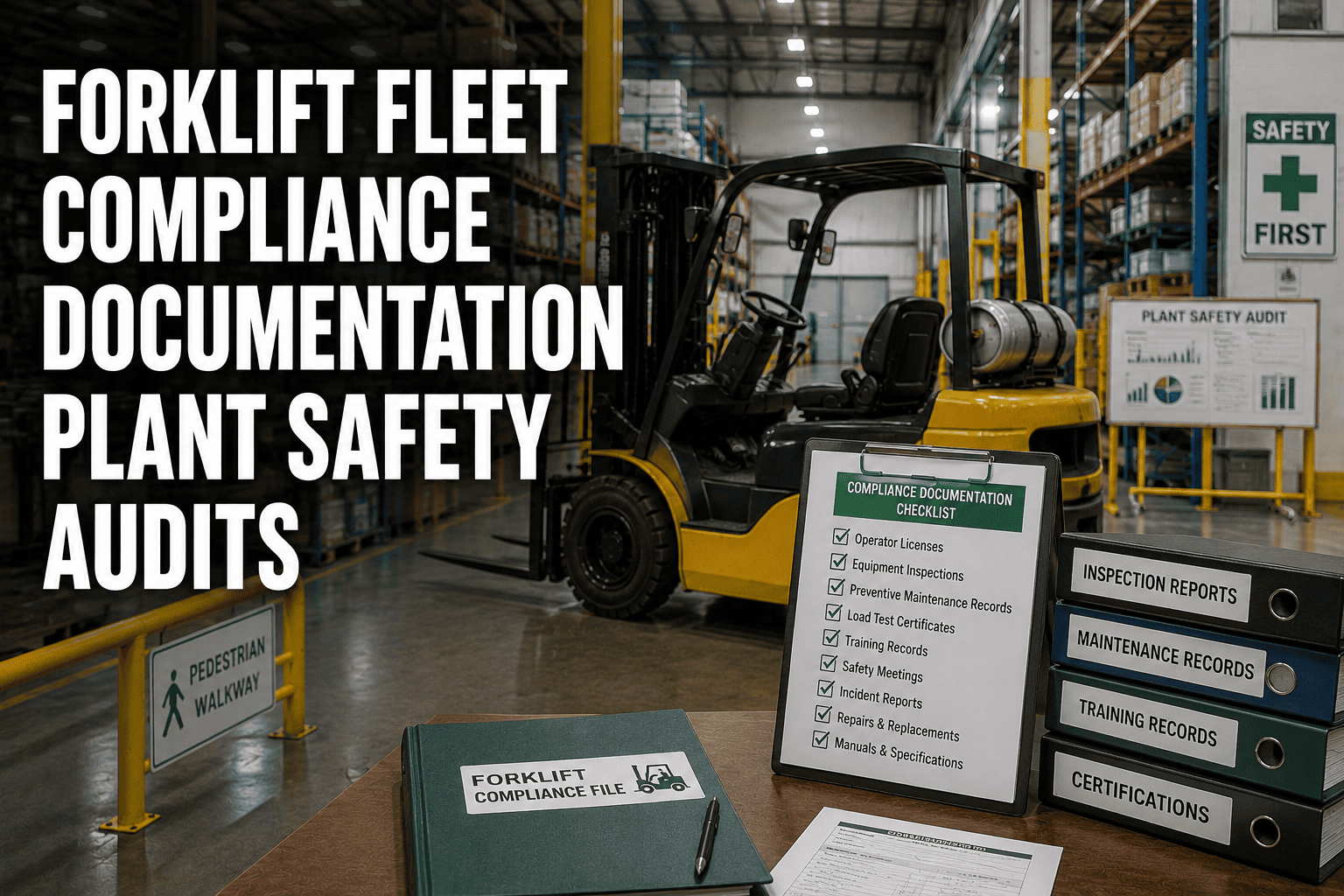
| Inspections | OSHA pre-shift checklists, defect photos | Defects get reported verbally and often forgotten |
| Utilization | Per-shift usage, idle time by operator and zone | Fleet-sizing decisions become guesswork, not data |
FleetRabbit connects telematics, maintenance, inspections, and utilization into a single real-time platform, so nothing gets lost between disconnected tools. Sign up and unify your fleet data today, or book a demo to see it mapped to your current systems.
Why Brand-Agnostic Beats Manufacturer-Specific
Part of the consolidation story is which platform plants are consolidating onto. Manufacturer-specific telematics, tied to one forklift brand, solves a narrower problem than most plants actually have. A facility running Toyota, Crown, and Hyster trucks side by side ends up right back in the tabs problem, just with fewer tabs. A brand-agnostic platform pulls data across every manufacturer in the fleet into one dashboard, which is what actually ends the fragmentation instead of just relabeling it.
Why This Distinction Matters More In Manufacturing Than Warehousing
Plants acquire forklifts over years, often through different capital cycles, different vendors, and sometimes different facilities merging under one company. A platform that only works with one brand becomes obsolete the moment the fleet stops being homogeneous, which for most manufacturing operations happens fast.
What Plants See After Consolidating
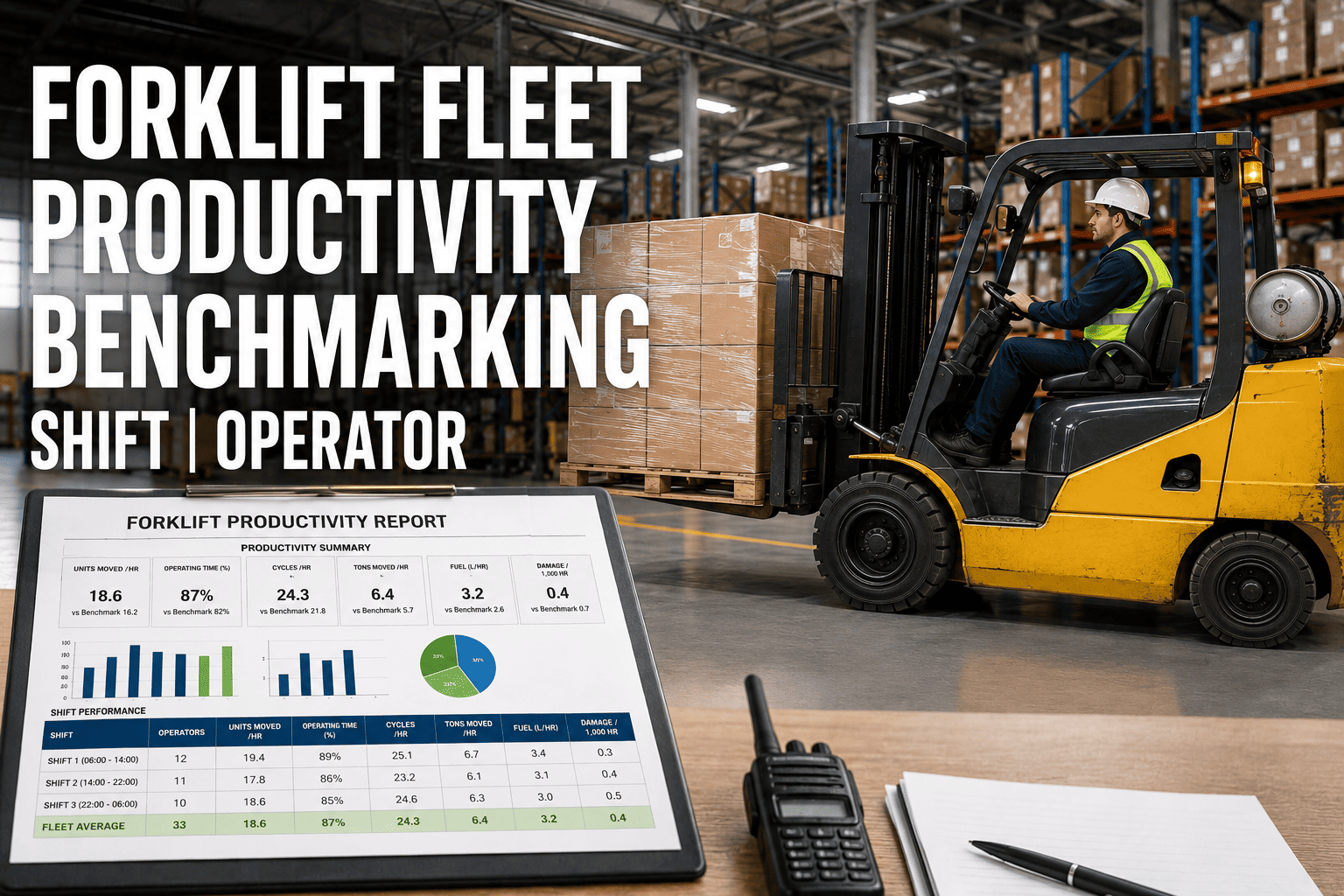
The results aren't subtle once maintenance, inspections, and utilization move onto one system. Predictive maintenance built on connected telematics data typically cuts unplanned breakdowns by 30 to 42 percent, because the system reacts to real wear patterns instead of a calendar. One global automotive parts manufacturer running an 85-asset forklift fleet saw a 42 percent reduction in unplanned downtime within six months of consolidating onto a single platform, along with roughly 720,000 dollars in savings from eliminated emergency repairs and reduced rental equipment. When their ISO auditor visited, two years of maintenance history came up in seconds instead of a search across separate systems.
None of that came from a single dramatic feature. It came from closing the gaps between four data streams that used to live in four separate places.
FleetRabbit works across brands and connects to the systems you already run, so consolidating doesn't mean starting over. Start your free trial today, or book a 30-minute demo to see how it fits your current fleet.
FleetRabbit brings maintenance, inspections, telematics, and utilization into one connected platform, built for mixed-brand manufacturing forklift fleets.