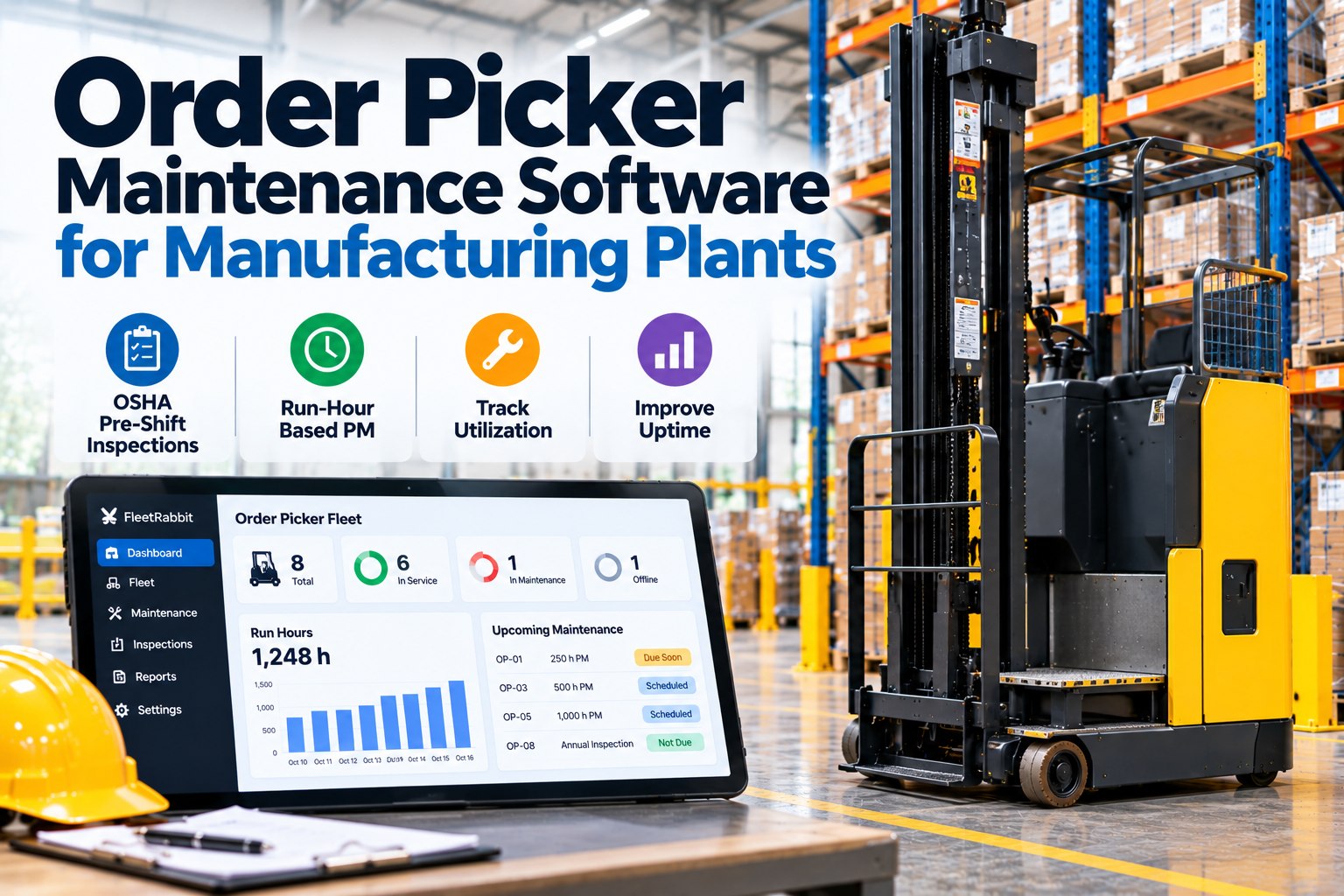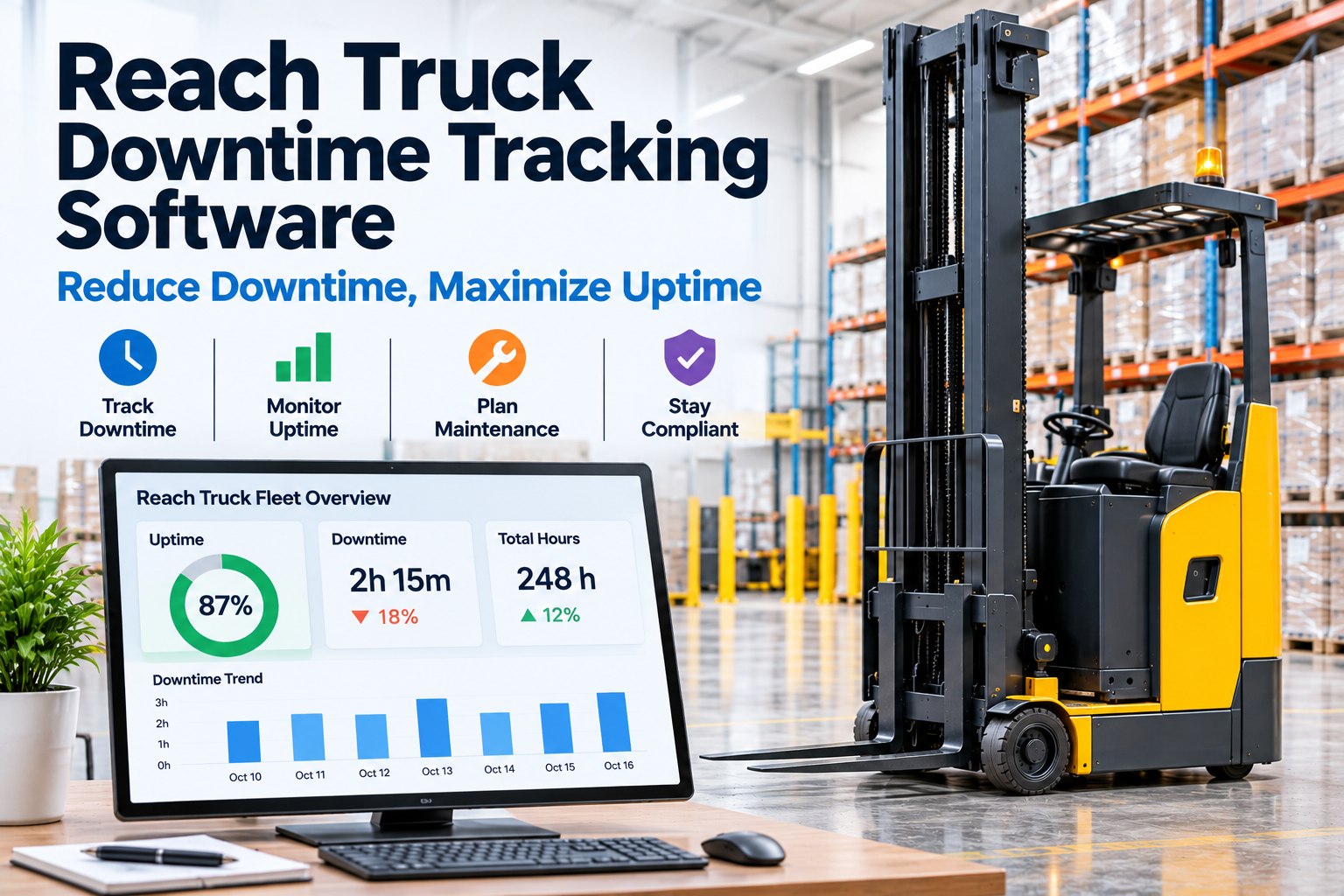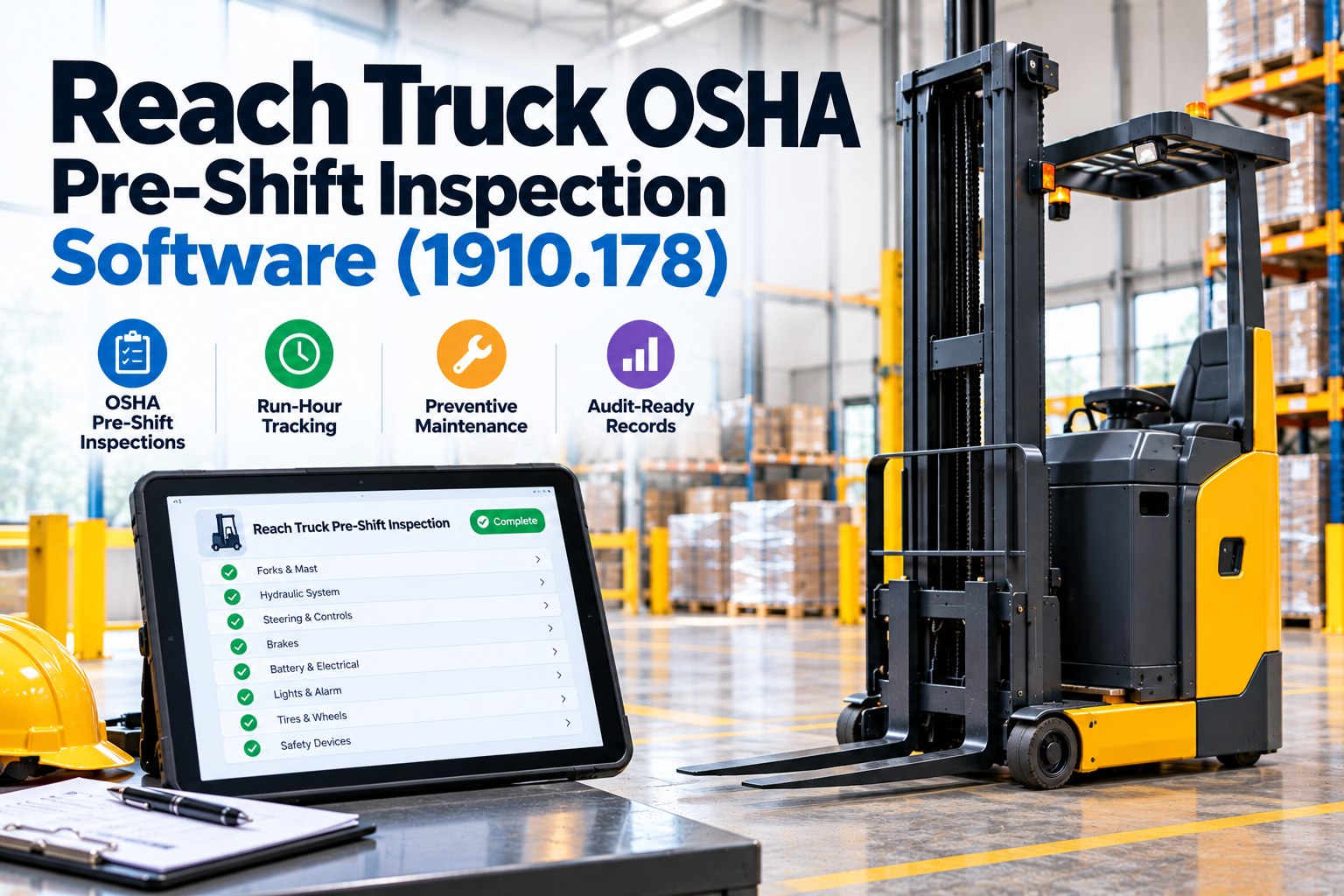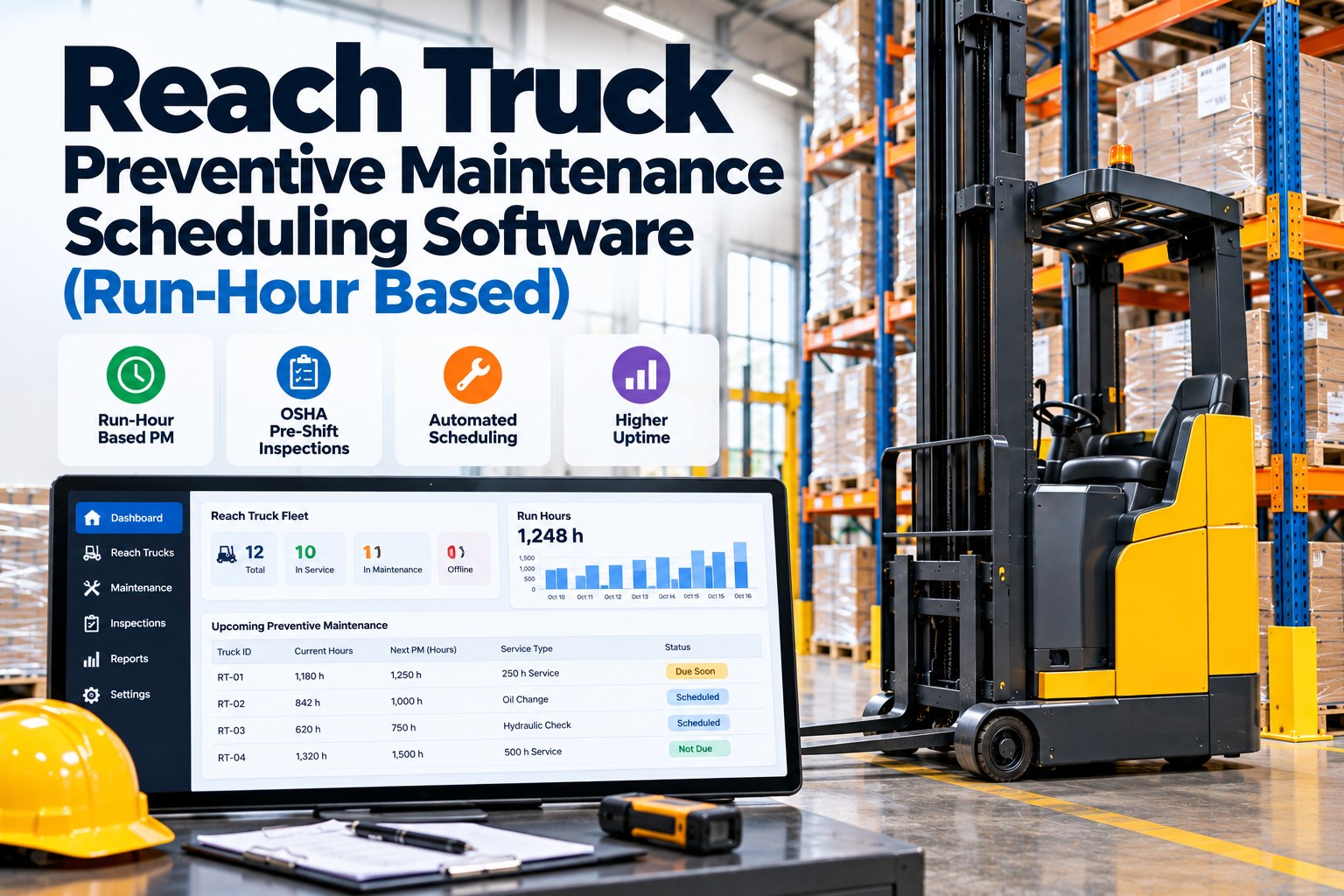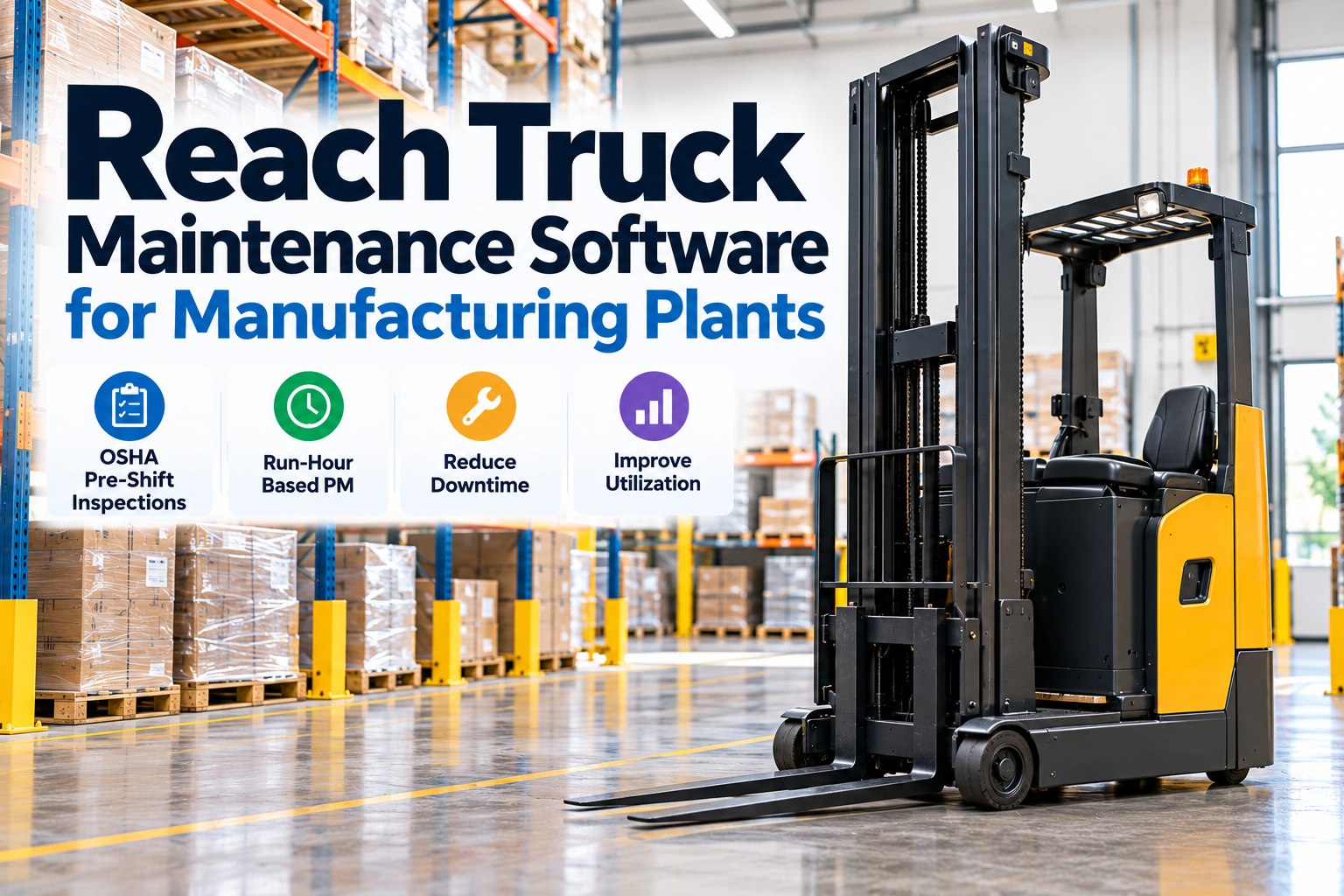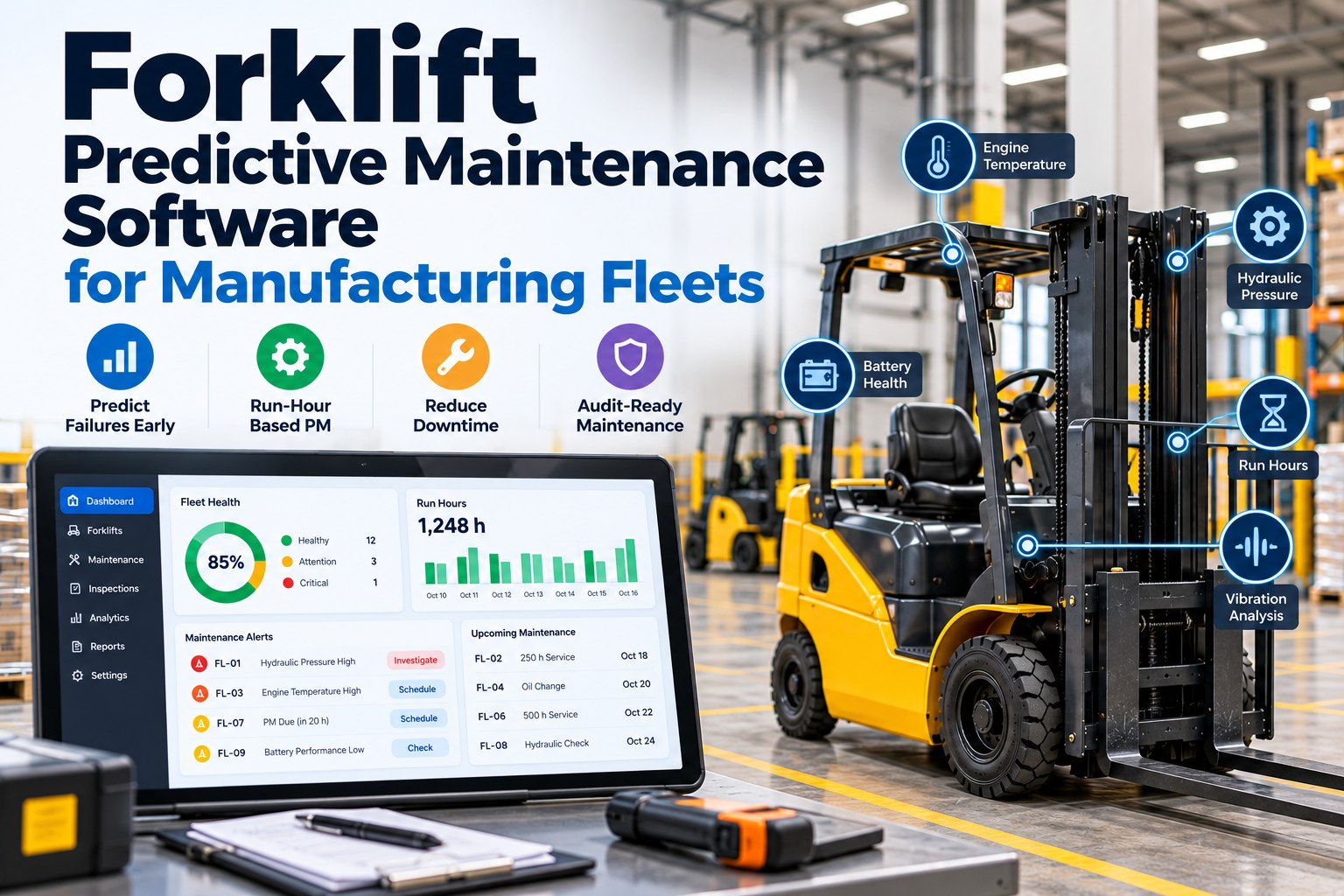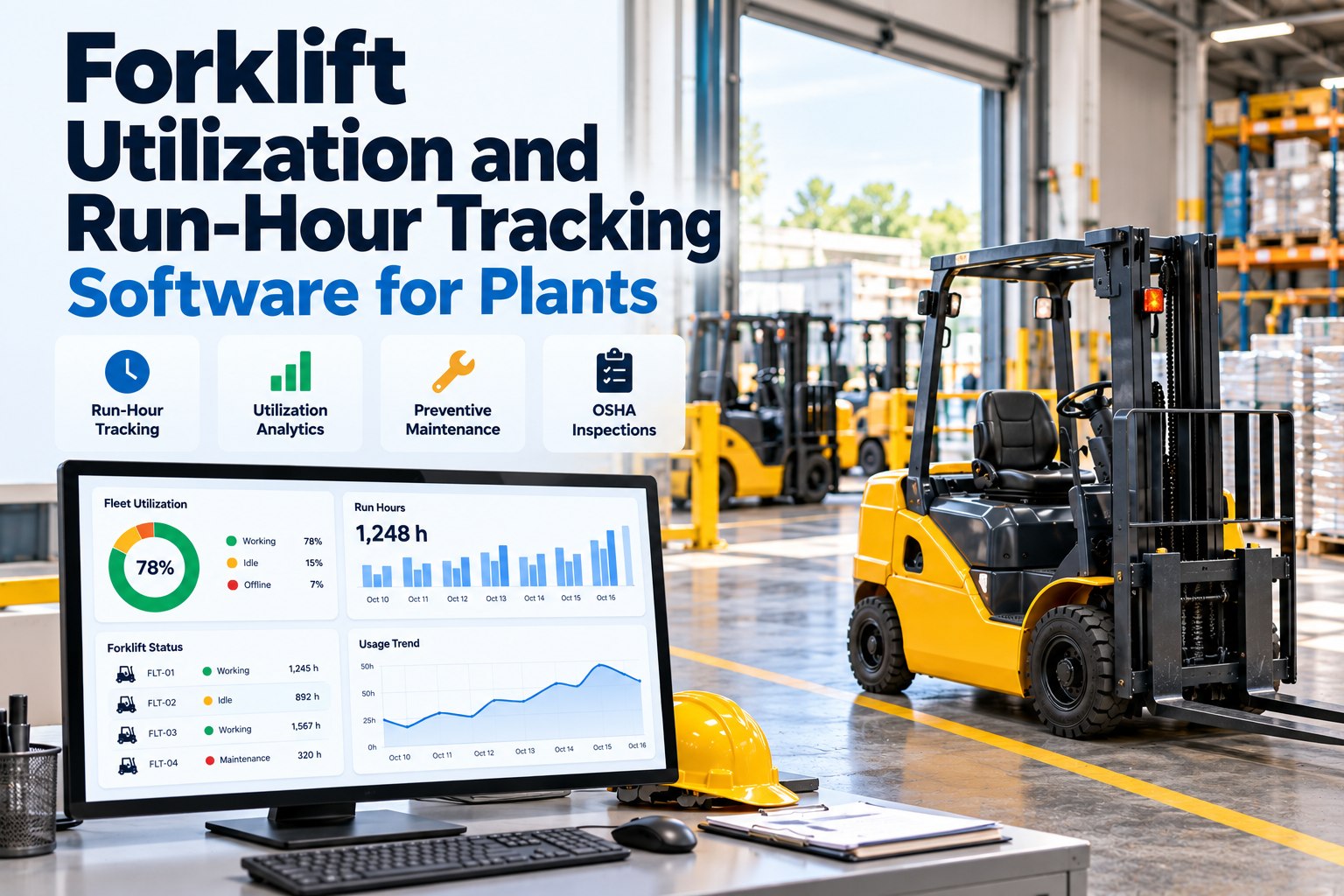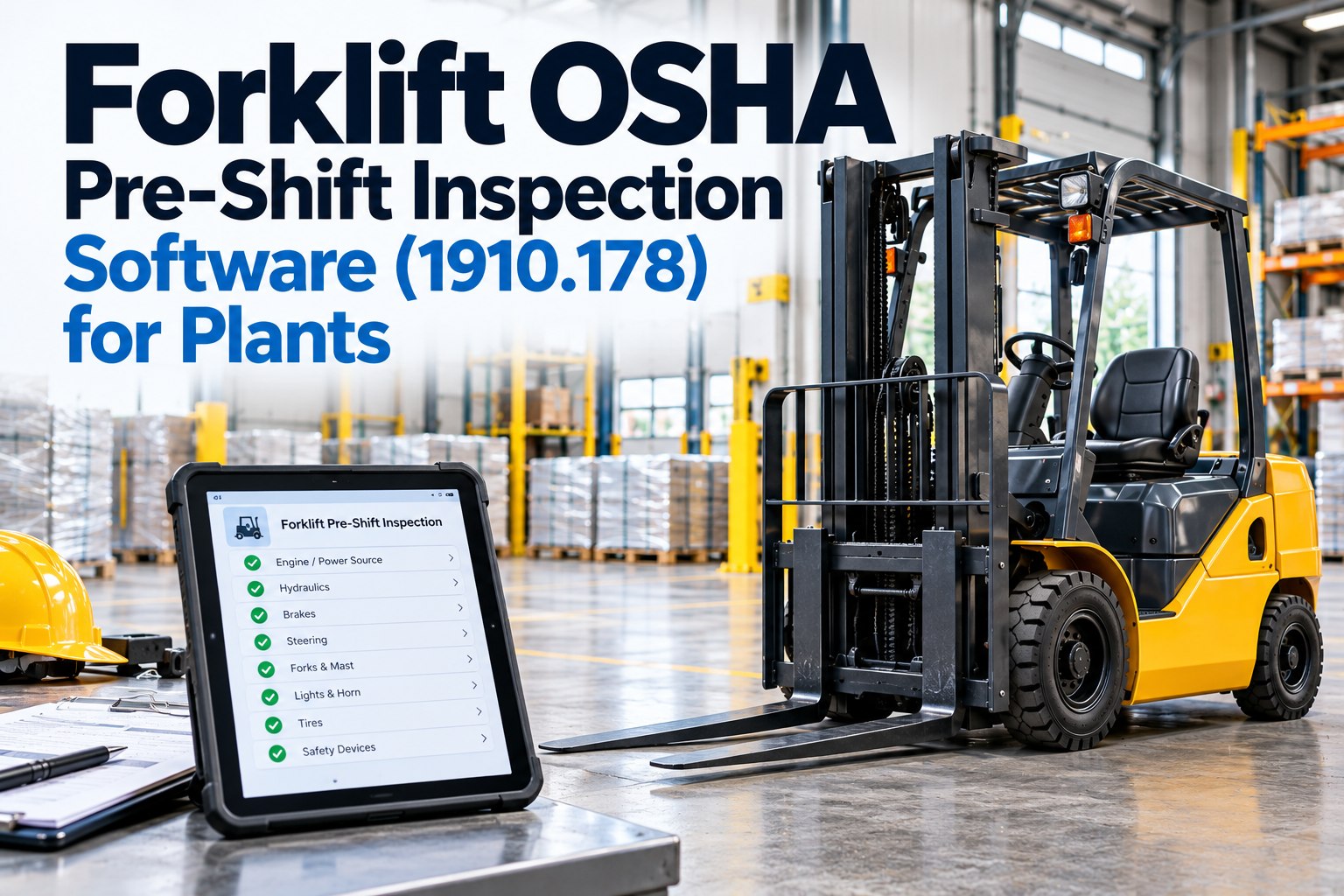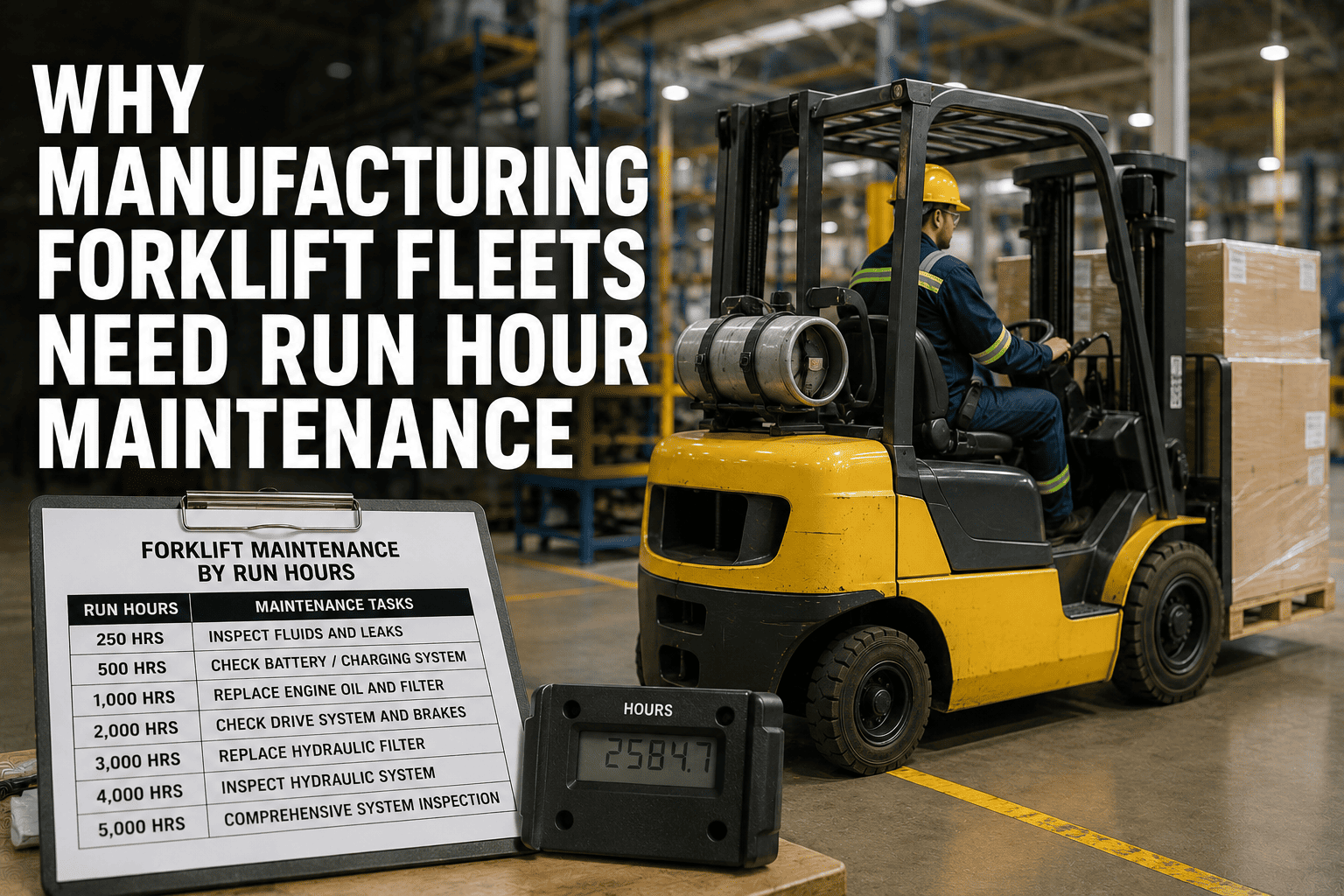
Walk onto almost any manufacturing floor and you'll find forklifts serviced on the same rule: every three months, like clockwork. The problem is that a forklift running three shifts a day doesn't wear out on a calendar, it wears out on an hour meter, and that meter can hit 500 hours in six weeks while a single-shift unit two aisles over takes five months to get there. Servicing both machines on the same date isn't preventive maintenance, it's a coin flip. Plants that switch to run-hour-based triggers stop guessing and start servicing forklifts exactly when the wear actually happens. You can see how that shift works on a real fleet by choosing to book a demo with the FleetRabbit team.
Manufacturing forklifts need run-hour-based maintenance because usage intensity, not the calendar, drives component wear. A forklift working three shifts can accumulate 500 hours in as little as six weeks, while a single-shift unit takes several months to reach the same mark. Standard service ladders sit at 250, 500, 1,000, and 2,000 hours, and tracking the hour meter instead of a fixed date is what keeps hydraulic systems, brakes, and drivetrains from operating past their real service point.
The Hidden Math Behind Multi-Shift Wear
Two identical forklifts, purchased the same week, can be years apart in mechanical condition within a single year of operation. The only difference is how many hours they logged, and that gap grows fast once a plant runs more than one shift.
| Shift Pattern | Approx. Hours Per Month | Time To Reach 500 Hours | Time To Reach 2,000 Hours |
|---|---|---|---|
| Single Shift | 160 to 180 hours | Roughly 3 months | Roughly 12 months |
| Two Shifts | 320 to 350 hours | Roughly 6 weeks | Roughly 6 months |
| Three Shifts | 480 to 520 hours | Roughly 4 weeks | Roughly 4 months |
Why A Fixed Quarterly Date Fails The Three-Shift Unit
If the plant standard is a quarterly service, a three-shift forklift could run 400 extra hours past its real 500-hour point before anyone touches it, operating the entire back half of that gap with degraded hydraulic performance and increased failure risk.
Why The Same Date Over-Services The Single-Shift Unit
The opposite problem costs money quietly. A single-shift forklift serviced every quarter on the same schedule as the busy unit gets fluid and filter changes it doesn't need yet, adding labor and parts cost with no wear-related benefit.
FleetRabbit reads the hour meter on every unit and triggers the right service at the right hour mark automatically, so busy forklifts stop running overdue and light-use units stop getting serviced early.
The Run-Hour Service Ladder
Forklift manufacturers build their service recommendations around the hour meter for the same reason aircraft are maintained on flight hours instead of the calendar. Most plants standardize on four checkpoints.
| Hour Mark | Core Service Tasks | Typical Downtime |
|---|---|---|
| 250 Hours | Fluid levels, visual inspection, mast and chain check, safety system verification | 15 to 30 minutes |
| 500 Hours | Oil and filter change, brake inspection, hydraulic filter, chain and roller check | 2 to 4 hours |
| 1,000 Hours | Deep hydraulic service, drive component inspection, steering wear check, fault history review | 4 to 8 hours |
| 2,000 Hours | Comprehensive overhaul, power source assessment, full drivetrain inspection | 1 to 2 days |
Electric Forklifts Wear Differently Than Internal Combustion Units
Treating both fuel types on the same ladder misses half the story. Electric forklifts add battery health, connector corrosion, and charging discipline to the hour-based schedule, while internal combustion units carry the added burden of engine oil, coolant, and exhaust system checks at each interval.
Battery-specific checks for electric units
Connection corrosion, charging cycle discipline, and cell water levels should be checked on a schedule separate from the hydraulic and drivetrain ladder, since improper charging habits can cut battery lifespan in half regardless of run hours.
Engine-specific checks for IC units
Oil analysis and filter condition at each hour mark catch developing engine wear before it becomes a mid-shift breakdown, particularly in dusty plant environments where filtration is the first system to degrade.
Turning The Hour Meter Into An Automatic Alert
A hand-written hour log depends on someone remembering to walk over, read the meter, and write the number down every week. Miss two weeks in a row on a three-shift unit and the fleet is already 150 hours past where anyone thinks it is.
Step one: connect the hour meter
Telematics or manual entry feeds real-time hours into a central system instead of a clipboard that only gets updated when someone remembers.
Step two: set the service ladder per unit
Each forklift gets its 250, 500, 1,000, and 2,000 hour triggers configured once, and fuel-type-specific tasks like battery checks or oil analysis attach automatically.
Step three: route the alert to a technician
When a unit crosses its threshold, the assigned technician gets a mobile work order before the forklift finishes its shift, not after it breaks down mid-run.
Plants that make this switch typically catch developing hydraulic and brake issues while the vehicle is still operational, rather than discovering them through a roadside failure on the production floor. If your plant is still tracking hours on paper, it's worth seeing the automated version — you can sign up for a free trial and connect your first few forklifts today.
FleetRabbit turns every forklift's hour meter into a live trigger for the right service at the right threshold, with mobile work orders sent to technicians before a unit ever runs overdue.
Frequently Asked Questions
Multi-shift plants can't afford to guess when a forklift is due. FleetRabbit tracks the hour meter on every unit, triggers the right service level automatically, and puts the work order in front of a technician before the machine ever runs overdue.