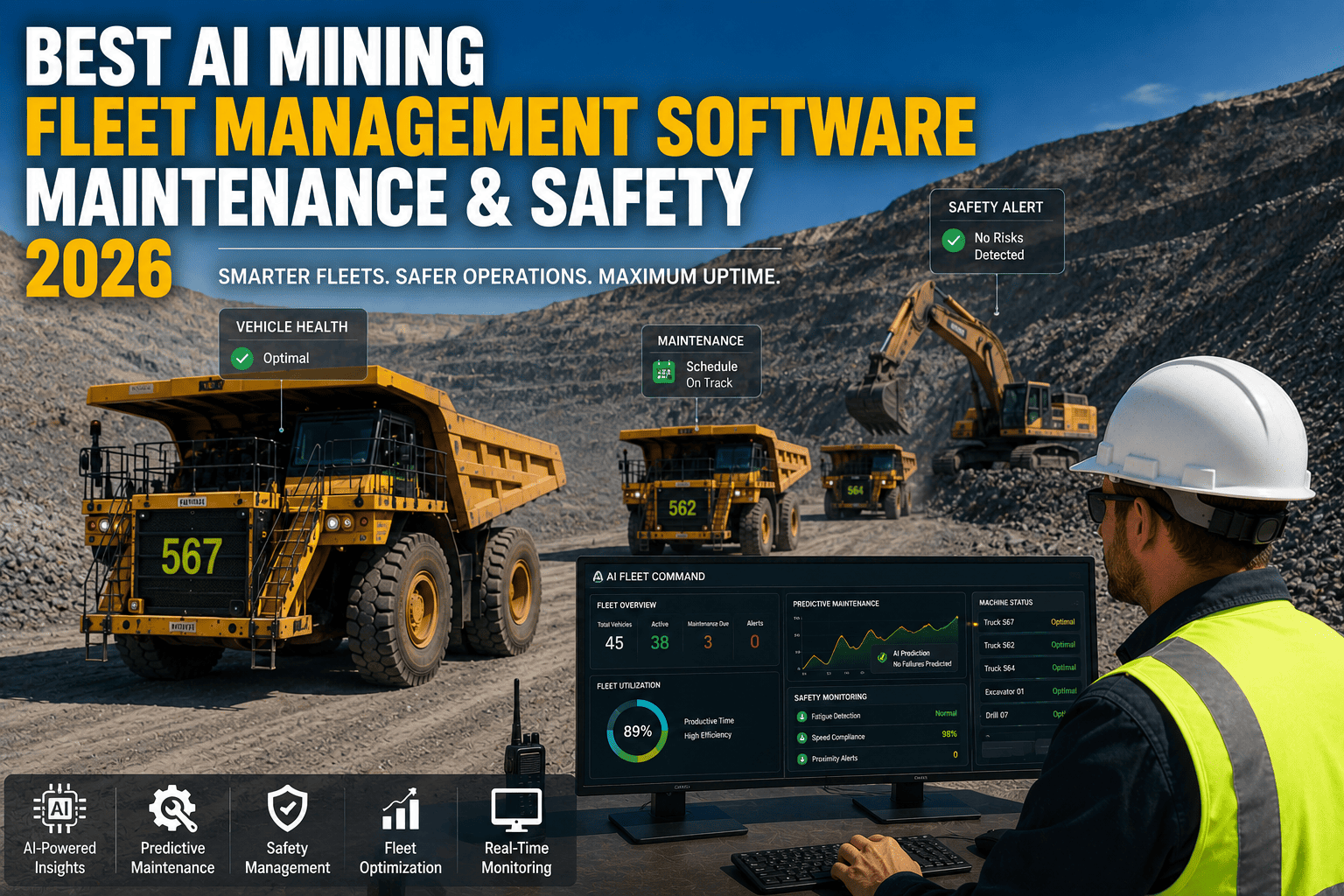
Underground and surface mining operations run some of the most complex, high-value equipment on the planet — haul trucks worth millions, excavators running around the clock, and ancillary fleets that keep every shift productive. Yet most mine sites still manage this equipment with paper logs, radio calls, and gut instinct. The result is predictable: unplanned breakdowns, costly emergency repairs, missed compliance deadlines, and safety risks that never needed to happen. In 2026, AI mining fleet management software changes all of that — giving operations teams live visibility, predictive failure alerts, and digital inspection trails that protect both assets and people. If you manage equipment at a mine site and you're still reacting to breakdowns after they happen, this guide is for you. Book a demo with FleetRabbit to see what predictive mining fleet management looks like in practice.
The best AI mining fleet management software in 2026 combines predictive maintenance, real-time equipment tracking, MSHA-compliant digital inspections, and operational analytics in one platform. Leading solutions like FleetRabbit catch hydraulic, engine, and transmission failures 20–45 days before traditional diagnostics, reducing unplanned downtime by 35–50% and delivering 4–12x ROI on maintenance investment.
Why AI Is Now the Standard for Mining Fleet Management
The mining fleet management software market reached $1.2 billion in 2024 and is projected to hit $2.5 billion by 2033, growing at 9.2% annually. This isn't a trend — it's a fundamental operational shift. Mine sites that once relied on calendar-based PM schedules and paper inspection forms are moving to AI-driven platforms that predict failures, automate compliance, and optimize every asset across the operation.
The economic pressure is clear. A single unmanaged mine operation loses an average of $127,000 per year to unplanned downtime, emergency repairs, regulatory penalties, and parts delays. Heavy equipment like haul trucks can cost $15,000 per operating hour to keep running, and engine rebuilds routinely run $400,000+. When AI can predict a failure 30 days in advance and convert a $400,000 emergency rebuild into a $40,000 scheduled repair, the ROI is self-evident. Sign up for FleetRabbit and start catching failures before they cost you.
5 Core Capabilities Every AI Mining Fleet Platform Needs
Not all fleet management platforms are built for mining. Many are adapted from trucking or logistics and lack the hour-based scheduling, offline inspection capability, and OEM telematics integrations that mine sites require. Before evaluating any platform, verify it delivers all five of these core capabilities.
AI Predictive Maintenance
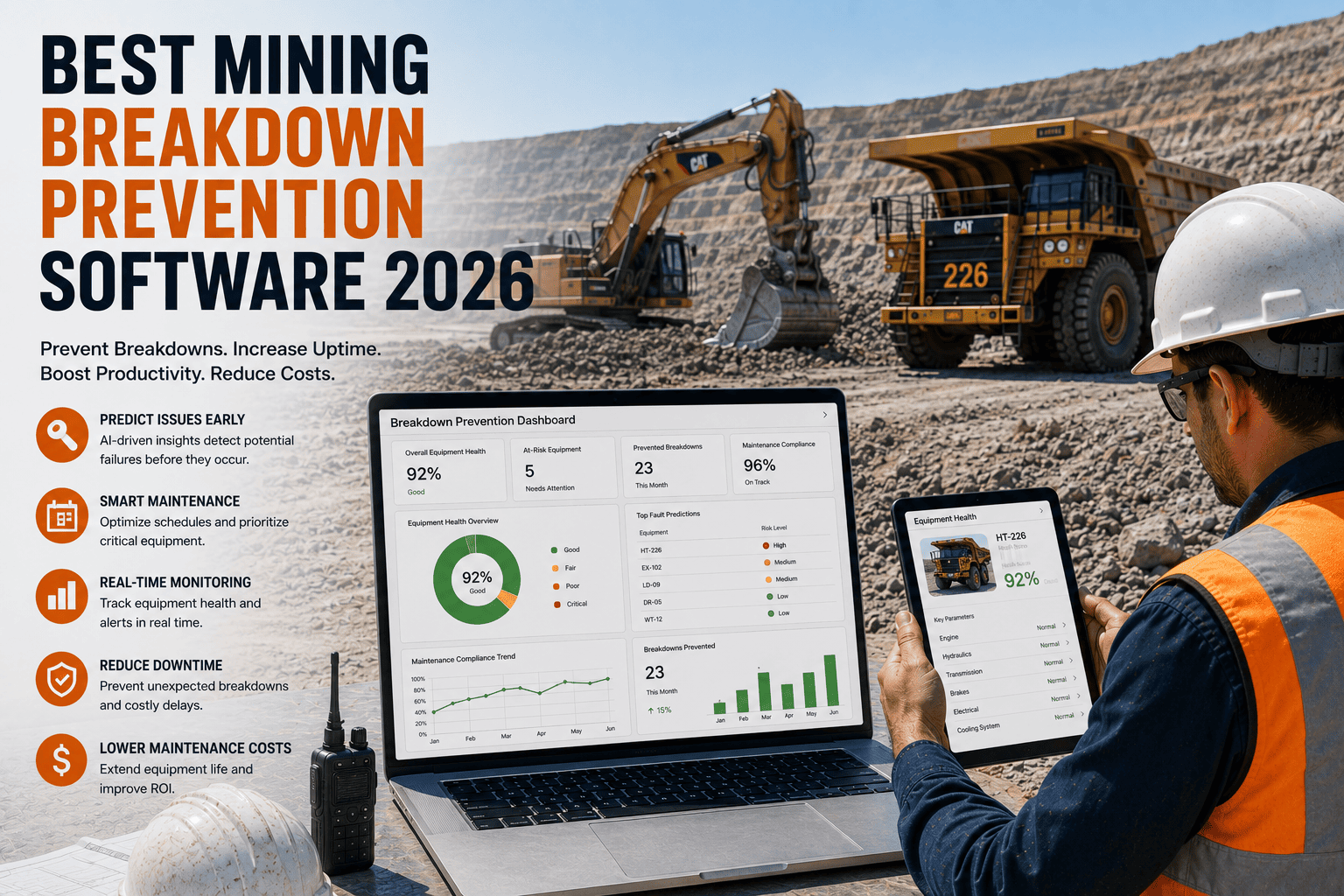
Machine learning models analyze engine sensor data, telematics, and historical repair records to predict hydraulic, transmission, and engine failures 20–45 days before they occur. Planned repairs cost 4–5x less than emergency breakdowns for identical components.
MSHA-Compliant Digital Inspections
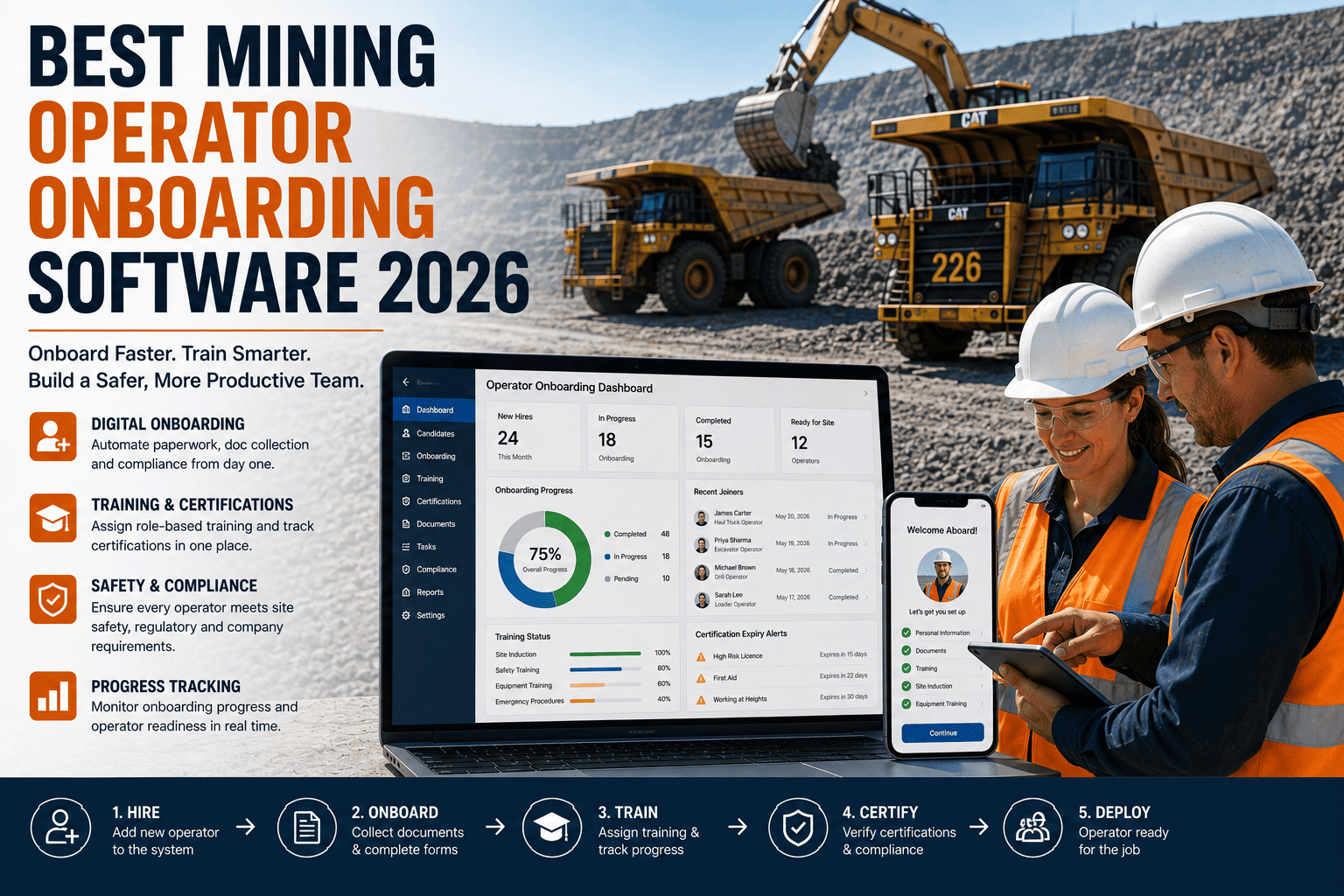
Pre-shift inspection checklists tailored to each machine type — haul trucks, loaders, excavators — with offline mobile capability for remote pit locations. Every inspection creates a timestamped audit trail that satisfies MSHA requirements without paper filing.
Real-Time Asset Tracking & GPS
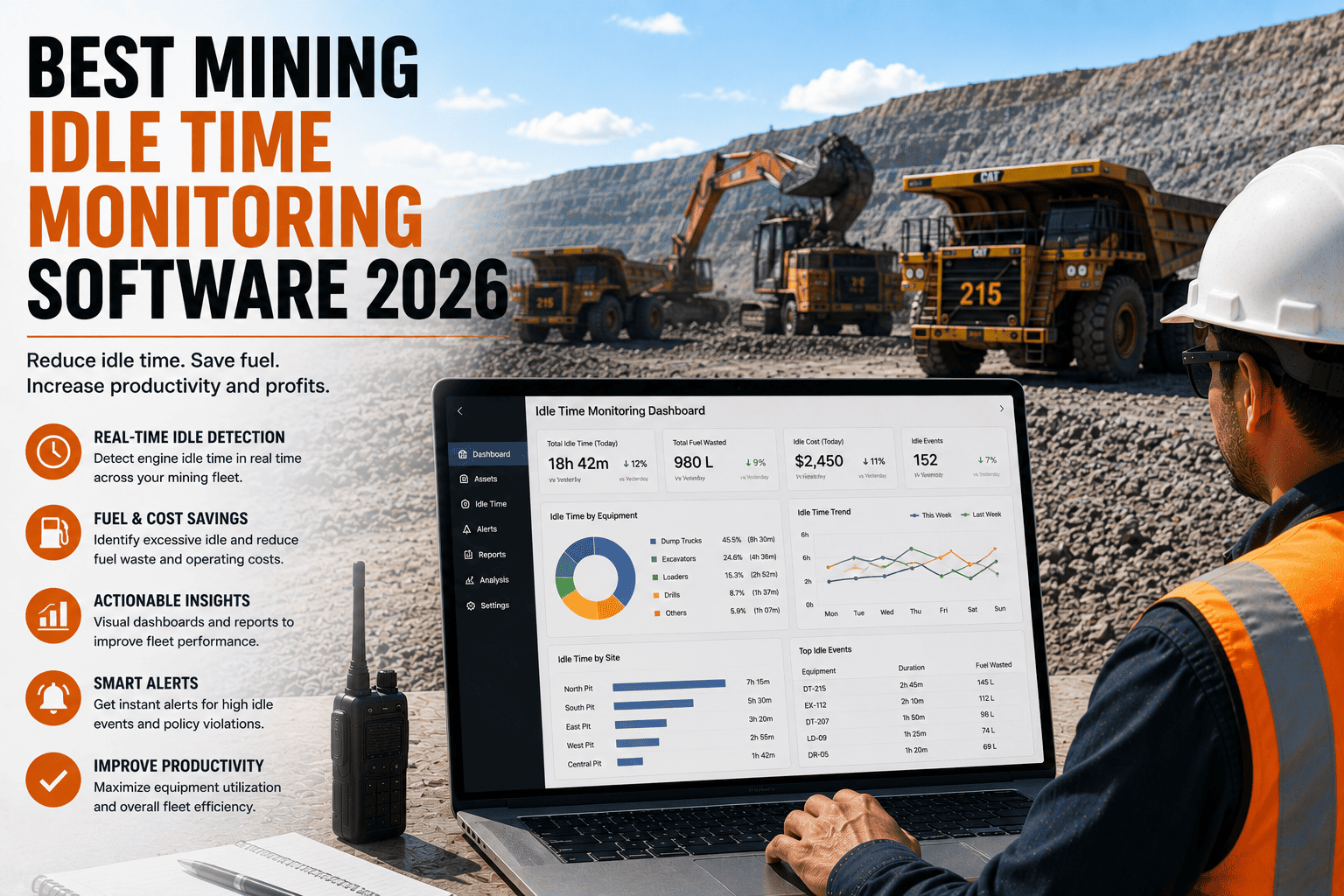
Live dashboard visibility across every haul truck, loader, and ancillary vehicle on site. Geofencing alerts, equipment utilization metrics, and shift-by-shift reporting give operations managers the data to optimize deployment and eliminate idle time.
Operational Analytics & Cost-Per-Hour
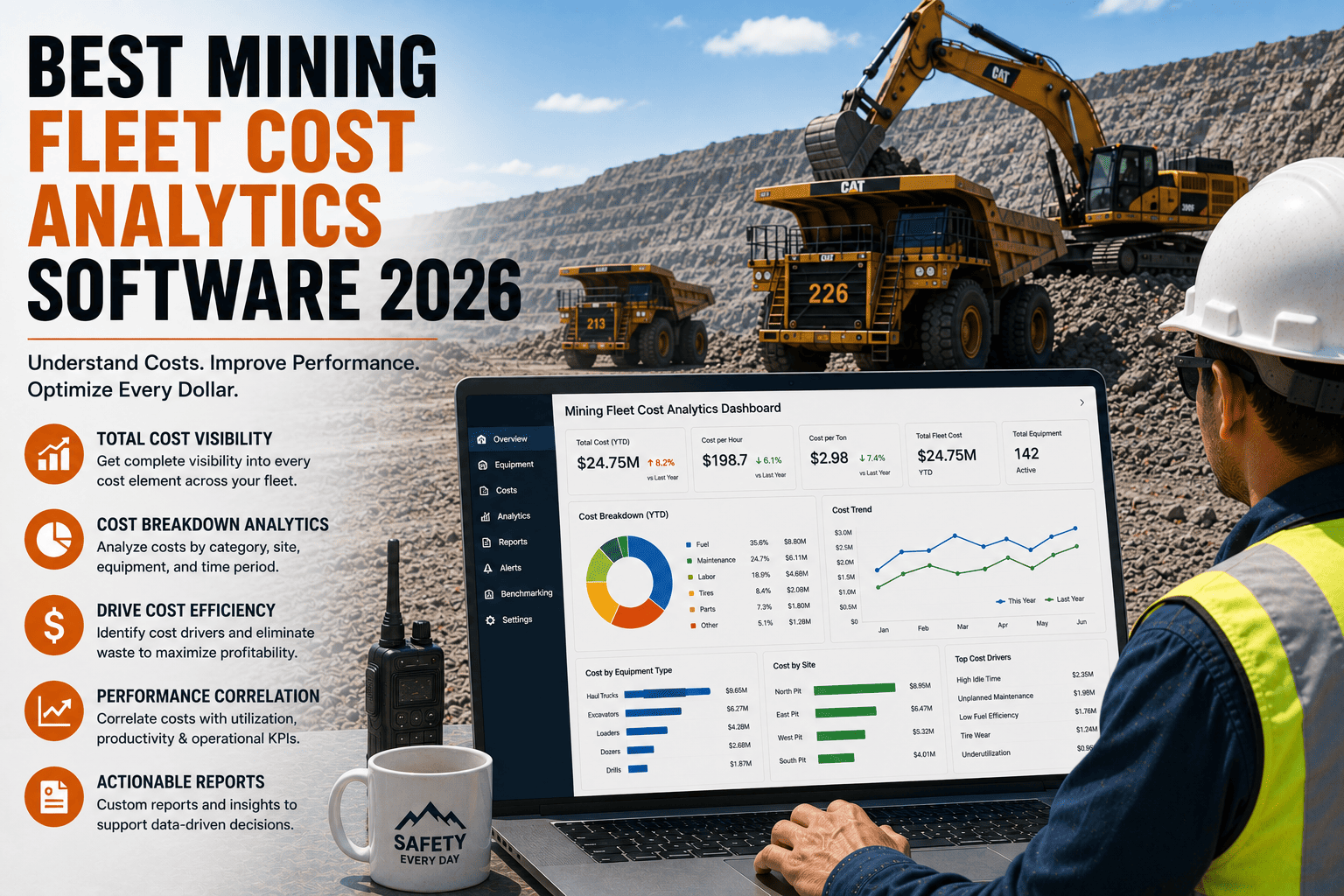
Cost-per-operating-hour analytics reveal which assets are underperforming and why. Trending data identifies components that fail repeatedly, enabling targeted investment in higher-quality parts or upgraded maintenance protocols that extend asset life.
Fleet Safety Monitoring
With 28 mining fatalities in 2024 from vehicle interactions, safety monitoring is non-negotiable. AI fleet platforms track driver behavior, operator fatigue indicators, and equipment health status that directly impact on-site collision and incident risk.
OEM Telematics Integration
Native integration with Cat MineStar, Komatsu KOMTRAX, and major telematics providers without replacing existing hardware. Hour-based PM scheduling (not mileage) aligned with OEM recommendations and your actual operational patterns.
How AI Predictive Maintenance Works in Mining
Traditional maintenance schedules are time-based: change the oil every 250 hours, inspect brakes every 500 hours. This approach is blind to actual equipment condition. A haul truck operating in harsh, dusty conditions at maximum load degrades faster than scheduled intervals assume. A truck running light cycles in optimal conditions may have components that can safely run longer. AI predictive maintenance replaces guesswork with condition-based intelligence.
The AI Maintenance Cycle
Continuous Sensor Ingestion
Engine temperature, hydraulic pressure, transmission vibration, brake wear, and fuel consumption data streams in 24/7 from onboard sensors and telematics systems across every asset.
AI Pattern Analysis
Machine learning models compare real-time readings against failure baselines built from millions of equipment events. Subtle deviations — a hydraulic pressure drop 3% below normal — trigger risk scoring days before a DTC code activates.
Automated Work Order Creation
When risk crosses threshold, the system generates a prioritized work order, checks parts inventory, schedules a repair window during planned downtime, and assigns the right technician — no manual input required.
Repair & Learning Loop
Every repair outcome refines the AI model. The system learns your specific equipment, operational conditions, and failure patterns — prediction accuracy improves continuously and reaches 94% in production deployments.
The economic impact is direct. Book a FleetRabbit demo to see how mines using automated PM scheduling improve haul truck availability by 35% within the first quarter — every recovered hour of uptime is production revenue that would otherwise be lost.
Mining Fleet Downtime: What It's Actually Costing You
Fleet downtime in mining carries costs that extend far beyond the repair invoice. When a 150-ton haul truck breaks down mid-shift, the financial damage cascades across the entire operation simultaneously.
| Cost Category | Per Incident Cost | What Drives It | Prevention Approach |
|---|---|---|---|
| Direct Revenue Loss | $1,500–$4,000 | Production halted for 6–12+ hours; haul cycles disrupted across site | Predictive alerts schedule repairs during planned shift breaks |
| Emergency Repair Labor | $800–$2,500 | Overtime rates, expedited service calls, technician diversion from scheduled work | Catch issues during preventive windows at standard labor rates |
| Premium Parts Sourcing | $1,200–$4,500 | Emergency parts bypass normal procurement; supplier markups, expedited freight | AI-triggered advance ordering maintains inventory for predicted failures |
| Road Recovery & Towing | $500–$2,000 | On-site recovery vehicles, crane mobilization, haul to workshop | Prevent roadside failures through systematic condition monitoring |
| Cascading Equipment Stress | $300–$900 | Remaining fleet runs harder to compensate; accelerated wear, fuel overconsumption | Eliminate primary failures to protect backup fleet from overuse damage |
| Compliance & Safety Risk | $500–$5,000+ | Missed MSHA inspection deadlines, safety violations, potential regulatory fines | Digital inspection trails with automated compliance scheduling |
AI Mining Fleet Software vs Traditional Fleet Management
Understanding the gap between legacy fleet management approaches and modern AI platforms helps operations teams build the business case for technology investment. The difference isn't incremental — it's a fundamentally different operating model.
- Calendar-based PM schedules regardless of actual equipment condition
- Paper inspection checklists that get lost, skipped, or falsified
- Reactive maintenance — fix it after it breaks
- No visibility into which assets are trending toward failure
- Manual work order tracking with spreadsheets or whiteboards
- Compliance documentation assembled manually before audits
- Emergency parts ordering at premium pricing
- Institutional knowledge locked in individual technician heads
- Condition-based maintenance triggered by real equipment health data
- Digital inspections with offline capability, timestamped and audit-ready
- Predictive maintenance — catch failures 20–45 days before they happen
- Live fleet health dashboard ranking every asset by failure risk
- Automated work order generation, scheduling, and technician assignment
- MSHA audit trails generated automatically, always ready
- Advance parts ordering triggered by AI failure predictions
- AI captures diagnostic knowledge and scales it across every technician
Fleet Safety in Mining: Where AI Makes the Biggest Difference
Mining safety isn't a compliance checkbox — it's an operational priority that AI fleet management addresses at the equipment level. With vehicle interactions accounting for 30–40% of mining fatalities, the condition of your fleet directly determines the safety of every person on site. Sign up for FleetRabbit to get live safety monitoring deployed across your fleet today.
How AI Fleet Platforms Improve On-Site Safety
Brake System Monitoring
AI tracks brake pad thickness, hydraulic pressure, and fluid condition in real time. Degradation alerts are triggered before brake failure risk reaches a dangerous threshold — not after a near-miss incident.
Pre-Shift Inspection Enforcement
Digital checklists with mandatory completion before equipment can be signed out. Defects flagged during inspection automatically create work orders and flag equipment for grounding — eliminating the safety gaps paper inspections create.
Driver Behavior Analytics
Harsh braking, excessive speed in geofenced zones, and fatigue-pattern indicators are tracked per operator. Coaching interventions happen proactively — before behaviors become incidents. AI driver coaching combined with predictive maintenance reduces accidents by 35%.
MSHA Compliance Automation
Every inspection, maintenance action, and defect resolution is timestamped and stored. MSHA audits that once required days of document assembly are satisfied in minutes with complete digital records available on demand.
ROI of AI Mining Fleet Management Software
ROI calculations for AI mining fleet software consistently become positive within 6–12 months of deployment. The math is straightforward when you account for all downtime cost categories — not just repair invoices.
ROI Example: 25-Vehicle Mining Fleet
Implementation: How Fast Can You Get Started?
One of the most common objections to AI fleet management adoption is implementation complexity. Operations managers at active mine sites can't afford lengthy IT projects that pull teams away from production. Modern AI platforms are built for rapid deployment — FleetRabbit is designed to get your entire fleet into a live maintenance dashboard before your next shift starts.
Typical Implementation Timeline
Week 1 — Data Integration & Setup
Connect existing telematics providers (Cat MineStar, Komatsu KOMTRAX, or generic OBD) without replacing hardware. Configure hour-based PM schedules aligned with OEM recommendations and your operational patterns. Import historical maintenance records.
Week 2 — Inspection & Compliance Configuration
Build MSHA-compliant pre-shift inspection checklists for each equipment type. Train operators on the mobile inspection app — offline capability means no connectivity delays on remote pit locations. First digital inspection audit trail established.
Weeks 3–4 — Live Dashboard & First Alerts
AI begins analyzing sensor data against baseline patterns. Maintenance teams start receiving predictive alerts for developing issues. Most mines identify 2–4 previously invisible equipment problems within the first two weeks of active monitoring.
Days 30–90 — Measurable Downtime Reduction
Operations teams see 20–30% downtime reduction in the first 90 days as the system catches and enables correction of issues that were previously invisible. AI models refine continuously based on your specific equipment and operating conditions.
Ready to start? Sign up for FleetRabbit with no credit card required — get your fleet into a live dashboard today and see your first actionable maintenance insight within hours.
Stop Reacting to Breakdowns. Start Predicting Them.
FleetRabbit gives mining operations live equipment health dashboards, MSHA-compliant digital inspections, AI predictive maintenance alerts, and shift-by-shift utilization reporting — all in one platform built for mine sites, not adapted from trucking. Set up in under a day. No enterprise contracts. No IT team required.
Key Metrics to Track with AI Mining Fleet Software
Effective fleet management requires tracking the right KPIs — not just fuel consumption and odometer readings. AI platforms surface the metrics that actually predict operational performance and identify improvement opportunities before they become crises.
Essential Mining Fleet KPIs
Percentage of scheduled operating hours the asset is available and running. Long-haul equipment targets 98–99%; surface mining equipment typically targets 95–97%. Below 93% signals chronic issues requiring root cause analysis.
Average operating hours between unplanned breakdowns per asset. AI predictive maintenance typically improves MTBF by 40–60% within the first year by catching developing failures before they complete.
Ideally 80–90% of all maintenance should be scheduled. Operations with 50–70% unplanned maintenance are reactive and prime candidates for AI predictive tools — the potential improvement is immediate and substantial.
Rising cost per operating hour over time signals declining fleet health even when vehicle count stays constant. Fleets implementing AI maintenance typically reduce cost per operating hour by 8–15% within 12 months.
Pre-shift inspection compliance rate across all equipment and operators. Digital inspection platforms with mandatory completion enforcement routinely achieve 98–100% compliance versus 60–75% for paper-based systems.
Time between AI failure prediction alert and maintenance action. Operations that respond to predictive alerts within 48 hours convert potential $50,000+ emergency breakdowns into $3,000–$8,000 scheduled repairs.
Frequently Asked Questions
The Bottom Line on AI Mining Fleet Management Software
Mining operations in 2026 that rely on paper inspections, calendar-based PM schedules, and reactive maintenance are paying a compounding price — in emergency repair premiums, unplanned downtime, compliance risk, and safety exposure. The average unmanaged mine loses $127,000 per year to problems that AI fleet management software prevents systematically.
The platforms leading this space — built specifically for mining rather than adapted from trucking — deliver predictive failure detection 20–45 days in advance, MSHA-compliant digital inspections with offline capability, live asset health dashboards, and cost-per-operating-hour analytics that identify underperforming equipment before it becomes a production liability.
FleetRabbit AI is purpose-built for mine sites: haul trucks, loaders, excavators, and ancillary fleets tracked in one live dashboard, with MSHA audit trails, predictive maintenance alerts, and shift-by-shift utilization reporting — all set up in under a day. Sign up for a free 14-day trial or book a 30-minute demo to see your first actionable fleet insight before your next shift starts.
Get Your Mining Fleet Into a Live AI Dashboard Today
Every day without AI predictive maintenance is another day of breakdowns you could have prevented, emergency repair premiums you didn't need to pay, and compliance gaps you can't afford. FleetRabbit deploys in under 24 hours and delivers actionable fleet health insights from day one. Join mining operations across the US, Australia, and globally that have already cut downtime by 35–50%.