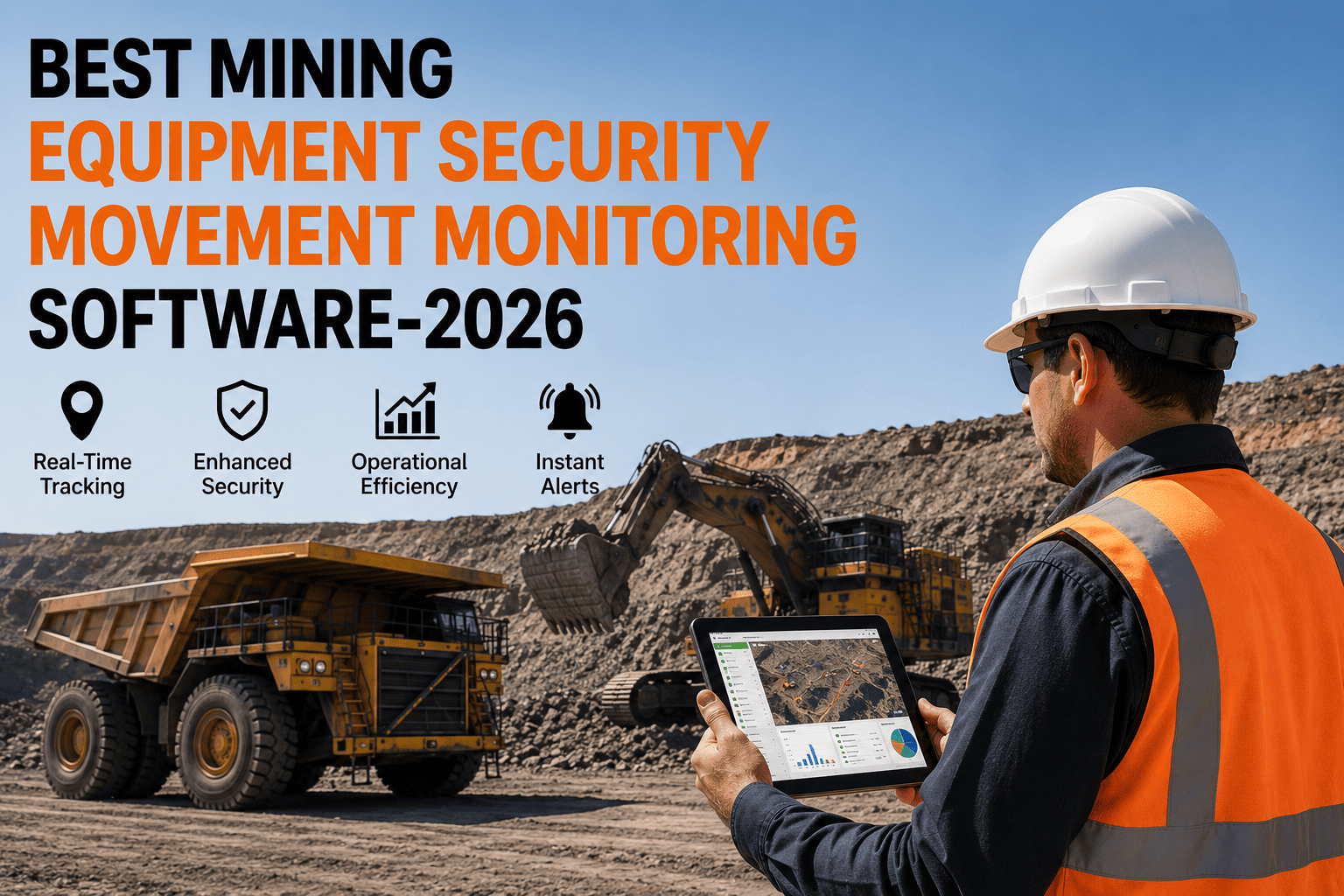
A haul truck sitting idle overnight at a remote pit is one of the easiest high-value targets in any industry. Mining sites sit far from police response times, run equipment worth hundreds of thousands of dollars per unit, and often leave keys in the ignition between shifts because stopping to lock every cab slows down operations. Mining equipment security and movement monitoring software closes that gap by watching every asset continuously, the moment it starts moving outside approved zones or hours, not the next morning when someone notices it missing.
The best mining equipment security software combines GPS location tracking, geofence alerts around active zones and restricted areas, and after-hours movement detection into one live dashboard. Recovery outcomes are decided almost entirely in the first 15 to 30 minutes after unauthorized movement begins, before equipment reaches a staging area, gets loaded onto a second trailer, or is dismantled for parts.
Why The First 30 Minutes Decide Everything
Once stolen or misused equipment reaches a transport corridor or a temporary staging point, recovery rates decline sharply. The window that matters most is not how accurate your GPS unit is. It is how fast a geofence breach turns into a confirmed alert, and how fast that alert reaches someone who can act on it. A four-stage response is what separates sites that recover equipment from sites that file an insurance claim and move on.
Why Mining Sites Are Prime Targets
Mining operations face a specific combination of risk factors that most other industries do not deal with at the same scale. Understanding these makes it clear why generic vehicle tracking is not enough for a mine site.
FleetRabbit watches every asset against its approved zones and hours, and fires an alert the moment a breach happens instead of waiting for someone to notice equipment is gone. You can sign up and have your fleet's geofences live within a single day.
Core Capabilities Every Mining Security Platform Needs
Not every GPS tracker qualifies as a security system. The table below breaks down the capabilities that actually change how fast a threat gets caught and how well it stands up as evidence afterward.
| Capability | What It Catches | Why It Matters On A Mine Site |
|---|---|---|
| Live GPS Location | Real-time position of every powered and unpowered asset | Turns a search into a pin on a map instead of a guess across hundreds of acres |
| Geofence Boundaries | Movement outside active pit zones, haul roads, or storage yards | Flags a breach the instant it happens instead of relying on a visual check |
| After-Hours Movement Rules | Ignition or motion events outside approved shift windows | Catches the exact scenario most theft actually happens in, overnight and on weekends |
| Restricted Zone Alerts | Entry into blast zones, high-wall areas, or unauthorized sections | Prevents near-miss safety incidents in addition to security breaches |
| Movement History Logs | Full record of distance, duration, speed, and route for every asset | Supports insurance claims, investigations, and post-incident documentation with a verified timeline |
| Offline-First Reporting | Location and activity data captured even without signal at depth | Keeps underground and deep-pit assets visible instead of going dark exactly where risk is highest |
Geofencing Is More Than A Perimeter Line
Basic geofencing draws one boundary around a site and alerts when anything crosses it. Mining operations need several layers working together, since a single perimeter fence misses most of the situations that actually cause loss or risk.
Zone-Specific Rules For Active Areas
Blast zones, haul roads, and high-wall sections all need their own boundaries with different alert rules. An asset entering a blast zone during an active shift is a safety issue. The same asset parked in a storage yard after hours is a security issue. Treating both as the same type of alert buries the ones that actually need immediate attention.
After-Hours And Idle Detection
Most unauthorized movement happens outside working hours, when nobody is actively watching the yard. Rules that flag ignition events, movement, or dwell time changes specifically during off-shift windows catch the exact pattern most theft follows, instead of generating noise from equipment being used correctly during the day.
Layered Detection, Not A Single Trigger
Deterrence, geofencing, and live tracking work as three layers, and weakening any one of them reduces the effectiveness of the others. A hidden tracker without geofence rules just shows where equipment ended up. Geofence alerts without a defined response process just generate notifications nobody acts on in time. The combination is what actually changes outcomes.
FleetRabbit configures blast zones, haul roads, and storage areas as separate geofences, each with its own rules for hours, speed, and access, so alerts reach the right person for the right reason. Book a demo to see your own site mapped with live geofence rules.
Building A Response Plan Around Your Software
Software alone does not recover equipment. A structured response process built around the alerts is what actually turns a geofence breach into a recovered asset instead of a police report filed the next morning.
Confirm before escalating
The first step after any alert is confirming whether the movement is legitimate, such as a shift change or an authorized relocation. False escalations quickly reduce how seriously a team treats future alerts, so a quick confirmation step protects the credibility of the entire system.
Assign a single point of contact
Every alert should route to one designated person or team who owns the response, not a general notification list where everyone assumes someone else is handling it.
Keep movement history ready for investigators
Full movement logs including distance, duration, and route give law enforcement and insurers the exact detail they need to act quickly, rather than starting an investigation from a blank slate.
Frequently Asked Questions
Key Takeaways
Mining equipment security is not about installing a tracker and hoping it helps if something goes wrong. It is about closing the specific window, the first 15 to 30 minutes after unauthorized movement begins, when recovery is still realistic. Remote locations, unattended high-value assets, and slow outside response times make mine sites uniquely exposed, and a single perimeter alert is not enough to cover blast zones, haul roads, storage yards, and after-hours risk all at once.
The operations that actually reduce loss combine live GPS tracking, layered geofence rules built around how each zone is actually used, and a response process that turns an alert into action within minutes instead of hours. That combination is what changes unauthorized movement from a loss you write off into an asset you get back.
FleetRabbit monitors every mining asset against its approved zones and hours, firing an instant alert the moment something moves where it should not. Sign up free and get your site's geofences live today, or book a demo to see live movement monitoring built around your own zones.