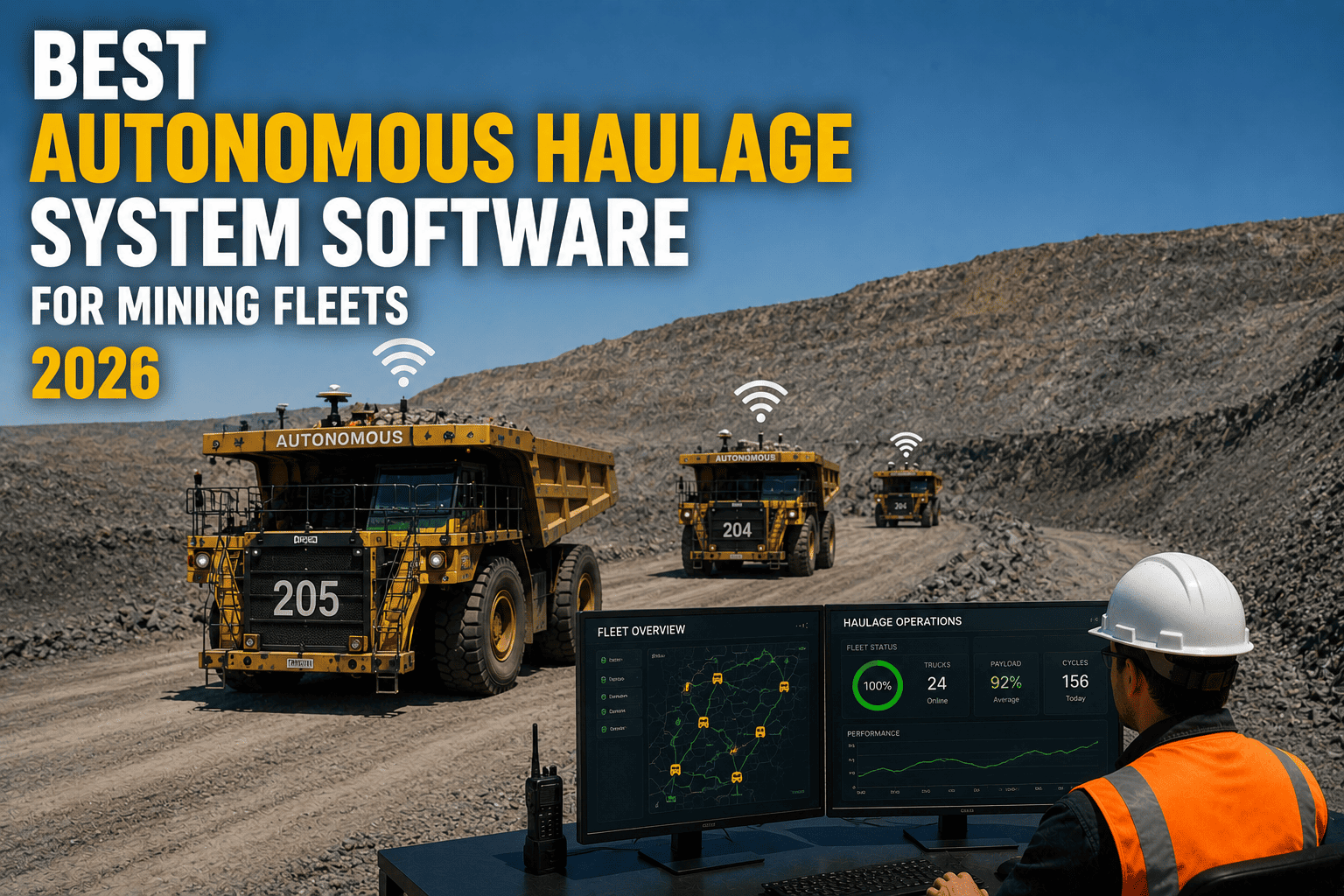
Mining operations are moving faster than ever — and the software powering autonomous haul trucks is the difference between a profitable mine and a struggling one. Discover the top AHS platforms, what to look for, and how FleetRabbit fits into the picture.
Mining operations worldwide are undergoing the biggest transformation in decades. Autonomous haul trucks now run 24 hours a day, seven days a week, across open-pit sites in Australia, Canada, Chile, and beyond — moving billions of tonnes of ore without a single driver behind the wheel. But the trucks themselves are only half the story. The software orchestrating every route, every maintenance alert, and every dispatch decision is what separates a high-performing autonomous mine from one that struggles with costly breakdowns and unexpected downtime. In this guide, we break down the best autonomous haulage system (AHS) software for mining fleets in 2026 — what each platform does, where the gaps are, and how fleet intelligence tools like FleetRabbit help mining operations get more from every autonomous truck they run. Whether you are evaluating a full AHS deployment or looking to improve uptime on an existing autonomous fleet, this guide gives you the clarity you need to make the right decision.
The best autonomous haulage system (AHS) software for mining fleets in 2026 combines real-time vehicle health monitoring, AI-driven route optimization, predictive maintenance scheduling, and seamless fleet dispatch coordination. Leading platforms include Komatsu FrontRunner, Caterpillar MineStar Command, and Hitachi Wenco — but modern operations increasingly pair these with fleet intelligence platforms like FleetRabbit to maximize uptime, cut maintenance costs, and keep every autonomous truck operating at peak capacity around the clock.
What You Will Learn
What Is Autonomous Haulage System Software?
Autonomous Haulage System (AHS) software is the brain behind driverless haul trucks in open-pit and underground mines. It coordinates GPS navigation, obstacle detection, route planning, fleet dispatching, and real-time communication — all without a human operator sitting behind the wheel.
Unlike traditional fleet management tools, AHS software operates continuously across all three shifts with no fatigue, no human error, and no production gaps caused by shift changes. Sign up for FleetRabbit to see how intelligent fleet management software complements your AHS deployment and keeps your trucks moving longer.
Why AHS Software Matters More Than Ever in 2026
The numbers tell a compelling story. China alone surpassed 4,000 autonomous mining trucks in operation by early 2026, with EACON deploying over 2,000 units across 25 sites. Komatsu commissioned its 1,000th autonomous ultra-class haul truck in April 2026. The industry is not experimenting — it is scaling at pace.
Labor Shortages Are Getting Worse
Remote mine sites in Australia, Canada, Chile, and Siberia face chronic worker shortages. Autonomous haulage software removes the dependency on hard-to-recruit operators while enabling existing staff to move into higher-value monitoring and analytics roles.
ESG Mandates Are Tightening
By 2026, autonomous mining trucks are expected to reduce greenhouse gas emissions by 20–25% in leading operations. AHS software's route optimization and fuel management capabilities directly support sustainability targets that investors and regulators now demand.
Downtime Costs Are Skyrocketing
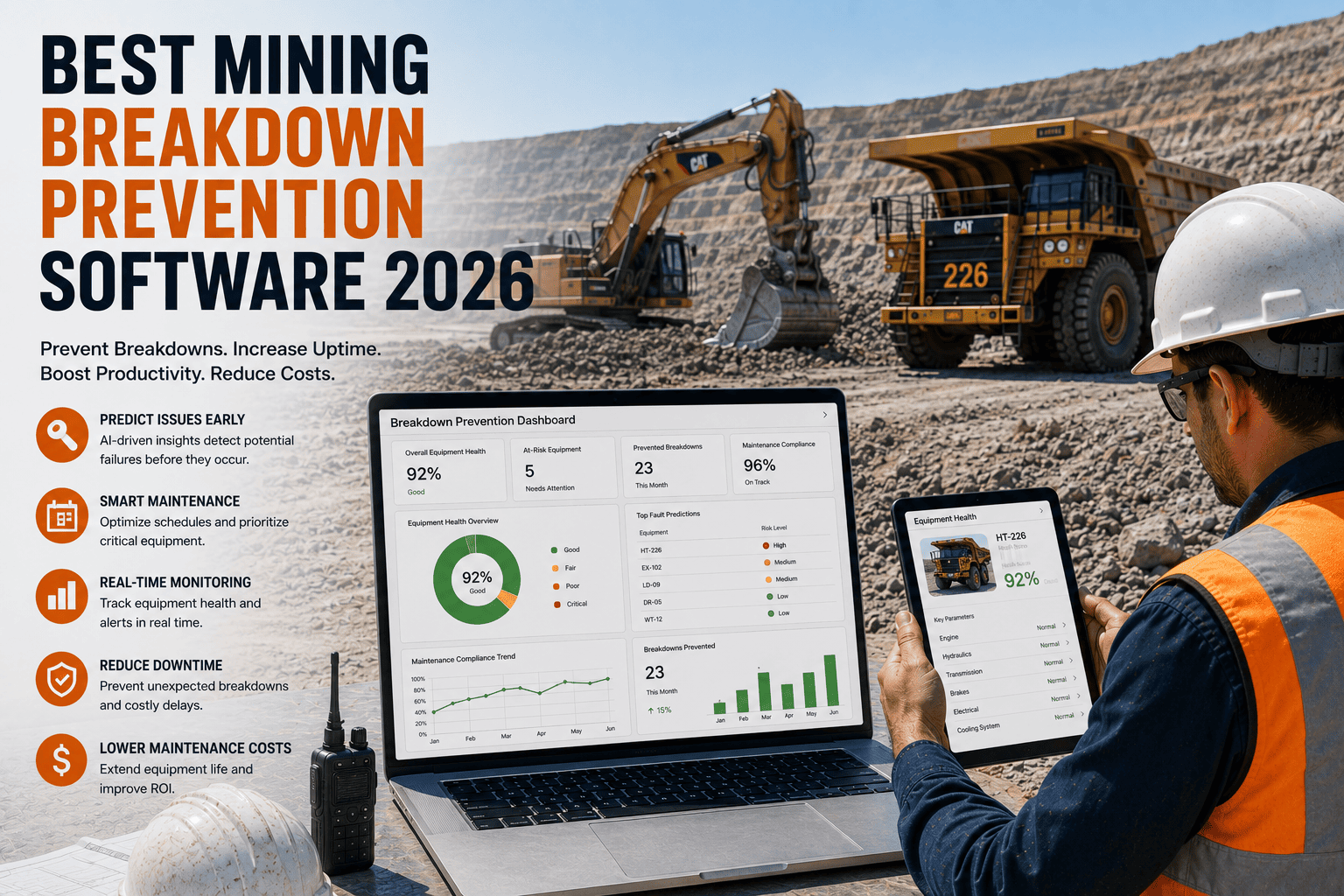
A single unplanned haul truck breakdown in a mining operation can cost tens of thousands of dollars per day in lost production. AHS software combined with predictive maintenance platforms catches failures weeks before they happen, eliminating the most expensive surprises. Book a demo to explore how FleetRabbit prevents this.
Key Features to Look For in AHS Software
Not all autonomous haulage platforms are built the same. Whether you are evaluating a full OEM solution or a complementary fleet intelligence layer, these are the capabilities that separate high-performing systems from basic automation.
Real-Time Vehicle Health Monitoring
The software must monitor engine temperature, tyre pressure, braking systems, and transmission data continuously — not just during scheduled checks. Systems that process thousands of data points per second using machine learning can predict component failures up to 500 operating hours in advance, keeping trucks on the road instead of in the shop.
AI-Powered Route Optimization
Effective AHS software dynamically recalculates haul routes based on payload weight, road conditions, traffic congestion at loading and dumping points, and fuel efficiency targets. Static routing costs mines millions annually in wasted fuel and extended cycle times.
Predictive Maintenance Scheduling
The gap between planned and unplanned maintenance is massive: a planned tyre service might cost $3,000 while an emergency tyre failure on a haul road costs $40,000–60,000 per truck tyre plus towing and lost production. The best AHS software platforms schedule maintenance during low-demand windows, not during peak production hours.
Centralized Fleet Dispatching
A unified dispatch interface coordinates every autonomous truck across the site simultaneously, preventing bottlenecks at loading zones and optimizing overall throughput. This coordination is what allows mining operations to achieve consistent, 24/7 production rates that human-operated fleets cannot match.
Integration with Existing Telematics and ERP Systems
The best AHS software connects cleanly with existing fuel card systems, maintenance management platforms, and enterprise resource planning tools. Siloed systems create blind spots — and blind spots in mining create accidents and expensive surprises.
Digital Work Order Management
Every maintenance task should be documented digitally, creating a permanent record for compliance, warranty claims, and historical analysis. Operations that rely on paper-based maintenance records consistently experience 25–40% more unplanned downtime than those using digital workflows.
Top Autonomous Haulage System Platforms in 2026
The AHS software market in 2026 is dominated by OEM-integrated platforms alongside specialist fleet management layers. Here is how the leading solutions compare across the dimensions that matter most to mining operations teams.
| Platform | Best For | Truck Compatibility | Predictive Maintenance | Open Integration |
|---|---|---|---|---|
| Komatsu FrontRunner | Large open-pit operations, 290MT+ trucks | Komatsu 930E, 960E series | Advanced (500hr prediction) | Limited to Komatsu ecosystem |
| Cat MineStar Command | Integrated Cat fleets, near-continuous ops | CAT 793, 797 series | Strong via MineStar Health | Partial — Cat systems preferred |
| Hitachi Wenco AHS | Coal and hard rock mines, mixed fleets | Hitachi EH5000AC3 series | Good — integrated diagnostics | Moderate via Wenco FMS |
| Sandvik AutoMine | Underground mining, ramp haulage | Sandvik trucks and loaders | Condition monitoring included | Open API available |
| FleetRabbit (Intelligence Layer) | Any fleet — adds predictive maintenance & analytics on top of any AHS | All makes and models | 35–50% downtime reduction | Full open integration |
FleetRabbit works alongside OEM AHS platforms — not instead of them. It fills the gaps that proprietary systems leave: multi-vendor visibility, independent predictive maintenance, and fleet-wide cost analytics that no single OEM platform delivers. Start your free trial today and connect your existing fleet data in minutes.
Take Control of Your Autonomous Fleet's Uptime
FleetRabbit monitors every truck in your autonomous mining fleet 24/7, predicting failures before they happen and scheduling maintenance during planned windows — not during peak production hours. Reduce unplanned downtime by up to 50% and recover hundreds of thousands in lost production annually.
Fleet Maintenance in Autonomous Mining: The Hidden Challenge
Here is a reality that many mining operations discover only after deploying AHS: autonomous trucks break down too. Removing the human driver eliminates fatigue-related incidents and operator error — but it does not eliminate wear and tear on mechanical components. In fact, autonomous trucks running 24/7 across all three shifts accumulate mechanical stress faster than human-operated trucks, which stop at shift changes.
The Cost Gap Between Planned and Unplanned Maintenance
The financial difference between catching a problem early and reacting to a breakdown is enormous in mining environments. Emergency repairs require overtime technician labor, expedited parts shipments (sometimes by helicopter to remote sites), towing, and lost production time. A planned brake service on a 300-ton haul truck might cost $8,000. The same repair performed as an emergency after a road breakdown can exceed $35,000 — plus towing and lost production.
Cost comparison: planned vs unplanned maintenance in large mining truck operations
What Predictive Maintenance Software Does Differently
Instead of scheduling maintenance based on calendar intervals or mileage milestones, predictive maintenance software analyses real-time sensor data — engine temperature trends, vibration patterns, oil analysis readings, brake fluid condition — and flags developing problems weeks before they become failures. Some mining operations have achieved 90% accuracy in predicting tyre replacement requirements up to 500 operating hours before failure, turning one of mining's most expensive surprises into a planned, budgeted event.
Key Maintenance Metrics That AHS Software Should Track
Where FleetRabbit Fits in Your Autonomous Mining Stack
FleetRabbit is not an AHS platform — it is the intelligence layer that makes your AHS investment perform better. OEM autonomous haulage systems are exceptional at navigation, dispatching, and real-time truck control. What they are not designed to do is provide fleet-wide maintenance intelligence, cross-vendor analytics, and cost visibility across a mixed or multi-site operation.
What FleetRabbit Delivers for Mining Operations
Predict failures weeks in advance
FleetRabbit analyses telematics data from any truck — Komatsu, CAT, Hitachi, or mixed fleet — and triggers alerts when patterns suggest developing failures, giving your team time to plan parts and labor before a breakdown occurs.
Schedule maintenance during planned downtime windows
Maintenance aligned with low-production windows means your autonomous fleet keeps running at peak during shift peaks and planned inspections happen during natural breaks — not emergency shutdowns during full-production hours.
Digital work orders that close the accountability gap
Every maintenance task is logged, verified, and stored permanently. Rushed or incomplete maintenance — one of the leading causes of early component failure — becomes visible and addressable before it creates expensive repeat failures.
Multi-vendor fleet visibility in one dashboard
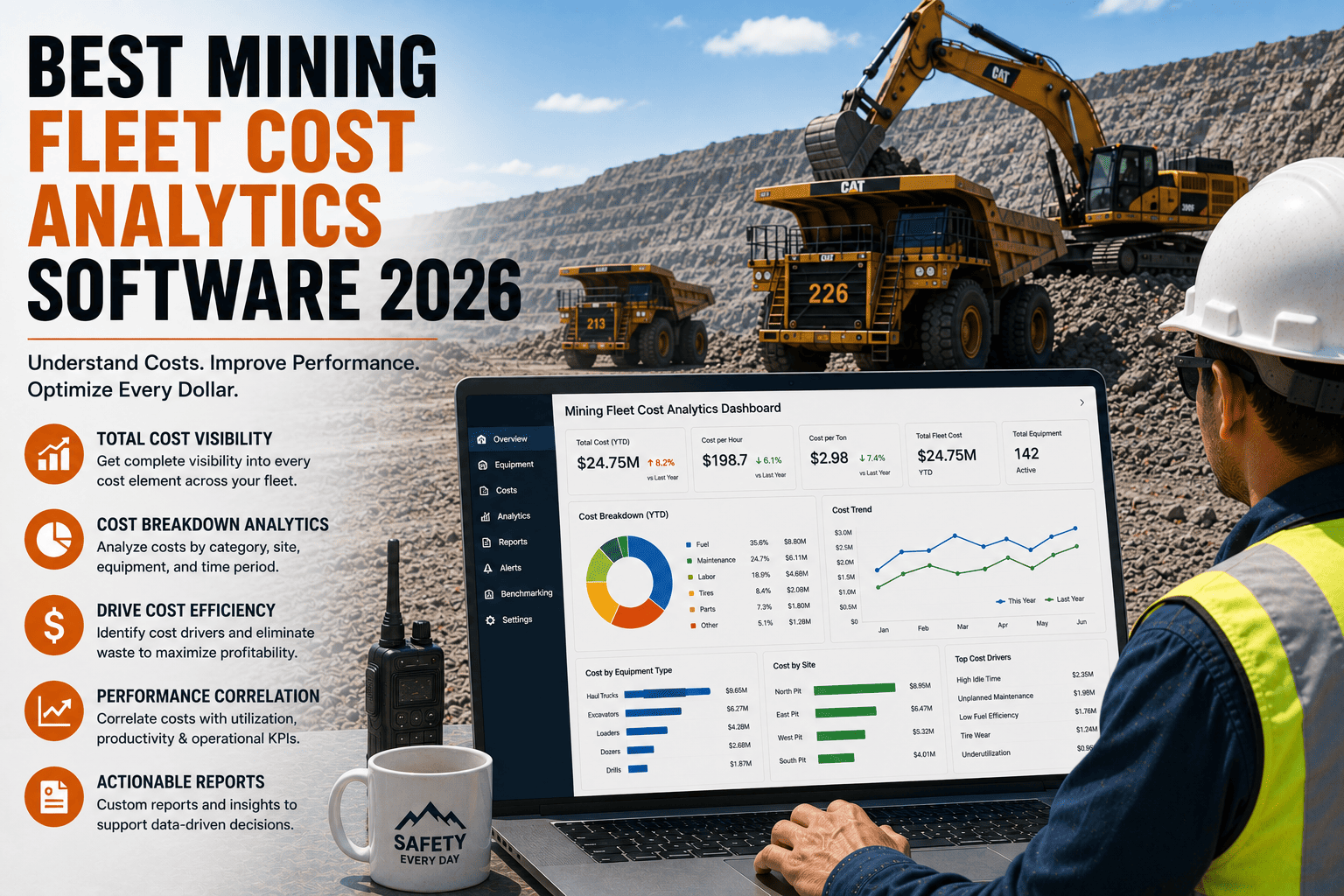
Most mining operations run trucks from multiple OEMs. FleetRabbit aggregates health data, maintenance records, and cost analytics across your entire fleet — regardless of make or model — in a single interface.
Ready to see it in action? Book a 30-minute demo and our mining fleet specialists will show you exactly how FleetRabbit integrates with your existing AHS deployment and starts reducing downtime within the first 90 days.
The ROI of Autonomous Haulage System Software
Investment in AHS software and supporting fleet intelligence platforms pays back faster than most mining operations expect. The math is straightforward when you account for both direct and indirect savings.
Direct Financial Returns
Reduced Repair Costs
Fleets implementing predictive maintenance software reduce emergency repair incidents by 35–50%. For a 20-truck autonomous mine fleet, preventing just 8 unplanned breakdowns annually saves $280,000 or more in combined repair and production costs.
Recovered Production Hours
Every hour a 300-ton autonomous haul truck is down represents thousands of dollars in lost ore movement. Reducing downtime by 40% across a 20-truck fleet recovers thousands of production hours annually — a direct revenue multiplier.
Insurance Premium Reductions
Mining operations with strong maintenance records and improved CSA scores consistently achieve 5–15% insurance premium reductions. For a large mining fleet, this delivers $50,000–$200,000 in annual savings on top of direct downtime benefits.
Total Cost of Ownership Analysis
Industry data shows that autonomous haulage system deployments with fleet sizes exceeding 20 vehicles typically achieve positive ROI within 3–5 years for the full AHS hardware and software investment. When a fleet intelligence platform like FleetRabbit is added to an existing AHS deployment, the incremental ROI payback is typically 6–12 months — because the software investment is a fraction of the hardware cost, and the downtime savings begin immediately. Start your free trial to calculate your specific savings potential.
Stop Losing Production Hours to Preventable Breakdowns
FleetRabbit connects to your existing telematics and AHS data within hours. Mining fleet managers who switch from reactive to predictive maintenance see 35–50% downtime reduction within the first 90 days. Every day without it is a day of preventable production loss.
Frequently Asked Questions
Key Takeaways
Autonomous haulage system software is the central nervous system of modern mining — coordinating GPS navigation, obstacle detection, fleet dispatching, and real-time analytics across every truck on site.
The AHS market reached a major milestone in 2026, with Komatsu commissioning its 1,000th autonomous truck and China exceeding 4,000 units in operation — the industry is scaling, not experimenting.
Autonomous trucks still require proactive maintenance — and their 24/7 operation schedule makes predictive maintenance software even more critical than for conventional fleets.
FleetRabbit fills the gap that OEM AHS platforms leave: cross-vendor fleet health monitoring, predictive maintenance scheduling, digital work orders, and cost analytics — all in one open platform.
Mining operations that add a predictive maintenance intelligence layer to their existing AHS deployment typically achieve 35–50% downtime reduction and ROI payback within 6–12 months.