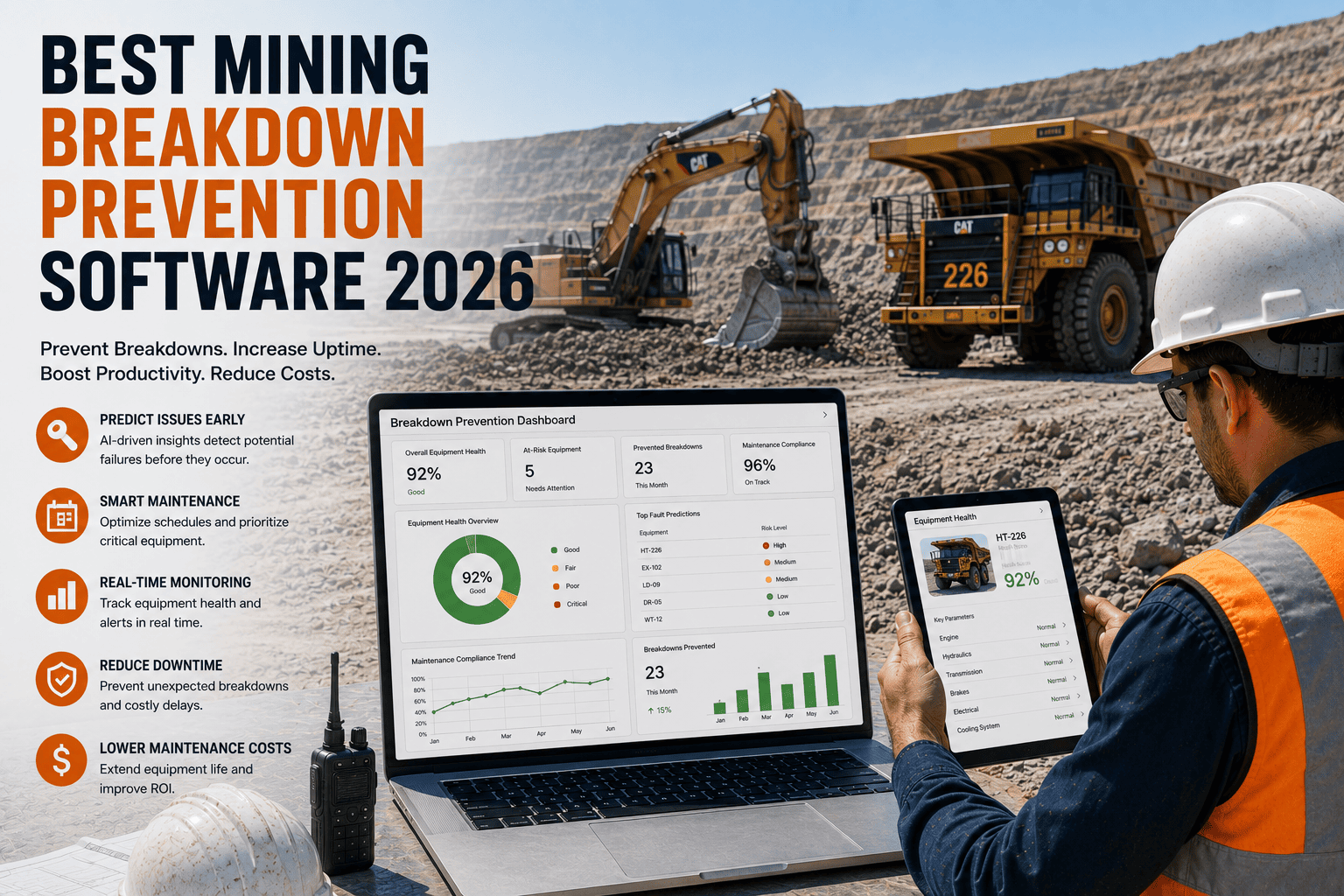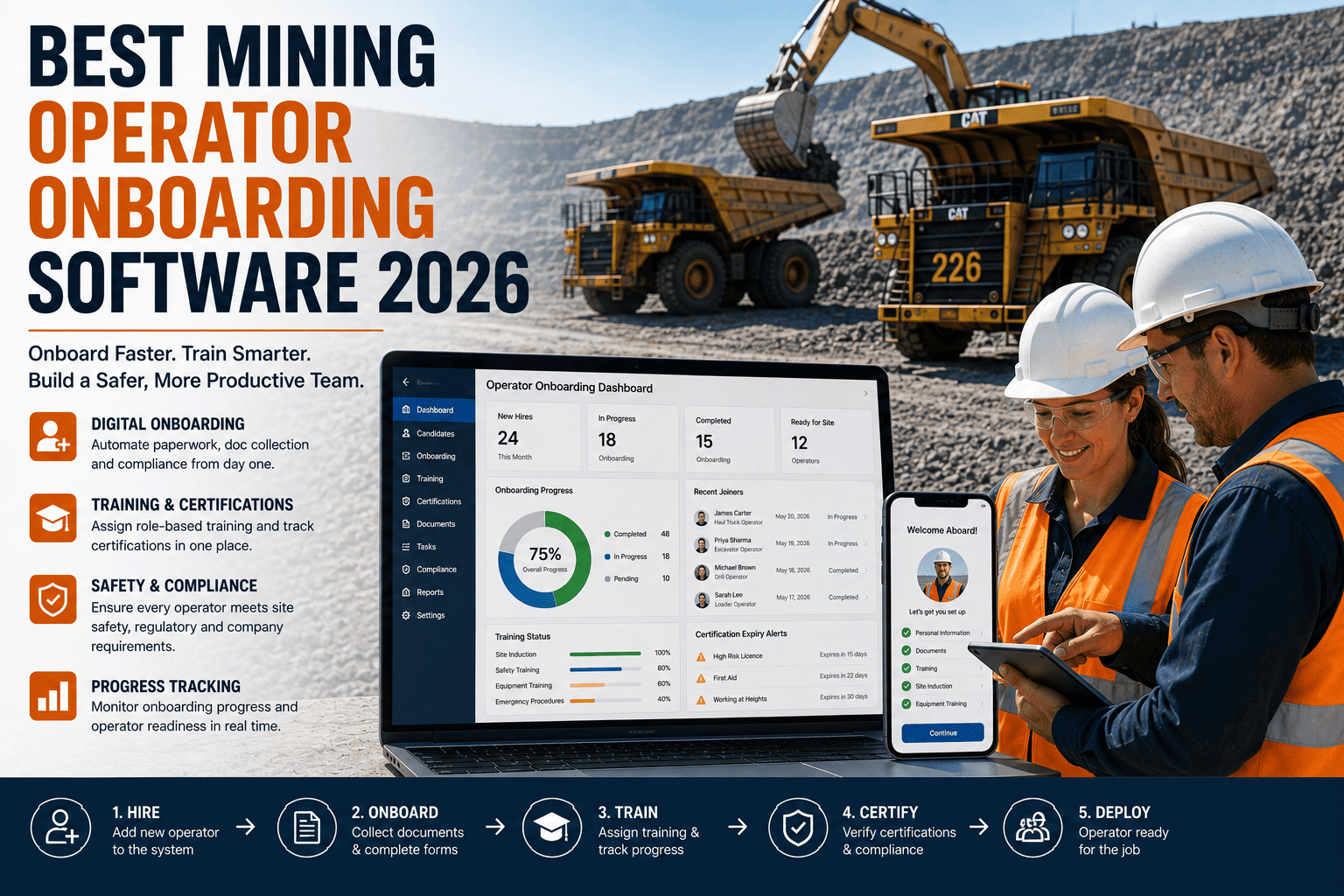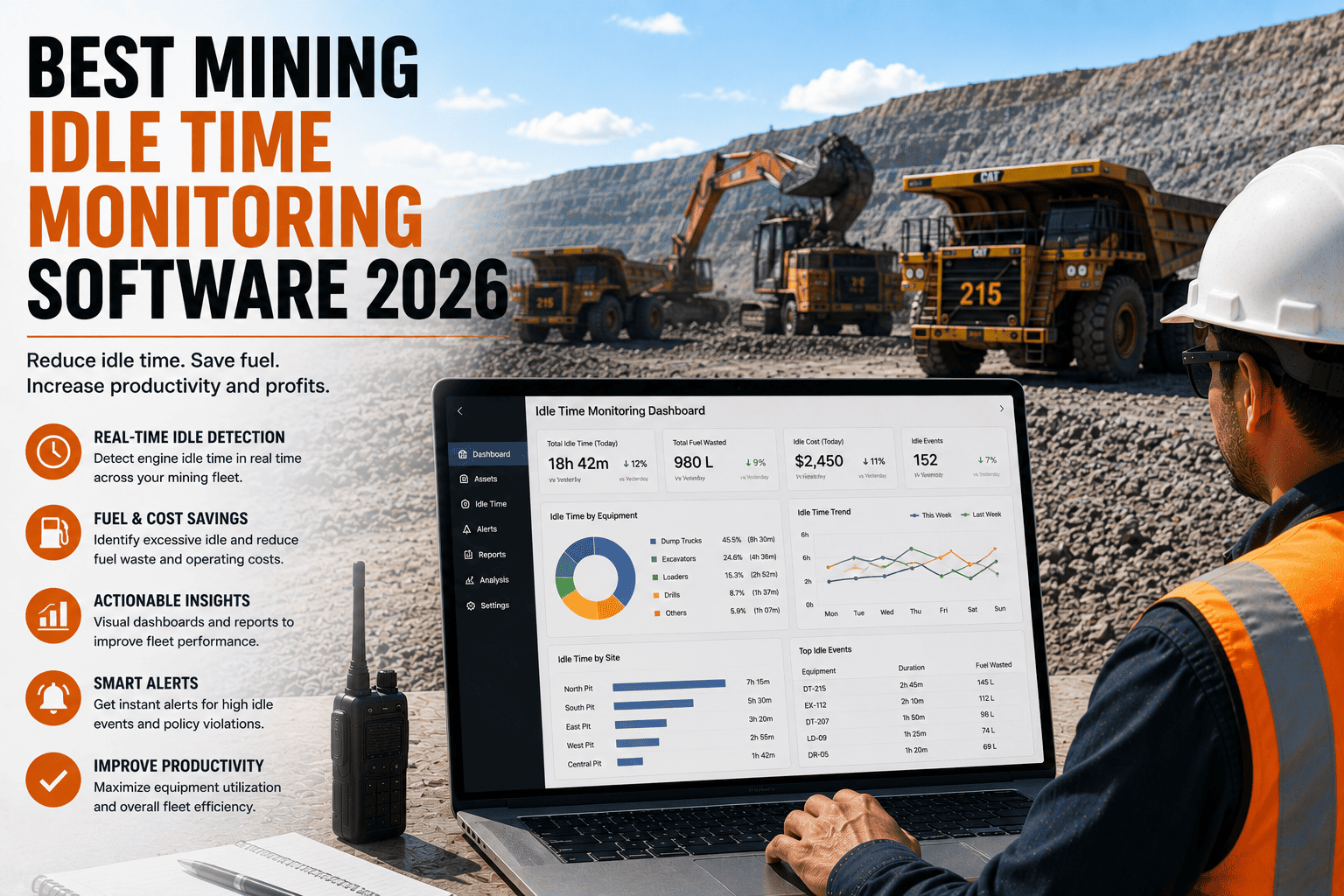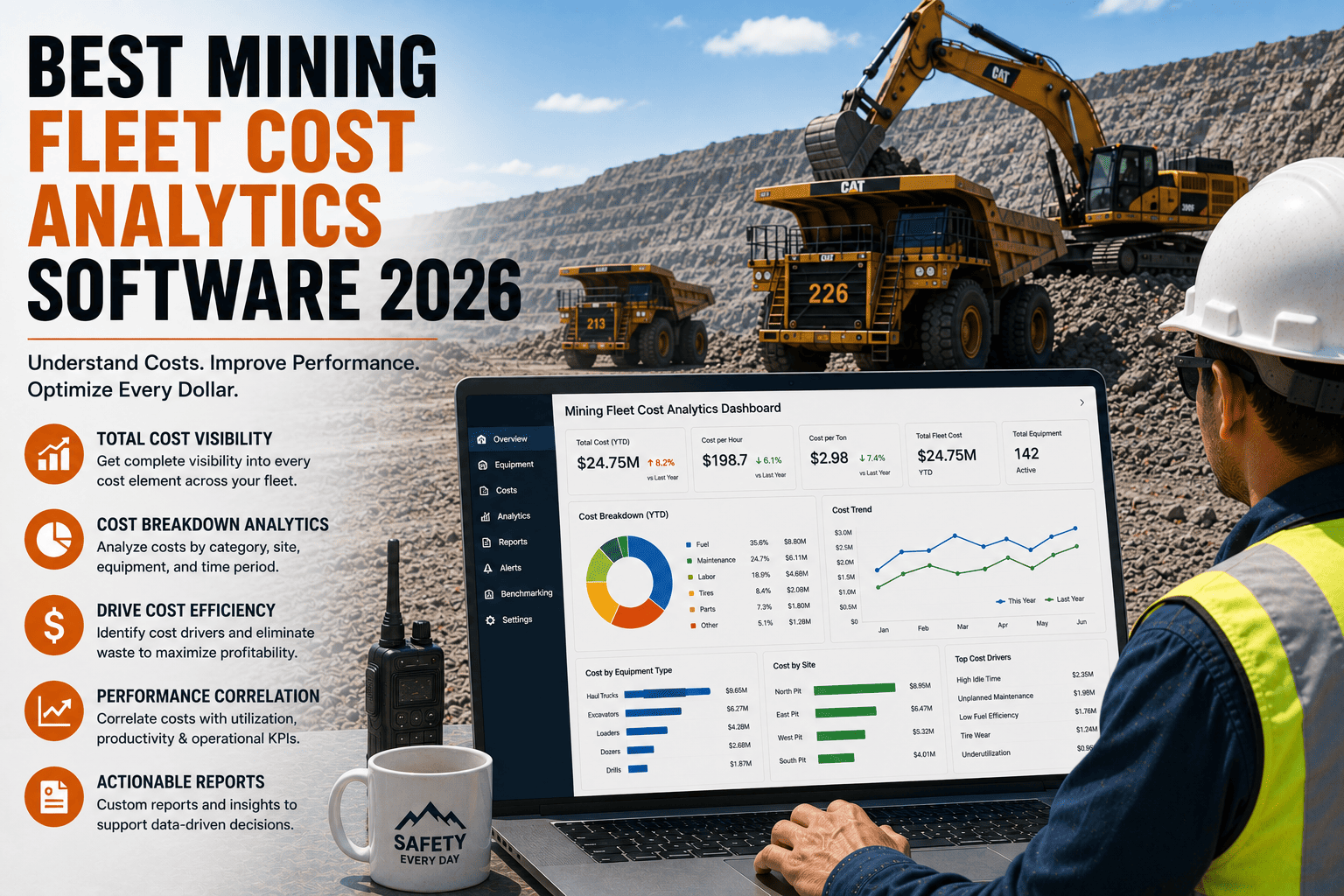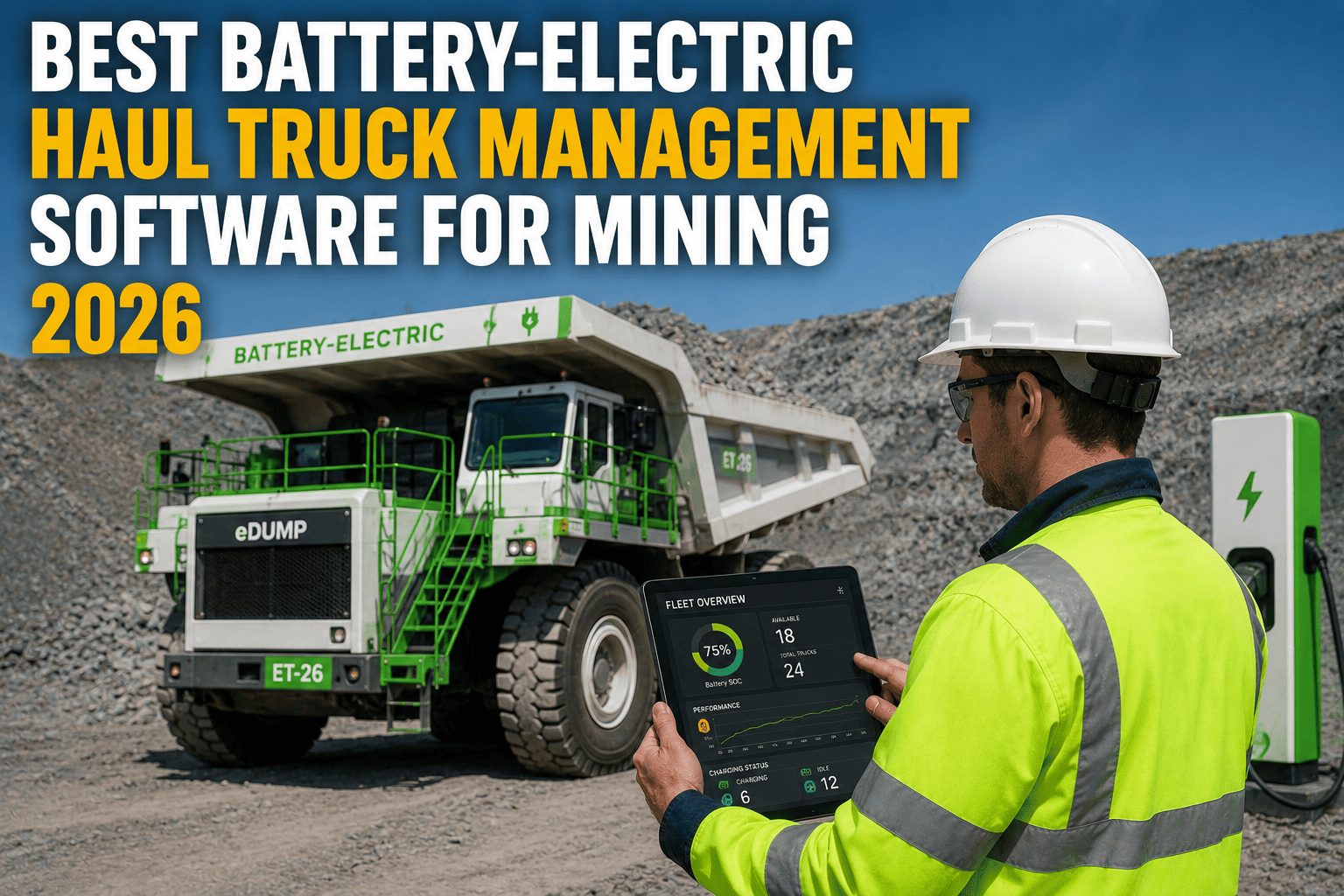
Battery-electric haul trucks are no longer a future concept — they are hauling ore, coal, and copper right now at mines across Australia, China, Chile, and Sweden. Fortescue is running 15 full-size 220-tonne electric haul trucks in live production across its Pilbara iron ore operations. The Yimin coal mine in China deployed 100 autonomous electric trucks achieving 120% of benchmark productivity set by diesel competitors. Liebherr is delivering 360 battery-electric T264 trucks to Fortescue as part of a $4 billion electrification program. The technology has arrived. What most mines are not ready for is the software complexity that comes with it. Managing battery state-of-charge, charging cycles, thermal health, energy costs, and predictive maintenance across an electric fleet requires a fundamentally different software approach than traditional diesel fleet management. This guide covers what that software must do, what the best platforms offer in 2026, and why FleetRabbit is the right choice for mines of every size making the electric transition.
Battery-electric haul trucks operating in production environments generate up to 45 unique data streams per vehicle — from battery cell voltage and thermal readings to regenerative braking recovery rates. Without dedicated software to interpret and act on that data, mines are flying blind in one of the most capital-intensive transitions in mining history. A single avoided battery failure at a mine like Fortescue's is worth over $400,000 in avoided downtime and replacement costs.
Why Electric Haul Trucks Demand Specialized Management Software
The software your mine used to manage diesel haul trucks is not equipped for battery-electric operations. Diesel fleet management is built around engine hours, oil change intervals, fuel consumption rates, and exhaust system health. Battery-electric truck management is a completely different discipline — one built around electrochemistry, thermal dynamics, energy economics, and charge cycle optimization. Book a demo with FleetRabbit to see how purpose-built electric fleet software changes what your maintenance team can see and act on.
The Five New Dimensions of Electric Fleet Management
Battery State-of-Health Monitoring
Mining batteries target 5,000 to 10,000 charge cycles to 80% capacity retention. Monitoring cell-level voltage, temperature variance, and capacity fade in real time is the difference between a battery lasting 8 years and one degrading in 3. Software must track state-of-health across every cell group — not just overall pack voltage.
Charging Schedule Optimization
A 220-tonne electric haul truck with a 1.4 MWh battery pack takes 30 to 45 minutes for an 80% fast charge. With multiple trucks, multiple chargers, and variable production demand, charging schedules must be optimized dynamically — not planned manually on a whiteboard.
Thermal Management Alerts
Mining batteries operate optimally between 15°C and 35°C. Operating outside that window accelerates degradation. In extreme environments — Yimin's frozen winters, Fortescue's Pilbara heat — thermal management software alerts are not optional; they are the front line of battery protection.
Regenerative Braking Analytics
Electric haul trucks recover 15 to 25% of energy during loaded downhill hauls. Tracking regenerative braking performance per truck, per route, and per shift reveals which routes maximize energy recovery — and which trucks are losing recovery efficiency due to system degradation.
Energy Cost Management
Charging cost per tonne-kilometer is the new diesel cost-per-kilometer equivalent. Software must track when trucks charge, at what tariff rate, and how that translates to energy cost per production cycle — enabling mines to shift charging to off-peak electricity windows and cut operating costs by 30 to 50%.
What the Best Electric Haul Truck Software Must Include
Not every fleet management platform is ready for battery-electric mining operations. Legacy tools designed for diesel trucks simply bolt on a battery monitoring widget — and that is not enough. Sign up for FleetRabbit and get a platform that was built with electric fleet intelligence at its core, not added as an afterthought.
Core Feature Requirements
| Feature | Why It Matters | Without It |
|---|---|---|
| Real-Time Battery Dashboard | Live state-of-charge, cell temperature, and pack health for every truck simultaneously | No warning before a thermal runaway event or unexpected capacity loss mid-shift |
| Predictive Battery Degradation | AI models detect early-stage capacity fade weeks before it affects operational range | Batteries replaced reactively — either too early (wasted capital) or too late (failed mid-haul) |
| Charging Station Management | Monitors charger availability, queues trucks by priority, and logs every charge event | Manual charger assignment causes congestion, idle trucks, and delayed production starts |
| Energy Cost Tracking | Calculates cost per kWh per vehicle against tariff schedules and production output | No visibility into whether electrification is delivering expected cost savings versus diesel |
| Depth-of-Discharge Control | Alerts when trucks cycle below 20% or above 80% — the optimal charge window for longevity | Batteries cycled to 0% and 100% lose up to 40% of their expected service life prematurely |
| Regen Braking Analytics | Tracks energy recovered per route segment and flags declining regen performance | Efficiency losses go undetected; routes that should recover energy are wasting it instead |
| Maintenance Work Orders | Digital work orders for brake inspections, thermal system checks, and drivetrain evaluations | Electric truck maintenance — which is simpler but still critical — goes undocumented and incomplete |
| Compliance Documentation | MSHA-ready inspection records with photo verification and offline mobile sync | High-voltage system inspection gaps trigger regulatory citations averaging $15,625 each |
Battery Intelligence That Diesel Software Cannot Deliver
FleetRabbit monitors battery state-of-health, thermal performance, charging cycles, and energy costs across every electric haul truck in real time. Predictive alerts catch degradation weeks before it disrupts operations. Start your free 14-day trial — no credit card, no contracts, live in under a day.
How FleetRabbit Manages Battery-Electric Haul Trucks
FleetRabbit's electric fleet module is designed around the unique operational profile of battery-electric haul trucks — where the battery pack is both the most expensive asset and the most complex system to manage. From a single dashboard, your team can see every truck's charge level, thermal status, predicted range, and maintenance needs simultaneously. Book a 30-minute demo and watch the dashboard in action with live data from a mine site similar to yours.
Battery Lifecycle Intelligence
Mining batteries are designed to cycle between 20% and 80% state-of-charge — never fully depleting, never overcharging — to maximize service life toward the 5,000 to 10,000 cycle target. FleetRabbit monitors every charge event, tracks capacity retention over time, and builds a health trajectory for each battery pack. When a pack is degrading faster than its baseline curve, your maintenance team gets an alert weeks before the degradation affects operational range or leads to an unplanned replacement costing $200,000 to $500,000 per battery system.
Charging Coordination That Keeps Trucks Moving
The biggest operational risk in an electric haul fleet is not a dead battery — it is a poorly managed charging queue that leaves three trucks idle while two chargers sit available. FleetRabbit's charging coordination module assigns trucks to chargers based on state-of-charge priority, production shift schedules, and charger availability in real time. It logs every charge event with timestamp, energy delivered, duration, and cost — giving mine managers the data they need to optimize charging infrastructure investment and minimize idle time.
Thermal Monitoring in Extreme Environments
Whether your mine operates in the Pilbara's 45°C summer heat or Inner Mongolia's sub-zero winters, battery thermal performance is the variable that determines whether your fleet hits its production targets. FleetRabbit tracks battery pack temperature across operational cycles, flags trucks operating outside the optimal 15°C to 35°C window, and alerts maintenance teams before thermal stress causes irreversible capacity loss. At mines like Yimin, where temperature extremes are a daily reality, this monitoring layer is not optional — it is fundamental.
Predictive Maintenance Rebuilt for Electric Trucks
Electric haul trucks eliminate oil changes, fuel system servicing, spark plugs, timing belts, and exhaust system maintenance. But they introduce new maintenance requirements: brake system inspections to compensate for reduced mechanical braking usage, battery thermal management system servicing, high-voltage connector integrity checks, and drivetrain component evaluation. FleetRabbit's maintenance module is configured for electric-specific service intervals — not diesel schedules repurposed for EV use — ensuring every electric truck gets exactly the maintenance it actually needs, when it needs it.
Electric vs. Diesel Fleet Management: What Changes
The Real Cost of Getting Electric Fleet Management Wrong
The investment in battery-electric haul trucks is enormous. Fortescue committed $4 billion to electrify its Liebherr fleet. A single 220-tonne electric haul truck costs $5 million to $8 million. The battery pack alone represents 30 to 40% of that capital cost. Getting the software wrong — using diesel-era tools that cannot monitor battery health, optimize charging, or predict degradation — is not just an operational inconvenience. It is a capital risk measured in tens of millions. Sign up for FleetRabbit and protect your electric fleet investment from day one.
What Poor Electric Fleet Management Actually Costs
2026 Electric Mining Fleet Trends You Need to Know
Battery-Swap vs. Fast-Charge: Two Paths, One Software Need
The industry has split into two charging strategies. Some mines — like Yimin in China — have adopted automated battery-swap stations where robots replace depleted packs in under five minutes at a 98% success rate, enabling near-continuous operation. Others, particularly in Australia, use fast-charging infrastructure that takes 30 to 45 minutes per cycle, coordinated around shift changes and break periods. Both approaches require dedicated software to manage — either swap scheduling and inventory tracking or charge queue optimization and tariff management. FleetRabbit supports both models through configurable charging management workflows.
Regenerative Braking as a Revenue Stream
In mining haul operations with significant elevation changes, regenerative braking is not just an efficiency feature — it is a measurable energy recovery system. Routes where loaded trucks descend from pit to crusher recover 15 to 25% of the energy consumed on the uphill return trip. Mines that track regenerative recovery per route, per truck, and per shift can quantify the energy value recovered, optimize route design to maximize recovery, and identify trucks where regen performance has degraded and needs servicing. This is data FleetRabbit captures automatically and presents in the energy analytics dashboard.
Underground Mines Leading Electrification
Underground mining operations are the fastest adopters of battery-electric vehicles because electrification eliminates diesel particulate matter, reducing ventilation requirements from 15 to 20 air changes per hour down to 5 to 8. That 40 to 50% ventilation energy reduction is a massive operational cost saving independent of fuel savings. Sandvik and Epiroc dominate the underground electric LHD market with 2 to 9 tonne payload systems running 4 to 8 hour cycles per charge. FleetRabbit manages these underground electric fleets with offline-capable mobile inspections that sync when connectivity is restored — critical for underground environments where network coverage is intermittent.
Hybrid-Electric as the Bridge Technology
Not every mine is ready for full battery-electric haul trucks. Cummins deployed its First Mode hybrid-electric system at Lundin Mining's Caserones copper mine in 2026 — a retrofit kit combining a diesel QSK60 engine with a modular battery system that captures regenerative braking energy at elevations exceeding 4,000 meters. For mines in this hybrid transition phase, software must manage both the diesel engine parameters and the battery system — exactly the kind of mixed powertrain management FleetRabbit is built to handle.
The Software Your Electric Fleet Needs From Day One
Whether you are running 5 electric trucks as a pilot or scaling to a 100-vehicle electric fleet, FleetRabbit gives you the battery health intelligence, charging coordination, and predictive maintenance tools to protect your investment and maximize uptime. Book a 30-minute demo and see your electric fleet modeled live — or start your free 14-day trial today.
Frequently Asked Questions
Getting Started With FleetRabbit for Electric Mining Fleets
The fastest way to see FleetRabbit's electric fleet capabilities applied to your specific mine is through a live 30-minute demo where we model your fleet configuration, vehicle types, and charging infrastructure in the platform before you commit to anything. Most mines choose to start a free 14-day trial immediately after the demo — because the setup takes less than a day and the first battery health alerts typically arrive within the first 48 hours of operation.
Your First 30 Days: From Connection to Confidence
Day 1: Connect and Configure
Integrate existing telematics from your electric trucks, configure battery pack profiles, set thermal alert thresholds, and deploy mobile inspection apps to operators. Most electric fleet setups are fully live within one business day.
Days 2–7: First Intelligence
FleetRabbit begins building battery health baselines for each pack. Charging patterns are logged and analyzed. The first anomalies — thermal variances, unusual capacity readings, irregular charge curves — are flagged for your maintenance team's review.
Days 8–30: Optimized Operations
Charging schedules are dynamically optimized based on learned production patterns. Maintenance teams work from electric-specific preventive schedules instead of reactive callouts. Energy cost dashboards reveal peak-tariff exposure and charging efficiency gains. Most electric fleet operations see measurable improvements within the first month.
Your Electric Fleet Deserves More Than a Diesel Software Workaround
Every battery-electric haul truck in your fleet is a $5 million to $8 million asset with a battery pack worth $2 million or more. Managing that investment with software designed for diesel trucks is not just inefficient — it is a capital risk. FleetRabbit gives your team real battery intelligence: live state-of-health monitoring, predictive degradation alerts, charging coordination, thermal management, and electric-specific maintenance tracking — all in one platform that deploys in under a day. Start your free trial now and see what purpose-built electric fleet software actually looks like.