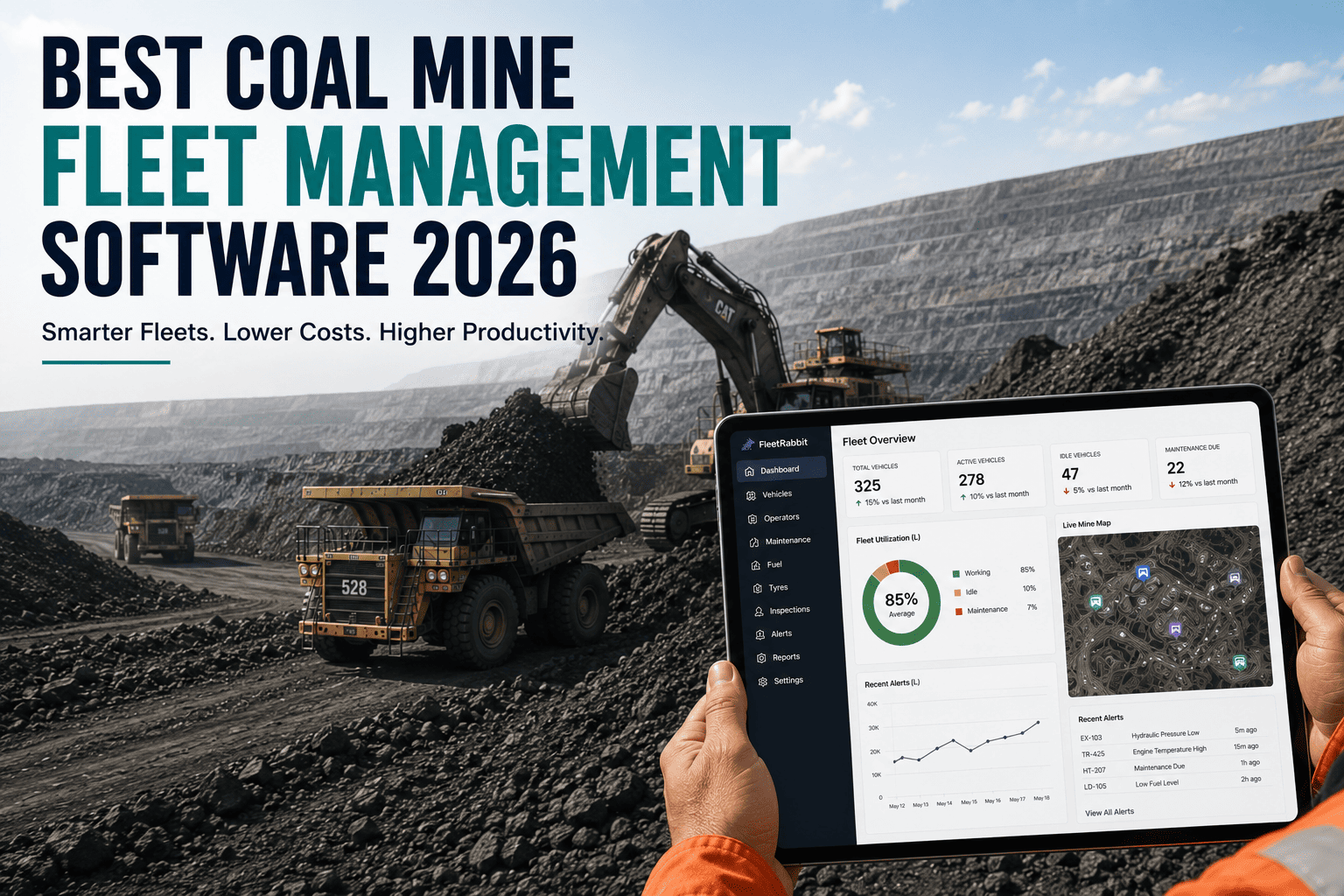
Coal mining fleets run on machines that most software was never built to handle. Haul trucks hauling 100 to 400 tons per cycle, continuous miners chewing through seams, highwall drills, dozers, and water trucks all need to be inspected, maintained, and tracked under strict MSHA rules. When a single haul truck goes down mid-shift on a surface coal operation, the loss isn't measured in minutes, it's measured in tons of coal that never reach the tipple. Coal mine fleet management software exists to close that gap between paper logs and real production numbers.
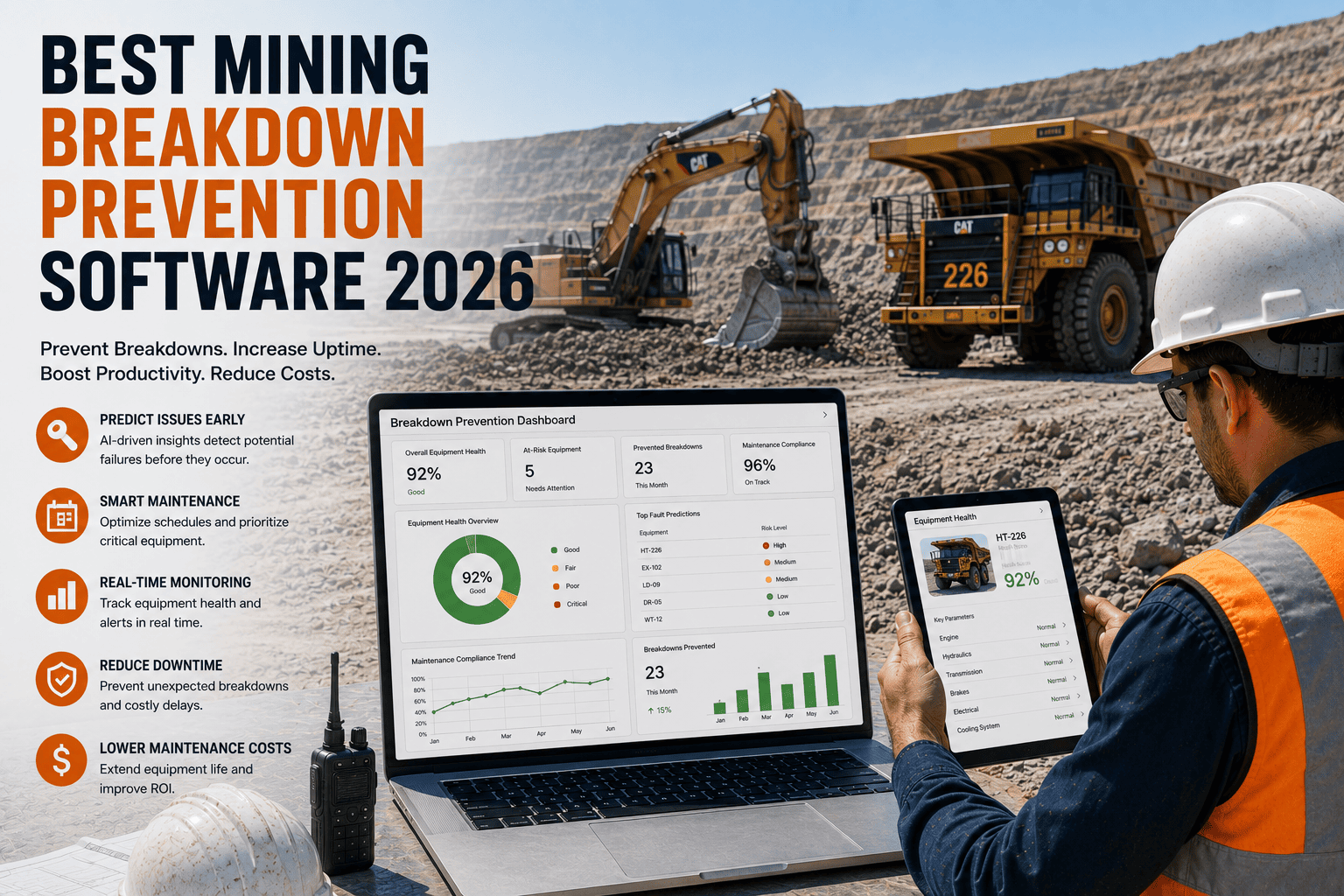
Unplanned haul truck downtime at a surface coal mine costs 6000 to 18000 dollars per hour depending on truck class and seam productivity. A single major breakdown on a 190 to 240 ton haul truck can idle an entire truck-shovel match, costing 40000 to 90000 dollars in a single shift. Coal operations using automated inspection, MSHA-aligned compliance tracking, and predictive maintenance software report 30 to 45 percent less unplanned downtime within two quarters.
Why Coal Mines Need Purpose-Built Fleet Software
Coal mine fleets are unlike any other vehicle fleet. Haul trucks operate on unpaved haul roads with steep grades and constantly shifting dump points. Continuous miners and shuttle cars work in confined underground sections with no cell signal. Highwall drills and blast support vehicles sit exposed to coal dust that clogs filters and accelerates wear far faster than surface construction equipment. Standard fleet software built for over-the-road trucking tracks miles and DOT hours of service. Coal fleet software needs to track engine hours, load cycles, seam-specific duty cycles, and MSHA Part 56 or Part 77 inspection requirements instead.
The operational stakes are higher too. A production coal mine schedules trucks against a fixed shovel-and-loader match. When one haul truck goes down, the whole cycle backs up, shovels sit idle waiting on empty beds, and the tipple falls behind schedule for the shift. That single failure cascades into overtime, missed rail car loading windows, and in some contracts, penalty clauses tied to tonnage delivery. Booking a demo with a team that understands coal-specific duty cycles is often the fastest way to see where your current process is leaking money.
FleetRabbit tracks haul trucks, continuous miners, shuttle cars, drills, and support vehicles with MSHA-aligned inspections, offline mobile forms for low-signal sections, and predictive maintenance alerts before a component fails mid-shift. Start free with 3 vehicles today.
Core Capabilities Coal Mine Fleet Software Must Deliver
Not every fleet platform belongs on a coal site. Before comparing vendors, coal mine operators should confirm the software covers the operational reality of the pit, the highwall, and the underground sections, not just a generic vehicle list.
Equipment-Specific Maintenance Scheduling
Haul trucks, continuous miners, roof bolters, and water trucks each fail differently. Software should trigger preventive maintenance based on engine hours and load cycles for haul trucks, cutting hours for continuous miners, and calendar intervals for standby equipment, not a single generic mileage rule applied across every asset type.
MSHA-Aligned Inspection Templates
Pre-shift and post-shift inspection forms need to mirror Title 30 CFR Part 56 and Part 77 requirements directly, with defect escalation that automatically opens a work order the moment an operator flags a brake, steering, or structural issue.
Offline Mobile Capability
Underground sections and remote highwall pits often have zero cellular coverage. Inspection and work order apps must function fully offline and sync automatically once a device reconnects at the surface office.
Fuel And Utilization Tracking
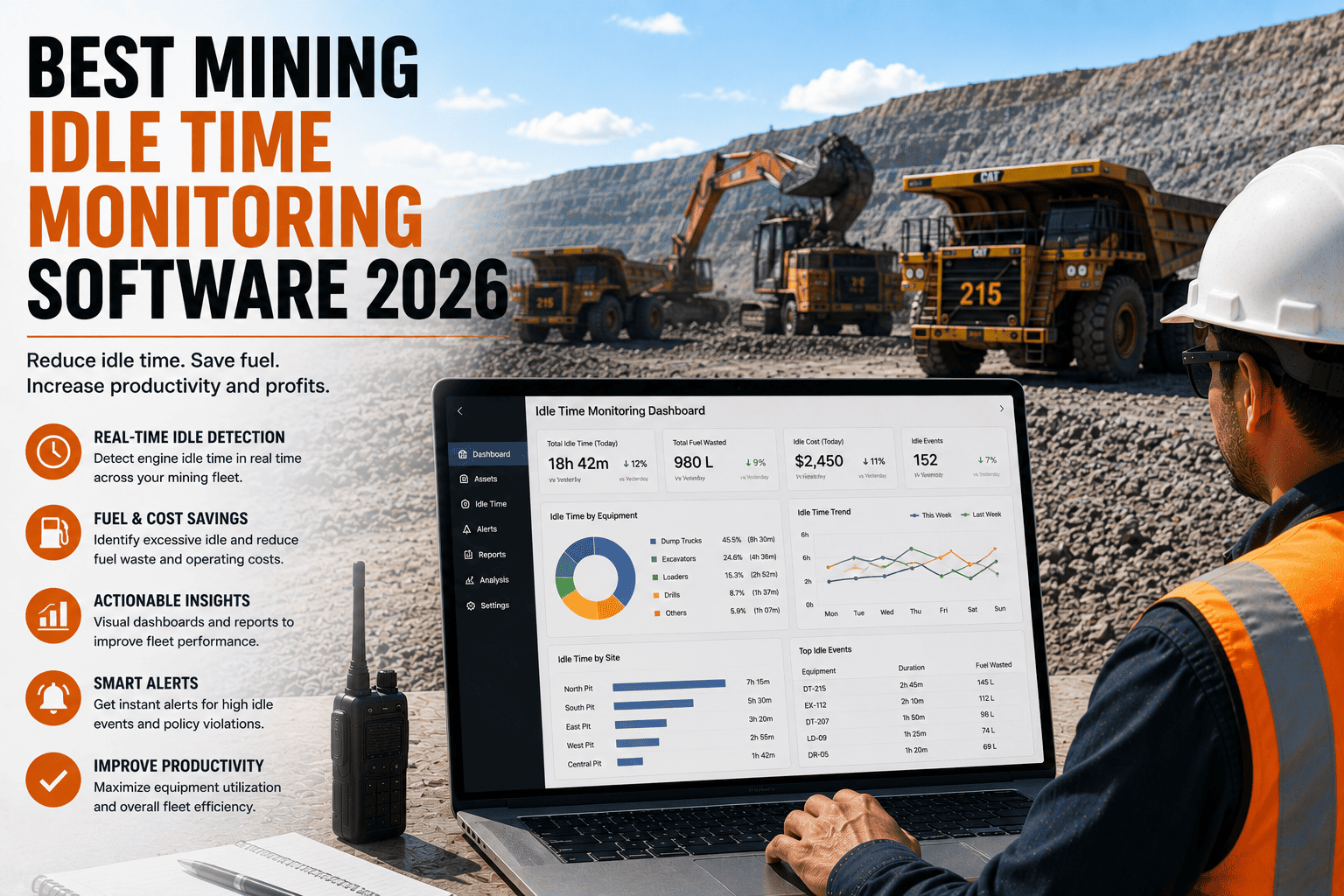
Diesel consumption on a 240 ton haul truck fleet is one of the largest controllable operating costs on site. Fleet software should flag abnormal fuel burn per ton hauled and identify machines running with excessive idle time.
| Equipment Type | Common Failure Point | Downtime Cost Range | Software Response |
|---|---|---|---|
| Surface Haul Truck | Brake wear, tire failure, engine overheating on grade | 6000 to 18000 dollars per hour | Engine hour based PM triggers with real-time brake and tire alerts |
| Continuous Miner | Cutter head wear, hydraulic failure, conveyor jams | 12000 to 30000 dollars per shift | Cutting hour tracking with escalated defect work orders |
| Highwall Drill | Bit wear, hydraulic leaks, mast alignment | 4000 to 9000 dollars per incident | Condition-based scheduling tied to drilling hours logged |
| Shuttle Car | Cable damage, battery degradation, tire wear | 3000 to 7000 dollars per incident | Offline inspection forms with photo-based defect capture |
| Water And Dust Suppression Truck | Pump failure, spray bar clogging | 2000 to 5000 dollars per incident | Scheduled preventive maintenance tied to compliance calendar |
Surface Versus Underground Coal Fleet Needs
Surface coal operations running large haul trucks, shovels, and dozers need software centered on GPS-based haul road tracking, cycle time reporting, and tonnage per shift by machine. The priority is keeping the truck-shovel match balanced so no unit sits idle waiting on the next load or dump slot. Underground coal operations running continuous miners, shuttle cars, and roof bolters need something different: offline-first inspection tools, methane and ventilation-adjacent equipment tracking, and cutting-hour based maintenance since these machines rarely leave the section for scheduled service.
Blended operations that run both surface and underground sections from one office need a platform that can separate these two operating models without forcing every asset into the same maintenance logic. A shuttle car and a 320 ton haul truck should never be scheduled on the same rule set.
How To Evaluate Coal Mine Fleet Management Software
Start by mapping your current fleet mix, surface haul trucks, underground production equipment, and support vehicles, against the maintenance and inspection rules that actually govern each category. Ask any vendor how their platform differentiates between engine-hour based scheduling for haul trucks and cutting-hour based scheduling for continuous miners. Ask whether inspection forms map directly to your current MSHA-required checklist or whether your team will need to rebuild them from scratch.
Test the offline experience before committing. A platform that looks great in a surface office demo but fails the moment a device loses signal underground will create more paperwork problems than it solves. Confirm how quickly defects reported during an inspection turn into an actual work order, and whether that work order routes to the right maintenance technician automatically. Finally, look at reporting: can a site superintendent see today's haul truck availability, tonnage per unit, and open compliance items on one screen without exporting spreadsheets. If you want a walkthrough tailored to your specific pit and section layout, you can book a demo and bring your actual equipment list to the call.
Return On Investment For Coal Fleet Software
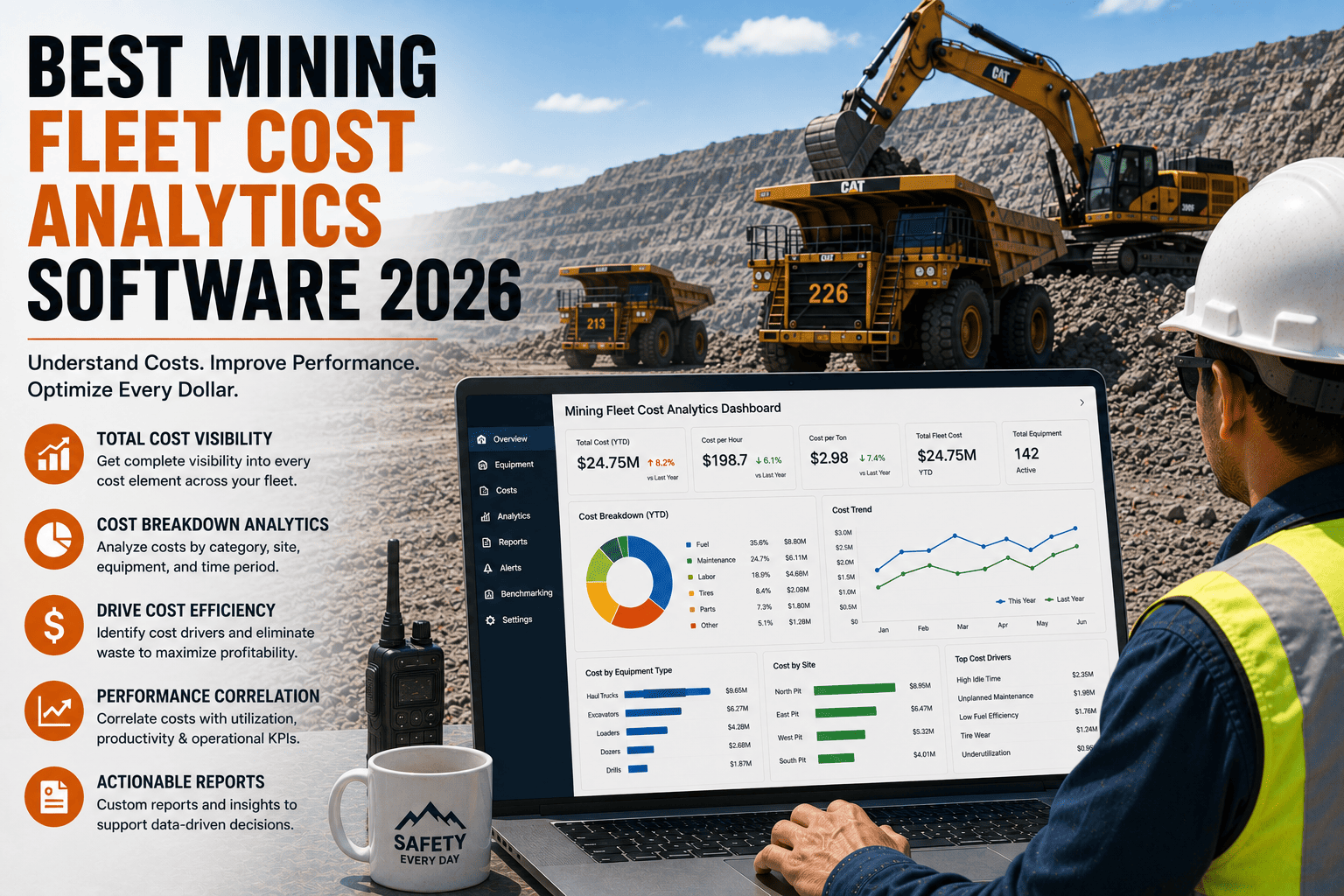
Most coal operations recover the cost of fleet management software within two to four months. A 30-truck surface coal fleet spending 25000 to 40000 dollars annually on a platform like FleetRabbit typically prevents 8 to 15 unplanned haul truck breakdowns per year. At an average of 9000 dollars in combined downtime and repair cost per incident, that is 72000 to 135000 dollars in direct annual savings, before counting reduced MSHA citation risk or fuel efficiency gains.
From highwall drills to continuous miners, FleetRabbit gives your maintenance and compliance teams one connected view of every machine, every inspection, and every open work order across surface and underground sections. See how it fits your site before you commit to anything.
Frequently Asked Questions
Final Word On Choosing Coal Mine Fleet Software
Coal mining margins are tight enough without losing thousands of dollars an hour to a haul truck that could have been serviced a week earlier, or a citation that came from an incomplete paper inspection log. The mines that consistently hit tonnage targets are running maintenance and compliance as a system, not a stack of clipboards. Purpose-built coal mine fleet management software turns scattered inspection sheets and reactive repairs into a single, predictive view of every truck, miner, drill, and support vehicle on site.
If your current process still depends on someone walking a clipboard between the pit office and the shop, it is worth seeing what a connected system looks like on your own equipment list. You can start a free trial with a handful of vehicles to see the dashboard in action, or book a demo to walk through your specific surface and underground sections with the FleetRabbit team.
FleetRabbit brings haul trucks, continuous miners, drills, and support vehicles into one connected dashboard with MSHA-aligned inspections, offline mobile forms, and predictive maintenance alerts. See downtime drop within your first few weeks. No credit card required to start.