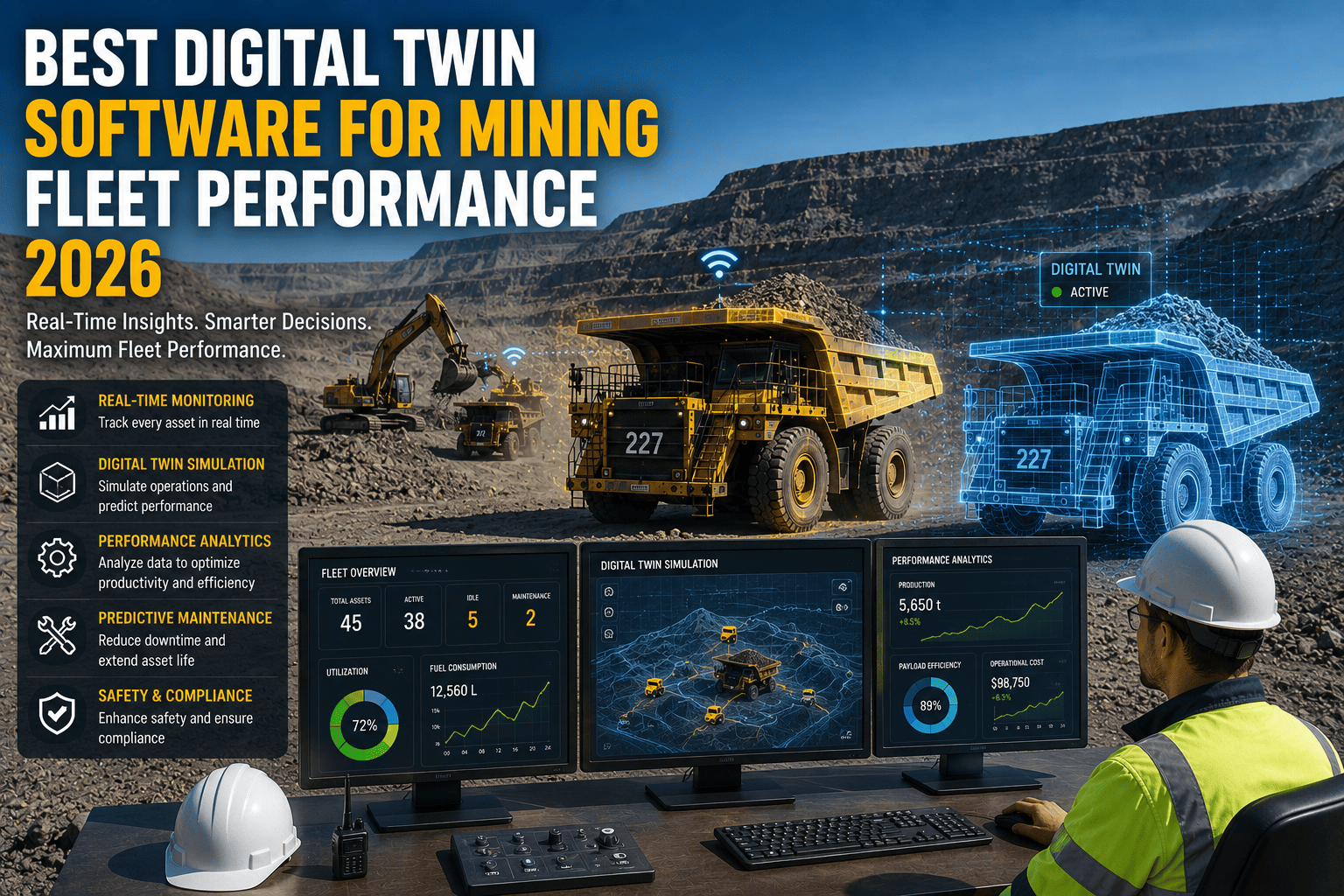
Picture your entire mining fleet — every haul truck, excavator, drill rig, and service vehicle — running in parallel as a live digital replica that thinks ahead. It knows that Truck 14 will develop a hydraulic fault in approximately nine days. It knows Truck 07 is burning 12% more fuel than its twin suggests it should. It knows that if you reroute three vehicles during tomorrow's shift, you can recover 40 minutes of productive haulage. This is what digital twin software delivers in 2026. It is not a futuristic concept reserved for billion-dollar enterprises — it is a practical, deployable technology that fleet-forward mining operations of every scale are adopting right now. FleetRabbit brings this intelligence to your operation without the enterprise price tag or the six-month implementation timeline.
A digital twin is a continuously-updated virtual replica of your physical mining asset — built from live sensor feeds, telematics data, and historical maintenance records. Unlike a static model or a report, it evolves in real time alongside the physical machine and generates predictions before problems occur.
Digital Twin vs Telematics vs Simulation: Understanding the Difference
These three terms appear in mining technology conversations constantly — often interchangeably, which causes real confusion when evaluating software. They are related but fundamentally different in what they deliver. Understanding the distinction helps you identify which capability gap your operation actually has and which type of software addresses it. If you are ready to skip straight to the platform that combines all three, book a demo with FleetRabbit and see it live on a mining fleet dataset.
Fleet Telematics
Tells you what happened. GPS position, speed, engine hours, fuel consumed, fault codes triggered. Essential baseline visibility, but entirely backward-looking. You know a vehicle broke down after it breaks down.
Simulation Software
Tests what could happen under defined conditions. Engineers build models, run scenarios, analyse outputs. Powerful for design and planning phases, but static — disconnected from live fleet data.
Digital Twin Software
Knows what is happening and what will happen. A living virtual replica permanently synced to real sensor data. Predicts failures, scores component health, runs what-if scenarios against actual conditions — continuously, automatically.
The Four Levels of Digital Twin for Mining Fleets
Digital twin technology in mining is not a single monolithic capability. It exists across four distinct levels of sophistication, each delivering different value. Most mining operations begin at Level 1 or 2 and progress as digital maturity grows. FleetRabbit supports all four levels in a single unified platform — meaning you can start with core monitoring and expand without switching systems.
Asset Twin
A virtual replica of one individual piece of equipment. Tracks component health scores, maintenance history, and operating parameters for a single haul truck or excavator. The starting point for most mining fleet digital twin deployments.
Fleet Twin
A coordinated set of asset twins across the entire active fleet. Enables comparison across vehicles, identification of fleet-wide patterns, and dispatch optimisation that routes work to vehicles based on actual condition rather than schedule alone.
Process Twin
Models workflows — ore extraction cycles, haul road routing, crusher feed rates — not just individual assets. Identifies where queuing, idle time, and bottlenecks are consuming production time across the full operational flow.
System Twin
A comprehensive virtual model of the entire mine site — integrating fleet, processing plant, infrastructure, and environmental systems. The full operational picture in one live model, enabling enterprise-level decisions with complete context.
What Digital Twin Software Actually Does for Mining Fleet Performance
The concept is compelling. The practical applications are where the real money is. Here are the six operational areas where digital twin software delivers measurable, documented improvements on active mining sites — not in pilot programmes or controlled trials, but in production operations running today. Book a FleetRabbit demo to see these applications demonstrated on live fleet data.
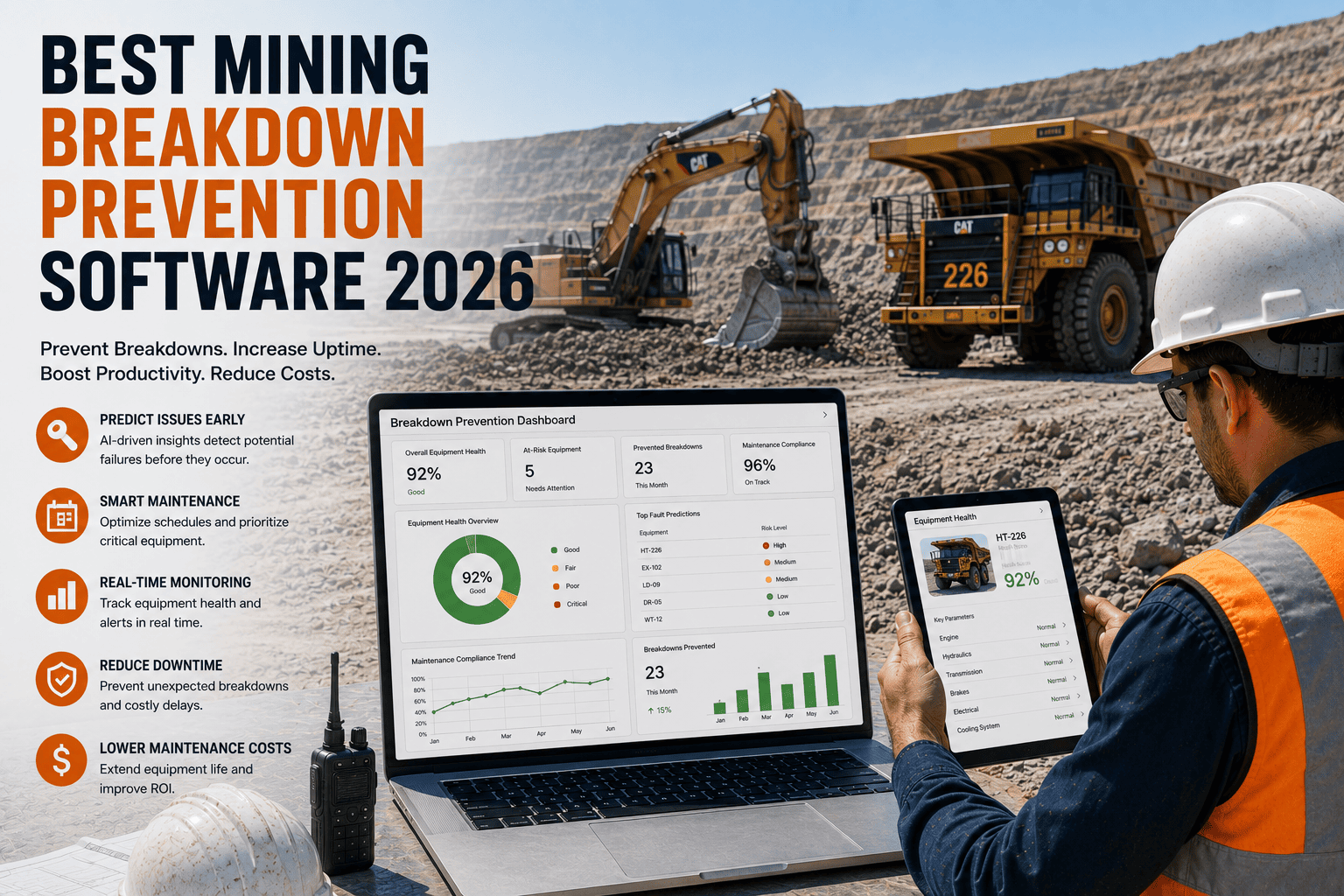
Predictive Maintenance Before Failure
The digital twin continuously analyses sensor streams — engine temperature trends, oil pressure patterns, vibration signatures, hydraulic data — and scores each component's remaining useful life. When a bearing is trending toward failure, the twin flags it 3–14 days in advance. Maintenance teams schedule the repair during a planned shift change. The same bearing addressed proactively costs one-quarter of what it costs after catastrophic failure on a remote mine site where spare parts take days to arrive.
Fuel Performance Benchmarking
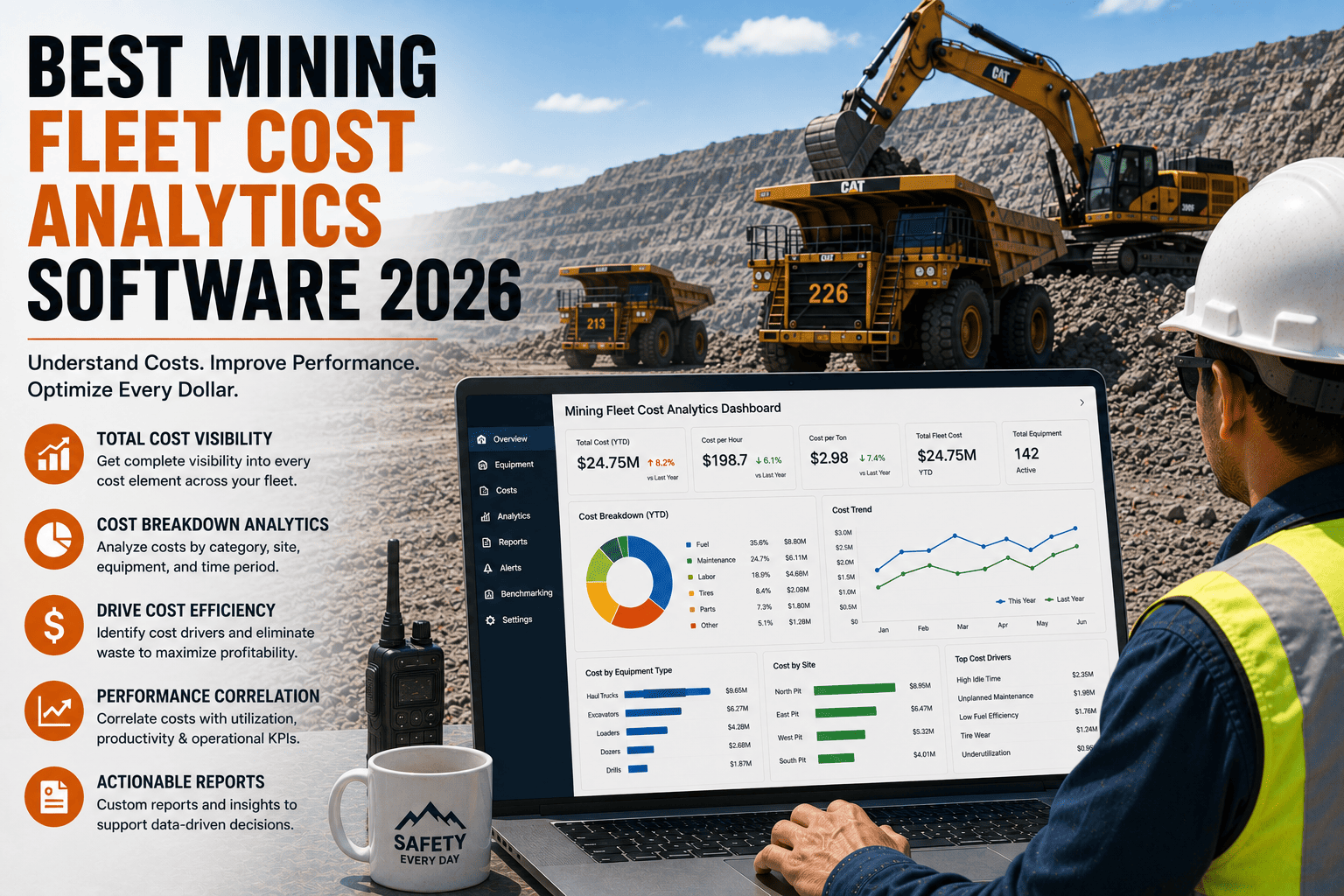
Each vehicle's digital twin knows exactly how much fuel that specific truck should consume given its age, load profile, haul road gradient, and current mechanical condition. When actual consumption deviates from the twin's baseline — upward by 8%, 12%, 15% — the system flags it immediately. The deviation might indicate a fuel injector fault, driver behaviour issue, or tyre pressure problem. Without the twin as baseline, these anomalies are invisible in aggregate fuel reports.
Dispatch Optimisation by Condition
Traditional dispatch assigns work by availability — which vehicle is idle. Digital twin dispatch assigns work by condition — which vehicle is best suited for this load and route given its current health. A truck with early-stage brake wear should not get the long downhill haul. A truck with peak hydraulic performance should take the heavy ore load. This condition-based dispatching reduces wear, extends component life, and prevents the premature failures that reactive maintenance programmes cannot anticipate.
What-If Scenario Testing Without Risk
Before changing a haul road routing, adding a third shift, or deploying a different loading pattern, operations managers can run the scenario through the digital twin to see projected outcomes. What happens to cycle times if haul distance increases by 2km? What is the maintenance impact if daily operating hours increase from 18 to 22? The twin models these changes against the actual condition of the actual fleet — not theoretical averages — and returns projected results before a single vehicle moves.
Equipment Utilisation Analysis
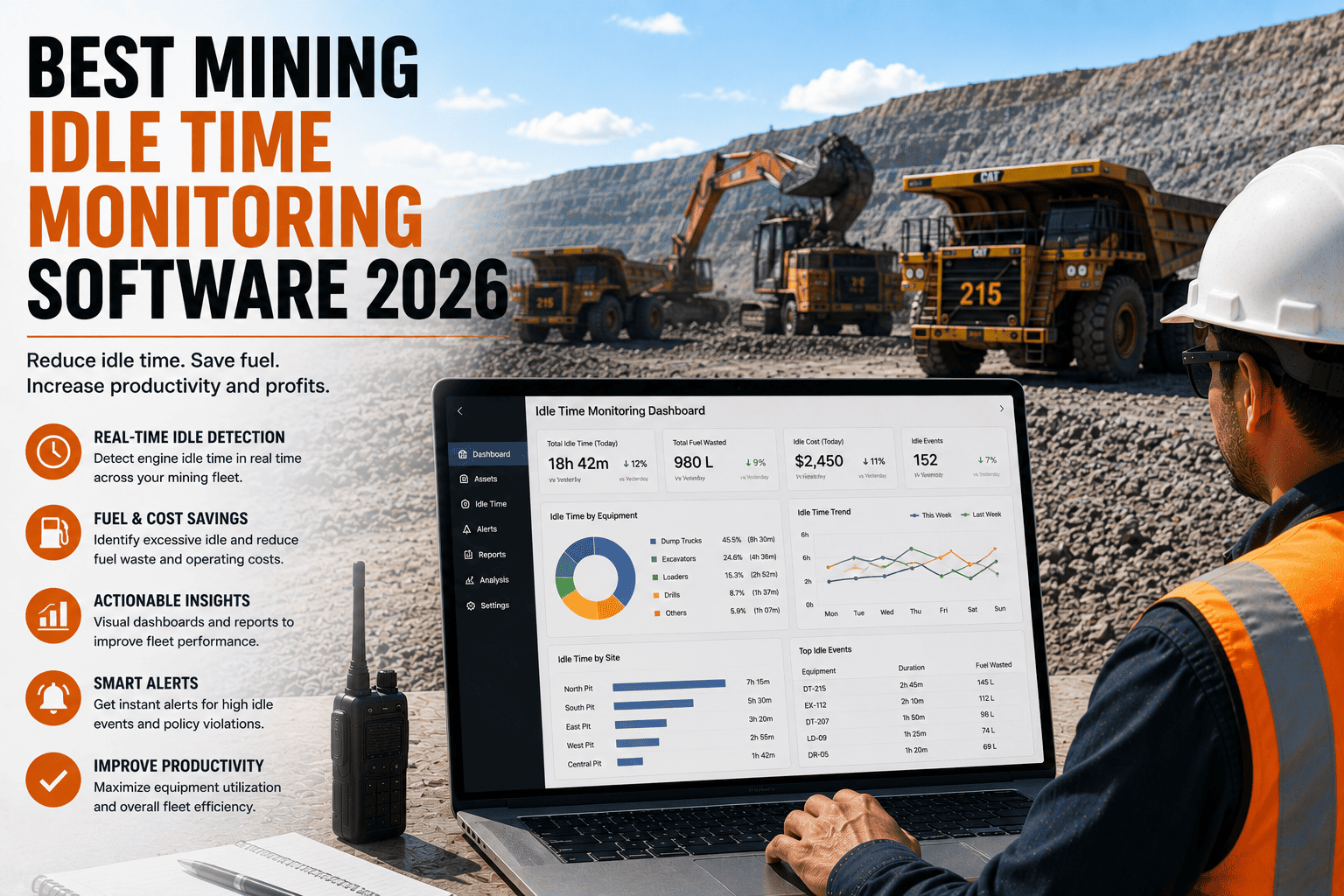
Digital twins reveal utilisation patterns that aggregate reports hide. A fleet of 20 haul trucks averaging 72% utilisation looks acceptable. The twin reveals that three specific trucks are running at 91% utilisation while four others run at 54%. The overworked trucks accumulate accelerated wear. The underworked trucks represent recoverable capacity. Rebalancing utilisation with twin intelligence is a recurring source of production gains that costs nothing to implement.
Capital Planning and Replacement Forecasting
When every vehicle has a digital twin tracking its real condition and accumulated wear, replacement planning stops being based on age and becomes based on projected remaining useful life. The twin can show that Truck 03 has 18 months of productive life remaining while same-age Truck 11 has only 7 months. This granularity transforms CapEx planning from budget guesswork into data-backed forecasting that finance teams can rely on.
FleetRabbit Brings Digital Twin Intelligence to Your Mining Fleet
FleetRabbit's platform builds a continuously-updated twin of every asset in your mining fleet — scoring component health, forecasting failures, benchmarking fuel performance, and surfacing utilisation gaps. Most operations have their first predictive alerts running within a single working week. No enterprise contract. No IT department required. Start with 3 vehicles free.
Key Features to Evaluate in Mining Fleet Digital Twin Software
The digital twin market for mining has expanded rapidly and the feature lists across platforms can look deceptively similar. These are the capabilities that separate platforms genuinely built for mining fleet environments from generic IoT analytics tools dressed up in mining terminology. Sign up with FleetRabbit to access all of the below from day one, with no implementation project required.
| Feature | What to Look For | Why It Matters in Mining |
|---|---|---|
| Real-Time Sensor Sync | Live data ingestion from CAN bus, OBD, IoT sensors every 30–60 seconds | Twin accuracy degrades rapidly without continuous data — a stale twin generates stale predictions |
| Component Health Scoring | Individual health scores per component (engine, transmission, hydraulics, tyres) not just overall vehicle status | Mining equipment fails at the component level — asset-level scores hide developing failures in specific systems |
| Remaining Useful Life Prediction | ML-based RUL forecasting trained on failure data from comparable mining equipment populations | Generic failure models not calibrated to mining duty cycles and operating conditions produce unreliable predictions |
| Offline Data Continuity | On-vehicle storage maintains data capture during connectivity gaps, syncs automatically on reconnection | Remote and underground mining operations have frequent connectivity gaps — twin integrity requires zero data gaps |
| Automated Work Order Generation | Maintenance alerts automatically create prioritised work orders pre-filled with asset history and parts requirements | Manual alert-to-action translation is a failure point — automated work orders close the loop without human delay |
| Multi-Asset Benchmarking | Cross-fleet performance comparison that identifies outliers — high-cost, low-utilisation, or anomalous fuel consumers | Individual asset twins gain full power when compared against fleet-wide baselines calibrated to actual site conditions |
| What-If Simulation | Scenario modelling against live fleet condition data — not generic fleet averages or manufacturer assumptions | Scenarios modelled against theoretical baselines are unreliable when actual fleet condition varies significantly from spec |
How FleetRabbit Delivers Digital Twin Capability for Mining Operations
FleetRabbit was not built for logistics companies or urban delivery fleets and then adapted for mining. Its architecture was designed from the ground up for the operational reality of industrial fleet management — high-value assets, remote environments, harsh conditions, and the absolute intolerance for unplanned downtime that defines serious mining operations.
A Live Twin for Every Asset on Your Site
The moment a vehicle is connected to FleetRabbit, the platform begins building its digital twin. Engine data, GPS position, fuel consumption, operating hours, historical fault codes, and maintenance records combine into a continuously-updated virtual model of that specific vehicle's current state. The twin scores each major system, tracks deviation from baseline performance, and generates predictive alerts when patterns indicate developing faults. Sign up today and your first assets are generating condition scores within 24 hours.
Predictive Alerts That Actually Reach the Right Person
A predictive alert that sits in a dashboard nobody checks is worthless. FleetRabbit routes alerts to the right people — site mechanics receive component fault predictions on their mobile devices with recommended repair procedures and parts requirements. Fleet managers receive utilisation anomalies and fuel deviation reports. Maintenance supervisors receive work order recommendations with priority rankings based on failure probability and production impact. The right information reaches the right decision-maker without requiring anyone to monitor a screen continuously.
Scenario Simulation Against Your Actual Fleet Condition
When you need to model a scheduling change, a fleet expansion, or a shift pattern adjustment, FleetRabbit runs the scenario against the real condition of your real fleet — not theoretical baseline assumptions. A 2-hour shift extension models differently on a fleet where four trucks have developing transmission issues than on a fleet where all assets are at peak condition. This specificity is the difference between planning intelligence and planning guesswork. Book a demo to see fleet scenario simulation running on a live mining operation.
Fleets that deployed digital twin technology in 2024 and 2025 are now entering their second and third year of compounding performance gains. Their predictive models are more accurate because they have more historical data. Their maintenance teams make faster decisions because they trust the system. Their CapEx planning is more precise because they have two years of real condition data. The gap between digitally-twinned fleets and reactive-maintenance fleets widens every quarter. 2026 is the year that gap becomes a competitive disadvantage that is difficult to close. Start FleetRabbit now and begin accumulating your own compounding performance advantage.
Getting Started: What Digital Twin Implementation Actually Looks Like
The biggest misconception about digital twin software for mining fleets is that it requires months of implementation, expensive hardware upgrades, and a dedicated data science team. Enterprise-scale platforms from OEM vendors can require exactly that. FleetRabbit does not. Here is what the realistic implementation journey looks like for a small to mid-size mining operation.
Connect and Configure
Install telematics hardware on priority vehicles (15–30 minutes per vehicle). Connect existing data sources — GPS, fuel cards, maintenance records — via FleetRabbit's integrations. Draw site geofences and set alert thresholds calibrated to your operation. First vehicles appear on the live dashboard within hours.
First Condition Scores and Baseline Alerts
Component health scores populate as sensor data accumulates. The platform identifies any vehicles already showing anomalous patterns against fleet baselines. First predictive maintenance alerts typically appear within 5–7 days of deployment for fleets with existing developing faults — which is the majority of active mining fleets.
Fleet Twin Fully Operational
Every tracked vehicle has an established digital twin with historical baseline. Utilisation patterns are visible. Fuel anomalies are flagged. Maintenance teams are working from condition-based work orders rather than schedule-based intervals. The operation has shifted from reactive to predictive maintenance without changing a single staff member.
Compounding Performance Gains
Predictive accuracy improves as the twin accumulates more data about each specific vehicle's behaviour patterns. Maintenance costs trend downward. Unplanned downtime incidents reduce measurably. CapEx forecasting for the next procurement cycle is based on real condition data, not age-based assumptions. The operation is running the fleet harder, smarter, and cheaper simultaneously.
Frequently Asked Questions
Your Mining Fleet Has a Digital Twin Waiting to Be Built
Every shift your fleet operates without digital twin intelligence is a shift where developing faults go undetected, fuel anomalies go unchallenged, and maintenance decisions are made on gut instinct instead of component-level data. FleetRabbit changes that — starting this week, with no enterprise contract and no IT project required.