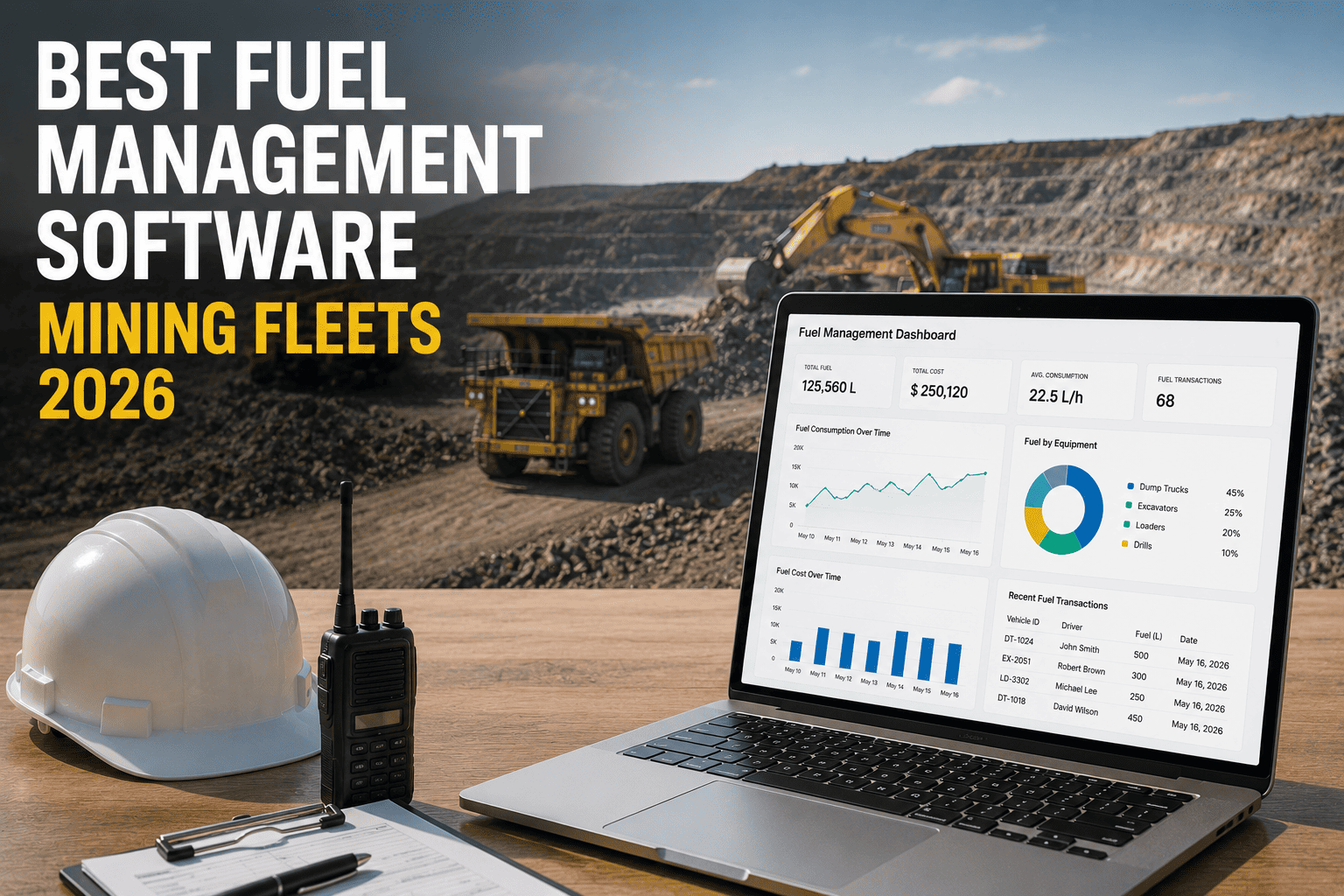
Best Fuel Management Software for Mining Fleets
A haul truck burns 300–500 litres of diesel an hour and sits idle for nearly 40% of its shift. Multiply that across a pit fleet and fuel quietly becomes the largest line item on your budget — and the easiest one to lose control of. Here's how mining operations are getting that control back in 2026.
Most mines never measure the gap between fuel purchased and fuel actually burned. You can sign up free to start measuring yours today, or book a demo if you'd like a walkthrough first.
Industry data on open-cast mining operating cost share, 2026
Three numbers every mine manager should know
of a haul truck's operating hours are spent idling rather than hauling, according to Caterpillar performance benchmarking.
lost per truck, per year, to idle-related diesel waste alone — before theft or inefficient routes are even counted.
of total fuel volume disappears to siphoning, fraud, or simple mismeasurement across mixed mining fleets.
Why mining fuel management isn't the same as fleet fuel management
Most fuel software was built for trucks on public roads, swiping cards at a gas station. Mining sites don't work that way. Fuel often moves through bowsers, bulk tanks, and mobile refuelling trucks, in locations with no cell signal and no fixed pumps. A loader and an excavator might draw from the same tank in a single shift, and the person who filled it may not be the person who logged it.
That gap between what left the tank and what's recorded on paper is where money disappears. The right fuel management software for mining fleets has to reconcile fuel from the moment it enters site storage to the moment it burns in an engine, across every vehicle type, shift, and weather condition a pit throws at it.
The hidden cost of doing it manually
Paper logs and end-of-shift estimates feel manageable on a small site, but they fail in exactly the conditions mining creates: multiple operators sharing equipment, fuel delivered in bulk rather than metered pumps, and supervisors who are too busy running production to audit every fuel slip. By the time a monthly statement reveals a shortfall, the fuel, and the evidence of where it went, is long gone.
Standard fleet fuel tools vs. mining-grade fuel management
Built for the highway
- Tracks fuel card swipes at retail stations
- Assumes one driver, one vehicle, one tank
- Relies on steady GPS and cellular coverage
- Reports consumption weekly or monthly
Built for the pit
- Reconciles bulk tanks, bowsers, and mobile refuelling
- Handles shared equipment across multiple operators and shifts
- Works offline and syncs once connectivity returns
- Flags anomalies within seconds, not after the statement arrives
Find out where your fuel is actually going
Most fuel loss in mining isn't one dramatic theft — it's siphoning, buddy fuelling, mismeasured logs, and idle waste, compounding quietly across every shift. The only way to see it is to measure it. Sign up free and connect your first tanks today, or book a demo and we'll walk through what's happening on your fleet.
What to look for in mining fuel management software
Not every fuel platform is built to survive a pit site. These are the capabilities that separate software that actually controls fuel from a dashboard that just displays numbers.
Real-time tank & bowser monitoring
Continuous sensor readings instead of end-of-shift estimates, so a sudden drop in tank level triggers an alert while it's still happening.
Theft & anomaly detection
Software that learns each machine's normal burn rate and flags siphoning, fraud, or buddy fuelling within seconds of it occurring.
Fuel card & bulk supplier integration
Every purchase, whether from a fuel card or a bulk delivery, reconciled automatically against GPS location and tank level.
Idle time & load-factor tracking
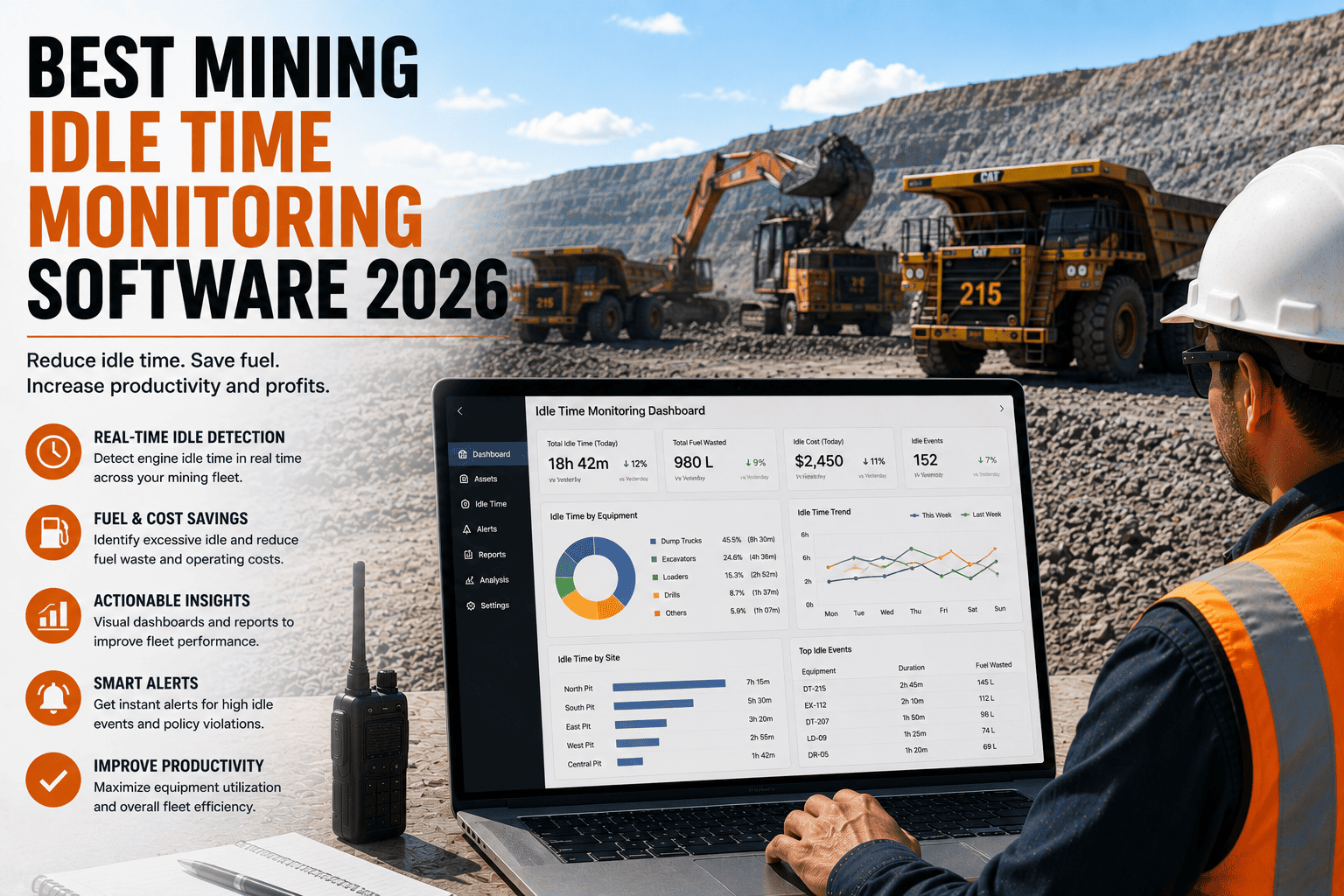
Idle hours broken down by machine and shift, so you can target the equipment quietly burning diesel without moving material.
Consumption analytics by asset
Litres-per-hour and litres-per-tonne trends for every haul truck, loader, and drill, so underperforming machines are obvious at a glance.
Works without constant connectivity
Data captured at remote pits and depots, then synced automatically the moment a signal is available again.
A simple checklist before you commit to a platform
Before signing a contract, it's worth asking a vendor to show, not just describe, how their software handles your hardest case: a shared mobile bowser refuelling three different machine types in a single shift, at a site with patchy signal. If they can walk you through that scenario clearly, the rest of the feature list usually holds up too.
What this looks like once it's actually fixed
The wins are well documented across the industry. After deploying fleet analytics, Anglo American's Mogalakwena platinum mine cut idle time by 32%, worth roughly $12 million a year. Teck Resources ran a three-month operator awareness program built on fuel data and cut idle time 18%, saving 6.5 million litres of diesel annually. Neither result came from buying new trucks — both came from finally being able to see what the existing fleet was doing.
idle time cut at a major platinum mine, worth roughly $12M a year
idle reduction from a 3-month operator awareness program, saving 6.5M litres a year
typical total fuel cost reduction reported by fleets after software adoption
Why the savings compound over time
The first month of visibility usually surfaces the obvious leaks — a tank that never quite balances, a machine that consistently outpaces its peers. The second and third months are where the bigger gains show up, once operators know fuel is being watched and routes, idling, and maintenance scheduling start adjusting on their own. Fleets that stay with the data tend to keep finding savings well past the first quarter.
Where FleetRabbit fits into this picture
FleetRabbit is built as a single platform that connects fuel monitoring to the rest of fleet operations — maintenance, inspections, GPS, and compliance — rather than treating fuel as a separate spreadsheet problem. For mixed mining fleets, that connection matters: a machine burning more diesel than expected is often a maintenance issue first and a theft issue second, and a platform that only watches fuel in isolation will miss that link.
How it works in practice
Connect your fuel sources
Link fuel cards, bulk tank sensors, and bowser data so every litre has a source.
Establish a baseline
The platform learns expected burn rates per machine, route, and load to know what "normal" looks like.
Catch what breaks the pattern
Unexpected drops, off-location fills, or excess idling trigger alerts with GPS and operator ID attached.
Act on the data
Coach operators, schedule maintenance, or investigate flagged transactions before small losses become large ones.
Built to scale with mixed fleets
Mining contractors rarely run a single type of equipment. A typical site mixes haul trucks, loaders, excavators, drills, and light vehicles, often supplied by different manufacturers and refuelled through different methods. FleetRabbit is designed to sit across that variety in one dashboard, so a fleet manager isn't switching between three different tools to understand one site's fuel picture.
Getting started doesn't require a long rollout. You can sign up free and connect your first vehicles today, or if you'd rather talk through your specific site setup first, you can book a demo with the team.
Matching the software to your fleet size
The right starting point depends on how your site already operates, not on which platform has the longest feature list.
Small or single-site contractors
If you're running a handful of machines from one depot, the priority is fast setup and a clear, simple view of fuel in versus fuel out. Look for software that deploys in days, not months, and doesn't require dedicated IT staff to maintain.
Multi-site or enterprise mining operations
Larger operations need the same core visibility, scaled across multiple pits, shift patterns, and reporting lines. Here, integration with existing ERP systems and the ability to roll up fuel data across sites for head-office reporting becomes the deciding factor.
Mixed contractor fleets
Many mining fuel losses happen specifically where contractor equipment meets owner-operated infrastructure. Software that can clearly separate and reconcile fuel by contractor, not just by vehicle, removes a common source of billing disputes.
Frequently asked questions
What does fuel management software actually do for a mining fleet?
It tracks fuel from storage through to consumption — tank levels, bowser transactions, fuel card purchases, and engine burn rates — and flags anything that doesn't match expected patterns, such as theft, fraud, or excessive idling.
How is this different from regular fleet telematics?
Telematics mainly tracks vehicle location and movement. Fuel management software focuses specifically on fuel inventory, dispensing, and consumption patterns. Many modern platforms, including FleetRabbit, combine both so fuel data connects to vehicle health and location.
Can it work at remote mine sites with poor connectivity?
Yes. Mining-grade fuel platforms are designed to capture data locally and sync once a connection is available, rather than depending on constant signal the way road-fleet tools often do.
How quickly can fuel theft be detected?
With real-time tank monitoring and anomaly detection, unusual fuel drops or off-site transactions can be flagged within seconds, rather than discovered weeks later on a fuel statement.
Is this worth it for a smaller mining contractor, not just large operations?
Yes. Smaller and mixed fleets often have less administrative capacity to manually track fuel, which makes automated reconciliation proportionally more valuable. Platforms like FleetRabbit are built to deploy quickly without heavy setup.
Does it replace the need for a fuel attendant or supervisor?
No. It removes the guesswork from their job. Supervisors still oversee fuelling, but instead of relying on paper logs, they get accurate, real-time data to act on.
How do I get started?
You can sign up free and begin connecting your fleet directly, or book a demo if you'd prefer a guided walkthrough first.
Stop guessing where your diesel goes
Every litre that disappears unaccounted for is a litre you already paid for. Bring fuel under control and you free up budget that's currently funding theft, idling, and inefficiency instead of production. Get started in minutes by signing up free at ai.fleetrabbit.com, or if you'd rather see it on your own fleet's numbers first, book a demo and we'll show you.