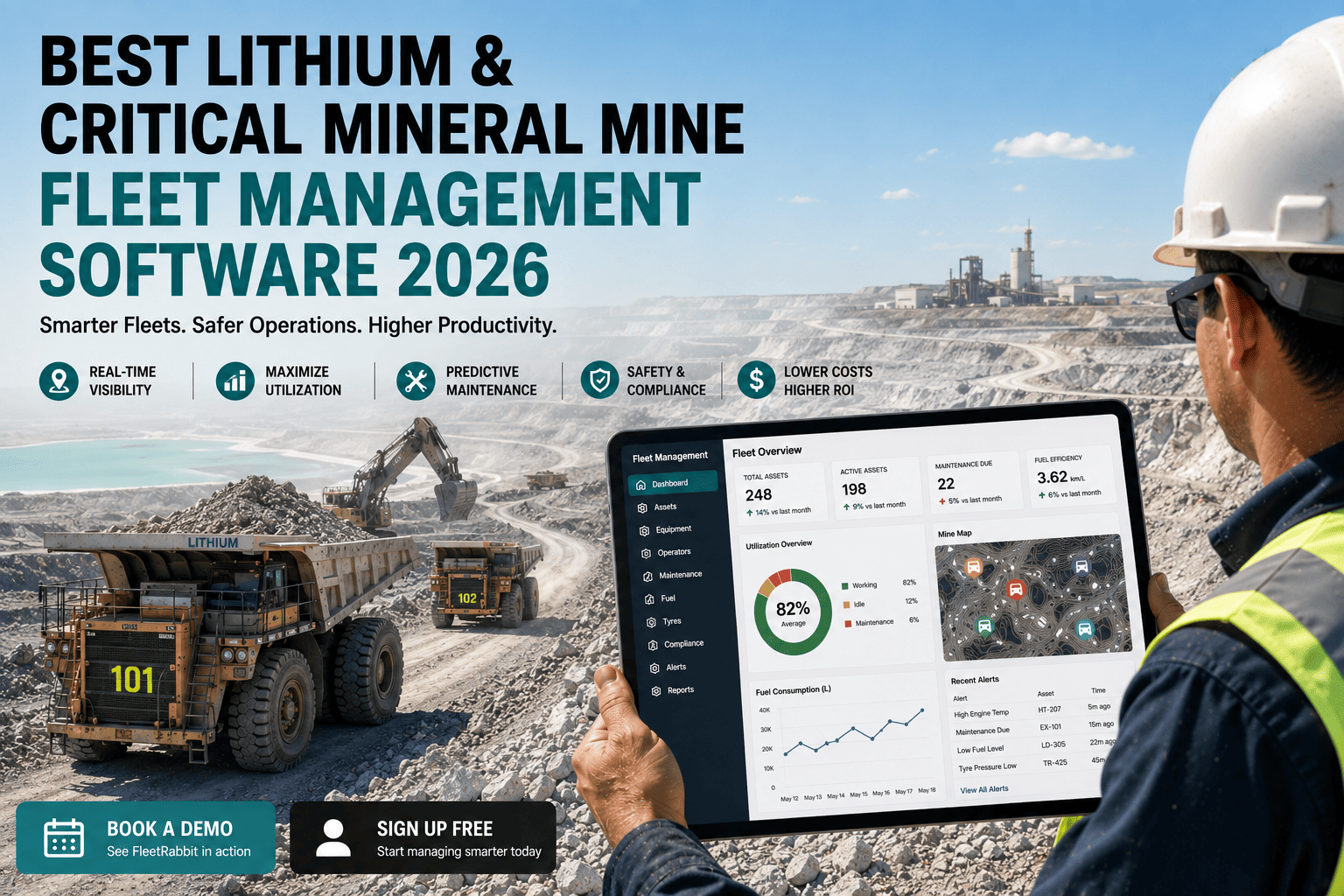
Lithium and critical mineral mining sit at the center of a global race that most equipment vendors have never had to design for. A spodumene pit in Western Australia and a lithium brine operation in Chile are technically both "lithium mines," yet they run completely different fleets, face completely different corrosion risks, and answer to battery makers who now demand mineral-by-mineral traceability all the way back to the truck that hauled it. Generic fleet software wasn't built for any of that. This guide walks through what actually matters when choosing fleet management software for lithium and critical mineral operations in 2026, and why the wrong choice quietly costs you compliance, uptime, and buyer trust.
The best lithium and critical mineral fleet management software handles two very different extraction environments — hard rock spodumene and brine-based direct lithium extraction — while adding batch-level traceability, corrosion-aware asset tracking, and ESG reporting that battery supply chains increasingly require. Operators using purpose-built platforms report PM completion rates above 95 percent and meaningfully fewer compliance gaps during customer and regulator audits.
Two Very Different Mines, One Software Problem
Lithium extraction happens two fundamentally different ways, and critical mineral operations for cobalt, nickel, and rare earths add even more variation on top. Fleet software built around a single extraction method fails the moment your operation doesn't match its assumptions.
What Critical Mineral Operators Need That Generic Software Misses
Beyond the extraction method, critical mineral mines answer to a supply chain that a copper or iron ore mine simply doesn't face in the same way. Battery makers, automakers, and regulators are pushing traceability requirements down to the mine site itself, and the fleet management layer is where that data has to originate.
| Requirement | Why It Matters | What Good Software Does |
|---|---|---|
| Batch & Lot Traceability | Battery supply chains increasingly require chain-of-custody records from extraction through processing | Ties every haul, load, and transfer to a timestamped, exportable record |
| Corrosion-Aware Maintenance | Brine and processing environments accelerate wear on pumps, seals, and electrical components | Adjusts maintenance intervals based on exposure conditions, not just standard OEM schedules |
| ESG & Emissions Reporting | Automakers and regulators increasingly ask for verifiable environmental data per site | Rolls fuel use, idle time, and emissions data into audit-ready reports automatically |
| Multi-Commodity Flexibility | Many critical mineral operations mine or process more than one mineral on the current 60-mineral list | Configurable asset and inspection categories rather than a rigid single-commodity template |
| Digital Inspections | Growing regulatory attention on critical minerals raises the bar on documented compliance | Mobile pre-shift inspections with photo evidence and permanent defect history |
FleetRabbit gives lithium and critical mineral operators one platform for dispatch, maintenance, and compliance, with the traceability data buyers are starting to require. You can sign up free with 3 machines to see how it fits your site before scaling up.
Capability Deep Dive
Three capabilities separate purpose-built platforms from repurposed trucking or construction software when it comes to lithium and critical mineral operations specifically.
Chain of Custody From Pit to Processing
Every load a truck moves needs a digital record: which pit or pond it came from, what time it left, where it was delivered, and which vehicle handled it. This isn't paperwork for its own sake. It's becoming a contractual requirement as battery manufacturers and automakers build supply chain verification into their sourcing agreements.
What to Look For
Confirm the platform generates exportable, timestamped custody records automatically from dispatch data, rather than requiring manual logging that gets skipped during busy shifts.
Predictive Maintenance for Corrosive Conditions
Brine, evaporation ponds, and lithium processing chemicals are harder on equipment than dry ore haulage. Pumps, seals, and electrical housings fail faster in these environments, and a maintenance schedule copied from a hard rock mine will under-service critical components.
What to Look For
Look for software that lets you set condition-based maintenance triggers tied to exposure and runtime, not a flat manufacturer interval that assumes standard operating conditions.
Compliance That Keeps Up With a Growing Mineral List
The list of officially designated critical minerals has expanded significantly in recent revisions, now covering roughly 60 minerals across battery metals, rare earths, and strategic minor minerals. Operations mining or processing more than one of these need software flexible enough to track different inspection and reporting requirements side by side.
What to Look For
Ask whether asset categories and inspection templates are configurable per commodity, or whether you're stuck with a one-size-fits-all setup built around a single mineral type.
Choosing the Right Platform for Your Site
Once you understand the unique demands of critical mineral operations, narrowing down vendors comes down to a short set of direct questions rather than a long feature checklist.
Ask for a Traceability Demo, Not Just a Feature List
Have the vendor show an actual exported custody record for a single load, from extraction point to delivery, so you can see exactly what data your buyers would receive.
Confirm It Handles Your Specific Extraction Method
Whether you're running hard rock haul trucks or brine pumping and DLE equipment, the maintenance and dispatch logic needs to match your actual operation, not a generic mining template.
Check the Implementation Timeline
A realistic rollout including telematics integration, inspection templates, and staff training should take a few weeks. Most sites see measurable improvements in PM completion and defect capture within the first 60 to 90 days.
FleetRabbit's predictive maintenance and digital inspection tools are built to handle both hard rock and brine-based critical mineral operations. Book a 30-minute demo and we'll map it against your specific site and mineral mix.
Frequently Asked Questions
Lithium and critical mineral mining are being asked to prove more than any commodity has had to before, from chain-of-custody records to emissions data to compliance across an expanding list of designated minerals. Fleet management software is no longer a back-office convenience for these operations. It's the layer that generates the data your buyers and regulators are starting to require, while also keeping the equipment running through some of the harshest operating conditions in mining. The sites that treat fleet software as core infrastructure, rather than an afterthought, are the ones best positioned to win long-term supply contracts.
FleetRabbit brings dispatch, predictive maintenance, and compliance-ready traceability together for lithium and critical mineral operations, whether you're running hard rock haul trucks or brine and DLE equipment. Start free with 3 machines, no credit card required, and see the difference within your first few shifts.