Ask any mine manager how long it takes to pull together a single monthly report and you rarely get a quick answer. It usually starts with a pause, because the real answer involves three spreadsheets, a maintenance binder, a few screenshots from a telematics portal, and a phone call to confirm a number that should have been logged automatically in the first place. By the time the report reaches leadership, the data behind it is already a week old, and the decisions built on it are working from the past, not the present.
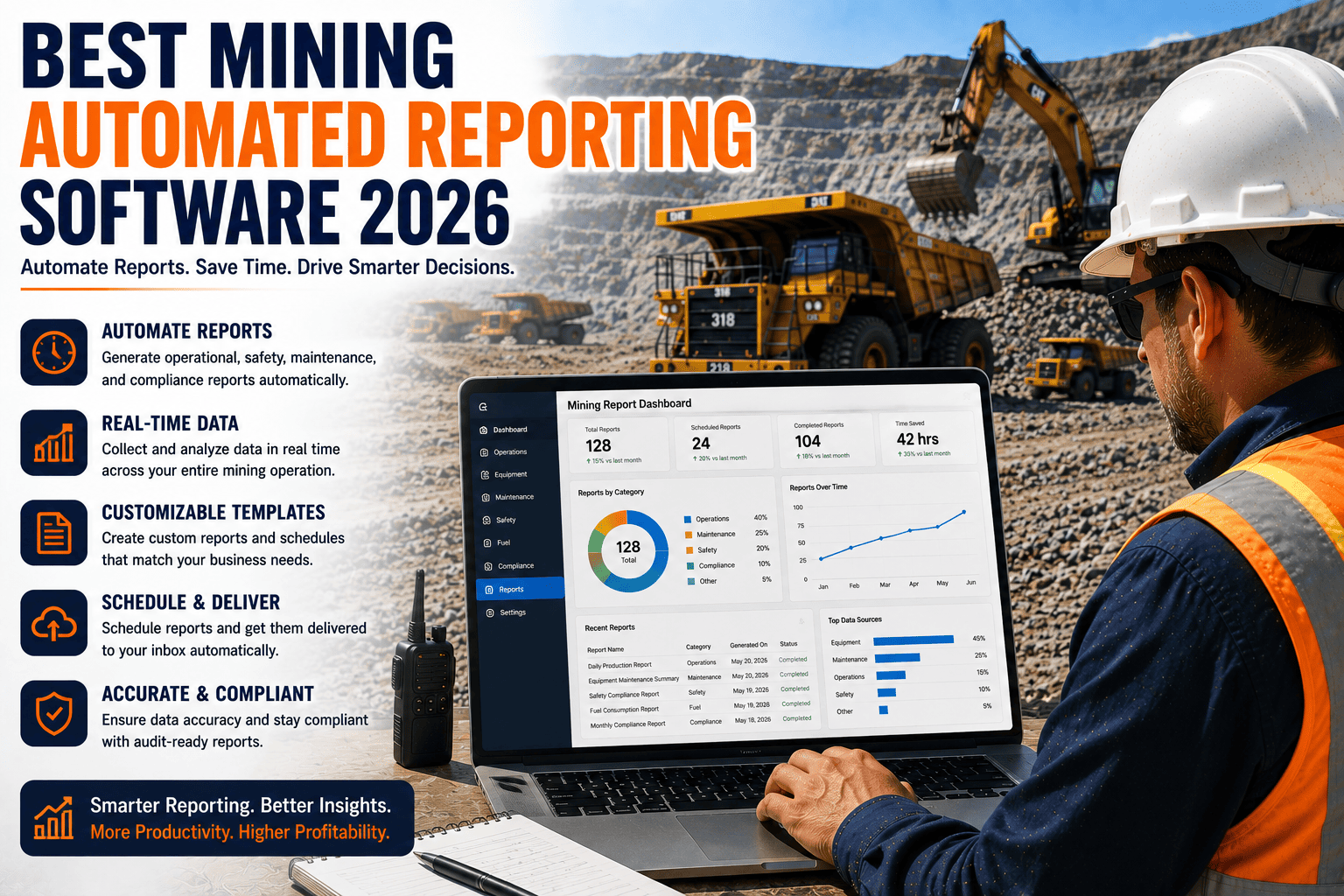
Mining automated reporting software pulls maintenance, safety, compliance, fuel, and production data directly from daily operations and turns it into ready-to-use reports without manual compilation. Manual reporting in industrial operations wastes more than 20 hours a week on average, largely because close to 60 percent of what actually happens on site never reaches a proper system of record. FleetRabbit closes that gap by capturing the data automatically at the source, so reports build themselves in the background.
The Hidden Cost Of Manual Mining Reports
Manual reporting rarely shows up as a cost anywhere in the budget, which is exactly why it survives so long. Research into industrial operations puts the real toll at more than 20 hours a week lost to manual report compilation, and the deeper issue is that close to 60 percent of what happens on a mine site never reaches a system of record at all. Radio calls, WhatsApp updates, shift handover notes, and clipboard tallies capture real events, but without automatic capture, none of it survives into the numbers leadership eventually sees.
Why A Nicer Dashboard Doesn't Fix It
Many sites already own a business intelligence tool. The problem is rarely the dashboard itself. A dashboard built only on the data that made it into a formal system is often missing most of the operational reality, so teams quietly keep the group chat running because the dashboard cannot be fully trusted, and the reporting effort doubles instead of disappearing.
FleetRabbit captures maintenance, safety, fuel, and production data automatically as it happens, so reports are ready the moment you need them, not days later. Sign up for a free trial and see your first automated report today, or book a demo to watch it run on your own fleet data.
Manual Reporting vs Automated Mining Reporting
Once the two approaches sit side by side, it becomes clear why manual reporting keeps costing time long after a site has already invested in software.
| Reporting Task | Manual Process | Automated Reporting Software |
|---|---|---|
| Building A Monthly Report | Days of pulling data from separate files and portals | Minutes, generated automatically from live data |
| Data Freshness | Reflects numbers gathered days or weeks earlier | Updates continuously as events happen on site |
| Compliance Records | Assembled under pressure right before an audit | Always current and export-ready for MSHA or internal review |
| Cross-Team Consistency | Different formats and formulas across departments | One standardized report format across every team |
| Error Risk | High, from re-typing and copy-paste mistakes | Low, since data flows directly from the source |
What Automated Mining Reporting Actually Covers
Good automated reporting is not one dashboard trying to do everything. It is a set of report types, each pulling from the data that already exists in daily operations.
Maintenance Reports
Work orders, repair costs, and parts usage roll up automatically into maintenance summaries, showing which assets are becoming expensive to keep running before the cost becomes a surprise.
Safety And Compliance Reports
Inspection logs, incident records, and training records generate audit-ready reports on their own, so a compliance review no longer means dropping everything to assemble paperwork.
Why this matters most under audit pressure
An inspector rarely gives advance notice. Reports that already exist in an exportable, time-stamped format remove the scramble that manual recordkeeping always creates in that moment.
Fuel And Consumption Reports
Fuel usage tracked against hours worked flags waste, theft, or inefficient routes automatically, instead of relying on someone noticing a discrepancy weeks after it started.
Production Reports
Output, utilization, and downtime combine into a single production view, so a shift's actual performance is visible the same day rather than reconstructed from memory later.
Executive And KPI Dashboards
Leadership gets a live summary of cost per hour, fleet uptime, and compliance status without waiting on a report cycle, turning monthly reviews into a quick check-in instead of a data-gathering exercise.
FleetRabbit automatically generates maintenance, safety, fuel, and production reports from the data your fleet already produces every day. Start your free trial and see it build your first report, or book a demo to walk through the reports that matter most to your site.
Who Gets The Most Out Of Automated Reporting
Some roles on a mining team feel the weight of manual reporting more than others, and these are usually the first to see the benefit once it is automated.
Site And Fleet Managers
Instead of spending a chunk of every week assembling status updates, managers get a live view of the fleet and can spend that recovered time on the problems the report was supposed to surface in the first place.
Compliance And Safety Teams
Automated, time-stamped records mean an audit no longer triggers a scramble through binders and spreadsheets, since the documentation has already been building itself all along.
Executives And Ownership
Leadership reviewing performance across multiple sites benefits from consistent, standardized reports that arrive on schedule, rather than a different format and quality level from every site manager.
Frequently Asked Questions
Every hour spent assembling a report by hand is an hour not spent acting on what it shows. FleetRabbit turns maintenance, safety, fuel, and production data into ready-to-use reports automatically, so your team gets answers instead of another spreadsheet to build.