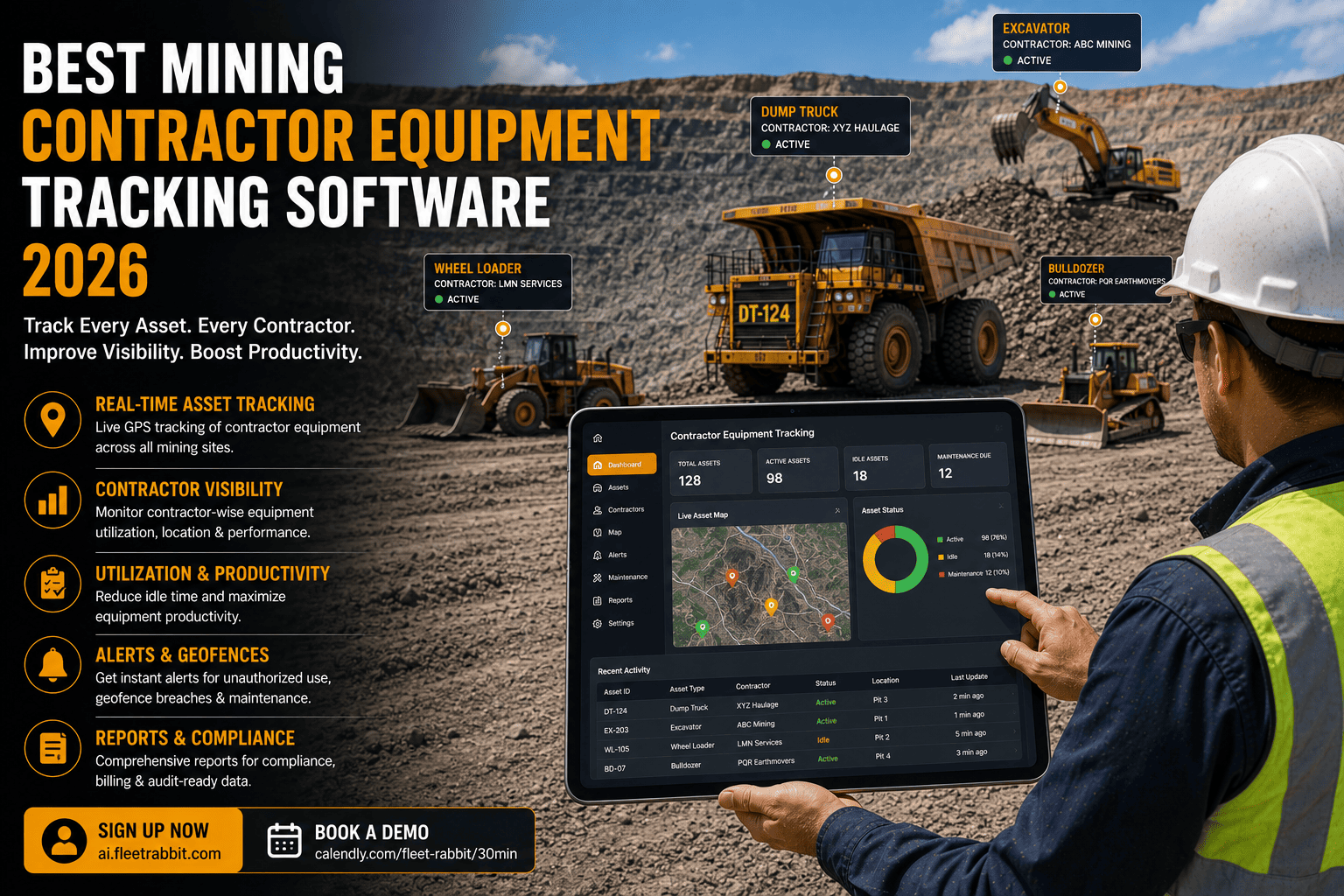
Most mine sites do not run on owned equipment alone. Contract haulers, drilling subcontractors, and rented support vehicles move in and out of a site constantly, and each one is a gap in visibility the moment it crosses the gate. Without a shared tracking system, a site manager has no reliable way to confirm a contractor's hours billed match hours actually worked, whether that machine ever entered a restricted blast zone, or if its insurance and certification records are even current. Mining contractor equipment tracking software closes that gap by putting every contractor asset on the same live dashboard as your owned fleet. Sign up for FleetRabbit to bring every contractor machine on your site into one view today.
Sites relying on paper sign-in sheets and contractor-submitted timesheets typically cannot verify 20 to 30 percent of billed contractor hours against actual equipment activity. Mining operations that move contractor assets onto a shared tracking platform recover 10 to 18 percent in disputed billing and cut safety zone violations from unmonitored equipment by more than half within the first quarter.
The Blind Spot Contractor Equipment Creates
Owned fleet is usually well tracked. Contractor equipment almost never is, and that gap creates real financial and safety exposure the moment a rented or subcontracted machine starts working on site.
- Contractor hours confirmed only by self-reported timesheets
- No record of whether equipment entered a restricted or blast zone
- Insurance and certification expiry tracked in spreadsheets, if at all
- Utilization and idle time invisible until invoice disputes arise
- Onboarding a new contractor asset takes days of manual setup
- GPS-verified engine hours matched automatically against invoices
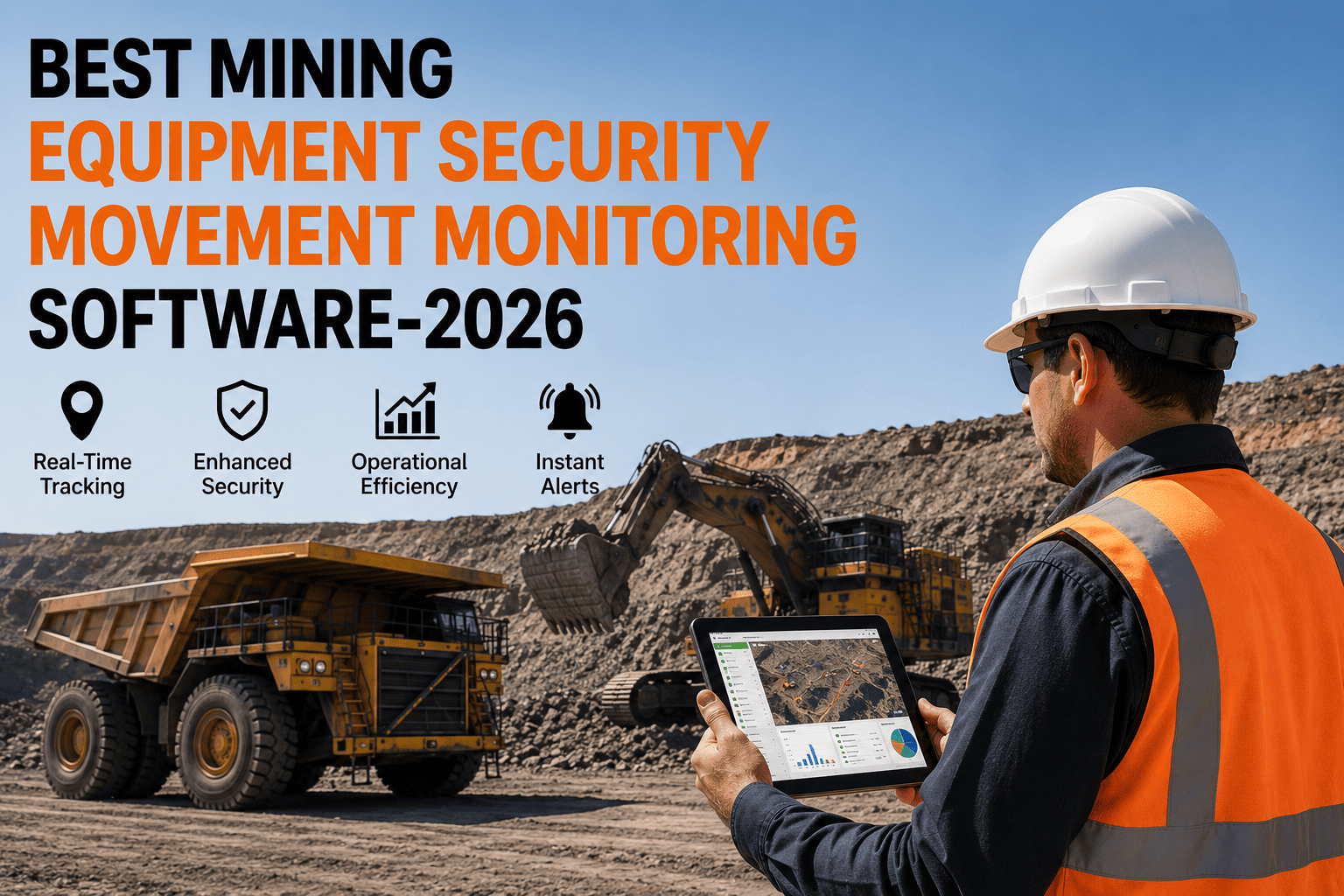
- Geofence alerts fire the instant equipment crosses a restricted zone
- Compliance documents tracked with automatic expiry reminders
- Utilization and idle time visible in real time on one shared dashboard
- A new contractor asset is visible on the map within a day
What Contractor Equipment Tracking Software Actually Delivers
A platform built for mixed owned-and-contractor fleets needs to do more than plot a GPS dot on a map. It has to reconcile billing, enforce safety boundaries, and keep compliance records current across equipment your company does not own or directly manage.
GPS-Verified Hours and Billing Reconciliation
Every contractor invoice is checked against actual GPS-tracked engine hours and location history instead of a submitted timesheet. Discrepancies between billed and worked hours get flagged automatically before payment goes out, not months later during an audit.
Geofencing Across Multi-Owner Equipment
Blast zones, restricted pit areas, and haul roads get mapped once and applied to every asset on site, whether it is company-owned or under contract. A contractor machine entering a restricted area triggers the same instant alert as your own equipment would.
Compliance and Certification Records
Insurance certificates, operator certifications, and equipment inspection records attach directly to each contractor asset in the platform, with automatic reminders before anything lapses, so a compliance gap never surfaces mid-project.
Fast Onboarding For Short-Term Contracts
Contractor engagements are often short, so onboarding cannot take weeks. A well-built platform gets a contractor asset connected and visible on the live map within a day, using existing telematics hardware wherever it is already installed.
| Tracking Capability | What It Solves | Risk Without It |
|---|---|---|
| GPS Hour Verification | Matches billed hours to actual tracked engine hours and location | Overbilling and disputed invoices with no data to resolve them |
| Shared Geofencing | Applies the same safety zones to contractor and owned equipment | Unmonitored equipment entering blast zones or restricted areas |
| Compliance Document Tracking | Attaches insurance and certification records with expiry alerts | Expired coverage discovered only after an incident occurs |
| Multi-Owner Dashboard | Displays owned and contractor assets side by side in real time | Site managers working from incomplete or delayed equipment lists |
FleetRabbit puts every contractor and subcontractor machine on your site under the same live map, geofences, and compliance tracking as your owned fleet, so nothing operating on site is invisible.
Getting A Contractor Asset Onboarded In Practice
Adding a new contractor machine should not require a project of its own. The process below reflects how most mining operations actually get a subcontracted asset live on a shared dashboard.
Book a demo through FleetRabbit's scheduling page to see this onboarding flow run against your own contractor roster before committing to a platform.
Calculating What Untracked Contractor Equipment Is Costing You
Start by pulling the last 12 months of contractor invoices and comparing billed hours against any available secondary record, even rough site sign-in logs. Most operations find a 20 to 30 percent gap between what was billed and what can be independently confirmed. For a site paying 300,000 dollars annually across contracted equipment, even a conservative 12 percent unverifiable gap represents 36,000 dollars a year in exposure sitting outside anyone's ability to audit. Add the liability risk of an uninsured or uncertified contractor asset operating in a restricted zone, and the case for shared tracking moves from operational nicety to financial necessity fairly quickly.
Key Takeaways On Contractor Equipment Tracking
Contractor and subcontracted equipment is often the least visible part of a mine site, even though it can represent a significant share of total equipment hours and cost. Paper timesheets and manual sign-in logs cannot verify billed hours, cannot enforce safety zones consistently, and cannot catch a compliance lapse before it becomes a liability.
Putting contractor equipment on the same live dashboard as owned fleet closes that gap directly, typically recovering 10 to 18 percent in disputed billing and cutting safety zone violations from unmonitored equipment by more than half. The equipment is already on your site. The only question is whether you can actually see what it is doing.
FleetRabbit brings every contractor, subcontractor, and rented asset on your site onto one live dashboard alongside your owned fleet, with verified hours, shared geofencing, and automatic compliance tracking. See exactly what is operating on your site before the next invoice lands.