Somewhere on your site right now, a shovel is standing still, waiting on a truck that is still five minutes out. Multiply that wait across every loading zone, every shift, every day of the year, and you get one of the most expensive gaps in mining — a fleet that looks busy on paper while quietly running at 60 percent of what it could actually move. Mining dispatch optimization software exists to close exactly that gap, and this guide breaks down how it actually works.
Mining dispatch optimization software matches haul trucks to shovels and loaders in real time, cuts queue waiting at loading and dump points, and re-tasks idle equipment the moment it goes unproductive instead of hours later. Fleets running effective dispatch optimization typically close the gap between industry-average haul truck availability near 72 to 78 percent and world-class targets of 92 to 94 percent. FleetRabbit gives dispatchers a live utilization baseline within 24 hours and their first actionable bottleneck within the first week.
The Utilization Gap Hiding in Your Fleet
A haul truck can be fully available, fully fueled, and mechanically sound, and still spend nearly a third of its shift earning nothing. That lost time doesn't show up on a maintenance report. It shows up in queue lines, slow dispatch decisions, and mismatches between truck arrival and shovel readiness.
60% Effective Utilization
Many fleets run near this figure even when equipment availability looks strong on paper, because the remaining productive time vanishes into queueing and dispatch delay.
72-78% Availability
The average haul truck availability across the industry, leaving a 15 to 17 percentage point gap against what world-class operations achieve.
92-94% Availability
What top-performing haul truck fleets sustain, with shovels and excavators close behind at 90 to 92 percent, through disciplined dispatch and maintenance planning together.
Availability and Utilization Are Two Different Problems
These two numbers get confused constantly, and the confusion is exactly where dispatch optimization gets overlooked. A truck can be perfectly available and still poorly utilized if dispatch decisions are slow or mismatched.
| Metric | What It Measures | What Fixes It |
|---|---|---|
| Availability | Whether a machine is mechanically ready to work at all, versus down for repair | Preventive maintenance strategy and predictive failure alerts |
| Utilization | Whether available machines are actually being used productively, minute by minute | Dispatch optimization, queue management, and real-time re-tasking |
| Cycle Time | How efficiently each individual haul loop runs, from load to dump and back | Route optimization and truck-shovel matching by dispatch software |
| Queue Time | How long trucks wait at loading zones and crushers before being served | Live queue visibility and automatic rerouting to the shortest line |
FleetRabbit tracks availability, utilization, and cycle time side by side, so dispatchers see the real gap instead of guessing. Sign up free to get your first live baseline, or book a demo to see it against your own haul routes.
How Dispatch Optimization Actually Closes the Gap
Optimization software doesn't just show a dashboard of numbers. It changes the decisions dispatchers make in the moment, shift after shift.
Truck-Shovel Matching
Rather than assigning trucks to shovels on a fixed rotation, optimization software continuously matches truck arrival timing to shovel readiness, factoring in payload targets and route distance so the next truck arrives close to the moment the shovel is free.
What this replaces
Radio-based manual dispatch, where a dispatcher's mental model of the pit is already a few minutes out of date by the time a decision gets made.
Live Queue Management
When a crusher or loading zone starts backing up, the software sees it building in real time and can redirect incoming trucks to a shorter queue before the line grows, instead of after drivers have already been sitting for ten minutes.
What this replaces
Fixed routing that sends every truck to the same point regardless of how long the line already is.
Automatic Idle Detection and Re-tasking
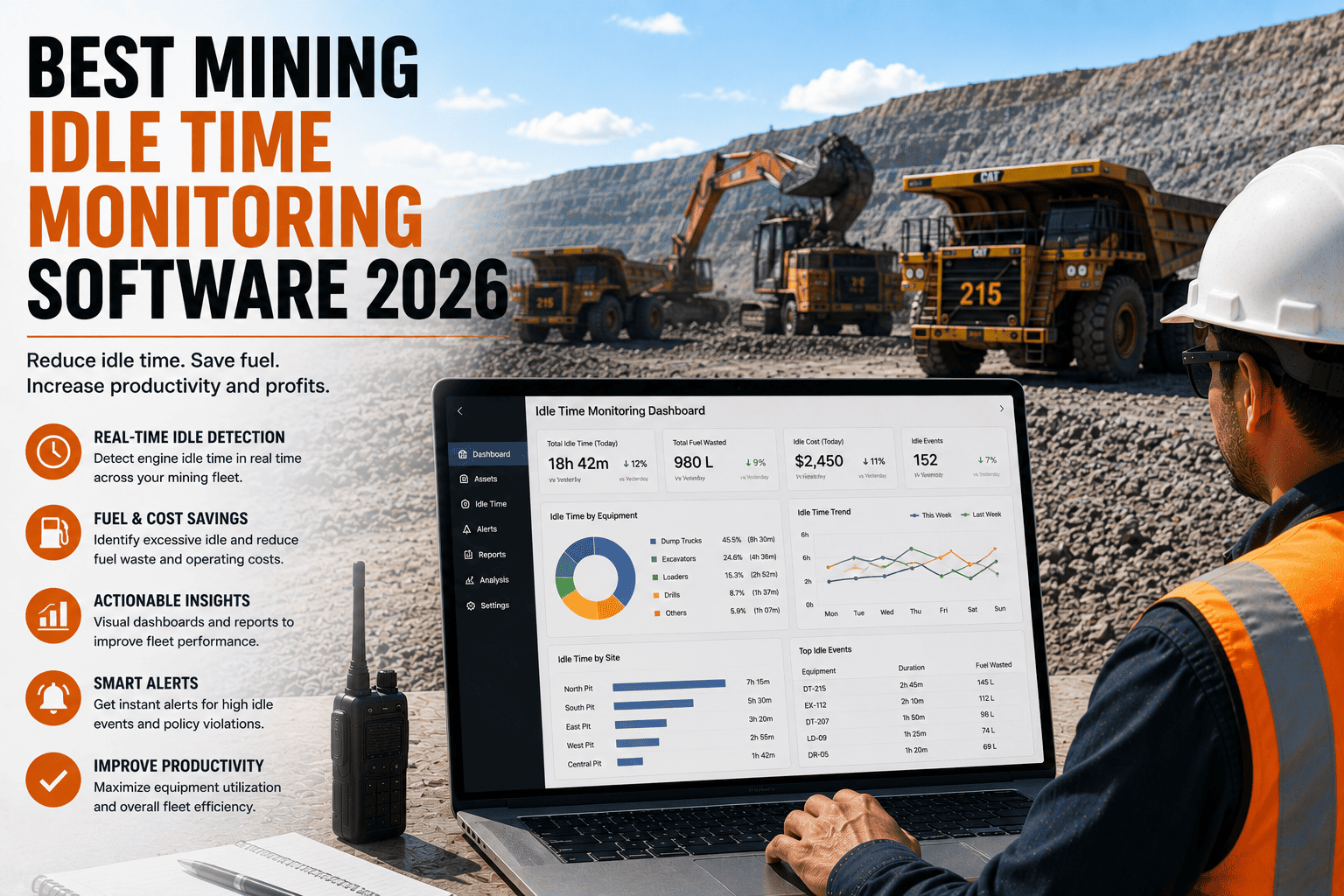
A truck sitting still for more than a defined threshold gets flagged automatically, and dispatch software can suggest or trigger a new task immediately rather than waiting for a supervisor to notice on a walk-through.
What this replaces
Idle equipment quietly costing production for a full shift before anyone catches it.
Bottleneck Pattern Detection
Over days and weeks, the software surfaces recurring patterns — a specific route that always backs up after shift change, or a shovel that consistently outpaces the trucks assigned to it — turning one-off observations into a fixable process problem.
What this replaces
Monthly production reviews that catch a problem long after it has already cost weeks of output.
What to Confirm Before Choosing a Dispatch Platform
Several platforms claim dispatch optimization. Fewer actually deliver decisions a dispatcher can act on in the moment. Confirm these four points, ideally in a live demo against your own site layout.
Real-Time, Not Batch
Recommendations should update continuously through the shift, not refresh once every hour from a batch process.
Works With Your Fleet Mix
Haul trucks, loaders, and support equipment from different manufacturers should all feed the same dispatch logic, not separate siloed tools.
Surfaces Patterns, Not Just Alerts
Ask to see a recurring bottleneck report, not just individual idle-time notifications with no trend analysis behind them.
The ROI Math on Closing the Utilization Gap
Dispatch optimization is one of the fastest-paying investments in a mining operation because every recovered minute compounds across hundreds of cycles a day.
| Improvement Area | Typical Gain | Production Impact |
|---|---|---|
| Haul Truck Availability | From 72-78% toward 92-94% | Closes a 15 to 17 percentage point gap against world-class benchmarks |
| Idle Time Reduction | Recovered minutes per truck per shift | Compounds across hundreds of cycles daily and thousands annually |
| Missed Haul Cycles | 2-3 cycles per shift recovered per truck | Each missed cycle represents a full payload of lost production |
| Time to First Insight | 24 hours for baseline, 1 week for first bottleneck | Dispatchers act on real data instead of a monthly review cycle |
FleetRabbit optimizes truck-shovel matching, tracks queue times live, and flags idle equipment the moment it stops earning. Start your free trial today, or book a 30-minute demo to see it running against your own haul cycles.
Frequently Asked Questions
Dispatch optimization turns queue delays, mismatched truck-shovel timing, and unnoticed idle time into recoverable production. FleetRabbit gives your dispatchers the real-time visibility to act on it every shift.