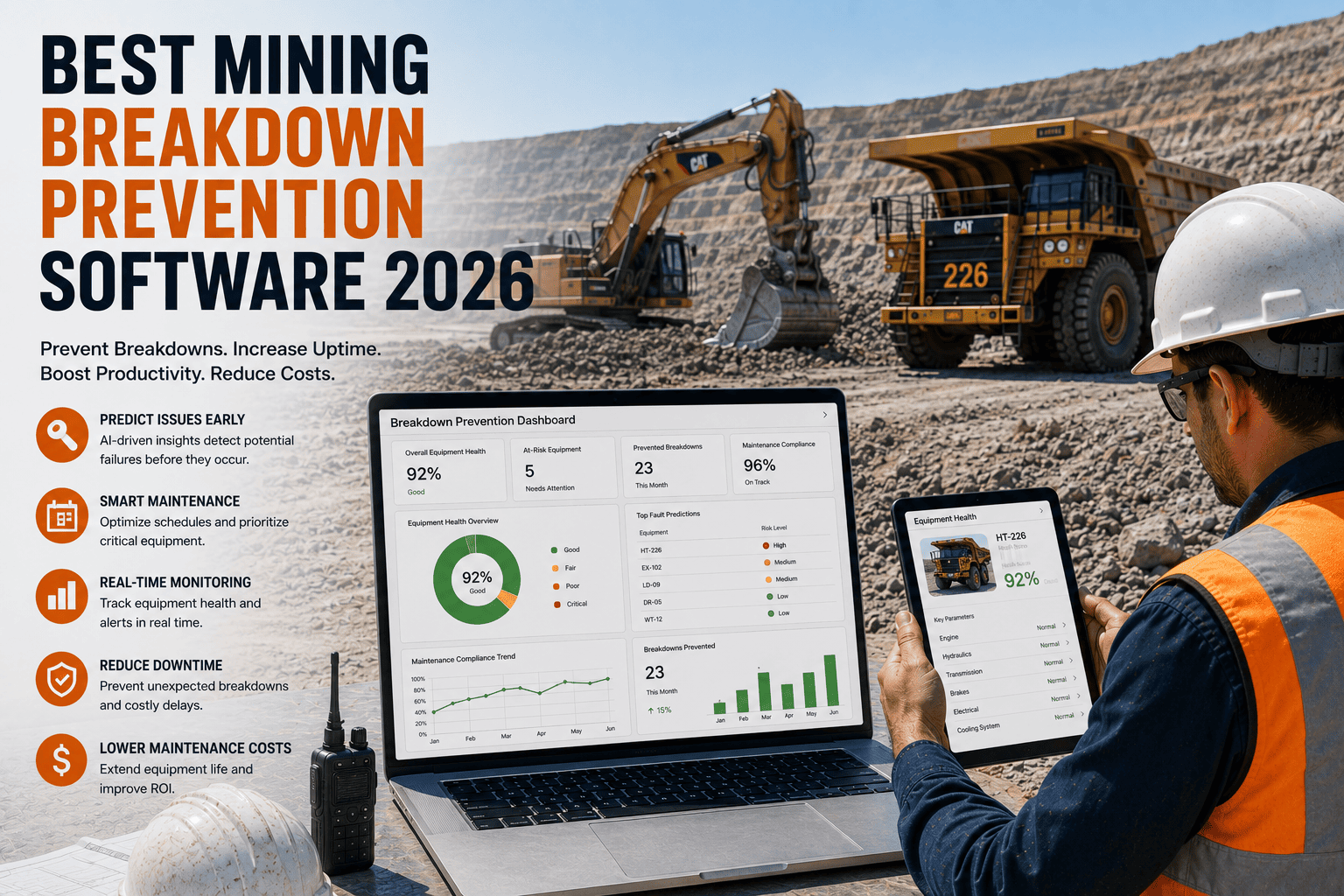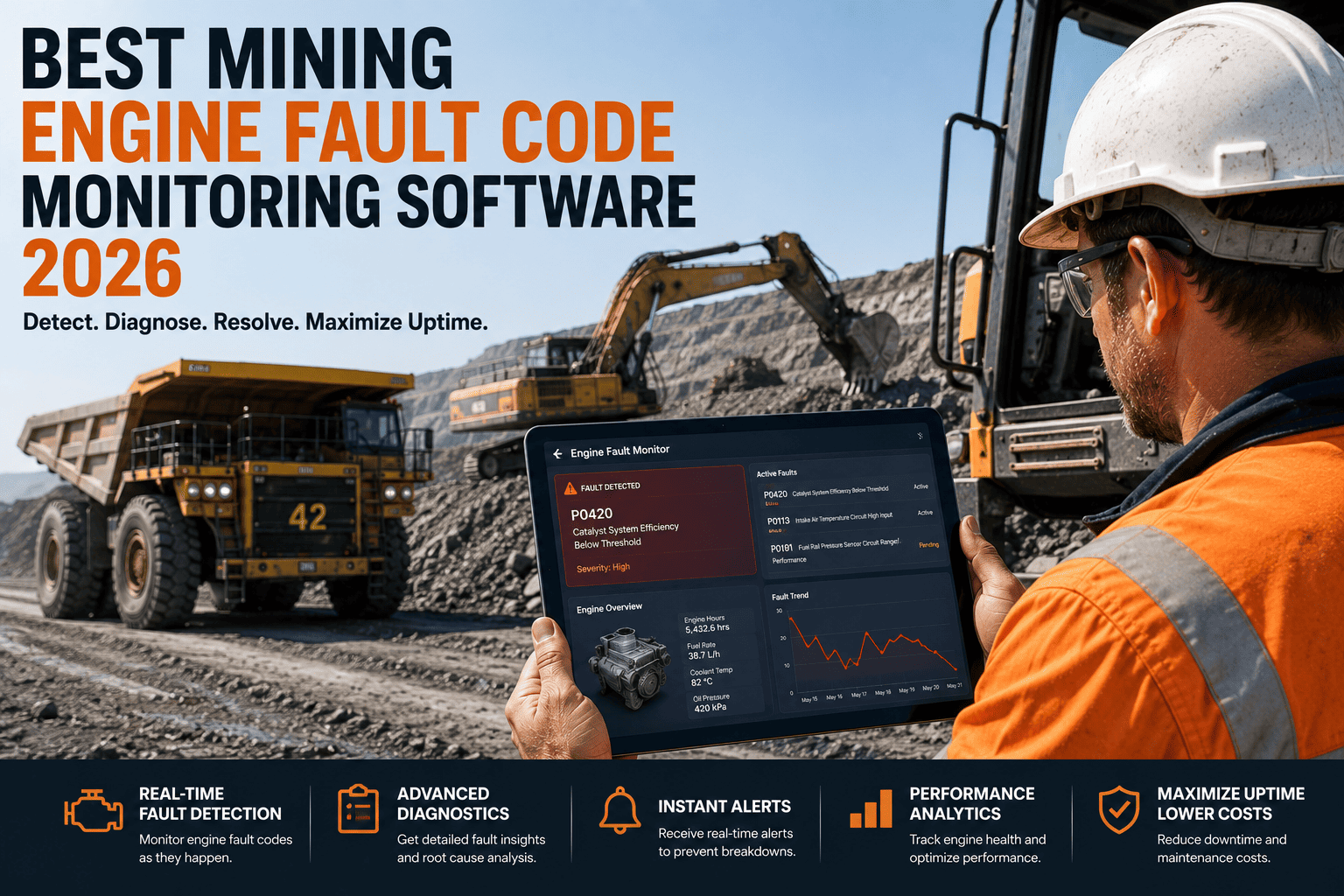
A haul truck doesn't just stop working one morning. It sends warnings for days, sometimes weeks, before a derate turns into a full breakdown. The problem is that most mining fleets are still reading those warnings the hard way: mid-shift, on the haul road, with a stopped machine and a maintenance crew scrambling on emergency time. Engine fault code monitoring software changes that sequence entirely, catching the diagnostic trouble code the moment it fires instead of after the equipment has already derated or stalled.
The best mining engine fault code monitoring software reads SPN/FMI and OEM diagnostic trouble codes in real time, flags derate-triggering faults before torque is cut, and schedules repairs during planned downtime instead of mid-shift. Unplanned haul truck downtime in mining runs 5,000 to 10,000 dollars per hour, while fault code monitoring paired with predictive maintenance cuts unplanned stoppages by 30 to 50 percent. Sign up for FleetRabbit to start reading your fleet's fault codes today.
What Mining Engine Fault Code Monitoring Software Actually Does
Every modern mining engine, whether it's running a haul truck, a wheel loader, or a drill rig, streams diagnostic trouble codes continuously through its electronic control module. Each code pairs an SPN, the suspect parameter number identifying which component or system is affected, with an FMI, the failure mode identifier describing how it's failing. Fault code monitoring software pulls that stream off the machine, decodes it, and turns raw numbers into a prioritized list your maintenance team can act on the same day a fault appears rather than the day the machine stops.
Why Raw Fault Codes Aren't Enough on Their Own
A technician staring at a code like SPN 3251 FMI 10 without context has no way to know if that's a five-minute sensor recalibration or the early warning sign of a DPF failure that will trigger a full engine derate within days. Software built specifically for fault code monitoring cross-references the code against severity libraries, prior repair history, and current operating conditions, then tells your team exactly how urgent the fault is and what caused similar faults in the past.
Severity Tiering Removes the Guesswork
Not every fault code deserves the same response. Good monitoring platforms sort incoming codes into tiers, routing critical derate-triggering faults straight to dispatch while logging minor sensor drift for the next scheduled service. This tiering is what keeps shop schedules from collapsing under a flood of low-priority alerts.
FleetRabbit connects directly to your mining fleet's existing telematics and reads every SPN/FMI code in real time, flagging derate risks before torque gets cut. No new hardware required on most equipment. Try it free with your first vehicles today.
Common Mining Engine Fault Codes and What They Cost You
Certain fault codes appear again and again across mining fleets, and each carries its own downtime and repair profile. Knowing which ones demand immediate shop time versus which can wait for the next scheduled window is the difference between a planned repair and a stranded machine.
| Fault Category | What It Signals | Derate Risk | Monitoring Advantage |
|---|---|---|---|
| SCR / DEF System Faults | Emissions system detects a fault severe enough to trigger a regulatory inducement | High, up to 25 percent power cut until resolved | Flags the fault before the inducement window closes, avoiding a forced derate |
| DPF Backpressure | Diesel particulate filter clogging, forcing exhaust back toward the turbo and head gasket | Moderate, escalates if ignored for weeks | Schedules regeneration or filter service before backpressure damages the turbocharger |
| VGT Turbo Actuator | Corroded terminals or soot interference in electronically actuated turbo systems | High on repeat occurrence | Tracks recurrence patterns so the root wiring issue gets fixed, not just the symptom |
| Low Battery / Network Faults | Voltage drops triggering communication errors across the ECM network | Low individually, high in aggregate | Groups recurring low-voltage events so charging system issues are caught early |
| Bearing / Gearbox Wear | Acoustic and vibration signatures indicating stressed bearing races or gear teeth | Not a derate code, but among the costliest failures | Surfaces two to six weeks ahead, protecting against 50,000 to 150,000 dollar component failures |
Where Fault Codes Hit Hardest Across Mining Equipment
Fault code monitoring pays off differently depending on which asset class is generating the code. The financial exposure and the operational fallout both shift based on what the machine does and how replaceable its capacity is in the moment.
Haul Trucks
Haul trucks carry the highest per-hour cost of any mining asset when they go down unexpectedly, since they sit directly in the haulage cycle. A single derated truck slows the entire loading and dumping sequence behind it, not just its own output.
Crushers and Conveyors
Crushing and haulage circuits account for the majority of total downtime events across a mining operation. A fault code on a crusher motor or conveyor drive doesn't just idle one machine, it can back up the entire processing line behind it.
Drills and Loaders
These machines run in shorter, repeated cycles, so fault codes here tend to compound through frequency rather than single catastrophic events. Monitoring software that tracks recurrence across the fleet catches patterns a single-machine view would miss entirely.
Building a Fault Code Monitoring Program That Actually Works
A monitoring program only pays off if the data reaches the right person fast enough to act. That means connecting existing telematics rather than ripping out working hardware, setting severity rules that match your operation's risk tolerance, and giving maintenance planners a single prioritized view instead of a raw code feed.
Start With the Data You Already Have
Most mining fleets already have GPS and telematics hardware capable of transmitting diagnostic trouble codes, it's simply sitting unused. Software that plugs into that existing feed gets a program running in weeks rather than requiring a full hardware retrofit across the fleet.
Layer in Condition Data Where It Adds the Most Value
Fault codes tell you what the ECM already knows. Vibration, oil analysis, and thermal data fill in what the ECM can't see yet, particularly for gearbox and bearing wear that shows up in condition data long before any code fires. Fusing both sources into one view is what separates a mature predictive maintenance program from a basic alert feed.
Set Severity Rules Before You Go Live
Decide in advance which fault categories trigger an immediate shop call, which get logged for the next scheduled service, and which are informational only. Doing this upfront is what keeps your team from either ignoring real derate risks or drowning in low-priority noise once the system is live.
FleetRabbit fuses live SPN/FMI fault codes with maintenance history and severity tiering, so your team sees what actually needs attention today. See how it works on your own fleet data before you commit to anything.
Signs Your Fleet Needs Fault Code Monitoring Now
Some warning signs are easy to spot once you know what to look for. If your maintenance team is regularly hearing about faults from the operator's cab instead of from a dashboard, if the same fault code keeps recurring on the same truck without the root cause ever being fixed, or if derates are showing up mid-shift rather than during a planned service window, your fleet is operating reactively rather than predictively. Each of these patterns is a signal that fault data exists, but nobody is reading it before the machine forces the issue.
FAQ: Mining Engine Fault Code Monitoring Software
Every ignored fault code is a derate or a breakdown waiting for the worst possible moment. FleetRabbit reads your mining fleet's diagnostic codes in real time and tells your team exactly what needs attention before the machine forces the issue. Start your free trial today, no credit card required.