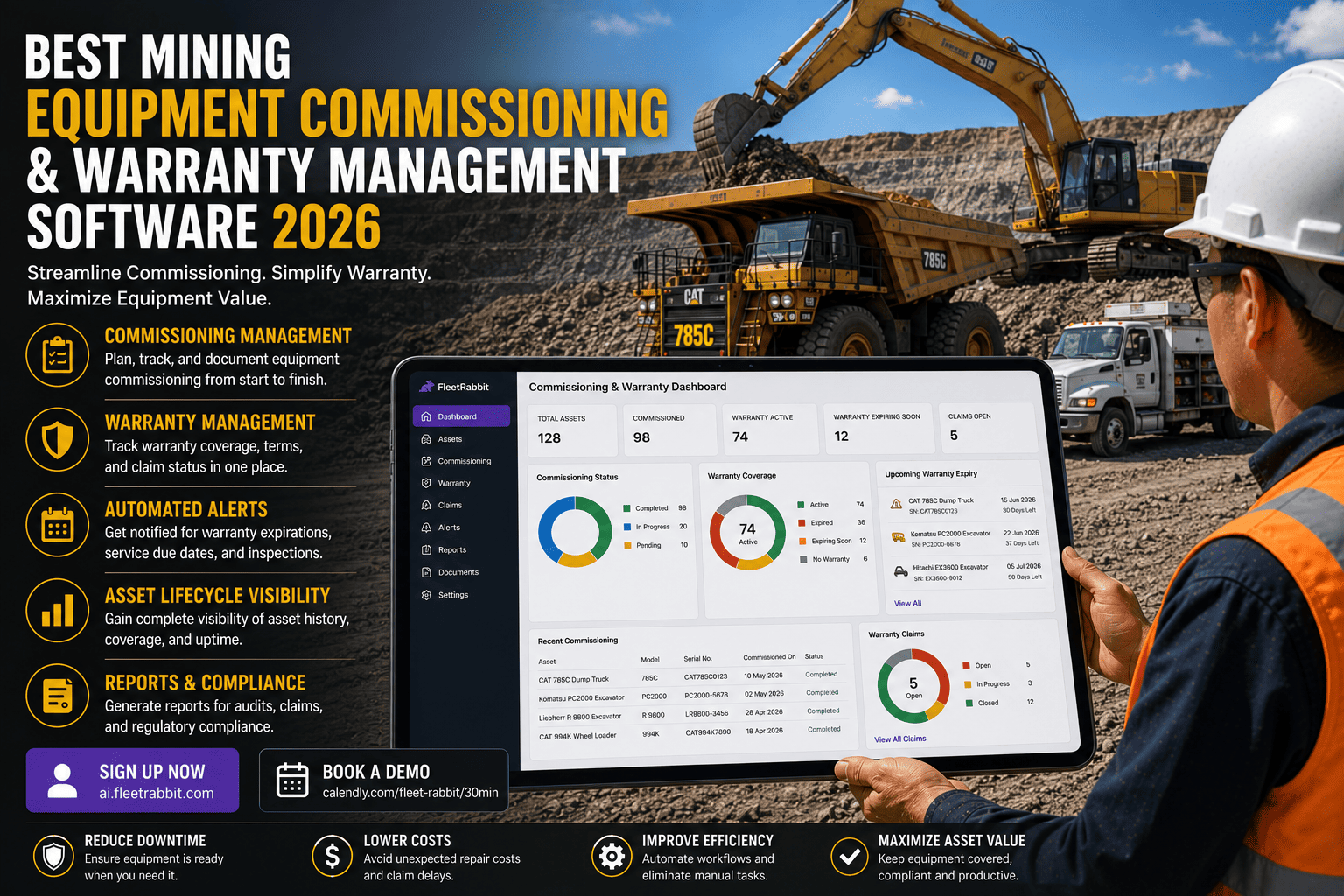
A brand-new haul truck rolling off the delivery trailer feels like the safest asset on the entire site. It isn't. The first few hundred hours of a machine's life are statistically some of the riskiest, full of assembly defects, break-in issues, and component faults that never showed up on the factory floor. That window is also exactly when the equipment is covered by warranty, which means every early failure that goes undocumented is either a safety risk quietly building or money the manufacturer should have paid for and never did. Commissioning and warranty management software exists to make sure neither of those things happens unnoticed.
The best mining equipment commissioning and warranty management software captures a machine's baseline condition and coverage terms the moment it arrives on site, tracks every early-life fault against that baseline, and links every repair to serial number, install date, and maintenance record so warranty claims go out complete. Operations running manual warranty tracking typically recover only 15 to 22 percent of eligible claim value, leaving the majority of legitimate coverage uncollected.
Why the First 500 Hours Matter More Than the Next 5,000
Reliability engineers have a name for this pattern: new equipment tends to fail more often right after commissioning than it does once it settles into steady operation, before wear-related failures start climbing again much later in its life. In between sits a long, comparatively quiet stretch. Mining fleets that skip close monitoring during that early window miss two things at once, an early warning sign of an assembly defect, and a warranty claim window that closes whether or not anyone filed the paperwork.
Two Risks Hiding in the Same Blind Spot
An undocumented early fault is rarely just a missed inconvenience. It's usually a safety issue and a lost warranty dollar wrapped into the same event, which is why treating commissioning as a paperwork formality instead of an active monitoring period is one of the more expensive habits a mine can carry without realizing it.
Safety Risk
A defect that isn't logged against baseline condition can recur and compound before anyone connects the pattern to a single root cause.
Coverage Loss
Warranty windows are calculated from install or delivery date, not filing date, so an undocumented early fault can quietly age out of eligibility.
Denied Claims
Claims without a complete fault trace back to a documented baseline are the easiest ones for a manufacturer to reject.
FleetRabbit captures each machine's baseline condition and warranty terms the moment it arrives, then tracks every early fault against that record so nothing slips past the coverage window undocumented. Sign up for a free trial to set up your next incoming asset, or book a demo to see how it maps to your current OEM coverage.
What a Complete Commissioning Record Actually Includes
A commissioning record isn't a delivery receipt. It's the reference point every future maintenance and warranty decision on that asset gets measured against, and it needs to hold up months later when a claim is being disputed.
| Record Component | What It Captures | Why It's Needed Later |
|---|---|---|
| Serial Number & Install Date | Exact asset identity and the date coverage windows are calculated from | A date mismatch is one of the fastest ways a legitimate claim gets disputed |
| Baseline Condition Report | Photos, fluid readings, and inspection results at first commissioning | Proves a later fault wasn't pre-existing or caused by site handling |
| OEM Warranty Terms | Coverage scope, duration, and maintenance obligations per component | Defines exactly which failures are eligible before a claim is even filed |
| Early-Life Fault Log | Every defect flagged during the first operating hours, tied to baseline | Builds the fault trace a manufacturer needs to approve a claim |
The Documentation Manufacturers Actually Ask For
Every warranty submission needs the same core package: service records, photographs of the failed component, diagnostic logs, and a clear fault trace showing the failure wasn't caused by misuse or a missed maintenance interval. When that information lives scattered across paper folders and technician memory, claims go in late, go in incomplete, or never get filed at all, which is exactly why manual tracking recovers such a small share of what's actually owed.
From Delivery to Claim: How the Record Should Flow
Asset Arrives On Site
Serial number, install date, and OEM warranty terms are logged before the machine does a single hour of work.
Baseline Condition Captured
Photos and inspection results establish the reference point every future fault gets compared against.
Early-Life Faults Tracked
Every defect in the high-risk early hours is logged against the baseline instead of treated as a one-off.
Claim Assembled Automatically
Service records, photos, and fault trace pull together into one submission instead of a scramble at claim time.
Want to see this against equipment you already have on order or recently commissioned? Book a demo and walk through your OEM coverage terms directly, or sign up to start logging your next asset's baseline the day it arrives.
FAQ
Every early fault that goes unlogged is a safety signal missed and a warranty dollar left uncollected. FleetRabbit captures baseline condition, tracks early-life faults, and assembles complete claims automatically from the moment equipment arrives on site.