Expansion is supposed to feel like progress. New pit, new haul routes, a handful of new machines on order, more tons moving every week. What actually happens on the ground is often messier. The dispatcher who used to know every truck's location from memory now loses track the moment a second active zone opens. Equipment that looks fully scheduled sits idle waiting for a route decision. The fleet grew, but coordination didn't grow with it, and the gap between the two is where expansion projects quietly lose money.
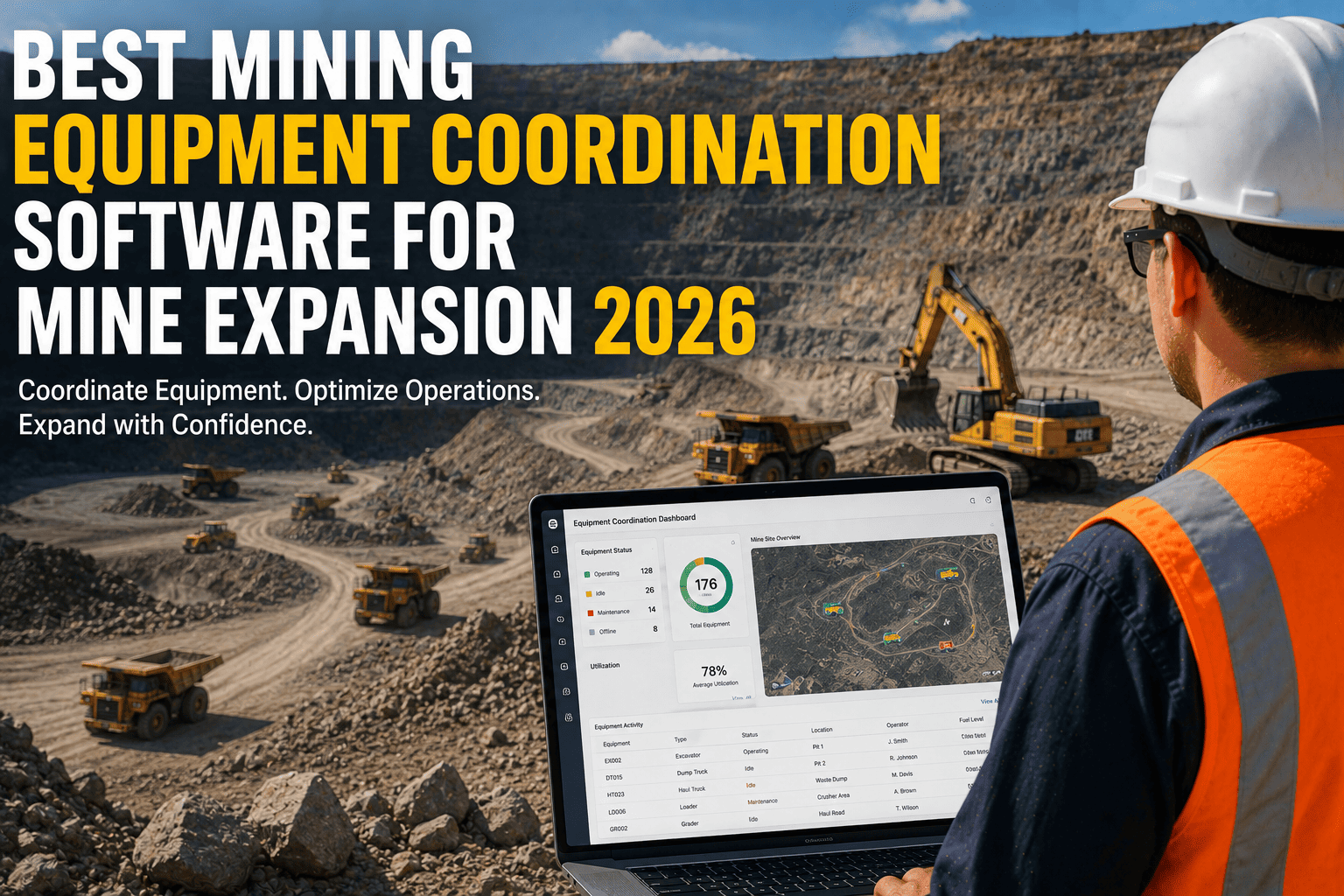
Mining equipment coordination software gives dispatchers and site managers one live view of every asset across old and new zones, so equipment gets assigned to the highest-value work instead of sitting idle during expansion. Research into real truck-shovel fleets has found Overall Equipment Effectiveness averaging around 25 percent for shovels and 38 percent for trucks, driven mainly by suboptimal dispatch and coordination rather than mechanical failure. FleetRabbit gives expanding mine sites the real-time coordination layer that manual dispatch and spreadsheet planning cannot keep up with once a second zone or shift comes online.
Why Equipment Coordination Breaks Down During Expansion
Underutilized equipment is rarely a mechanical problem. Research into real truck-shovel operations using a stochastic Overall Equipment Effectiveness framework found shovels operating at an average OEE near 25 percent and dump trucks near 38 percent, with the dominant constraint traced back to suboptimal dispatch and coordination rather than breakdowns or downtime. World-class sites target 85 to 95 percent equipment availability and 70 to 85 percent utilization, yet industry-average OEE sits closer to 60 to 65 percent even under normal conditions. Expansion tends to widen that gap further, since more zones, more equipment, and more shift complexity all increase the coordination burden at the exact moment manual methods start running out of capacity.
Why Adding Equipment Doesn't Automatically Add Output
It is tempting to assume more trucks and loaders on site directly translate to more tons moved. In practice, equipment that is mechanically sound but poorly coordinated can sit in a queue, wait on a route decision, or duplicate a route another asset already covered, all while looking busy on a shift roster.
FleetRabbit gives dispatchers and site managers a single live dashboard across every pit, zone, and shift, so new equipment gets assigned to the highest-value work from day one. Sign up for a free trial and map your expanding fleet today, or book a demo to see multi-zone coordination in action.
Manual Coordination vs Equipment Coordination Software
The strain of expansion shows up fastest in how equipment gets assigned day to day. Laid side by side, the two approaches diverge quickly once a second zone or shift enters the picture.
| Coordination Task | Manual Dispatch And Radio | Equipment Coordination Software |
|---|---|---|
| Fleet Visibility | Limited to what one dispatcher can track from memory | Every asset visible across all zones on one live map |
| Assigning New Equipment | Reactive, often idle until someone notices it's free | Slotted into the schedule automatically as capacity opens |
| Cross-Zone Conflicts | Discovered after a delay or a duplicated route | Flagged before assignments overlap or collide |
| Scaling To New Shifts | Coordination quality drops as complexity grows | System scales with added zones, shifts, and assets |
| Utilization Reporting | Estimated from shift rosters and memory | Calculated automatically from real dispatch data |
What To Look For In Coordination Software During Expansion
Not every fleet tool is built to handle the added complexity an expansion brings. These are the capabilities that matter most once a second zone or a growing crew enters the picture.
Real-Time Dispatch And Assignment
Equipment should be assignable to the nearest, highest-priority task automatically, instead of depending on a dispatcher manually tracking every truck's position across multiple active zones at once.
Cross-Site Resource Visibility
A single dashboard showing every asset, operator, and route across old and new zones lets managers reallocate equipment where it is actually needed instead of where it happens to be parked.
Why this matters most in the first 90 days of expansion
The early weeks of a new zone are when coordination gaps are most costly, since routes, crews, and equipment assignments are all changing at once and there is no established routine to fall back on yet.
Capacity Planning For New Equipment
New machines arriving mid-project should slot into a defined role in the schedule immediately, rather than sitting idle while someone works out where they fit into existing routes.
Conflict And Bottleneck Alerts
Automatic alerts for overlapping assignments, queue buildups, or underused equipment let a manager fix a coordination problem the same shift it appears, instead of discovering it in a monthly report.
Expansion-Phase Utilization Reporting
Tracking availability and utilization separately by zone shows exactly where the expansion is running smoothly and where coordination still needs work, guiding decisions before small gaps become expensive ones.
FleetRabbit combines real-time dispatch, cross-zone visibility, and automated conflict alerts so expansion adds output instead of just adding equipment. Start your free trial and set up coordination for your growing fleet today, or book a demo to walk through a multi-zone rollout.
Who Needs Coordination Software Most During Expansion
Some teams feel the strain of a growing fleet faster than others, and these are the situations where coordination software earns its keep quickest.
Sites Opening A Second Pit Or Zone
The moment equipment needs to be shared or reassigned across more than one active area, manual tracking stops scaling and a live coordination system becomes the only reliable option.
Fleets Adding Equipment Faster Than Process
Operations that are purchasing new trucks and loaders ahead of formalizing dispatch processes benefit most from software that slots new assets into the schedule automatically.
Multi-Shift Operations Scaling Up
Adding a new shift multiplies the number of handoffs and assignments happening each day, which is exactly where coordination gaps tend to appear first during an expansion.
Frequently Asked Questions
More equipment only means more output if every asset knows where it needs to be. FleetRabbit gives expanding mine sites one live view across every zone, shift, and machine, so growth adds tons moved instead of idle time.