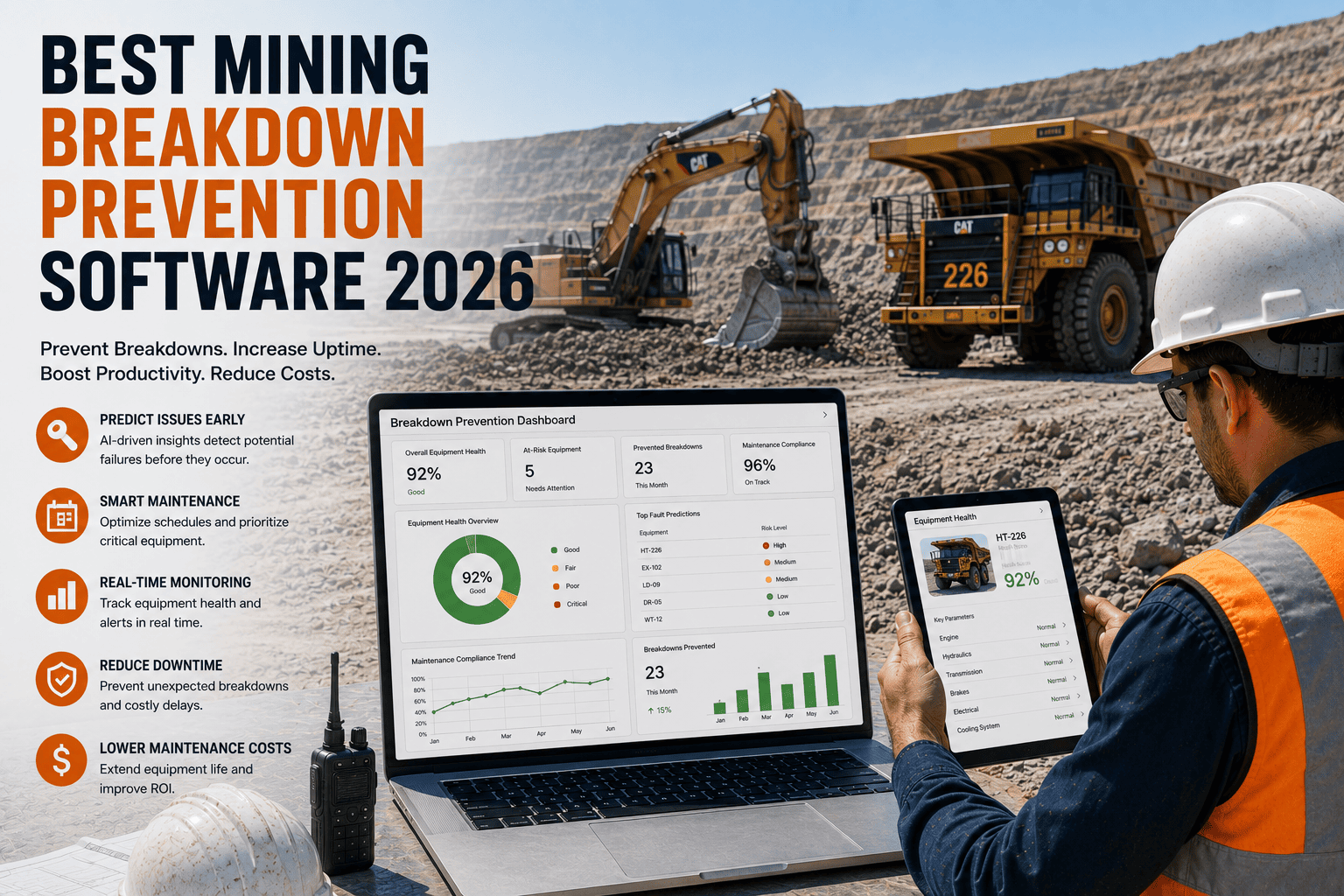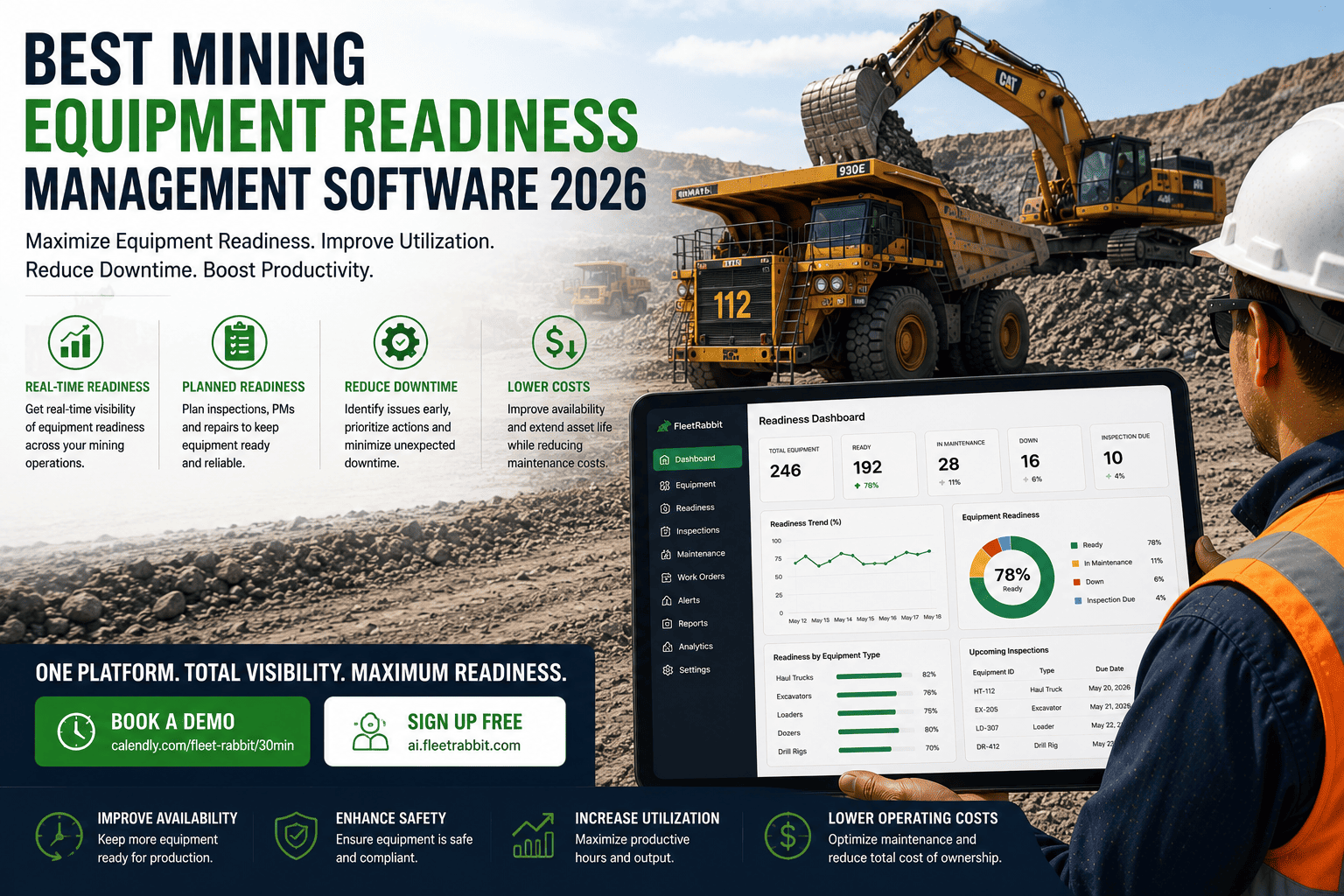
Every shift starts with the same quiet question: is this machine actually ready to work? Not just present on the yard, but inspected, serviced, stocked with the parts it might need, and assigned to an operator who's certified to run it. On most sites, that question gets answered in pieces, an inspection sheet here, a maintenance calendar there, a training spreadsheet somewhere else, which means the real answer often doesn't exist until something goes wrong mid-shift. Mining equipment readiness management software exists to answer that question in one place, before the engine even starts.
Mining equipment readiness management software combines inspection status, maintenance history, parts availability, and operator certification into one go or no-go signal for every asset before every shift. A defect caught during a two-minute pre-shift check costs a few hundred dollars to fix, while the same issue discovered mid-shift can cost 20,000 to 60,000 dollars in emergency repairs and lost production.
Readiness Is Four Questions, Not One
"Is the equipment ready" sounds like a single yes-or-no question, but it's really four separate ones that all need to be true at the same time. Miss any one of them and the machine either shouldn't be dispatched, or it gets dispatched anyway and the risk just moves from the yard to the middle of the shift.
Want to see your fleet's readiness status before your next shift starts? Sign up for a free FleetRabbit trial and get your first readiness dashboard live today.
What Readiness Software Needs to Track
A readiness platform is only as good as the data feeding it. If any one of the four pillars is missing or delayed, the "ready" signal can't be trusted, and crews go back to guessing.
Real-Time Inspection Status
Pre-shift inspection results need to update the readiness status instantly, with any safety-critical defect automatically holding that machine from dispatch until it's cleared and closed out.
Live Maintenance Schedules
Engine-hour-based service intervals should trigger work orders automatically rather than relying on someone remembering a calendar date, so a machine never rolls out on an overdue service window.
Connected Parts Inventory
Readiness isn't just about whether a machine currently runs, it's about whether it can keep running. Knowing that a known wear item is in stock, not two weeks out from a supplier, is part of the same readiness picture.
Operator Certification Status
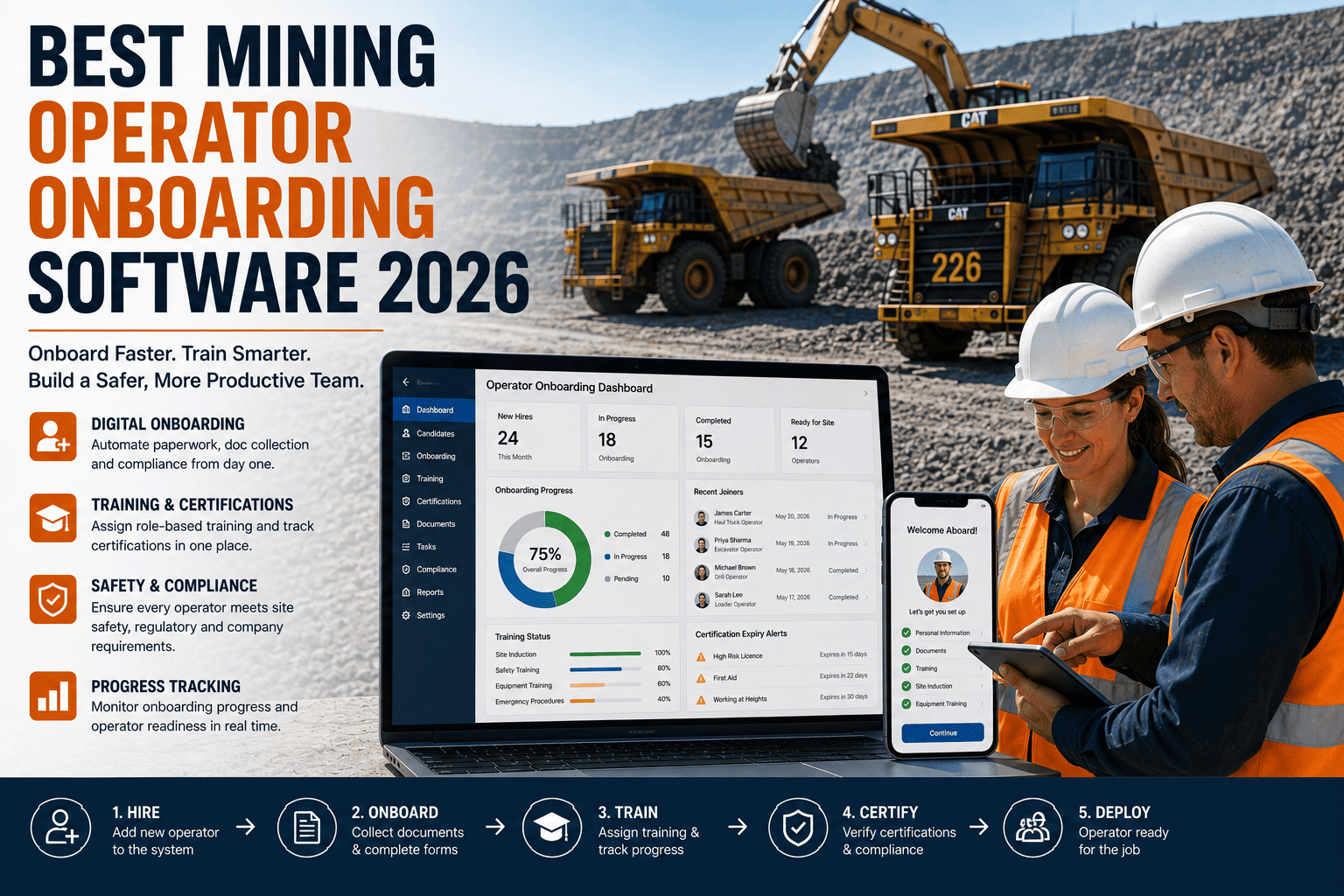
A perfectly maintained machine still isn't ready to dispatch if the only available operator's refresher training has lapsed. Readiness software needs to check workforce compliance alongside equipment compliance, not separately.
One Dashboard, Not Four Systems
The whole point breaks down if inspection, maintenance, parts, and training data live in four disconnected tools. A dispatcher needs one screen that says ready or not ready, with the reason attached if it's the latter.
| Readiness Pillar | Common Failure Point | What Software Fixes |
|---|---|---|
| Inspection Status | Paper forms delayed or never reviewed before dispatch | Instant defect flagging that holds unsafe equipment automatically |
| Maintenance Schedule | Service intervals tracked by memory or wall calendar | Automatic work orders triggered by real engine hours |
| Parts Availability | Stock levels unknown until a technician starts the job | Live inventory visibility tied to each asset |
| Operator Certification | Training records tracked separately from equipment status | Combined equipment and workforce readiness on one screen |
FleetRabbit combines inspections, maintenance schedules, parts inventory, and operator certification into one live readiness dashboard. Start a free trial and clear your fleet for dispatch with confidence.
The Real Price of a "Probably Ready" Machine
Dispatching equipment on an assumption instead of a confirmed readiness check is a gamble every mine site makes more often than it realizes. The math on that gamble is stark once you see it side by side.
That gap is exactly what a real-time readiness signal is designed to close. Book a demo to see how it applies to your fleet's own numbers.
Turning "Probably Fine" Into a Confirmed Answer
Every mine site already collects the data readiness requires, inspections get done, maintenance gets logged, parts get counted, training gets tracked. What's usually missing is the connection between them at the exact moment a dispatch decision gets made. Closing that gap doesn't require more paperwork, it requires the paperwork that already exists to talk to each other in real time.
Ready to see your fleet's true readiness status? Sign up for a free FleetRabbit trial or book a demo with our team.
FleetRabbit turns inspections, maintenance, parts, and training into one clear readiness signal for every machine on your site, before every shift, not after a breakdown proves something was missed.