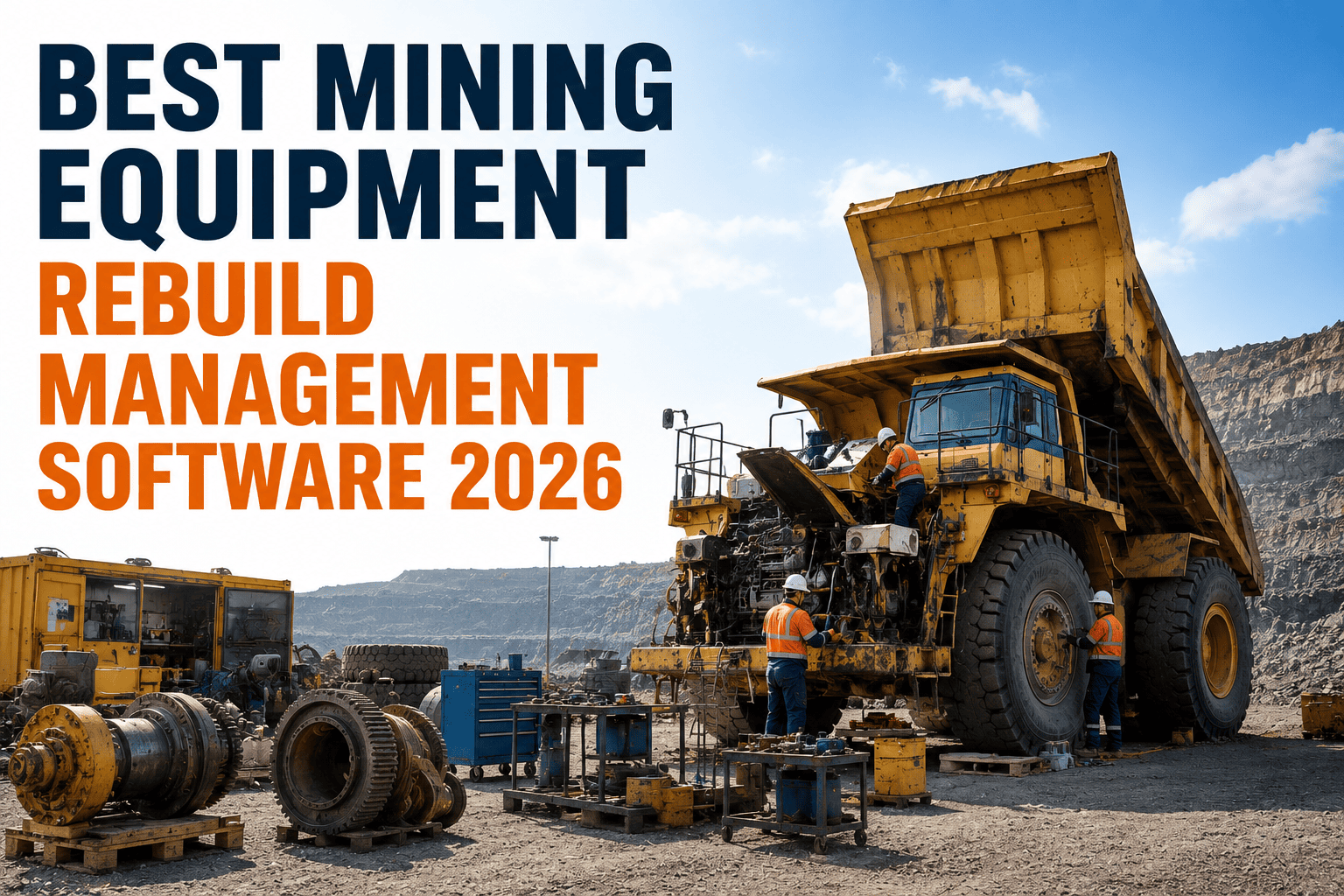
An engine rebuild on a large mining haul truck runs approximately 400,000 dollars. That number alone should make every rebuild decision a carefully planned one, yet most mine sites still schedule engine, transmission, and hydraulic overhauls based on a rough hour estimate scrawled on a maintenance sheet, not on real component condition data. The gap between what a rebuild actually costs and how casually the decision gets made is exactly where mining equipment rebuild management software earns its place in 2026. Done right, it turns a 400,000 dollar guess into a planned capital decision with weeks of advance notice.
Mining equipment rebuild management software tracks component life by operating hours, logs full rebuild and repair cost history per asset, and forecasts when engines, transmissions, hydraulics, and undercarriages will need overhaul so capital spend can be planned months ahead. Early detection of developing faults has been shown to avoid full rebuilds costing 400,000 dollars or more, catching issues while a far smaller repair is still possible.
Why Component Rebuild Costs Spiral Out of Control
Engines, transmissions, hydraulic systems, and undercarriages do not fail on a predictable calendar. They wear at rates driven by load, terrain, temperature, and operator behavior, yet most mine sites still plan rebuilds around rough hour estimates rather than actual component condition.
The Blind Spot Between Purchase and Rebuild
From the day a haul truck enters service until its first major rebuild, most of its cost history lives across separate spreadsheets, paper work orders, and individual technicians' memory. Without a single record tying hours, repairs, and condition data together, nobody can say with confidence how close any given component actually is to needing an overhaul.
When Rebuild Decisions Get Made Too Late
Waiting for a warning light or an audible failure to trigger a rebuild almost always means paying for collateral damage on top of the original component. A glycol leak caught early on one mining fleet avoided a full engine rebuild entirely, while unnoticed rising bearing wear on another fleet was caught just in time to save 164,000 dollars that would otherwise have gone toward emergency replacement.
FleetRabbit tracks engine, transmission, and hydraulic condition against real operating hours, so your team plans rebuilds weeks in advance instead of reacting to a failure on the shop floor.
What Rebuild Management Software Actually Tracks
The strongest platforms combine four data streams into a single asset record, so a rebuild decision is based on evidence rather than instinct.
| Data Tracked | What It Reveals | Decision It Supports |
|---|---|---|
| Component Operating Hours | Real usage per engine, transmission, and hydraulic system | When each component is approaching its rebuild interval |
| Condition Sensor Data | Vibration, temperature, and fluid analysis trends | Whether a component is wearing faster than its hour count suggests |
| Rebuild and Repair Cost History | Every dollar spent per asset, per component, over time | Which assets are becoming more expensive to keep running |
| Rebuild vs Replace Benchmarks | Historical rebuild cost against remaining useful asset life | Whether to rebuild, recondition, or retire an asset |
Component Life Tracking by Operating Hours
Instead of a single fleet-wide rebuild interval, the best software tracks each major component separately, since an engine, a transmission, and an undercarriage on the same machine wear at very different rates depending on load and terrain.
Rebuild vs Replace Decision Data
When a component approaches end of life, the software surfaces its full repair history and remaining forecast value, giving planners the evidence to decide between a rebuild, a reconditioned replacement, or full retirement.
Historical Cost Benchmarking
Comparing this rebuild's cost against the last three on the same component type across the fleet quickly flags whether a shop, a supplier, or an operating pattern is driving costs higher than they should be.
Rebuild vs Replace vs Reman: Making the Right Call
Not every worn component needs a full rebuild, and not every rebuild is the cheapest option. Rebuild management software makes this comparison explicit instead of leaving it to whoever answers the phone when a machine goes down.
| Option | Best For | Trade-Off |
|---|---|---|
| Full Rebuild | Components with strong remaining chassis or frame life | Highest upfront cost, restores near-original performance |
| Reconditioned Component | Fast turnaround needs when downtime cost is high | Lower cost than new, faster than a full custom rebuild |
| Full Replacement | Assets nearing the end of their overall useful life | Highest cost, but resets the reliability clock completely |
For a fleet running dozens of haul trucks, choosing reconditioned components over new OEM replacements at each overhaul cycle can add up to tens of millions of dollars in lifecycle savings, which is exactly the kind of decision that becomes obvious once the cost history is visible in one place. If you want to see what this looks like against your own fleet's data, you can book a free demo with FleetRabbit and walk through a live rebuild forecast together.
FleetRabbit forecasts component rebuild timing and cost across your entire fleet, so finance and maintenance teams plan capital spend together instead of reacting to the next breakdown.
Planning Capital Spend Around Rebuild Cycles
Once component life is visible, rebuild planning shifts from a maintenance department problem into a finance and operations conversation, held months ahead of the actual work.
Forecasting Rebuilds Across the Full Fleet
Instead of discovering three engines need rebuilding in the same quarter, a fleet-wide forecast spreads that capital spend across the year, avoiding both cash flow shocks and shop capacity bottlenecks.
Justifying Capital Decisions With Real Data
When a rebuild request goes to finance backed by hours, condition trends, and historical cost data, approval moves faster and the decision holds up to later scrutiny far better than a verbal estimate ever could.
Every rebuild your fleet will ever need is already being written into the data your equipment generates today, hours, vibration readings, fluid samples, and repair invoices. The only question is whether your team can see that story early enough to act on it, or whether it stays hidden until a component fails on the haul road. Fleets that consolidate this data plan rebuilds months ahead instead of scrambling to react to the next one.
FleetRabbit tracks component life, condition, and cost history across your entire mining fleet so every rebuild decision is planned, not panicked. Start free with no credit card required, or see a live forecast on your own fleet.