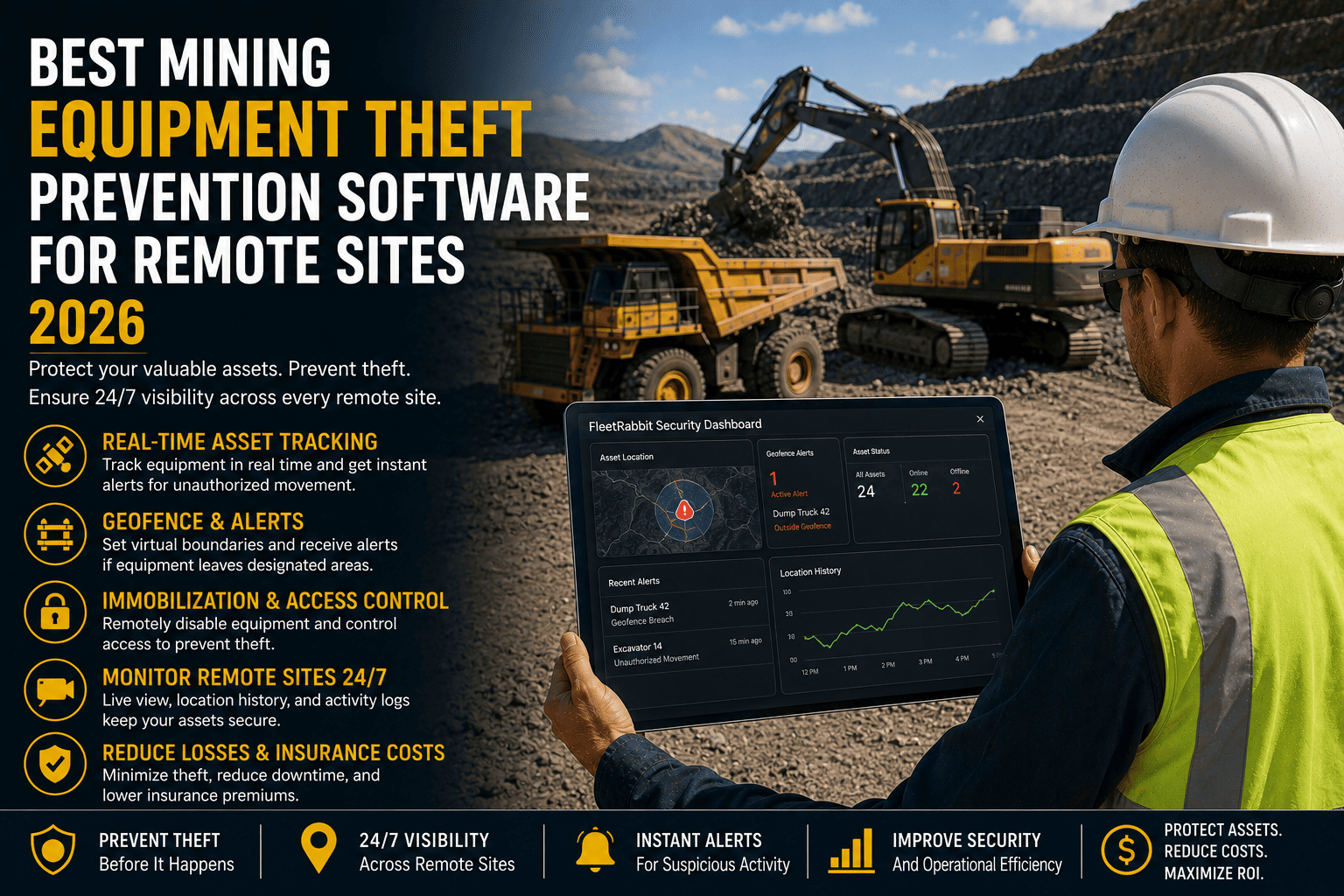
A mine site does not close on Friday afternoon. The pit stays exactly where it is, the haul roads stay open, and a two-hundred-thousand-dollar loader sits parked in the same spot until Monday's shift change, often miles from the nearest town and hours from the nearest police patrol. That combination of isolation, high-value machinery, and long unattended stretches is exactly what equipment thieves look for, and it is why remote mining operations lose far more to theft than most site managers ever budget for. The good news is that this is one of the most solvable risks in mining operations, and the fix does not require more guards or more fencing. It requires visibility.
Without GPS tracking, fewer than 25 percent of stolen heavy equipment is ever recovered. With real-time GPS and geofencing in place, recovery odds rise dramatically and theft attempts drop by as much as 85 percent, because tracked equipment is a far riskier target for thieves. You can sign up for FleetRabbit to start tracking your fleet's location and movement in real time today.
Why Remote Mine Sites Are a Prime Target
Every factor that makes a remote mine site efficient to operate also makes it easy to steal from. There is no foot traffic to notice a stranger walking the yard, no neighboring business to call in a suspicious vehicle, and often no cellular camera coverage across the full footprint of the site. Add long weekends between shifts and a fleet of high-resale-value machines parked in the open, and you have the exact conditions thieves look for.
Isolation Works in the Thief's Favor
A stolen excavator or haul truck can be loaded onto a flatbed and gone within minutes on a site with no active monitoring. Without live location data, the first anyone knows about it is the following shift, by which point the machine can already be repainted, stripped for parts, or moved across state or provincial lines.
High Resale Value Makes Equipment a Target
Loaders, excavators, drills, and generators hold strong resale value and, unlike passenger vehicles, most heavy equipment has no standardized identification system that law enforcement can run through a national database. That gap is exactly why recovery rates without tracking stay so low year after year.
What Equipment Theft Actually Costs a Mine
The sticker price of the stolen machine is only the starting point. The table below breaks down where the real financial damage comes from once a piece of equipment goes missing from site.
| Cost Component | What Happens | Typical Impact |
|---|---|---|
| Direct Replacement Cost | Full or partial loss of the machine's value if it is never recovered | $25,000 to $300,000+ per unit |
| Production Delay | Hauling, loading, or drilling capacity drops until a replacement is sourced | Days to weeks of lost output |
| Emergency Rental | Temporary machine hired at premium rates to keep production moving | Daily rental at 2-3x normal cost |
| Insurance Premium Increase | A theft claim raises future premiums for the whole fleet | 20-40% increase after a claim |
| Administrative Time | Police reports, insurance claims, and asset write-offs consume management hours | Weeks of staff time per incident |
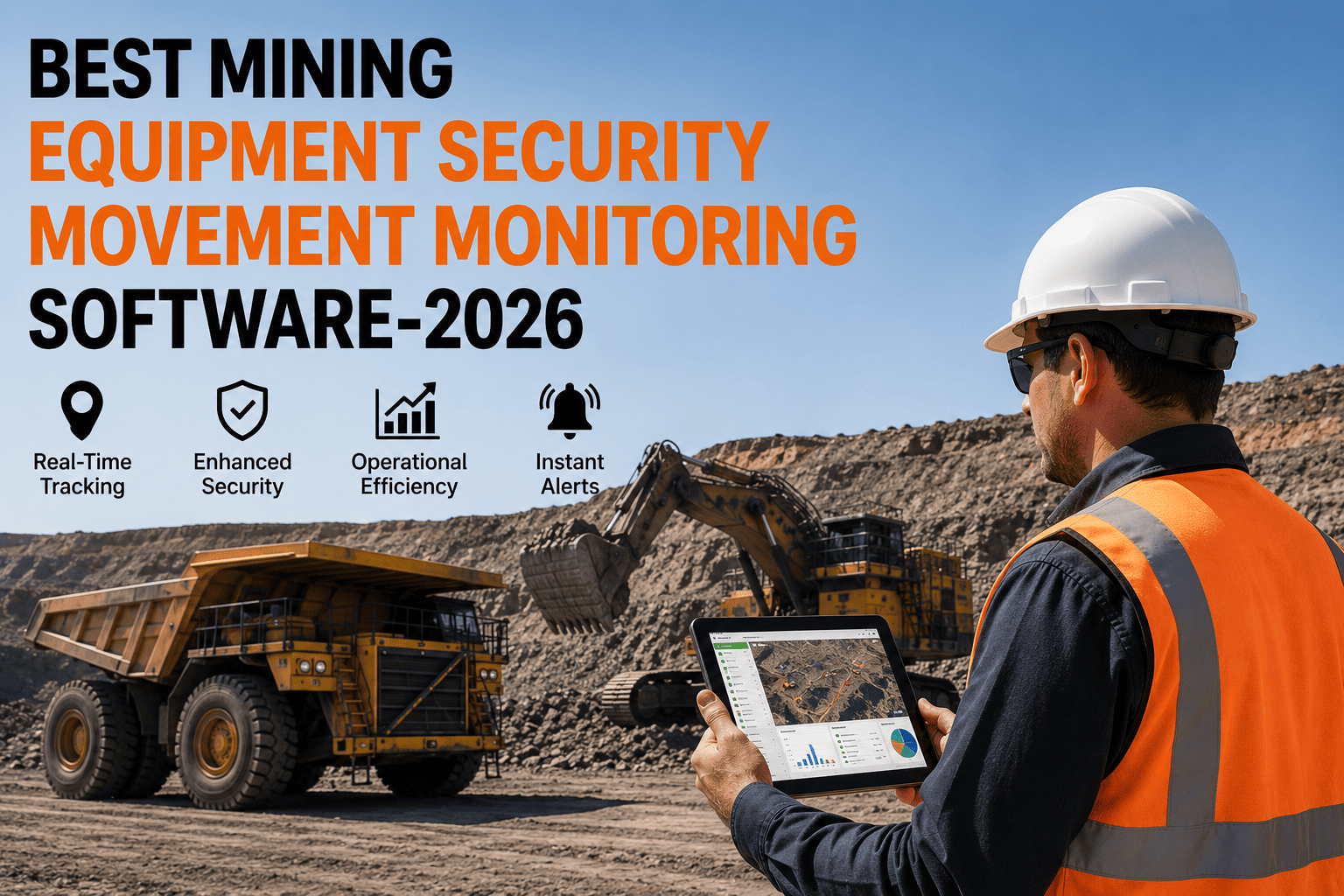
FleetRabbit gives remote mine sites live GPS location, geofence alerts, and after-hours movement notifications for every piece of tracked equipment, so a machine that moves without authorization gets flagged the moment it happens, not the next shift.
The Layered Defense Every Remote Site Needs
No single tool stops every theft attempt. The sites that lose the least equipment stack several layers together, so a thief has to beat every one of them, not just one lock or one camera, to get away clean.
GPS Location Tracking
Every tracked machine reports its live location, giving you a real-time map of the entire fleet across every pit, stockpile, and lay-down yard rather than a guess based on the last radio check-in.
Geofencing and Boundary Alerts
A virtual boundary around each site triggers an instant alert the moment a machine crosses it, often before anyone on site has even noticed something is missing.
After-Hours Movement Detection
Since most equipment theft happens overnight or over an unattended weekend, alerts tied specifically to off-hours ignition or movement catch the exact window thieves count on.
Remote Immobilization
Where supported, the ability to remotely disable a machine turns a moving theft into a stranded one, buying time for recovery before the equipment leaves the area.
Recovery-Ready Location History
Detailed location history and timestamps give law enforcement an exact trail to follow instead of a cold case, turning a general investigation into a targeted recovery operation.
What to Look for in Theft Prevention Software
Not every tracking platform is built for the realities of a mining site. The right software should hold up in remote, rugged conditions and give your team more than a dot on a map.
Coverage That Works Where Cell Signal Doesn't
Many mine sites sit outside reliable cellular range. Look for tracking devices that support satellite fallback or store-and-forward reporting so you are not blind the moment a machine moves into a dead zone.
Alerts Your Team Will Actually See
A geofence breach at 2 a.m. is only useful if someone is notified immediately. Configurable SMS, email, and app alerts routed to the right supervisor or security contact make the difference between catching a theft in progress and finding out three days later.
Asset Records That Support a Claim
Serial numbers, photographs, and ownership documentation tied to each tracked asset make insurance claims and police reports faster and far more likely to result in recovery.
One Dashboard for Every Site
Mining operations rarely run a single location. A platform that shows every site's equipment, alerts, and recovery status in one view keeps a multi-site security program from turning into a patchwork of separate logins and spreadsheets.
If you want to see how location tracking, geofence alerts, and recovery-ready records come together on your own fleet, you can book a demo and walk through it against your actual equipment list and site map.
FleetRabbit brings GPS tracking, geofencing, after-hours alerts, and asset records into one dashboard built for multi-site mining operations, so your team catches a theft in progress instead of writing it off as a loss.
Frequently Asked Questions
Equipment theft on a remote mine site is not bad luck, it is a predictable outcome of isolation, high-value machinery, and long unattended stretches with no active visibility. The mines that solve it are not spending more on guards, they are simply making every machine visible in real time, so a theft attempt gets caught in the moment instead of discovered on the next shift. If you want to see exactly how that visibility looks against your own fleet and site map, you can start a free trial or book a 30-minute demo with our team.
FleetRabbit connects GPS tracking, geofencing, and instant alerts across every site so your team knows the moment equipment moves without authorization, and has the location data to get it back fast when it doesn't.