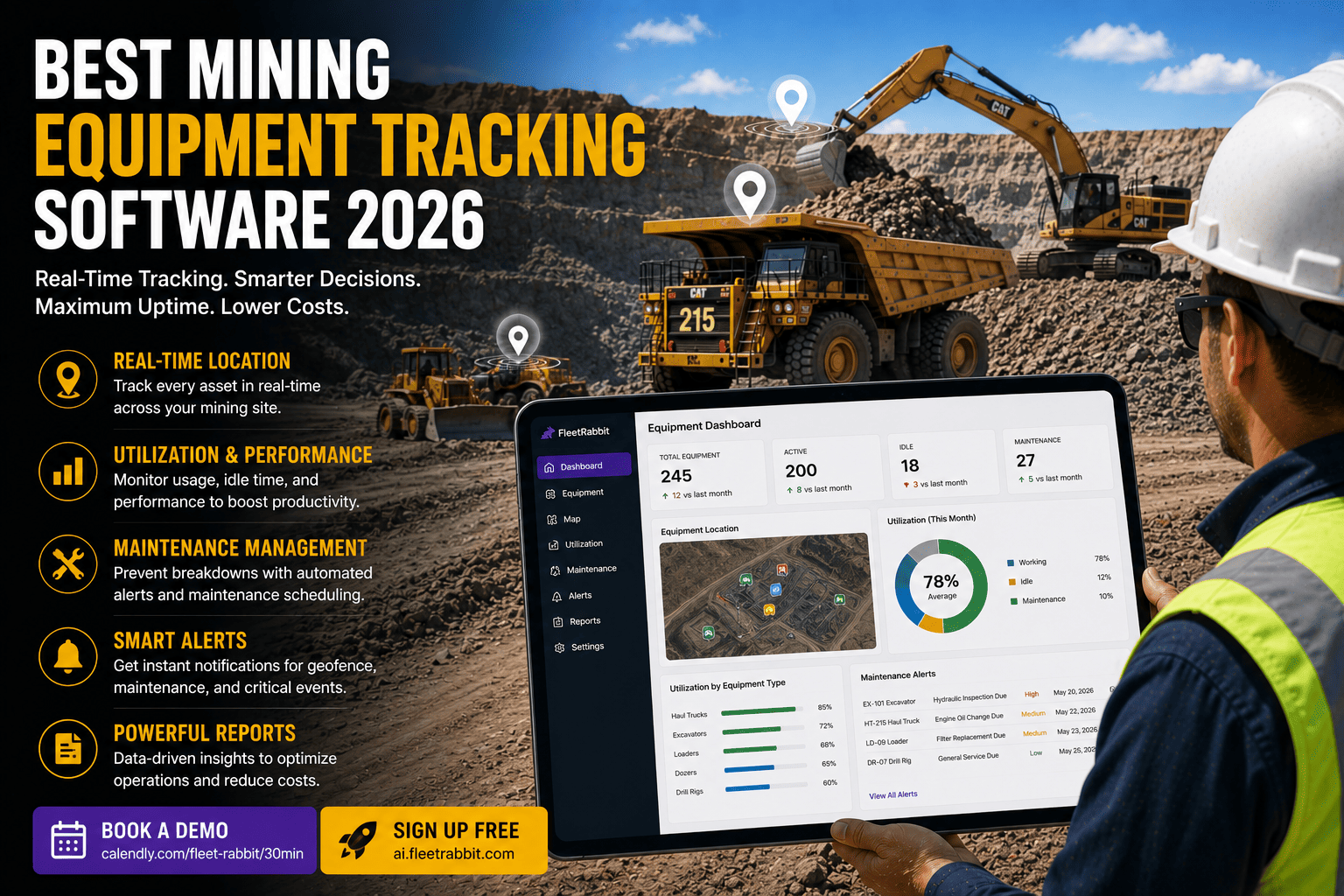
Ask any mine supervisor how much of their shift goes into finding equipment instead of running it, and you'll usually get an uncomfortable answer. A loader gets moved to cover another pit, a service truck parks behind a stockpile, a drill rig sits idle two kilometers from where the dispatch board says it should be, and suddenly a maintenance crew or a production team burns an hour just locating the machine before any real work starts. Mining equipment tracking software exists to remove that guesswork, putting every asset's location, status, and utilization on one live view so nobody has to drive around a pit searching for a 40-ton machine.
Mining equipment tracking software uses GPS, telematics, and RFID or QR tagging to show the real-time location, status, and usage of every asset across a mine site. Operations using dedicated tracking commonly lift equipment utilization by 15 to 20 percent and cut unplanned downtime by up to 30 percent, largely by eliminating the time crews waste searching for misplaced or idle machines.
The Hours You Don't See Going Missing
Equipment location sounds like a small problem until you add up how often it repeats across a shift. A service crew that spends even 30 minutes locating a machine before starting planned maintenance loses that time from every single work order, every single day, across every technician on the roster. Multiply that across a site running dozens of haul trucks, loaders, and drills, and the lost hours turn into lost production capacity that never shows up as a line item, only as a mine that consistently runs behind schedule.
Every hour reclaimed from searching is an hour returned to production or maintenance. Sign up for a free FleetRabbit trial and see how many of those hours your site is currently losing.
What Good Equipment Tracking Actually Looks Like
Not every "tracking" product does the same job. Some only show a dot on a map. The platforms that actually change how a mine operates go several layers deeper, connecting location data to utilization, maintenance, and site security in one place.
Live GPS Location Across the Whole Site
Every haul truck, loader, drill rig, and support vehicle should report its exact position continuously, not on a delayed refresh, so dispatchers and maintenance crews always know where a machine is right now, not where it was an hour ago.
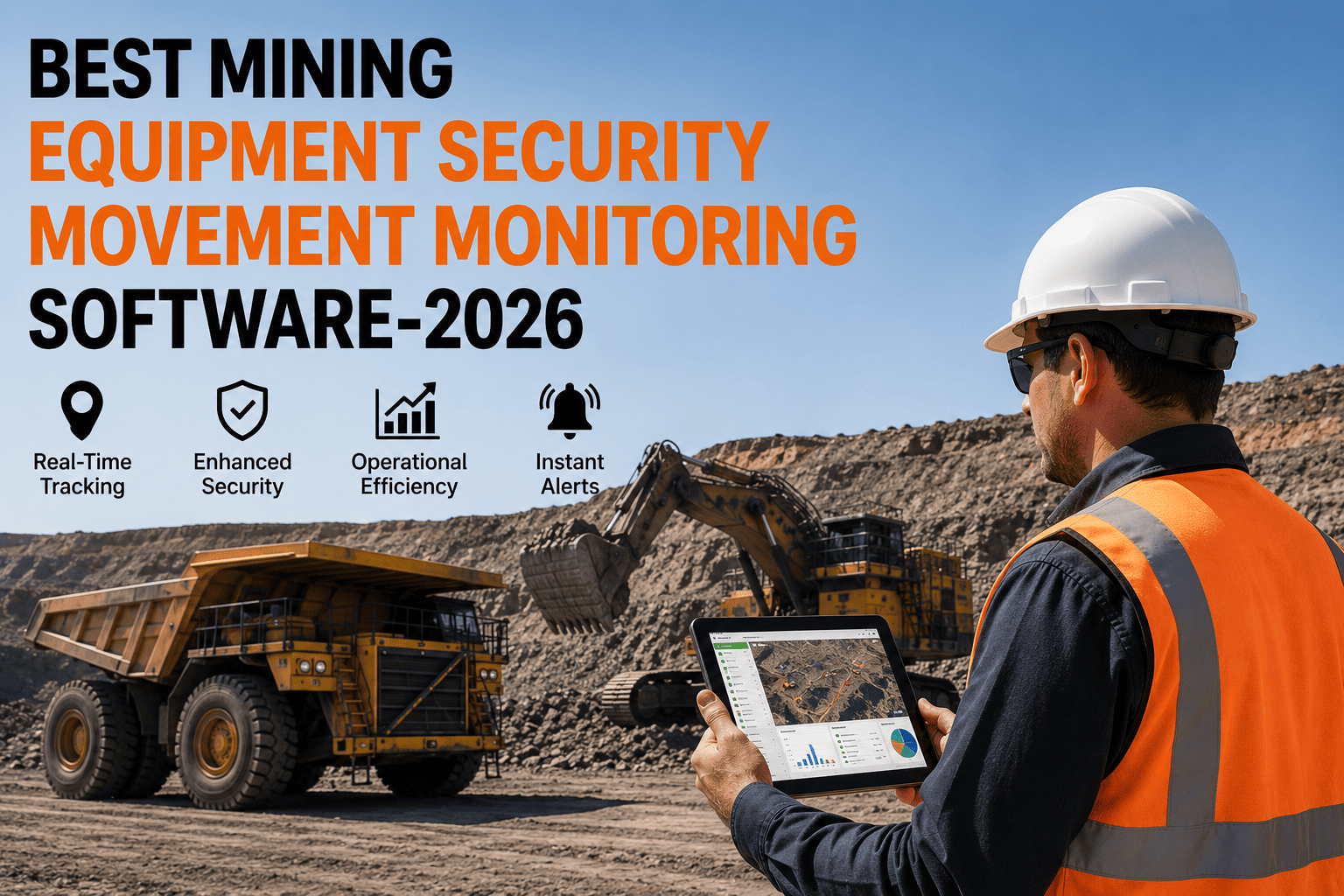
Geofencing and Zone Alerts
Drawing boundaries around active pits, no-go zones, and restricted areas means the system flags a machine the moment it crosses a line it shouldn't, protecting both safety and asset security without anyone having to watch the map manually.
Utilization and Idle-Time Reporting
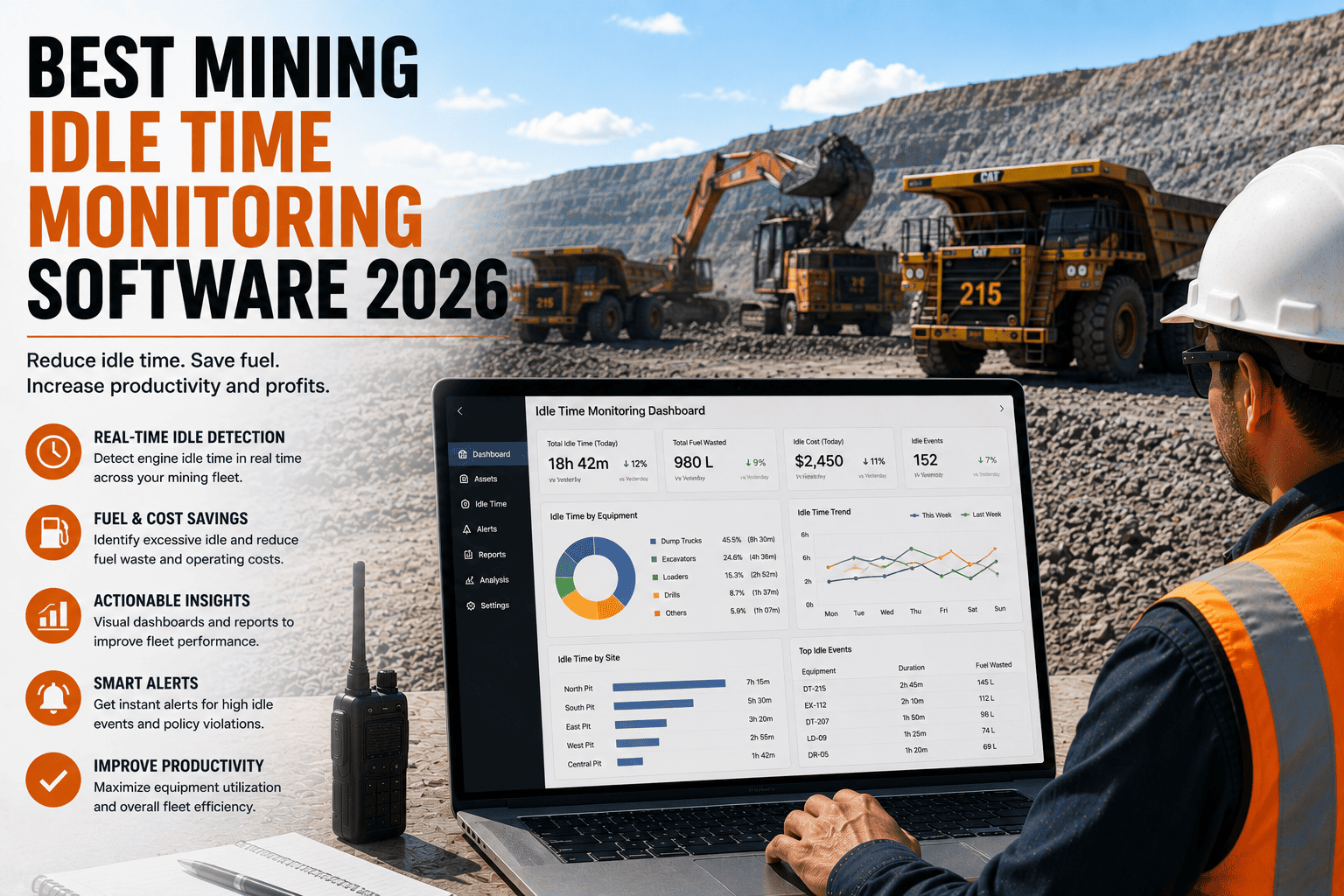
Tracking data becomes genuinely useful when it turns into a report showing which machines are running productively, which are idling, and which are sitting unused, giving planners hard numbers instead of gut-feel fleet sizing decisions.
Tool and Small-Asset Tagging
Beyond heavy machinery, QR codes and RFID tags on drill rods, spare tires, and portable tools stop small but expensive items from quietly disappearing between shifts or sites.
Offline-First Data Capture
Underground zones and deep pits regularly lose cellular signal, so the strongest platforms keep recording position and status locally on the device and sync automatically the moment coverage returns, so no movement history is ever lost.
| Feature | Problem It Solves | Typical Result |
|---|---|---|
| Real-Time GPS Tracking | Crews wasting time searching for misplaced equipment | Assets located on a live map within seconds |
| Geofencing | Unauthorized movement into restricted or unsafe zones | Instant alerts when equipment crosses a boundary |
| Utilization Reporting | Guesswork around fleet sizing and idle equipment | 15 to 20 percent higher fleet utilization |
| Engine Hours and Health Data | Unscheduled breakdowns from missed service intervals | Up to 30 percent reduction in unplanned downtime |
| Offline-First Sync | Data gaps from underground or remote zero-signal zones | Complete, gap-free movement history on every asset |
FleetRabbit puts haul trucks, loaders, drills, and support vehicles on a single dashboard with real-time location, utilization, and idle-time data. Start a free trial and get your fleet visible today.
Getting a Mine Site Live in Days, Not Months
One of the biggest myths about equipment tracking is that it requires a long IT rollout. In practice, most sites are fully visible on a live dashboard within one business day once existing telematics hardware is connected.
What This Means for Your Bottom Line
The value of equipment tracking software shows up in three places: recovered labor hours, higher equipment utilization, and fewer surprise breakdowns. A maintenance team that no longer loses time locating machines completes more work orders per shift. A planning team with accurate utilization data avoids over-buying equipment the site doesn't actually need. And a fleet that gets serviced based on real engine-hour data instead of a fixed calendar avoids the costly failures that come from missed intervals.
For a site running 40 to 60 pieces of mobile equipment, even a conservative 15 percent utilization gain translates into meaningfully more production from the same fleet, without buying a single additional machine.
Turning Visibility Into Production
A mine site can't optimize what it can't see. Once every asset reports its live location, status, and usage in one place, the small daily inefficiencies, the searching, the idle equipment, the missed service intervals, stop compounding into lost production. Sites that make this shift stop reacting to equipment problems and start managing their fleet with actual data.
Curious what your site would look like with every machine visible on one map? Sign up for a free FleetRabbit trial or book a demo to walk through it with our team.
FleetRabbit puts every piece of mining equipment, from haul trucks to hand tools, on one live dashboard. Cut search time, lift utilization, and reduce unplanned downtime with a platform built for real mine sites.