A fire suppression system that hasn't been inspected on schedule is a liability wearing the disguise of protection. On a mine site, where diesel, hydraulic fluid, and conveyor friction sit right next to millions of dollars in equipment, a suppression unit that fails silently doesn't just risk an MSHA citation. It risks a fire that no one catches until it's already spreading. Paper logs and wall-mounted tags make it easy for a single overdue cylinder to slip through, and that one miss is exactly what inspectors, and incident investigators, find first.
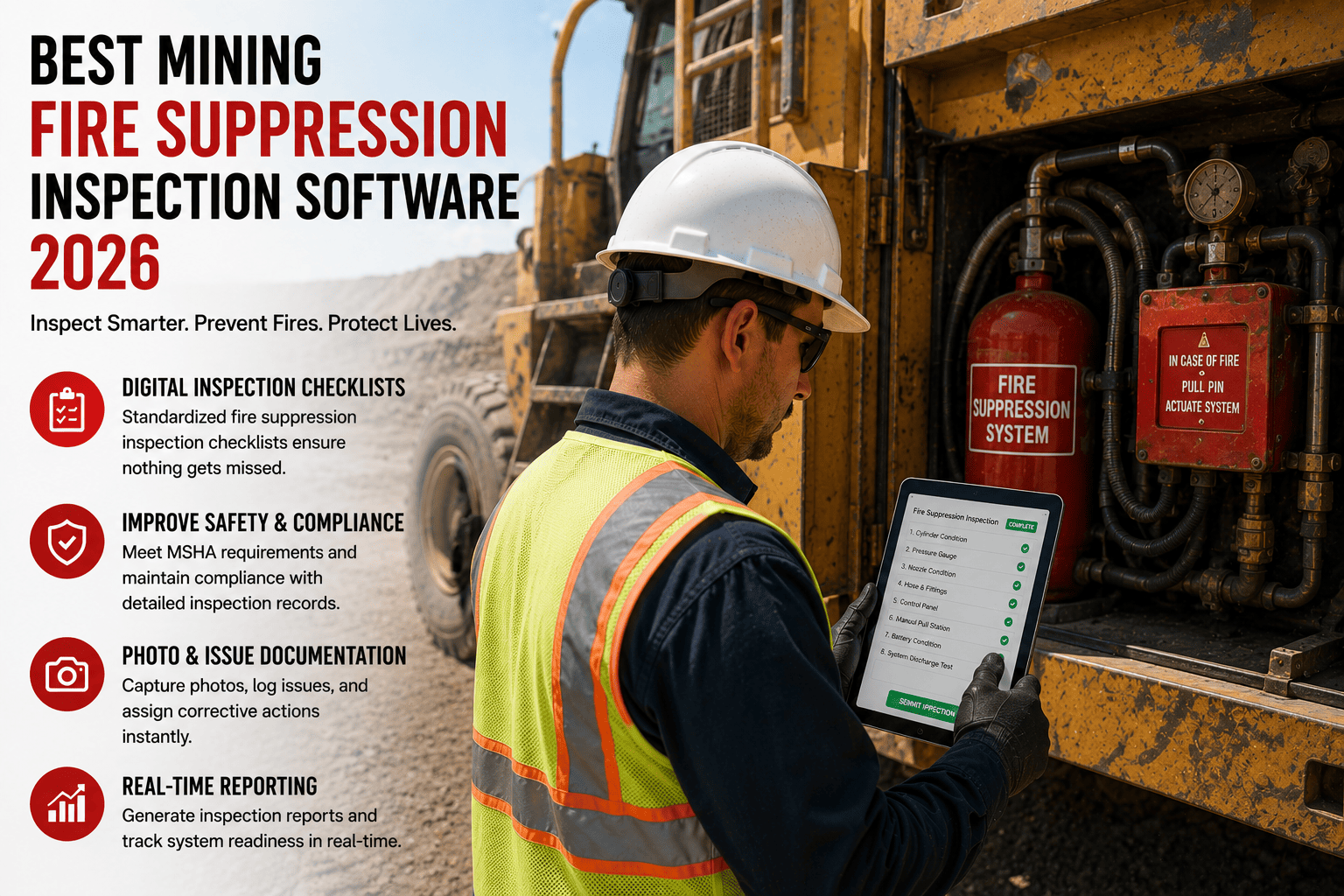
The best mining fire suppression inspection software digitizes the weekly, quarterly, and annual checks required under 30 CFR Parts 56, 57, and 75, sends automatic reminders before a deadline is missed, works fully offline underground, and stores certified inspection records for MSHA audits. Look for mining-specific checklists, photo-verified evidence, and automatic escalation when a system component fails.
Why Fire Suppression Inspection Slips Through the Cracks
Fire suppression compliance in mining is not one inspection. It's a layered schedule of weekly visual checks, quarterly hose and hydrant tests, and annual full-system certifications, each with its own regulation, its own deadline, and its own paper trail. When that schedule lives across clipboards, spreadsheets, and someone's memory, gaps appear quietly. A cylinder due for annual servicing in March gets logged in April. A quarterly hydrant test on a remote bench gets skipped because the inspector never made it out there. None of this looks dangerous until the day it is.
FleetRabbit tracks every weekly, quarterly, and annual fire suppression deadline across your fleet automatically, and flags any unit that falls behind before it becomes a violation. Sign up to load your equipment list today.
The Inspection Schedule Your Software Needs to Track
Mining fire suppression requirements are not a single rule. They're layered across surface and underground standards, and each layer has a different frequency. Good inspection software doesn't just remind you of one date. It manages three separate clocks running at once.
Weekly Visual Checks (Underground)
Under 30 CFR Part 75, every fire suppression device underground must be visually inspected at least once a week by a qualified person, with the finding logged and retained at or near the device.
What the software should flag
A missed weekly check on any underground device, cross-referenced against the person qualified to perform it, with the record stored where it can be pulled up instantly during an MSHA visit.
Quarterly Component and Hydrant Tests
Water pipes, valves, outlets, hydrants, and hoses that form part of a mine's firefighting system need a visual check every three months for damage or deterioration, separate from the annual full-system test.
Annual Full-System Inspection
Fire suppression systems themselves require a full inspection at least once every twelve months, following a schedule built around the manufacturer's specifications for each individual component, with use-testing on firefighting hoses and hydrants once a year.
Where mobile equipment adds complexity
Suppression systems mounted on haul trucks, loaders, and dozers fall under NFPA 17 and 17A standards for dry and wet chemical systems, on top of the manufacturer's own service intervals, which is why a spreadsheet tracking a mixed fleet gets unmanageable fast.
What Separates Real Mining Software From a Generic Checklist App
Plenty of inspection apps exist for logistics and construction. Very few are built around the fire suppression specifics that MSHA inspectors actually check: arm indicator status, nozzle blockage, agent pressure, and detection sensor condition. Here's how the categories compare.
| Capability | Generic Checklist App | Spreadsheet Tracking | Mining-Built Software |
|---|---|---|---|
| Mining-specific templates | Rarely included | Manually built, easy to miss items | Pre-built for 56.4201 and 75.1107 requirements |
| Offline capability | Often requires signal | No live sync underground | Full offline capture, auto-sync on reconnect |
| Photo evidence per component | Optional or absent | Not possible | Mandatory photo capture on flagged items |
| Automatic escalation on failure | Basic alerts only | Manual follow-up needed | Instant alert to maintenance and safety lead |
| Audit-ready certification records | Generic export | Scattered across files | Timestamped, signed, MSHA-formatted records |
What a Fire Suppression Inspection Checklist Should Actually Cover
An inspection that only confirms a cylinder is "present" isn't an inspection. The components below are what MSHA guidance and NFPA standards point to, and what a proper digital checklist should walk an inspector through, item by item.
How FleetRabbit Manages Fire Suppression Inspections Across a Mine Site
FleetRabbit's inspection module was built around the exact regulatory rhythm mining sites have to follow, not adapted from a generic maintenance tool. It handles the weekly, quarterly, and annual layers as separate, auto-scheduled workflows tied to each individual unit of equipment.
Automated Scheduling by Regulation Type
Every fire suppression unit gets its own inspection calendar, weekly visual checks for underground devices, quarterly component tests, and annual full-system inspections, so no single frequency gets overshadowed by the others.
Reminders before the deadline, not after
Supervisors and inspectors get alerted days ahead of a due date, giving time to schedule the check during a shift instead of scrambling once the deadline has already passed.
Offline-First Mobile Inspections
Underground levels and remote benches rarely have signal. The FleetRabbit app lets inspectors complete the full checklist offline, capture photos of gauges and nozzles, and sync everything automatically the moment a connection returns.
Instant Escalation on a Failed Component
If a gauge reads low or a sensor fails a check, the system flags it immediately and routes it to the maintenance team, instead of waiting for someone to notice the paperwork later.
Load your equipment fleet and run your first digital fire suppression inspection in minutes. Every weekly, quarterly, and annual requirement is already built in and ready to assign. Book a demo to walk through your specific fleet with our team.
Frequently Asked Questions
Get Ahead of Your Next MSHA Fire Suppression Inspection
A fire suppression system is only as reliable as the last check performed on it. Digitizing that check turns a scattered, easy-to-miss requirement into a tracked, provable part of your safety program, one that holds up the moment an inspector asks to see the record.
FleetRabbit tracks weekly, quarterly, and annual fire suppression inspections across your entire mining fleet, flags failures before they become incidents, and keeps every certified record ready for MSHA. Start free or talk to our team about your site.