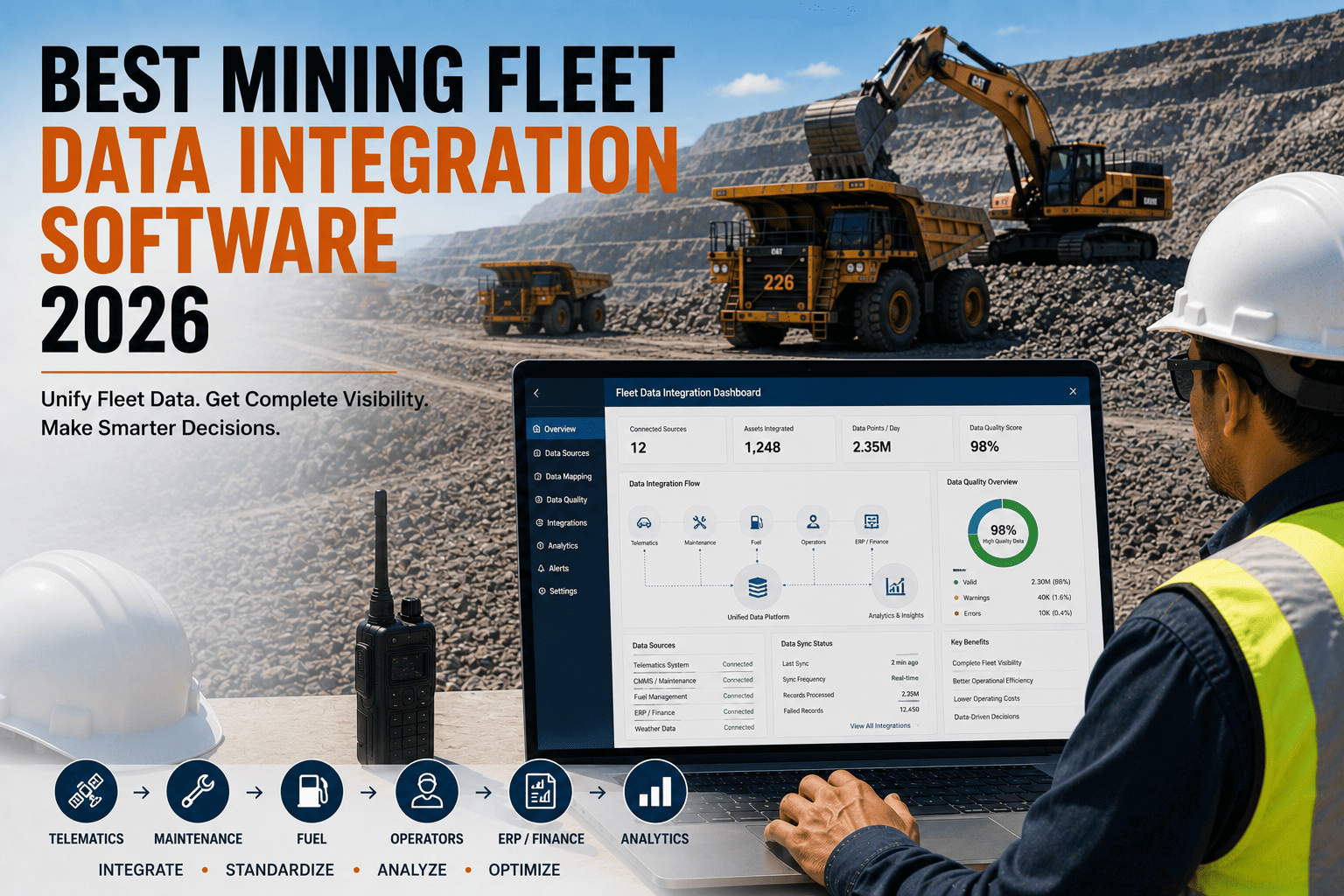
Most mine sites don't have a data problem. They have a data traffic-jam problem. GPS pings arrive from one telematics portal, fuel card transactions land in another, maintenance work orders live in a CMMS nobody else can see, and production numbers sit inside an ERP system that was never built to talk to any of it. Ask a fleet manager how many logins it takes to answer one simple question, like whether yesterday's fuel spend lines up with actual haul cycles, and the honest answer is usually three or four. Mining fleet data integration software exists to collapse that traffic jam into one connected view.
Mining fleet data integration software connects telematics, fuel, maintenance, ERP, and production systems into a single source of truth. 51 percent of mining and heavy fleet operations still run only partially connected systems, 75 percent rely on manual logs somewhere in the process, and fleets without integrated telematics-to-maintenance workflows see 41 percent more unplanned breakdowns. Sign up free to see your systems connected in one dashboard.
The Four-Login Morning Every Mine Manager Knows
It usually starts the same way. Check the telematics portal for overnight fault codes. Switch to the fuel card dashboard to see yesterday's consumption. Open the CMMS to check whether a work order actually closed. Then pull up the ERP or production system to see if any of it lines up with output targets. By the time all four screens agree with each other, half the morning is gone and the picture is already a few hours stale.
Why This Costs More Than Time
Disconnected systems don't just waste a manager's morning, they quietly degrade every decision built on top of them. A maintenance trigger pulled from a manually typed odometer reading is only as accurate as whoever typed it last, while the same trigger pulled from live GPS and engine-hour data is accurate by default. Budgeting, replacement planning, and fuel reconciliation all suffer the same way when the numbers behind them live in systems that were never designed to compare notes.
FleetRabbit connects telematics, fuel, maintenance, and ERP data into a single live view, so your morning check-in takes minutes instead of four separate logins.
What a Connected Mining Fleet Actually Looks Like
Integration doesn't mean replacing every system your mine already relies on. It means putting one platform in the middle that pulls data from each of them and makes it usable together.
Telematics
GPS, engine hours, fault codes
Fuel Systems
Card transactions, consumption data
ERP / Production
Output targets, cost allocation
Maintenance / CMMS
Work orders, PM schedules, parts
Fragmented Systems vs. Integrated Fleet Data
The difference between running four disconnected portals and one integrated platform shows up everywhere from morning check-ins to year-end audits.
| What You Need | Fragmented Systems | Integrated Fleet Data |
|---|---|---|
| Daily Visibility | Separate logins per system, manually cross-checked | One dashboard showing telematics, fuel, and maintenance together |
| Maintenance Triggers | Based on manually entered readings, prone to error | Pulled automatically from live engine-hour and GPS data |
| Fuel Reconciliation | Matched by hand against haul cycles at month-end | Reconciled automatically as transactions and trips occur |
| Reporting Accuracy | Manual logs still used by roughly 75 percent of fleets | Automated, connected reporting reaching around 81 percent accuracy |
| Unplanned Breakdowns | 41 percent higher without connected maintenance workflows | Reduced through condition-based, data-triggered scheduling |
What Integration Actually Delivers
Beyond Fewer Logins
The operational case for integration is easy to make, but the financial case is what tends to move budget conversations. A Bakken-style operation running fleet, telematics, ERP, fuel cards, and business intelligence tools together turns what would be isolated improvements into compounding value, because each connected data layer makes the others more accurate. A fuel reconciliation that used to take a full day of cross-checking against invoices becomes an automatic flag when a transaction doesn't match a logged trip.
Single Source of Truth
Fleet, cost, and production data all reference the same numbers, eliminating the arguments that come from three teams working off three different spreadsheets.
Automated Cost Allocation
Fuel, maintenance, and utilization data feed directly into ERP cost centers instead of being manually re-entered every reporting cycle.
Faster, More Accurate Audits
Every event across every connected system carries its own timestamp and source record, so compliance reviews pull straight from the platform instead of scattered files.
Fraud and Error Detection
Cross-referencing fuel card transactions against GPS and engine data surfaces overbilling and duplicate charges that manual reconciliation routinely misses.
If your team is still stitching together fuel, maintenance, and telematics data by hand every week, it's worth seeing what a connected dashboard actually looks like against your own systems. You can book a free demo to walk through your specific integration needs before committing to anything.
FleetRabbit connects your telematics, fuel cards, maintenance systems, and ERP into a single real-time dashboard, so decisions get made on complete data instead of partial snapshots.
Frequently Asked Questions
FleetRabbit brings telematics, fuel, maintenance, and ERP data together into one live dashboard, replacing four separate logins with a single clear picture of your mining fleet.