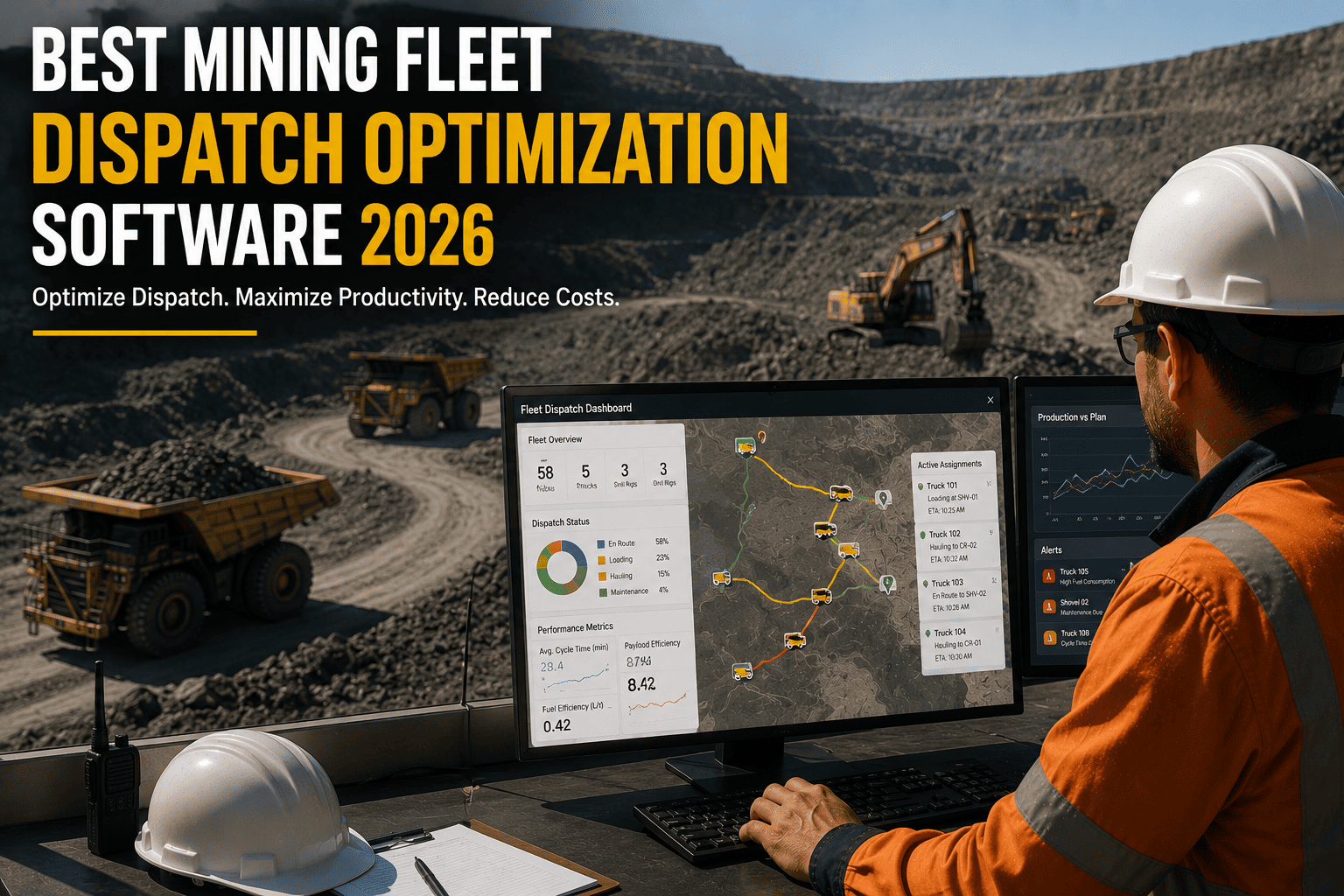
Two haul trucks queue at the shovel while a third sits empty on the far side of the pit, waiting for a radio call that hasn't come yet. Multiply that scene across every shift, every pit, every day of the year, and you're looking at the single biggest hidden cost in surface mining: a dispatch system that can't keep up with what's actually happening on the ground. Choosing the best mining fleet dispatch optimization software isn't about buying another dashboard. It's about closing the gap between the tons your fleet is capable of moving and the tons it actually moves.
Mining fleet dispatch optimization software assigns trucks to shovels in real time based on live location, queue length, and payload data instead of static routes or radio calls. Research on real truck-shovel fleets shows average Overall Equipment Effectiveness sitting well under 40 percent, mostly because of dispatch delays rather than mechanical failure. Sites that move to dynamic, data-driven dispatch typically see cycle time reductions of 8 to 15 percent and utilization gains that add the productivity of two to three extra trucks without buying a single new machine.
Why Dispatch, Not Equipment, Is Usually the Real Bottleneck
It's tempting to assume a slow shift means you need more trucks. The data tells a different story. World-class mining fleets sit between 85 and 95 percent equipment availability and 70 to 85 percent utilization, yet the industry average lands closer to 60 to 65 percent Overall Equipment Effectiveness, with some fleet studies showing truck OEE averaging under 40 percent. That gap almost never comes from broken-down machines sitting in the shop. It comes from a healthy, available truck sitting idle at the wrong end of the pit because nobody told it where to go next.
The Hidden Cost of Manual and Static Dispatch
Radio-based and fixed-route dispatch worked when pits were smaller and shovel moves were rare. Today, grade changes, blast patterns, and shifting haul distances mean the "right" truck-to-shovel assignment can change every few minutes. A dispatcher working from memory or a whiteboard can't recalculate that fast, so trucks default to their last known route even after conditions change underneath them.
What This Looks Like on an Average Shift
A truck finishes dumping and returns empty to the shovel it just left, instead of the shovel across the pit that's been starved of a truck for ten minutes. Multiply that one missed decision by dozens of cycles a shift and hundreds across a week, and the lost tonnage adds up fast, even though every truck on paper was "available" the entire time.
What Real-Time Dispatch Optimization Actually Does
Good dispatch software doesn't just show dots moving on a map. It classifies exactly what phase of the haul cycle every truck is in, second by second: queueing, spotting, loading, hauling, dumping, or traveling empty, without needing a driver to press a button. That live picture is what lets the system make the same call a top-tier dispatcher would make instantly, every single cycle, instead of once every few minutes.
Matching Trucks to Shovels the Moment Conditions Change
The return-empty leg is where dynamic dispatch earns its value. Instead of sending a truck back to the shovel it just left, the system routes it to whichever shovel needs a truck most urgently right now, based on queue length, remaining bench material, and travel time. That single change is often where most of the 8 to 15 percent cycle time gain comes from.
Turning Queue Data Into a Same-Shift Decision
Traditional reporting tells you yesterday's numbers. Optimization software surfaces the bottleneck while the shift is still running, so a dispatcher can act on it in minutes rather than reading about it in a report the following week. If you want to see how this looks on a live site, you can book a demo and walk through an actual shift replay with our team.
Comparing Your Dispatch Approach to What's Achievable
Before choosing a platform, it helps to see exactly where your current approach sits against what modern optimization software can deliver.
| Dispatch Approach | How Assignments Are Made | Typical Cycle Efficiency | Visibility Into Bottlenecks |
|---|---|---|---|
| Radio and manual dispatch | Dispatcher memory and voice calls, based on last known positions | Lowest, frequent idle and mismatched routing | Little to none until end-of-shift review |
| Fixed-route scheduling | Pre-set routes updated occasionally as the plan changes | Moderate, but slow to adapt to real conditions | Delayed, usually daily or weekly reporting |
| Real-time optimization software | Live queue length, location, and payload data recalculated continuously | Highest, 8 to 15 percent cycle time improvement typical | Immediate, same-shift bottleneck alerts |
Find Out Where Your Cycles Are Leaking
FleetRabbit tracks every phase of the load-haul-dump-return loop automatically and shows dispatchers exactly which truck, which shovel, and which shift is losing minutes. Sign up and see your first cycle time report within a day, or book a demo to walk through it live with our team first.
How to Calculate the Value of Better Dispatch for Your Site
The math behind dispatch optimization is more straightforward than most mine managers expect, and it doesn't require guesswork once you have a baseline.
Step One: Find Your Recoverable Minutes Per Cycle
Pull your current average cycle time per truck class from your existing dispatch system or telematics, then compare it against the theoretical cycle time for your haul distance, grade, and truck speed rating. The gap between actual and theoretical is your recoverable minutes per cycle.
Step Two: Multiply Across Cycles and Payload
Take that recoverable gap and multiply it by the number of cycles your fleet runs per shift, then by your average payload per cycle. For a 25-truck fleet on 12-hour shifts averaging 220 tons per load, even a 2-minute recoverable gap per cycle typically works out to 1,500 to 3,000 additional tons moved per day.
What That Means Over a Year
Closing a gap that size, without adding a single truck to the fleet, is roughly the production equivalent of adding two to three extra haul trucks. That's the scale of return sitting inside most sites' existing equipment, waiting on better dispatch decisions to unlock it.
What to Look for When Evaluating Platforms
Not every system marketed as "dispatch software" actually optimizes in real time. A few capabilities separate genuine optimization platforms from glorified GPS trackers.
Automatic Cycle Phase Detection
The software should identify queueing, spotting, loading, hauling, and dumping automatically from machine and location data, rather than depending on a driver to log each phase manually. Manual logging gets skipped under pressure, and skipped data means blind spots exactly when you need visibility most.
Same-Shift Alerts, Not Just End-of-Day Reports
A platform that only tells you about a bottleneck the next morning has already cost you a full shift of lost tonnage. Look for systems that flag a specific shovel, truck, or pit zone falling behind while there's still time to fix it during the current shift.
Standardized Metrics Across Shifts and Sites
Benchmarking only works if everyone agrees on what counts as downtime, delay, or idle time. Platforms built on consistent, standardized definitions let you compare a night shift on the east pit against a day shift on the west pit and trust that the numbers actually mean the same thing.
Getting Started Without Disrupting Current Operations
Most sites worry that a new dispatch system means weeks of downtime for setup. In practice, integration with existing telematics and GPS hardware typically takes hours, not weeks, and dispatchers usually identify their first actionable bottleneck within the first week of live data. You don't need to replace your fleet's hardware to get there, and you can start small with just a handful of trucks before rolling it out site-wide. If you'd rather see the setup process before committing your team's time, booking a demo is the fastest way to judge the fit.
Frequently Asked Questions
Stop Losing Tons to Dispatch Delays
Every shift without real-time dispatch optimization leaves recoverable tonnage sitting on the table. FleetRabbit tracks every phase of the haul cycle automatically and shows your dispatchers exactly where the minutes are going, truck by truck, shift by shift. Sign up for a free trial or book your demo today.