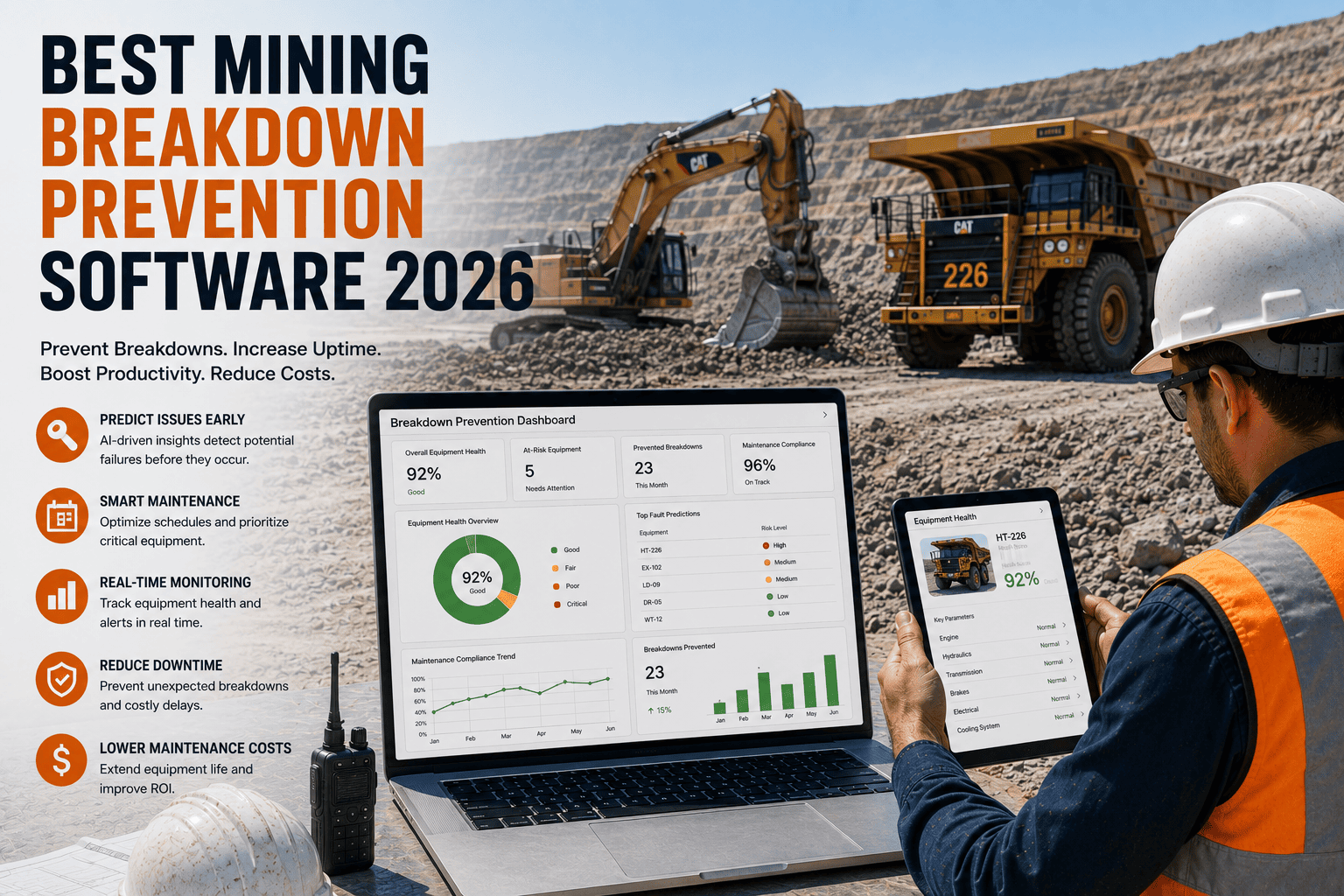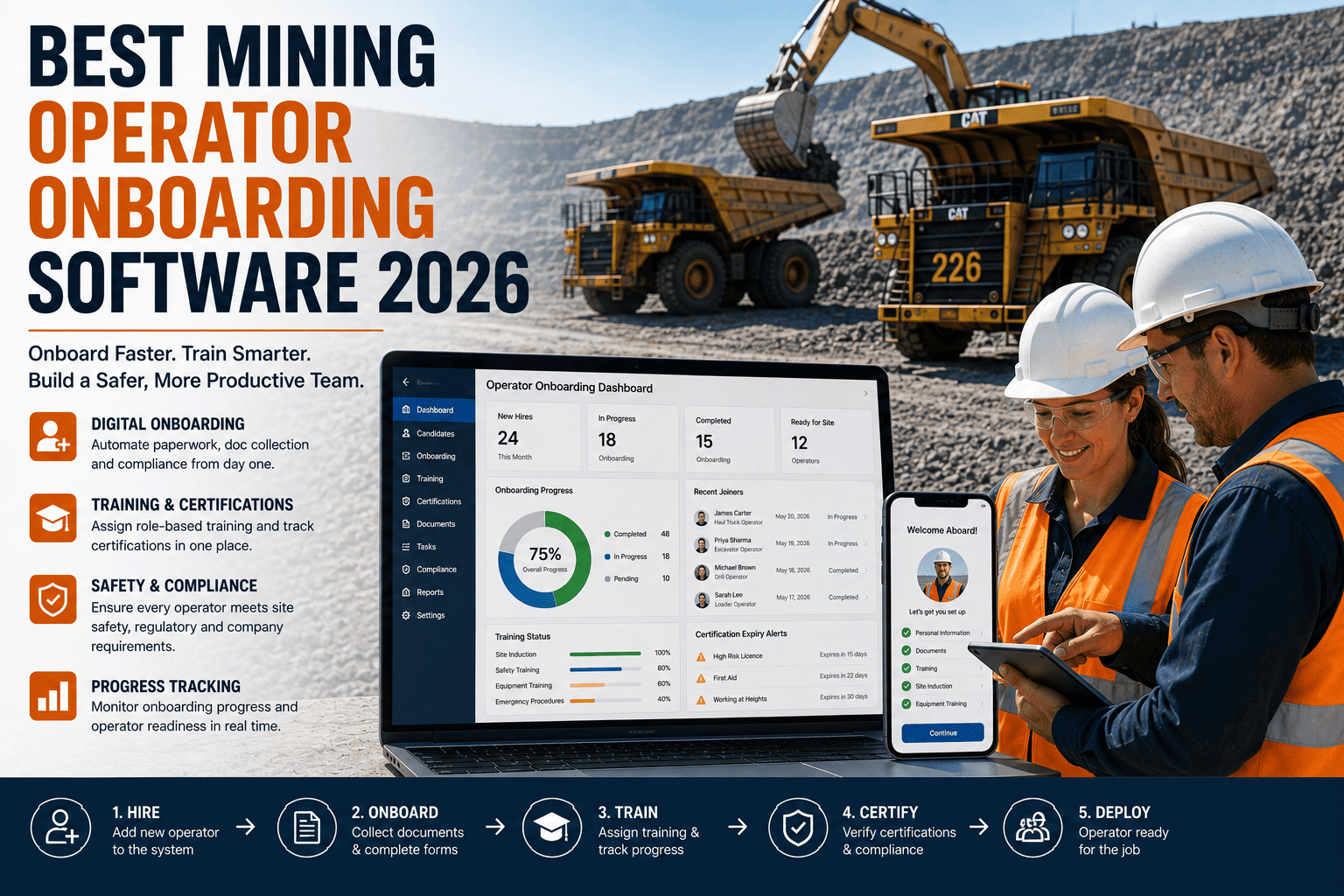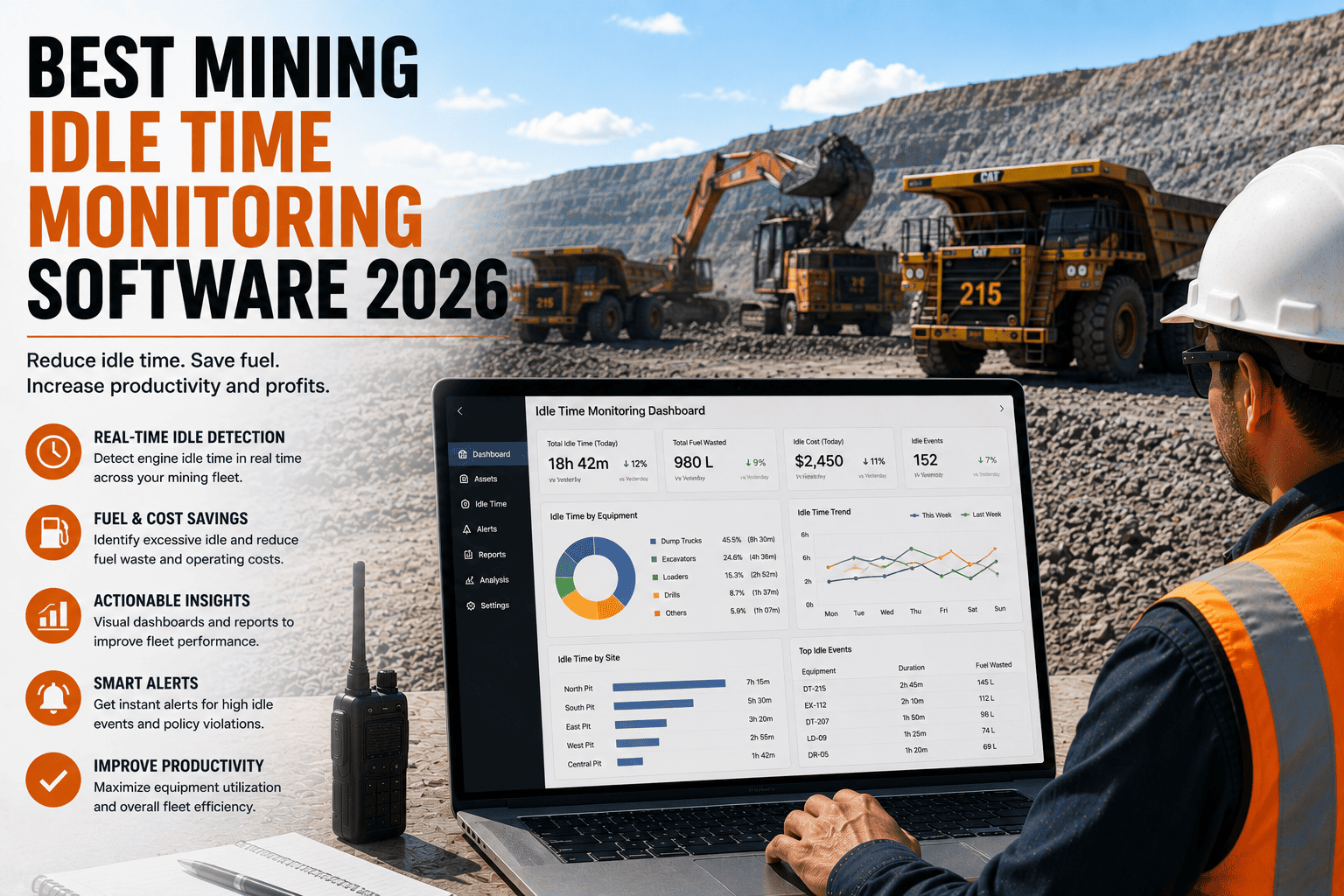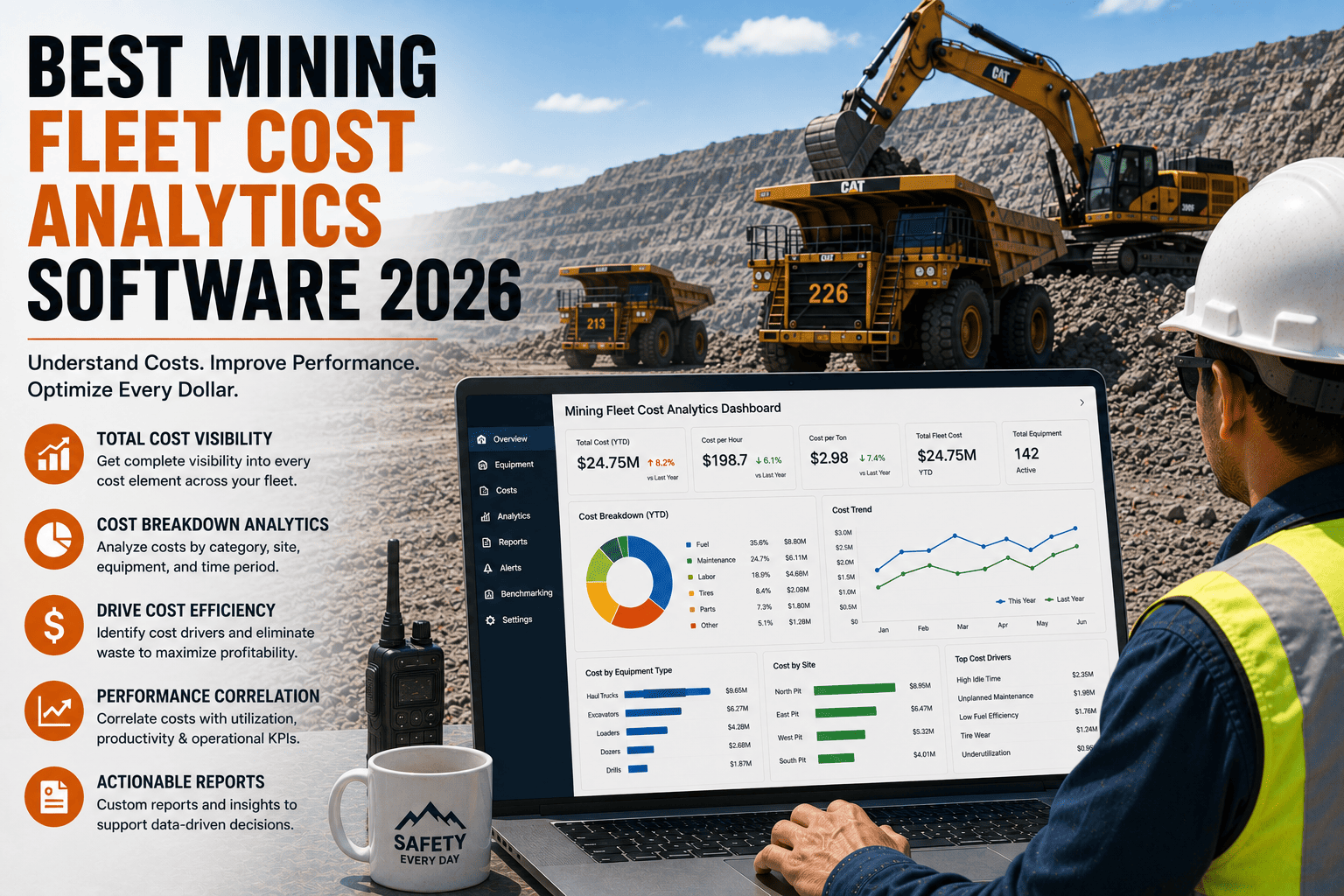
Choosing mining fleet management software is not like picking a tool for a delivery van fleet. Haul trucks run on engine hours instead of miles, inspections have to satisfy MSHA rather than DOT, and half of your equipment spends its shift somewhere a cell signal has never reached. Get the software wrong and you find out the hard way, usually when a shovel goes quiet and the whole truck queue behind it grinds to a halt. This guide breaks down what actually separates a mining-ready platform from a repurposed trucking tool, what it should cost you, and how to evaluate vendors without drowning in a feature list built to impress a procurement committee rather than run your pit.
Why Generic Fleet Tools Fall Apart on a Mine Site
Most fleet management platforms were built for paved routes and predictable duty cycles, then bolted onto mining as an afterthought. That approach breaks down fast once you're running equipment in an open pit or underground. Duty cycles are harsher, machines cost far more to replace, and connectivity simply isn't there for most of the shift. A dispatcher trying to run a mine site on software designed for a courier fleet is working blind on the exact conditions that matter most: engine hours, fault codes, and offline coverage.
The Five Gaps That Disqualify Non-Mining Software
Mileage-Based Scheduling
Excavators, dozers, and drills wear out by engine hours under load, not kilometers driven. Software that only counts miles misses the maintenance window entirely.
DOT-Style Inspections
Mine sites answer to MSHA, not DOT. Checklists built for highway vehicles won't hold up in an audit and won't cover pit-specific hazard checks.
Online-Only Inspection Apps
Pre-shift checks happen in pits and tunnels with no signal. Any tool that requires connectivity gets abandoned within a week and replaced with paper again.
No OEM Telematics Integration
Cat MineStar, Komatsu KOMTRAX, and Volvo CareTrack generate the richest diagnostic data on your most expensive assets. Software that can't ingest those feeds leaves you blind on your biggest investment.
Cost-Per-Mile Reporting
A pricing model built around miles driven cannot tell you what an excavator actually costs to run per hour of load, which is the number that drives real decisions on a mine site.
One-Size Enterprise Pricing
Platforms priced for a 200-truck operation with a dedicated IT team leave a 15-truck quarry paying for modules it will never touch.
See the Difference on Your Own Fleet Data
Instead of comparing spec sheets, connect your haul trucks, loaders, and drills to FleetRabbit and watch the visibility gap close within hours. You can sign up and start a free trial or book a demo to walk through it with your own equipment list.
What the Best Mining Fleet Software Actually Delivers
Strip away the marketing language and every credible mining fleet platform in 2026 is judged on the same five capability categories. Each one maps directly to a cost driver that shows up on your P&L whether you're tracking it or not.
1. Engine-Hour Based Preventive Maintenance
Maintenance intervals should trigger at 250, 500, 1,000, and 2,000 engine hours, not on a calendar date. Tying service windows to actual usage keeps wrenches turning on healthy schedules instead of guesswork, and it's the single biggest lever for pushing PM compliance above 95 percent.
2. Offline-First Mobile Inspections
Digital DVIRs need to work with zero bars of signal and sync automatically once a device resurfaces near a site office. Anything less gets replaced by a clipboard by week two.
3. Predictive Failure Alerts
Modern platforms read dozens of CAN-bus parameters, from hydraulic pressure to exhaust temperature, and flag anomalies days or weeks before a component actually fails. That's the difference between a scheduled repair in the tens of thousands and an emergency rebuild that runs into the hundreds of thousands.
4. MSHA-Ready Compliance Records
Every inspection, work order, and citation response should generate an audit trail automatically, so a surprise MSHA visit is a formality instead of a scramble through paper folders.
5. Live Dispatch and Utilization Visibility
One dashboard should show every truck, loader, and support vehicle with current status, next PM due date, and open work orders. Idle time on tracked mining equipment commonly runs 30 to 40 percent, and most of it is invisible until a live map exposes it.
Comparing the Top Platforms
Enterprise systems like DISPATCH and MineStar dominate large open-pit operations with hundreds of trucks and dedicated OEM integrations. They're powerful, but implementation runs into six figures and rollouts take months, which prices out most small and mid-size mines and quarries. The table below compares where each category of platform actually fits.
| Platform Type | Best Fit | Core Strength | Common Drawback |
|---|---|---|---|
| DISPATCH / MineStar Command | Large open-pit mines with 100+ trucks | Real-time dynamic dispatch and deep OEM integration | High implementation cost, months-long rollout |
| Generic Telematics Tools | Fleets that mainly need GPS and driver scoring | Solid location tracking and safety event logs | Weak on mine-specific PM and MSHA workflows |
| Enterprise EAM Suites | Global mining corporations with in-house IT | Deep asset lifecycle and financial reporting | Six-figure setup, steep learning curve |
| FleetRabbit | Small to mid-size mines, quarries, multi-site operations | Engine-hour PM, offline inspections, MSHA records, predictive alerts, live setup in under a day | Not built for 500-truck automated haulage fleets |
What This Should Cost You
Purpose-built mining fleet software for small and mid-size operations typically runs around five dollars per asset per month, which puts a twenty-truck operation at roughly $1,200 a year. Compare that to a single major unplanned breakdown, which can cost well over $100,000 in lost production and emergency repair premiums on a large asset, and the math tends to answer itself.
How to Evaluate Vendors Without Getting Lost
Most buying mistakes come from comparing feature checklists instead of comparing what a system does on your actual site conditions. Run every vendor through these four checks before signing anything.
Step 1: Test It Offline
Take a demo device into a basement or garage and see if the inspection form still saves. If it needs a live connection to function, it will fail in your pit.
Step 2: Confirm Engine-Hour Scheduling
Ask specifically whether PM triggers are based on engine hours pulled from ECM data or from a calendar. This single detail separates mining-grade software from repurposed trucking tools.
Step 3: Check Telematics Compatibility
Confirm the platform can ingest data from your existing OEM systems, whether that's Cat MineStar, Komatsu KOMTRAX, or Volvo CareTrack, without a costly custom integration.
Step 4: Price It Against Your Fleet Size
A twenty-truck quarry does not need the same platform as a two-hundred-truck open-pit mine. Match the pricing model and implementation timeline to your actual scale before you evaluate anything else.
Run Your Own 14-Day Comparison
The fastest way to evaluate mining fleet software is to run it against your current system. Sign up for a free trial and load in your haul trucks, loaders, and support vehicles, or book a demo and we'll walk through your specific site conditions together.
Frequently Asked Questions
Stop Running Your Mine on Paper and Guesswork
Every shift without engine-hour maintenance scheduling, offline inspections, and predictive alerts is a shift where a breakdown could have been caught early. FleetRabbit connects your haul trucks, loaders, excavators, and support vehicles into one live dashboard, ready in under a day and built for the exact conditions your site throws at it.