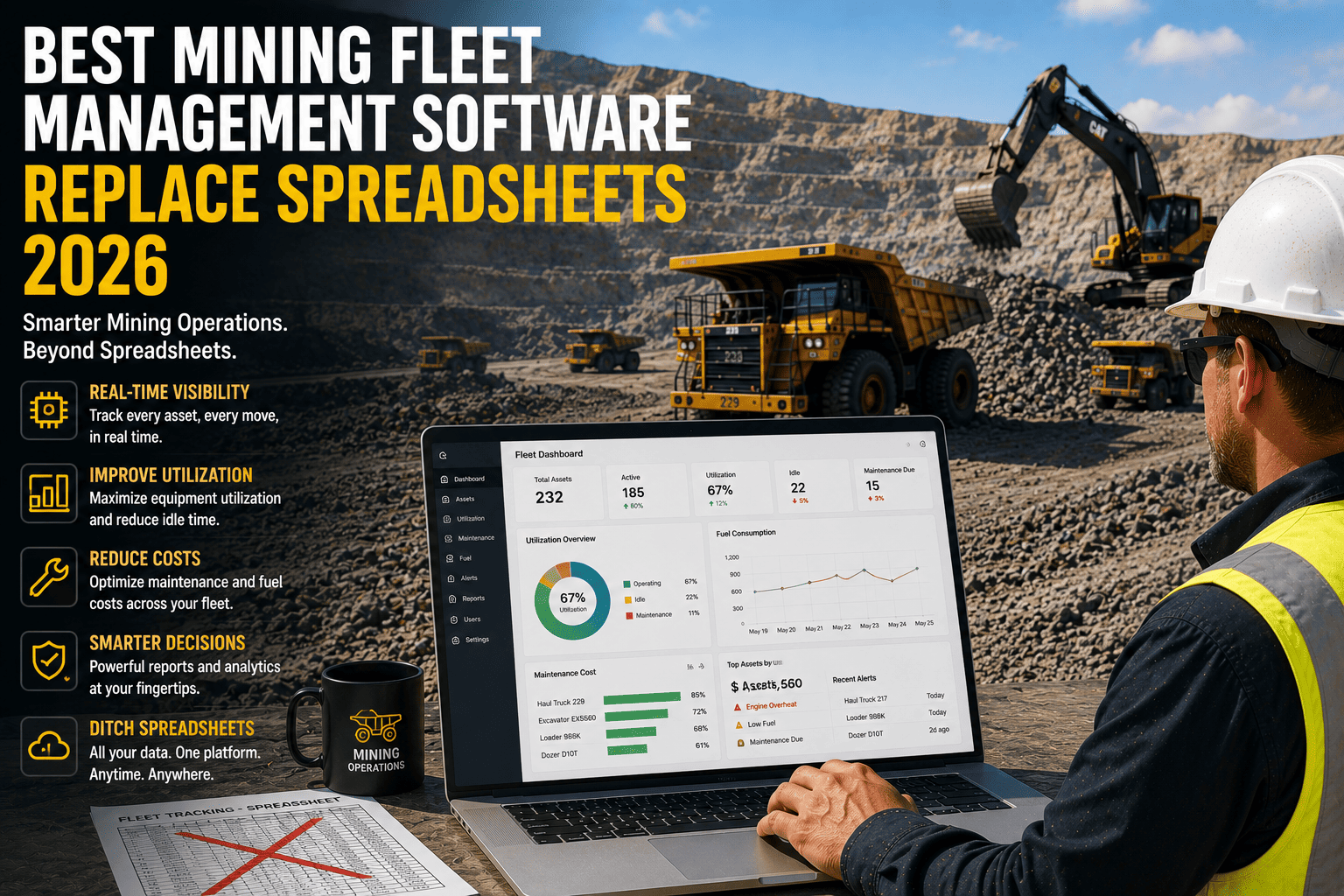
Most mine managers do not decide to run their fleet on spreadsheets. It just happens. A tab for inspections. A tab for fuel. A tab someone's cousin built for maintenance history that only makes sense to the person who built it. Then a truck goes down mid-shift, nobody can find the last inspection record, and the whole site is reminded that a spreadsheet was never built to run a fleet of haul trucks, loaders, and excavators working across shifts, sites, and crews.
Mining fleet management software replaces scattered spreadsheets with one live system for inspections, maintenance, compliance, and asset tracking. The mining fleet software market is valued near 3.8 billion dollars in 2025 and is expected to reach 8.6 billion dollars by 2034. Roughly 82 percent of fleet operators still rely on manual tracking, and unplanned downtime now costs close to 2000 dollars per vehicle per day. FleetRabbit gives small and mid-size mining fleets a purpose-built alternative without enterprise pricing or complexity.
Why Spreadsheets Quietly Cost Mining Fleets So Much
Spreadsheets feel free because there is no invoice attached to them. But the real cost shows up elsewhere. Roughly 82 percent of fleet operators still rely on some form of manual tracking, which means most sites are absorbing the same hidden losses without ever putting a number on them. Unplanned downtime is now estimated to cost close to 2000 dollars per vehicle per day, and emergency repairs run close to 4.8 times more than the same repair done on a planned schedule. For a small mine or quarry running a mixed fleet of haul trucks, loaders, and support vehicles, those losses compound quietly across a full year until someone finally adds them up.
The Real Number Behind "It's Just a Spreadsheet"
Independent research into small and mid-size mining operations points to an average annual loss near 127,000 dollars per unmanaged fleet, driven by unplanned downtime, emergency repairs, compliance penalties, fuel waste, and parts stockouts that delay repairs by days instead of hours. None of that shows up as a single line item. It shows up as a dozen small surprises that a spreadsheet was never built to catch before they happened.
FleetRabbit connects haul trucks, loaders, excavators, and support equipment into a single system for inspections, maintenance, compliance, and cost tracking. You can sign up for a free trial and have your fleet mapped in under a day, or book a demo to see it working on equipment like yours first.
Spreadsheets vs Mining Fleet Management Software
Laid side by side, the gap between a spreadsheet and purpose-built mining fleet software is not about design or convenience. It is about whether the people making decisions on your site actually have accurate, current information in front of them.
| Capability | Spreadsheets and Paper Logs | Mining Fleet Management Software |
|---|---|---|
| Data Freshness | Updated manually, often once per shift or day | Live updates as inspections and repairs happen |
| Compliance Trail | Editable cells, no timestamp or signature verification | Time-stamped, tamper-proof records ready for MSHA audits |
| Maintenance Scheduling | Manual reminders, easy to miss or duplicate | Automated alerts based on hours, mileage, or condition |
| Offline Access | Difficult to sync across remote or underground zones | Mobile inspections work offline and sync when connected |
| Cost Visibility | Requires manual formulas that break as data grows | Automatic cost-per-hour and downtime tracking per asset |
What Good Mining Fleet Management Software Actually Does
Not every fleet tool on the market is built for the realities of a mine site. Before comparing options, it helps to know what a genuinely useful platform covers.
Real-Time Asset Visibility
Every haul truck, loader, and excavator should show its current status, location, and health on one screen, instead of requiring a phone call to the yard to find out if a machine is even running today.
Why this matters on multi-shift sites
When crews rotate through day and night shifts, a live dashboard is often the only way an incoming supervisor knows what happened on the machine before they touch it.
Predictive and Preventive Maintenance
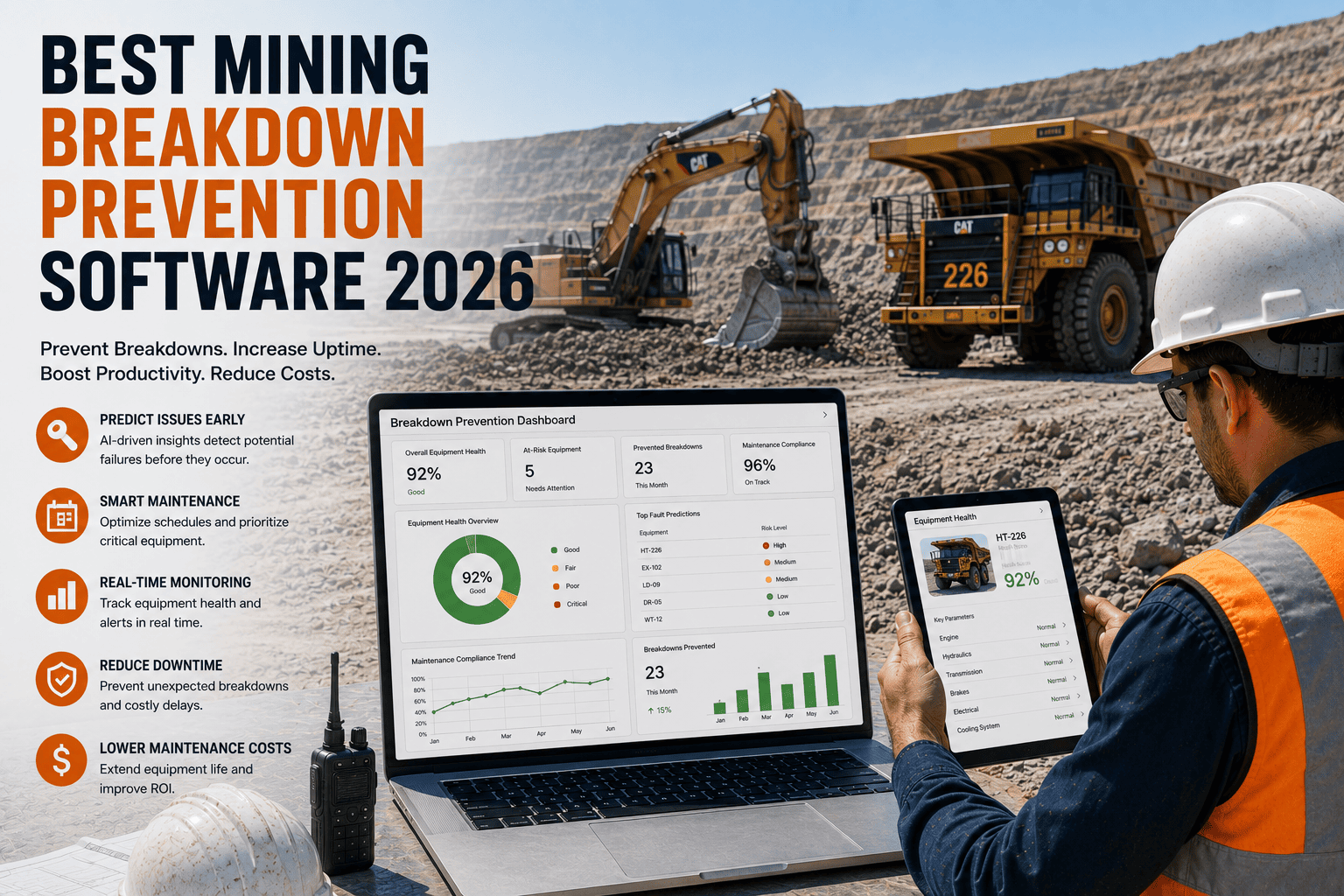
Condition-based alerts catch developing issues, such as unusual engine temperatures or brake wear, early enough to schedule a repair instead of reacting to a breakdown on the pit floor.
Offline-Ready Inspections
Underground zones and remote pits do not always have signal. Inspection tools that work offline and sync automatically once connectivity returns keep records accurate without slowing crews down.
MSHA-Ready Compliance Records
Digital, time-stamped inspection and maintenance logs remove the guesswork from an audit, replacing binders and loose paperwork with records that are already organized and searchable.
Cost-Per-Hour Reporting
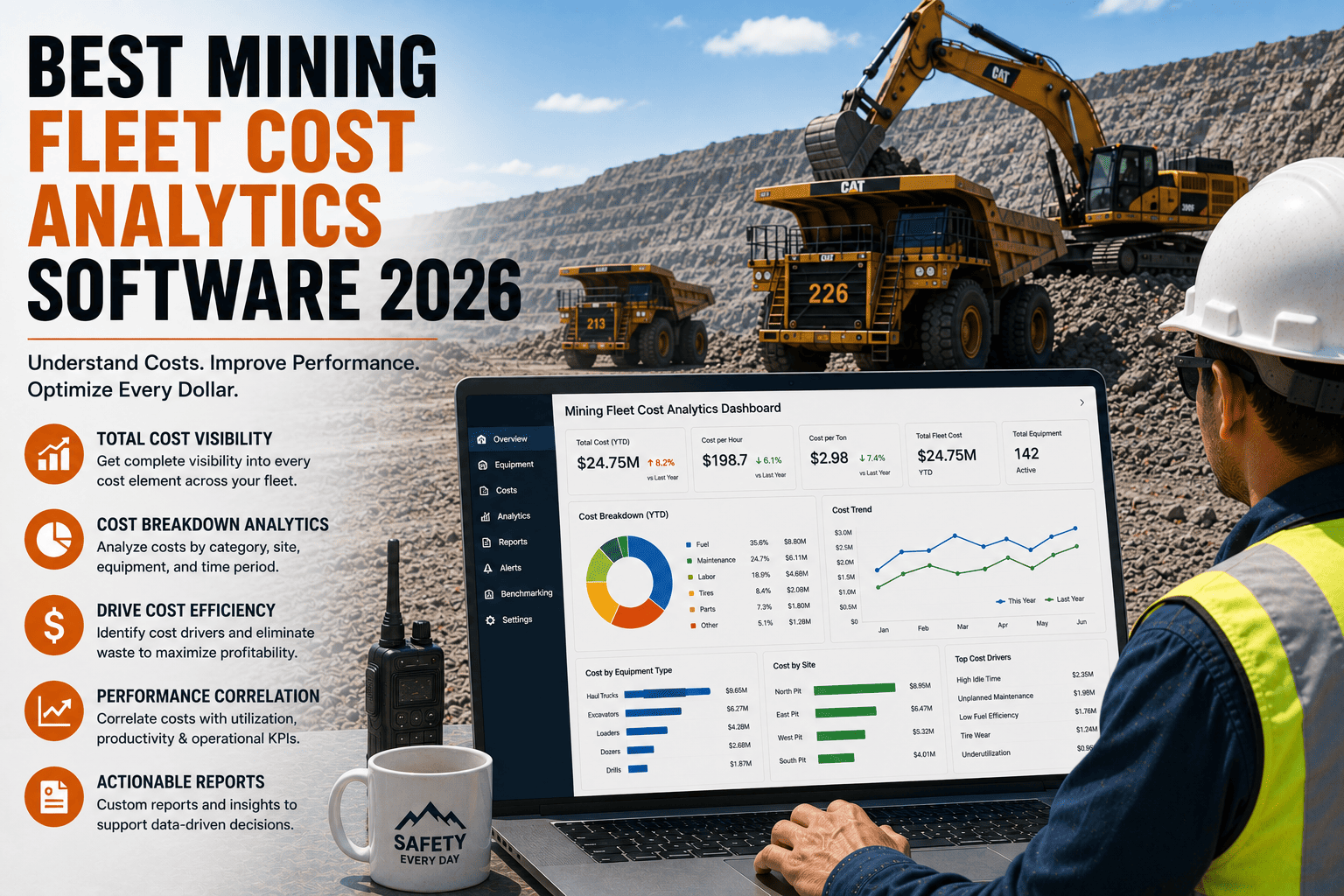
Once fuel, maintenance, and depreciation figures are entered per asset, a good platform calculates a fully loaded cost-per-hour automatically, so decisions about repairing or replacing aging equipment are based on data instead of a manager's general impression.
FleetRabbit brings offline inspections, predictive maintenance alerts, GPS tracking, and MSHA-ready audit trails into one platform starting at 5 dollars per asset per month. Explore it yourself with a free 14-day trial, or book a walkthrough with our team to see it configured for your exact fleet.
Who This Actually Helps
Purpose-built mining fleet software tends to matter most for teams that feel the spreadsheet strain daily rather than occasionally.
Small and Mid-Size Quarries
Operations running 10 to 30 pieces of equipment often find enterprise fleet platforms too expensive and too complex, while a lightweight, purpose-built system fits both the budget and the day-to-day workflow.
Multi-Site Mining Operators
When equipment moves between pits or locations, a shared spreadsheet becomes unreliable almost immediately. A live system keeps every site looking at the same current data.
Sites Preparing For Growth
Fleets planning to add trucks, loaders, or a second site benefit from switching before the spreadsheet system breaks under its own weight, not after.
Frequently Asked Questions
Every day on spreadsheets is another day of decisions made on outdated information. FleetRabbit gives mining fleets of any size one live system for inspections, maintenance, compliance, and cost tracking, set up in under a day with no IT team required.