Most small mine and quarry operators are managing million-dollar equipment fleets with paper inspection logs, whiteboard schedules, and radio calls. Equipment failures go undetected until a haul truck breaks down mid-shift. MSHA inspectors arrive and the paper trail is incomplete. A missed PM turns into a $40,000 emergency repair that halts production for two days. In 2026, that approach is no longer acceptable — and it no longer has to be. The right mining fleet management software gives small operations the same visibility and control that large mines pay six figures to achieve, at a price and simplicity built for your scale.
This guide covers what mining fleet management software actually does for small operations, the five essential capabilities every quarry and mine site needs, how to evaluate your options without getting lost in enterprise features you will never use, and how FleetRabbit AI delivers complete fleet visibility, MSHA-ready compliance, and predictive maintenance in one platform starting at $5 per asset per month.
FleetRabbit AI connects your haul trucks, loaders, excavators, and ancillary equipment into one live dashboard. Offline inspections, MSHA audit trails, predictive maintenance alerts, and GPS tracking — all set up in under a day. No enterprise contracts. No IT team needed. Start your free 14-day trial and get your first actionable fleet insight within hours.
Why Mining Fleet Management Software Matters More in 2026
The U.S. mining software market was valued at $4.70 billion in 2025 and is projected to reach $8.85 billion by 2033, growing at 7.5% annually. The driver is not large enterprise mines adopting new tools — they already have them. The growth is coming from small and mid-size operations that are finally getting purpose-built, affordable software that matches how they actually work.
Small mines and quarries face a unique problem: enterprise fleet management tools are built for 200-truck open-pit mining operations with dedicated IT staff. They are expensive, complex to implement, and packed with features a 15-truck quarry will never use. Meanwhile, spreadsheets and paper logs create compliance risk, hide equipment problems until they become expensive failures, and leave managers making decisions on information that is already three days old.
The result is a $127,000 average annual loss per unmanaged small mine — from unplanned downtime, emergency repairs, MSHA penalties, fuel waste, and parts stockouts that delay repairs by days. In 2026, purpose-built mining fleet management software closes that gap completely.
Mines using automated PM scheduling and predictive maintenance alerts see haul truck availability improve by 35% within the first quarter. Every hour of uptime recovered is production revenue that would otherwise be lost.
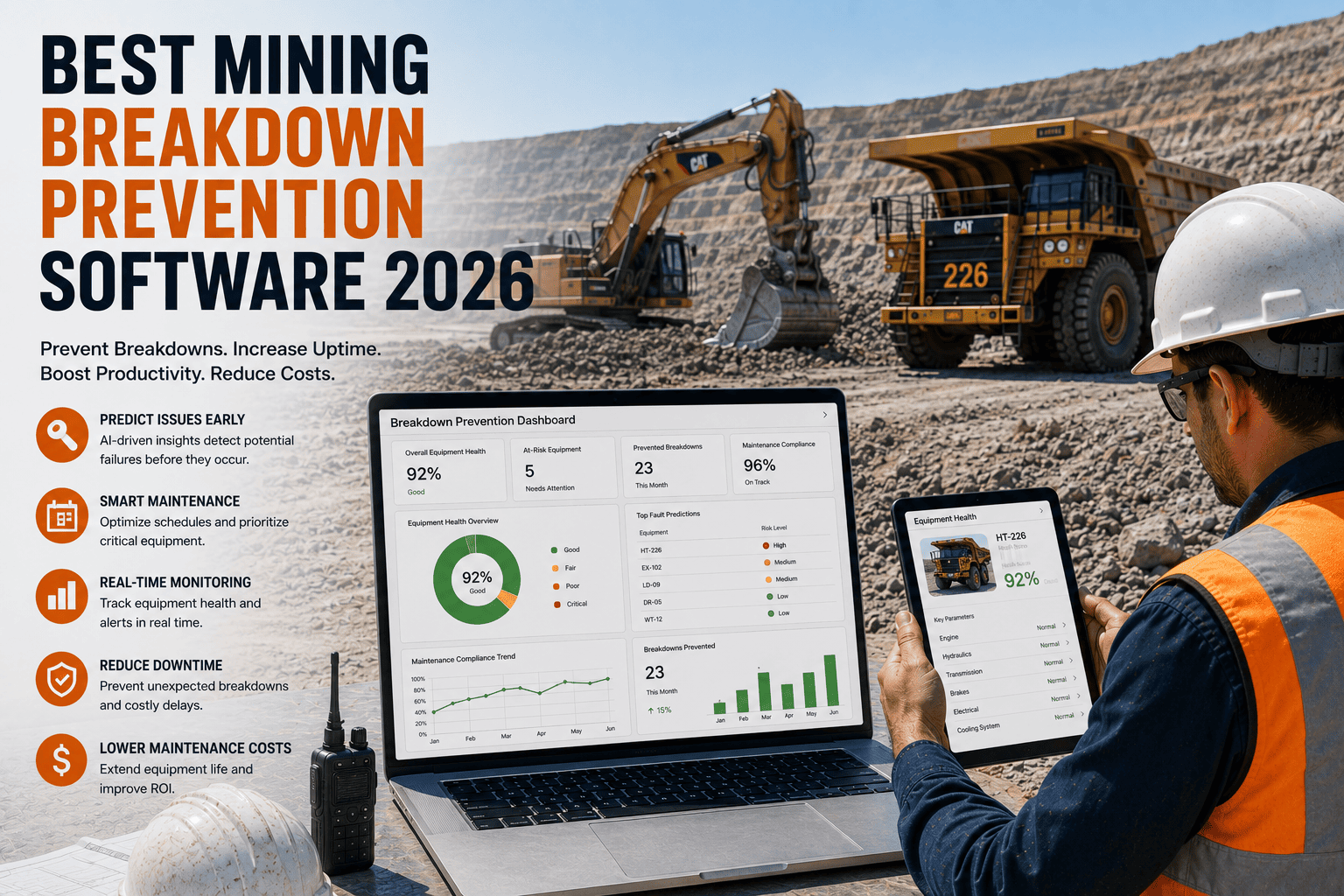
AI-powered maintenance alerts catch hydraulic, engine, and transmission issues 20 to 45 days before traditional diagnostics would flag them. Catching a $1,200 part failure prevents a $15,000 emergency breakdown.
Digital DVIRs with mandatory photo verification and automatic sync to central maintenance planners eliminate the paper trail problem. Every inspection record is tamper-proof, searchable, and MSHA-ready on demand.
Predictive parts reordering and inventory optimization mean critical components are on-site before the repair is needed — not 3 to 5 days later after a stockout delays work at an isolated quarry location.
The 5 Problems That Cost Small Mines the Most Money
Before evaluating any software, it helps to understand exactly where small mines and quarries bleed money — because the right platform solves all five, not just one or two.
What happens: Operators complete pre-shift checks on paper forms. Forms get lost, damaged, or incompletely filled. When an MSHA inspector arrives, the documentation trail has gaps that trigger citations averaging $15,625 each.
The cost: A single MSHA citation plus legal and administrative time easily exceeds $25,000. Repeat violations can result in withdrawal orders that halt production entirely.
The fix: Mobile-first digital inspections that operators complete on their phones with photo verification, mandatory field completion, and automatic cloud sync — whether they have signal or not.
What happens: Most fleet apps require an internet connection to function. Underground operators and remote pit workers lose access the moment they go off-network, forcing them back to paper or skipping inspections entirely.
The cost: Inconsistent inspection data, incomplete maintenance records, and compliance gaps that create regulatory exposure and hide developing equipment problems.
The fix: Offline-first mobile apps that store all inspection data locally and sync automatically when connectivity returns — with zero data loss and no workflow interruption for operators.
What happens: Maintenance is scheduled by calendar days rather than actual engine hours or telematics data. Equipment gets serviced too early (wasted cost) or too late (breakdown risk). No one knows which truck is about to fail until it does.
The cost: Unplanned downtime averages 18 hours per vehicle per month. At $448 to $760 per vehicle per day, a single unexpected breakdown on a haul truck costs $1,300 to $2,200 in lost production alone — before parts and labor.
The fix: Telematics-synced engine hour tracking that triggers PM schedules automatically, combined with AI pattern recognition that flags emerging failures before they cause production stops.
What happens: A repair is needed but the critical component is not in stock. The nearest supplier is 2 to 4 hours away. The repair gets delayed 3 to 5 days while the equipment sits idle and production targets slip.
The cost: Parts delays on a single excavator can cost $3,000 to $8,000 in lost production time per incident, plus expedited shipping charges that are 40 to 60% higher than standard orders.
The fix: Inventory optimization that tracks historical parts usage per asset and triggers automatic reorders based on predictive maintenance schedules — so components arrive before they are needed.
What happens: GPS data lives in one tool. Maintenance records live in a spreadsheet. Fuel receipts are in an email inbox. Compliance docs are in a filing cabinet. Getting a complete picture of one vehicle requires checking four places and still misses half the story.
The cost: Decision delay. Managers cannot act on data they cannot see. Capital replacement decisions get made on gut feel. Underperforming assets stay in the fleet too long. Oversized fleets carry unnecessary fixed costs.
The fix: A single unified platform that connects telematics, maintenance records, inspection history, parts inventory, and compliance documentation — with drill-down from the summary dashboard to the individual asset level.
Annual loss from all five problems: $127,000 average for a 15-truck small mine or quarry operation. This is not an estimate — it is the aggregate of documented downtime costs, emergency repair premiums, MSHA citation averages, expedited parts costs, and fuel waste from poor utilization visibility.
The good news: Solving all five problems with a unified mining fleet management platform like FleetRabbit costs $900 per year for a 15-asset operation. The ROI is not marginal. It is transformational from the first quarter.
What changes immediately: Operators submit digital inspections from day one. Managers see a live equipment dashboard. Maintenance schedules auto-generate from engine hours. MSHA audit trails build themselves. Parts inventory tracks automatically.
The 5 Essential Capabilities to Look for in Mining Fleet Management Software
Not all fleet management software is built for mining. Most tools were designed for commercial trucking or construction and adapted for mine sites as an afterthought. When evaluating platforms for your quarry or mine, these five capabilities separate purpose-built solutions from generic adaptations.
Pre-shift equipment checks, daily vehicle inspection reports (DVIRs), and safety walkarounds must work without internet connectivity. Operators on underground levels, remote pit faces, and isolated crusher stations cannot interrupt their workflow for signal problems. Look for full offline functionality with automatic background sync — not a "limited offline mode" that only stores partial data or requires manual upload when connectivity returns.
MSHA requires surface mines to be inspected twice per year and underground mines four times per year. When an inspector arrives, you need instant access to complete, tamper-proof records of workplace exams, equipment inspections, training certificates, and incident reports. Software that stores records with audit trails, photo verification, and operator sign-offs eliminates the manual documentation problem entirely. Look for one-click compliance report generation — not manual PDF compilation.
Mining equipment maintenance intervals are measured in engine hours, not calendar days. A haul truck running three shifts burns through its 250-hour oil change interval in under 10 days. Calendar-based PM scheduling creates systematic under-maintenance on high-utilization equipment and over-maintenance on seasonal assets. The right platform syncs with telematics to pull real engine hours and auto-schedule maintenance work orders at the correct intervals for each asset individually.
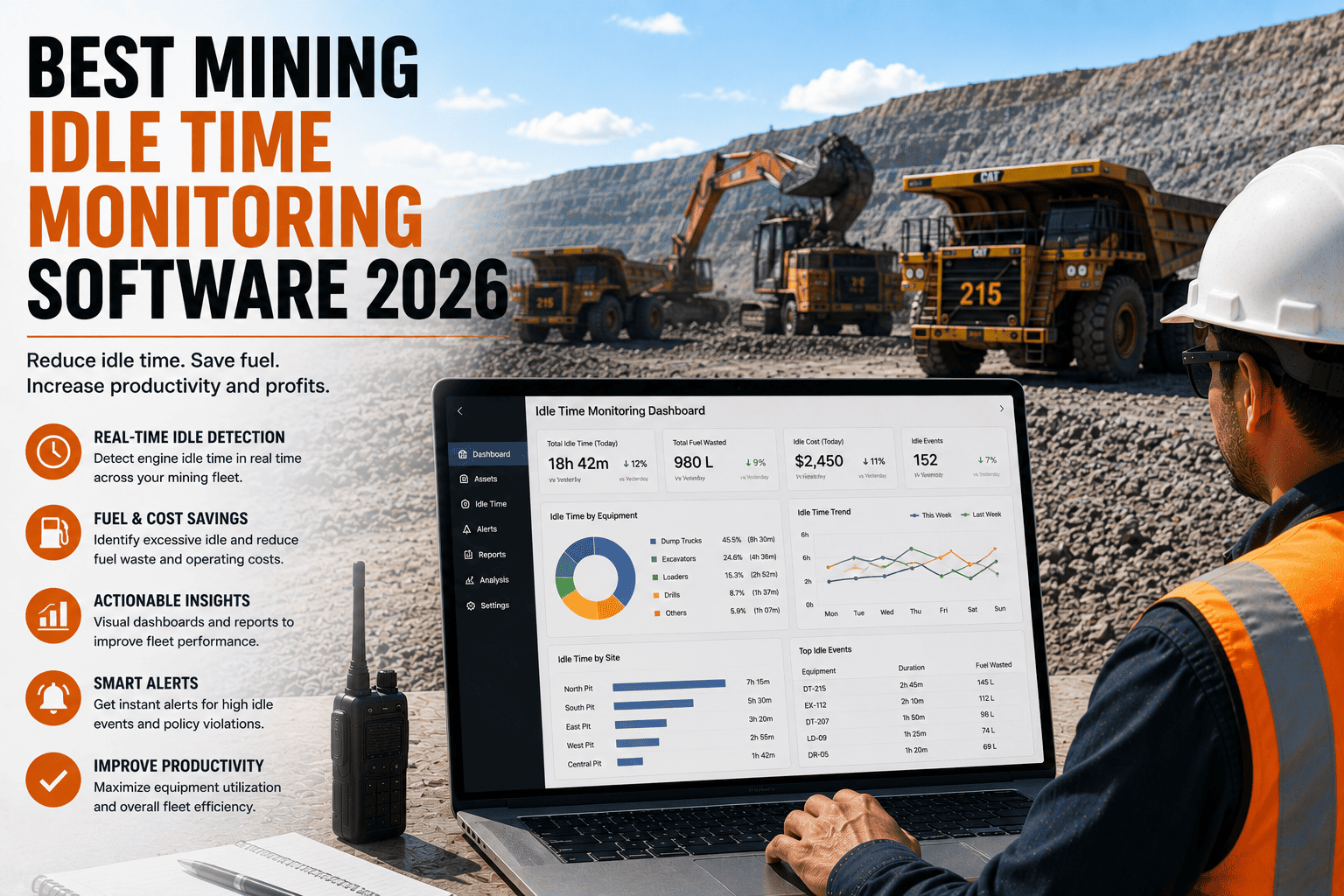
Knowing where every haul truck, loader, excavator, and service vehicle is at any moment is the foundation of operational efficiency. Live tracking eliminates radio check-ins, identifies idle equipment, confirms production cycle adherence, and provides the location data needed for dispatch optimization. For quarry operations specifically, geofencing around active blast zones and restricted areas adds a critical safety layer that manual radio-based systems cannot replicate.
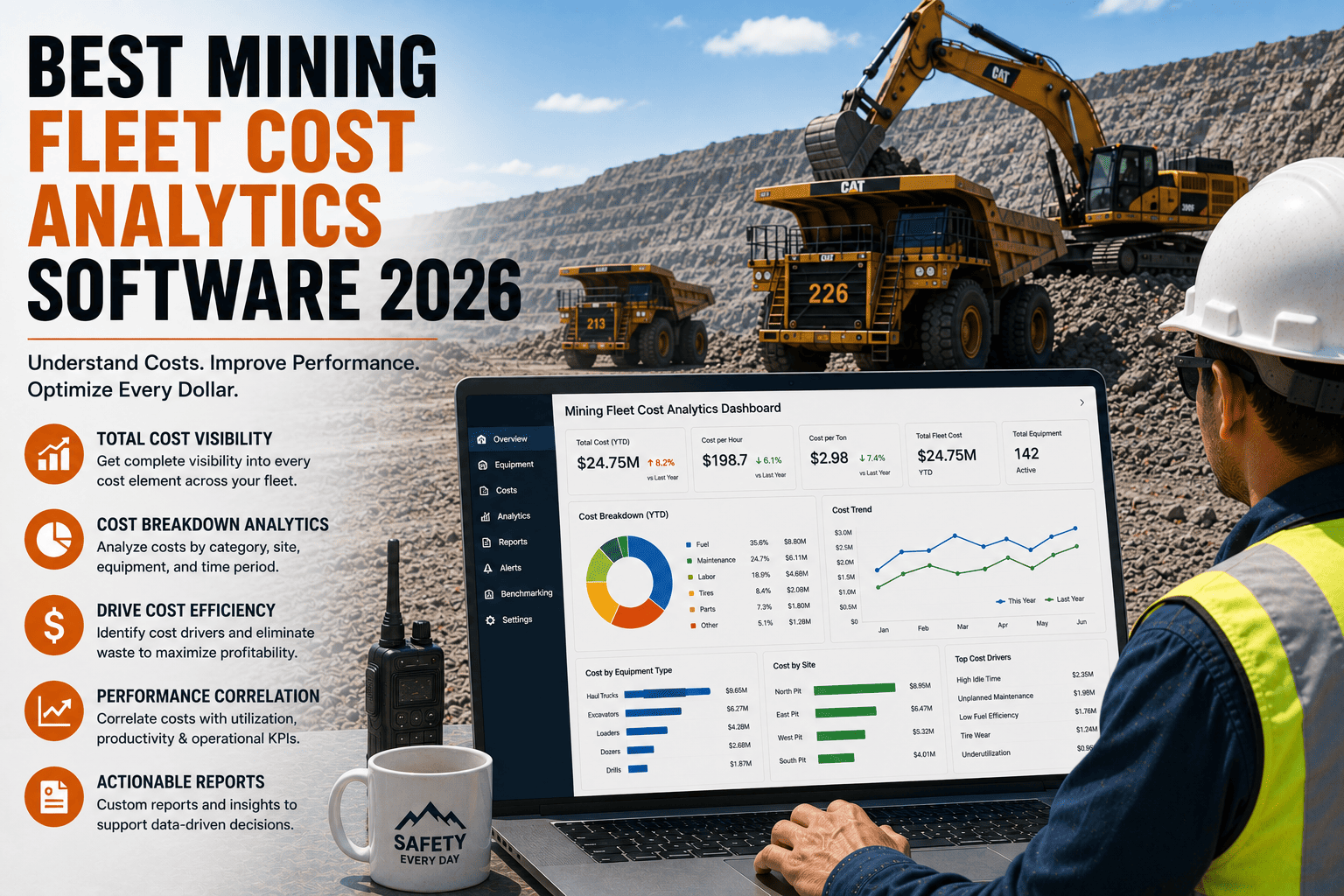
Understanding what each piece of equipment actually costs to operate per hour — combining fuel, maintenance, depreciation, and downtime — drives every capital allocation decision a mine manager makes. Without this visibility, replace-versus-repair decisions are based on gut feel rather than financial data. The best platforms surface maintenance cost trends per asset so managers can identify underperforming equipment before it becomes a financial anchor dragging down overall operational performance.
Operations that deploy mining fleet management software covering all five capability areas consistently see measurable improvements within 90 days. Haul truck uptime improves 35% when PM scheduling is automated and tied to real engine hours. Emergency repair costs fall 28% as predictive alerts catch developing failures. MSHA audit pass rates reach 100% when digital inspection records build themselves automatically. Repair turnaround times drop 40% when parts inventory is managed predictively. The combined effect is a fleet that costs less to run, stays in service longer, and meets every regulatory requirement without the last-minute scramble.
How FleetRabbit AI Compares: Mining Fleet Software at a Glance
Choosing the wrong platform means paying for features you do not need while missing capabilities that matter for your specific operation. This comparison focuses on what small mines and quarries actually require — not the feature lists designed to impress enterprise procurement teams.
| Capability | FleetRabbit AI | Enterprise Mining Platforms | Generic CMMS Tools | Spreadsheets |
|---|---|---|---|---|
| Offline mobile inspections | Full offline, auto-sync | Partial, complex setup | Limited or none | None |
| MSHA audit-ready records | Built-in, one-click reports | Configurable add-on | Manual exports only | None |
| Engine-hour PM scheduling | Auto via telematics sync | Yes, complex configuration | Calendar-based only | Manual tracking |
| Real-time GPS tracking | Included standard | Included, enterprise tier | Separate tool required | None |
| Predictive maintenance AI | Built-in AI alerts | Add-on module, extra cost | Not available | None |
| Cost per asset reporting | Automated, real-time | Custom reports, BI team needed | Manual calculation | Manual calculation |
| Setup time | Same day, self-serve | 3 to 6 months, consultants | 2 to 4 weeks | Hours (breaks immediately) |
| Monthly pricing | $5 per asset | $3,000 to $15,000+ | $300 to $1,500 | Free until it costs you |
| Built for small mines | Purpose-built | Enterprise focus | Generic adaptation | No |
FleetRabbit AI gives small mines and quarries real-time fleet visibility, MSHA-ready compliance documentation, predictive maintenance alerts, and offline mobile inspections — all in one platform. Setup takes less than a day. Your first actionable insight comes within hours. 14-day free trial. No credit card. No contracts.
Getting Started: From Paper Logs to Full Digital Fleet Control in One Day
The most common reason small mines delay implementing fleet management software is the fear that setup will be complex, time-consuming, and disruptive to ongoing operations. FleetRabbit AI was specifically designed to eliminate that barrier. Here is exactly what the first day looks like.
Enter each asset: haul trucks, loaders, excavators, drills, service vehicles, and ancillary equipment. Import from a CSV file or add manually. Assign each asset an ID, current engine hours, and maintenance history if available. For sites with existing telematics hardware, connect your provider and engine hours sync automatically going forward. Most 15-truck operations complete this step in under 20 minutes.
Choose from FleetRabbit's library of MSHA-aligned inspection templates for haul trucks, excavators, loaders, and drill equipment — or customize your own. Add mandatory photo verification steps for critical items like tire condition, brake checks, and fluid levels. Assign which operators complete which checklists. Operators receive instant mobile access — no app store download required, no training sessions needed.
Input manufacturer-recommended service intervals in engine hours for each asset type. FleetRabbit automatically calculates due dates based on current hours and average daily utilization. Work orders generate automatically and appear in the maintenance queue before the due date. Technicians receive mobile notifications. Managers see PM compliance rates update in real time as work orders are completed and signed off.
Operators complete their first digital pre-shift inspection from their phones before the shift starts. Photos upload automatically. Defects trigger immediate maintenance work orders. The manager dashboard shows which equipment passed inspection, which items have flagged defects, and which assets are currently active versus idle. MSHA compliance records start building automatically from the very first inspection submitted.
Within 24 hours, FleetRabbit surfaces patterns in your data that were previously invisible: which truck has the most defects flagged across inspections, which PM is most frequently overdue, which operator is consistently missing inspection steps. These are decisions you can act on immediately — not next week after a spreadsheet export. Most mine managers report making their first data-driven maintenance decision within 48 hours of going live.
MSHA Compliance: What Small Mines Get Wrong and How Software Fixes It
MSHA compliance is not optional — and for small mines, the documentation burden is identical to large operations. Surface mines face mandatory inspections twice per year. Underground mines face four mandatory inspections annually. Getting a citation during one of these inspections costs an average of $15,625 in penalties, plus legal fees, administrative time, and potential production shutdowns if violations are severe enough to trigger withdrawal orders.
Incomplete workplace exam records: MSHA requires operators to conduct workplace exams before each shift and maintain records. Paper logs with missing entries, illegible writing, or date gaps are the single most common citation trigger for small mines.
Untrained or improperly documented miners: Training records and certificates must be available on demand during any inspection. Records stored off-site must be produced within one business day — faster for active safety issues.
Missing equipment inspection documentation: Haul trucks, excavators, and loaders require regular documented inspections. Without a system that enforces completion and stores records centrally, documentation gaps are nearly inevitable.
Delayed defect correction: When equipment defects are identified in inspections, MSHA requires timely correction with documentation. Paper systems routinely lose the paper trail between defect identification and repair completion.
Mandatory inspection enforcement: Operators cannot start a shift without completing their digital inspection checklist. The system prevents incomplete submissions. Every record is timestamped, geotagged, and signed with operator credentials — no gaps, no illegible handwriting.
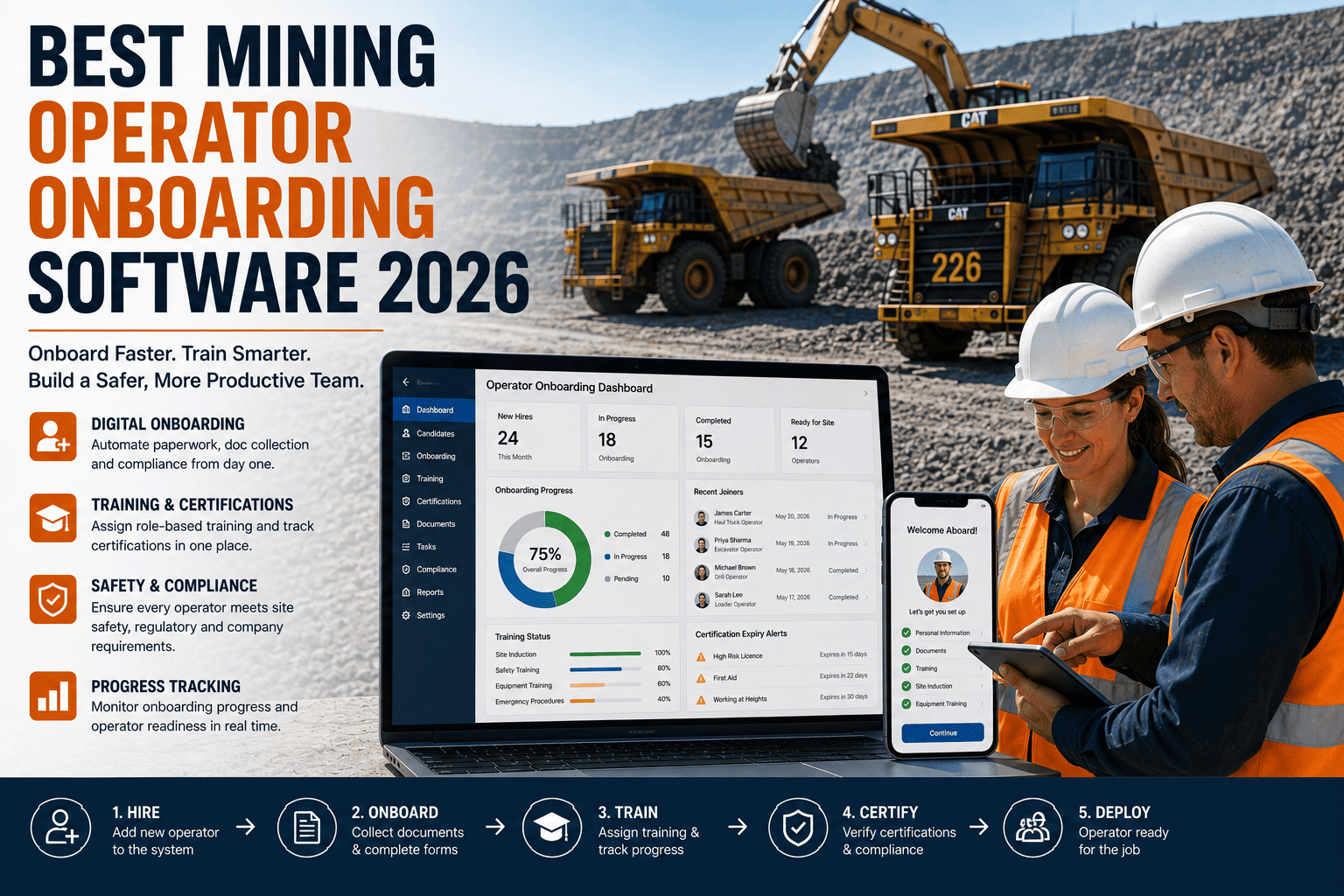
Training record integration: Store operator certifications, training completion dates, and safety program records inside FleetRabbit. Generate a complete training documentation report for any inspector in under 60 seconds.
Automatic defect-to-work-order linking: Every defect flagged in an inspection automatically generates a maintenance work order. When the repair is completed and signed off, the link between defect identification and resolution is preserved with timestamps — exactly the audit trail MSHA requires.
One-click compliance reports: Generate a complete inspection history report for any asset, any operator, or any time period instantly. No manual compilation. No missing records. MSHA inspectors get a professional, complete report that demonstrates systematic compliance management.
Frequently Asked Questions About Mining Fleet Management Software
Small mines and quarries lose an average of $127,000 per year to problems that purpose-built fleet management software eliminates on day one. Unplanned equipment downtime, MSHA citation penalties, emergency repair costs, parts stockouts, and fuel waste from poor utilization visibility — FleetRabbit AI addresses all five with a single platform that sets up in under a day and costs $5 per asset per month. No credit card required for the 14-day free trial. No long-term contracts. No implementation consultants. Real offline inspections, real predictive maintenance, real MSHA audit trails — starting from your very first shift.