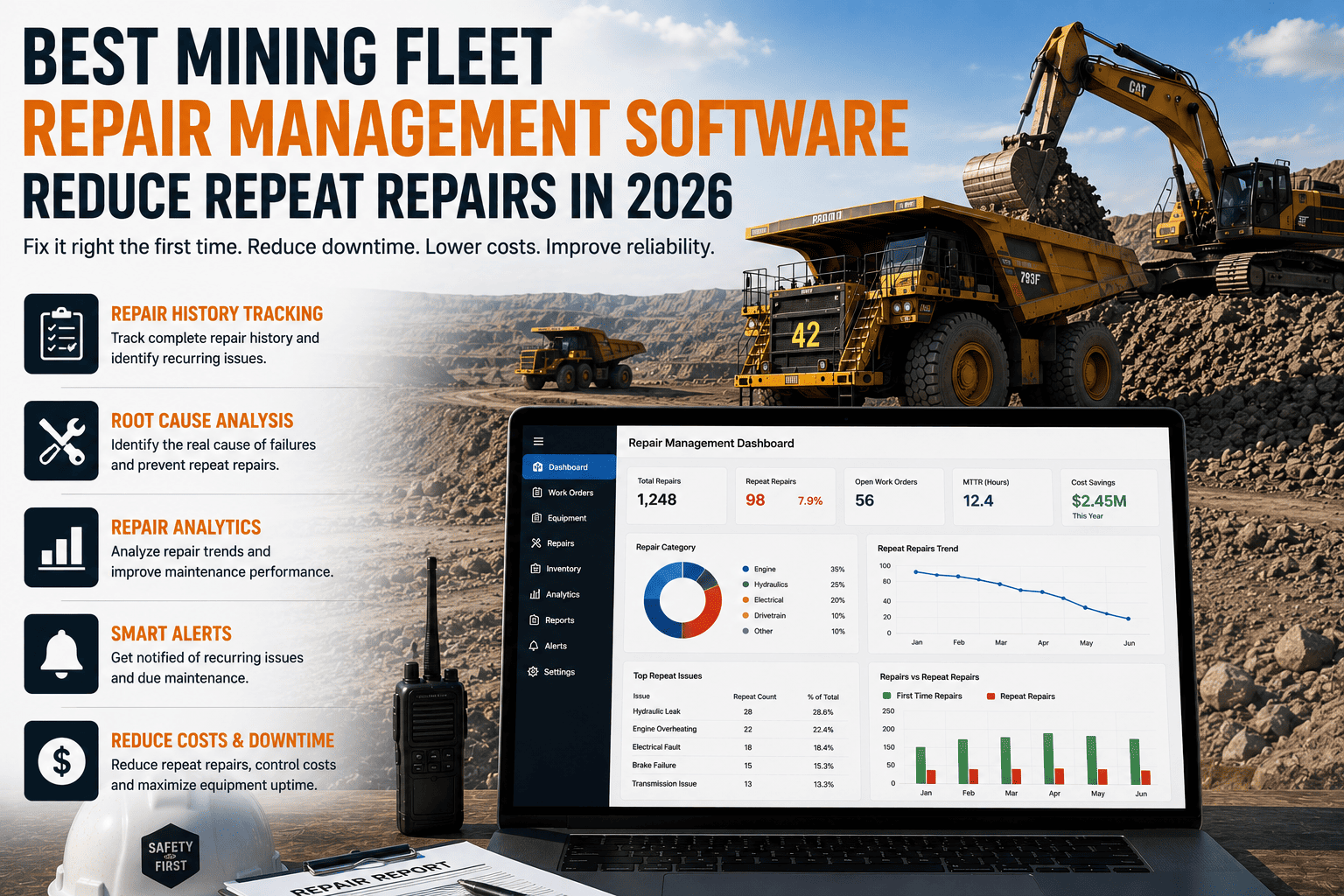
A technician finishes a repair, signs off the work order, and the machine goes back into service. Two weeks later, the same fault code appears on the same asset. Nobody planned for that second visit. It happened because the first one never actually fixed the root cause, just the symptom that was easiest to see. Repeat repairs like this are one of the most expensive, least discussed problems in mining maintenance, quietly consuming technician hours and workshop capacity that should be going toward work that actually stays fixed.
What First-Time Fix Rate Actually Reveals
First-time fix rate, often shortened to FTFR, measures the percentage of repairs resolved completely on the first attempt, with no follow-up visit needed for the same problem. It sounds like a simple operational metric, but it is one of the clearest signals of how mature a maintenance program actually is, because a low FTFR rarely points to one obvious cause. It points to a pattern of small gaps that compound every time a technician walks up to a machine.
The Four Root Causes Behind Every Repeat Repair
Repeat repairs almost never come down to a technician simply not knowing how to fix something. The real causes sit upstream of the repair itself, in the preparation that happens before a wrench ever touches the machine.
Missing Parts at Dispatch
A technician who arrives without the correct part does not fix the machine. They simply delay the failure to a second visit, which is one of the single biggest drivers of repeat repairs across heavy equipment maintenance.
Skills and Job Mismatch
Dispatching based on who is available rather than who is qualified for that specific equipment or fault type accounts for roughly a quarter of all repeat visits, and the mismatch usually only becomes visible once the technician is already on site.
No Visibility Into Repair History
A component that already failed twice in the past six months is a pattern, not a coincidence, but if that history is not surfaced before the repair starts, the technician has no way to know they are looking at the third occurrence of the same problem.
Incomplete Documentation
Thin work order notes and missing service history force every technician to start from scratch, repeating diagnostic steps that should already be known from the asset's own record.
Why Root Cause Analysis Has to Happen Before the Repeat, Not After
It is tempting to treat a second visit as just another work order. The more useful response is asking why the first one failed to hold. A failure investigated only at the symptom level gets patched again and again, while the same handful of failure modes, often a small list like hydraulic leaks, oil contamination, or specific component wear, end up driving the majority of all repeat work across a fleet.
The 80/20 Pattern Behind Most Repeat Repairs
Across most mining fleets, a relatively small number of failure modes account for the overwhelming majority of repeat repairs and downtime. Once a maintenance team has visibility into which specific components keep coming back, addressing that short list of root causes systematically does more to lift first-time fix rate than any amount of general technician training.
What to Look for in Repair Management Software
Generic work order tools log what happened. Software built to reduce repeat repairs has to do more, surfacing the right information before the repair starts, not just recording it after the fact.
| Capability | What It Prevents |
|---|---|
| Parts Confirmation Before Dispatch | A technician arriving without the part needed to actually complete the job |
| Repair History Tied to Each Asset | A repeated fault going unrecognized as a pattern instead of an isolated incident |
| Skills-Based Dispatch | Sending a technician who is available but not actually qualified for the specific fault type |
| Structured Digital Job Plans | Technicians improvising steps, leading to missed checks and incomplete repairs |
Seeing how much of your own repeat-repair pattern is preventable usually only becomes clear once it is laid out against real data. You can sign up for a free trial and pull your fleet's repair history into one view within a day.
How FleetRabbit Helps Mining Workshops Fix It Right the First Time
FleetRabbit was built around the idea that the moment a work order is created is the moment that determines whether the repair holds. Every piece of information a technician needs, parts availability, prior repair history, and the skills the job actually requires, is checked before dispatch instead of discovered on site.
Parts Checked Before the Technician Leaves the Shop
Every work order is matched against the parts list for that fault type, flagging missing components before dispatch so a technician never arrives only to find the job cannot actually be completed.
Every Asset Carries Its Own Repair Story
FleetRabbit shows a technician the full repair history for the specific machine in front of them, so a third occurrence of the same fault is recognized immediately as a pattern that needs a root cause fix, not another quick patch.
Dispatch Matched to the Job, Not Just Availability
Technician certifications and equipment experience are matched against what each work order actually requires, closing the skills-mismatch gap that drives a meaningful share of all repeat visits.
Stop Fixing the Same Fault Twice
FleetRabbit connects parts readiness, repair history, and technician skills to every work order before dispatch, so the first visit is the only visit the job needs. Sign up for a free trial and load your fleet's repair history today, or book a demo to see your specific repeat-repair patterns walked through on the call.
What a Higher First-Time Fix Rate Is Actually Worth
Every repeat repair is unpaid time twice over, once on the original visit and again on the comeback, with no new work actually completed in between. Moving from a low-performing first-time fix rate into the high-performing range frees up real technician capacity, since hours that used to be consumed by callbacks become available for new work orders instead.
The Compounding Effect Across a Whole Fleet
A single repeat repair looks like a minor inconvenience. Multiplied across a workshop handling dozens of work orders a week, the gap between a 63 percent and an 88 percent first-time fix rate represents a meaningful share of total technician hours, recovered simply by preparing each job correctly before dispatch instead of discovering the gaps on site.
Frequently Asked Questions
Every Repeat Repair Is a Job You Already Paid For Once
The pattern is sitting in your work order history right now, waiting to be seen. FleetRabbit turns parts readiness, repair history, and technician matching into a single check before every dispatch, so the next repair is the last one that fault needs. Get started with a free trial or talk through your specific workshop and repeat-repair patterns with our team first.