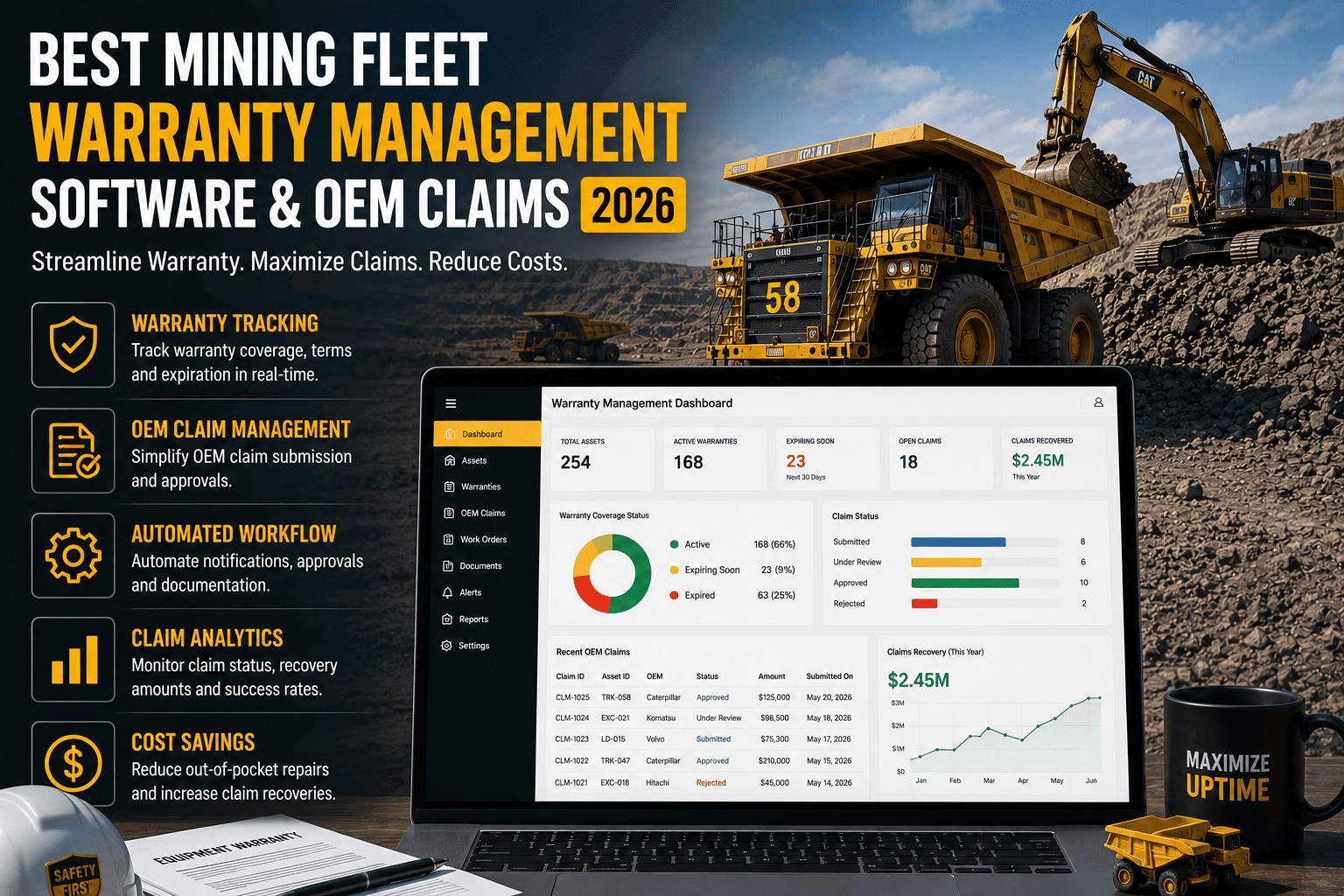
Somewhere in your fleet right now, a covered repair is probably being paid for out of pocket. Not because the part wasn't under warranty, but because nobody connected the failed component back to the manufacturer's coverage terms before the invoice got approved. Mining operations without a system tracking warranty status against every asset routinely pay for repairs that should have cost nothing, and the money walks out the door quietly, one missed claim at a time. Warranty management software exists to close that gap and put every dollar of OEM coverage back where it belongs.
Why Warranty Recovery Fails Without a System
Warranty management sounds like a paperwork problem until you see the number attached to it. Operations relying on manual tracking and spreadsheets typically recover only a small fraction of what they are actually owed, while a meaningful share of covered repairs across a fleet end up paid in full by the mine instead of the manufacturer, simply because the warranty status was never checked before the work was approved.
The Documentation Gap That Kills Claims
OEMs do not pay claims on good faith. Every submission needs service records, photographs of the failed component, diagnostic logs, and a clear fault trace showing the failure was not caused by misuse or missed maintenance. When that documentation lives scattered across paper folders, technician memory, and disconnected service tickets, claims either go in late, go in incomplete, or never go in at all.
What a Warranty Claim Actually Needs to Succeed
Manufacturers reject claims for predictable, avoidable reasons. Understanding what separates an approved claim from a denied one is the difference between treating warranty as a passive line item and treating it as recoverable budget.
Accurate Warranty Start and End Dates
Coverage windows calculated from install or delivery dates, not estimated, since a date mismatch is one of the fastest ways a legitimate claim gets disputed.
Complete Service History Tied to the Asset
Every maintenance record, inspection, and prior repair linked to the specific serial number, proving the equipment was maintained according to manufacturer requirements.
Failure Documentation at the Moment It Happens
Photographs, fault codes, and diagnostic logs captured immediately, before evidence is lost to a repair that has already started.
Submission Inside the Claim Window
Most OEMs enforce strict filing deadlines, and a claim submitted even a few days late is often denied automatically regardless of how valid it is.
Why Entitlement Checks Have to Happen Before the Repair
The most expensive mistake in warranty management is performing the repair first and checking coverage later. By the time someone notices a component was actually under warranty, the work has already been billed internally, and recovering that cost after the fact is far harder than confirming coverage before a technician ever picks up a tool.
Why Manual Tracking Always Leaks Money
Warranty leakage is not the result of carelessness. It is the structural outcome of running a multi-year, multi-OEM, multi-asset process through spreadsheets and email threads that were never built for it. Every manual handoff, a technician forgetting to log a photo, a claim deadline missed because nobody flagged it, a service record filed under the wrong asset, is a small leak. Across a full mining fleet, those small leaks add up to real money walking away every quarter.
How FleetRabbit Keeps Warranty Coverage Working For You
FleetRabbit was built so that warranty status is never something a maintenance team has to remember to check. Every asset carries its coverage terms, service history, and documentation requirements in one connected record, so a claim is ready to submit the moment a covered failure happens instead of being reconstructed weeks later from memory.
Coverage Checked Before the Wrench Touches the Machine
When a work order is created for an asset still under warranty, FleetRabbit flags it immediately, so technicians know whether to proceed under OEM coverage or whether the repair should be billed internally before a single hour of labor is logged.
Documentation Captured at the Point of Failure
Photographs, fault codes, and service notes are attached directly to the work order as the repair happens, building the exact evidence package an OEM requires instead of leaving someone to track it down after the claim window has already started closing.
Deadlines Tracked Automatically Across Every OEM
Each manufacturer's claim window and documentation requirements are tracked per asset, with reminders firing well before a deadline passes, so a legitimate claim never gets denied simply because nobody noticed the clock running out.
Stop Paying for Repairs Your OEM Already Owes You
FleetRabbit connects every asset's warranty terms, service history, and failure documentation in one place, so claims go out complete and on time instead of getting lost in the gap between a breakdown and a denied submission. Sign up for a free trial and load your fleet's warranty data today, or book a demo to see your specific OEM coverage modeled on the call.
The Financial Case for Warranty Software
Mining equipment is expensive enough that even a modest improvement in claim recovery rate translates into real money. Operations running manual warranty tracking typically recover only 15 to 22 percent of eligible claim value, which means the overwhelming majority of legitimate coverage is simply never collected. Closing even half of that gap on a fleet running multiple OEM brands adds up quickly, especially once major components like engines, transmissions, and hydraulic systems are involved.
Faster Claims Mean Faster Repairs
Beyond the dollar recovery itself, a complete claim with all documentation attached moves through OEM adjudication far faster than an incomplete one, which means equipment gets back to work sooner. The speed of approval is not a side benefit. It directly reduces the downtime cost sitting on top of the repair itself.
Frequently Asked Questions
Your OEM Coverage Is Only Worth What You Actually Claim
Every covered repair that goes unclaimed is recoverable budget walking out the door. FleetRabbit ties every asset's warranty terms, service history, and failure evidence together automatically, so the next claim goes out complete, on time, and gets paid. Get started with a free trial or talk through your specific fleet and OEM agreements with our team first.