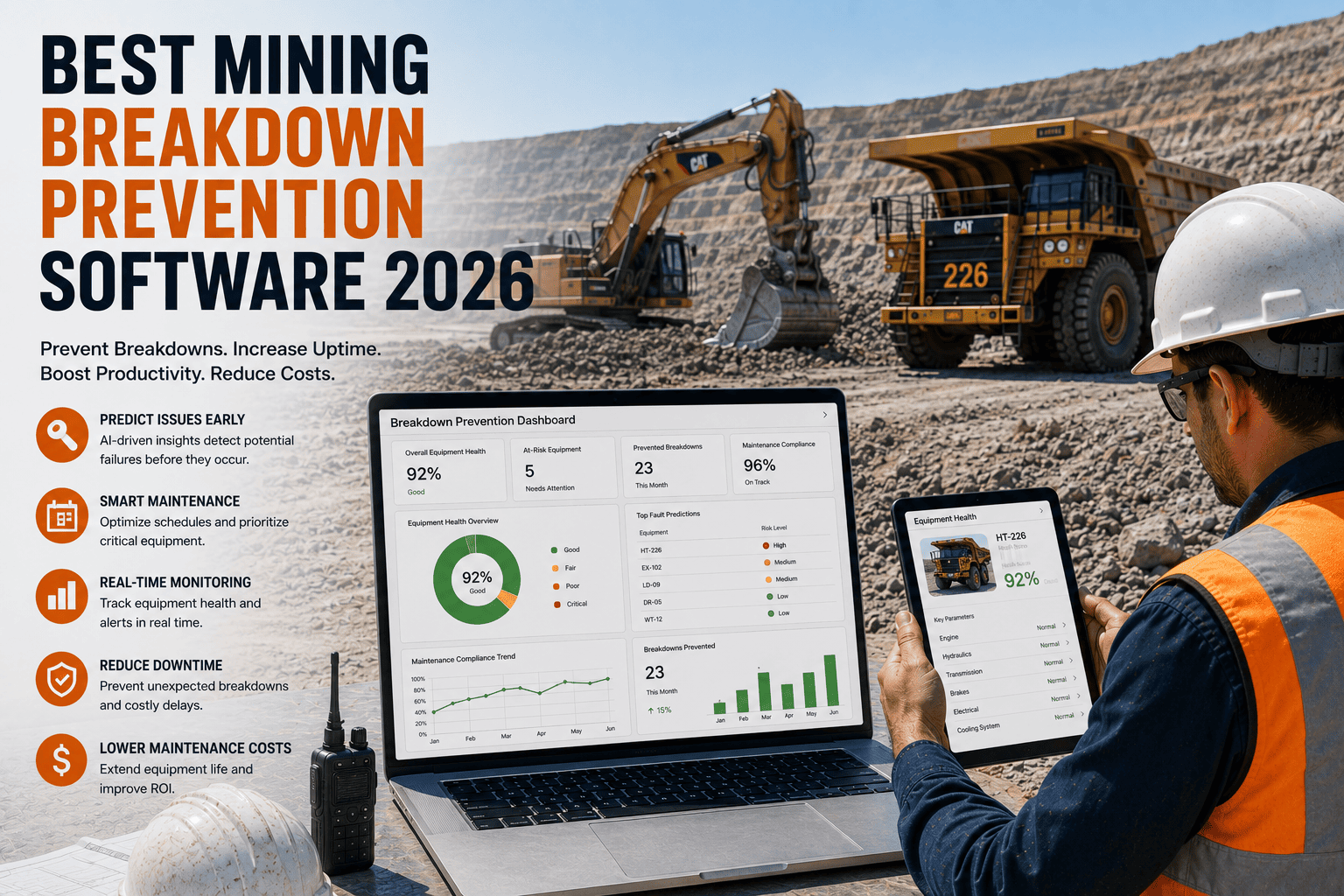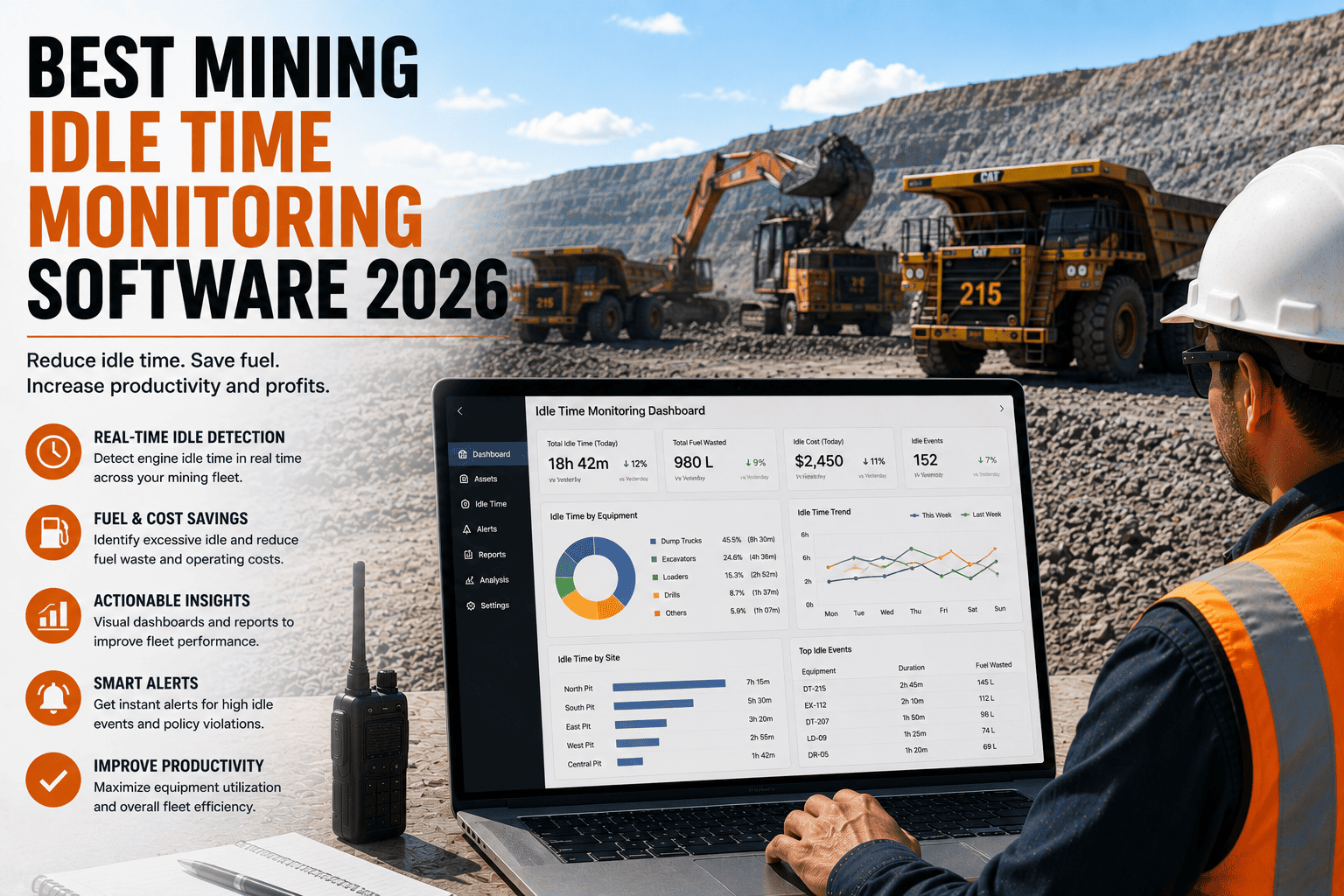
A haul truck at a northern mine site refuses to turn over at the start of a night shift. The battery tested fine three weeks earlier, but nobody tracked that it was due for a cold-weather load test again, and nobody flagged that the block heater on that specific unit had a loose connection since the last inspection. One truck down at minus thirty degrees doesn't just cost a repair bill, it can stall an entire haul cycle. Winterization software exists to catch exactly this kind of gap before the temperature drops, not after a crew is standing next to a dead machine in the dark.
Mining fleets in cold climates face a predictable set of failure modes every winter: weak batteries, thickened fluids, gelled fuel, and brittle seals. Manual winterization checklists catch these issues on paper but rarely tie them to a specific machine's due dates or trigger action automatically. The best mining fleet winterization software schedules cold-weather tasks by date and equipment type, tracks battery and fluid status per unit, and keeps inspection records tied directly to each machine's history.
Why Cold Weather Breaks Down Mining Equipment Faster Than Anything Else
Mining equipment already runs under heavy load cycles and rough terrain. Cold weather adds a second layer of stress on top of that, hitting batteries, fluids, and moving components in ways that summer operation never tests. Understanding these failure modes is the starting point for choosing software that actually addresses them, rather than a generic maintenance tool with a winter checklist bolted on.
FleetRabbit tracks battery test dates, fluid change intervals, and cold-weather inspections against every machine in your fleet, then schedules the work automatically as temperatures start to drop. Start your free trial and see your fleet's winterization status in one dashboard.
What To Look For In Mining Fleet Winterization Software
Not all maintenance software treats winterization as a distinct workflow. The strongest options build cold-weather readiness directly into scheduling, inspections, and equipment records rather than treating it as an annual reminder. Use the criteria below to evaluate any platform against the specific demands of a mining fleet operating through freezing conditions.
| Capability | Why It Matters | What To Check For |
|---|---|---|
| Battery Test Tracking | Battery failure is the most common cause of winter breakdowns across mining fleets | Voltage and load test scheduling per unit, with automatic flags for units overdue |
| Fluid Change Scheduling | Winter-grade oil, hydraulic fluid, and coolant swaps need to happen before temperatures drop | Date-based and temperature-triggered reminders tied to each machine's fluid history |
| Cold-Weather Inspection Checklists | Block heaters, hoses, seals, and fuel systems need targeted checks that differ from standard inspections | Configurable winter-specific checklist templates by equipment type |
| Equipment Readiness Dashboard | Supervisors need a fast way to see which machines are winter-ready before dispatch | Fleet-wide status view showing readiness by machine, not just individual work orders |
| Historical Failure Tracking | Machines with repeated cold-weather issues need targeted attention rather than the same generic checklist | Searchable repair history filtered by season and failure type |
Battery And Fluid Tracking Deserves Its Own Workflow
Batteries and fluids fail on different timelines than general wear items, so lumping them into a standard maintenance schedule buries the urgency. The strongest winterization software tracks battery test dates and fluid change intervals as their own category, flagging overdue units clearly instead of mixing them into a long general task list.
Automated Scheduling Beats An Annual Reminder
A single reminder each fall to "winterize the fleet" doesn't account for machines added mid-season, units that were repaired and need retesting, or regional temperature differences across multiple sites. Automated scheduling tied to each machine's own history and location adjusts as conditions change, instead of relying on one blanket date.
Why Inspection Compliance Needs A Digital Record
Winter inspection checklists only protect a fleet if completion is verified, not just assumed. A digital record that confirms each cold-weather check was actually completed, with a timestamp and technician name, gives supervisors a real answer when they ask whether a specific machine is ready for a cold shift.
Manual Winterization Versus Software-Driven Readiness
Many mining operations still run winterization off a paper checklist distributed once a year. This approach depends entirely on someone remembering to hand out the checklist, someone completing every line, and someone else reviewing it before equipment goes back into rotation. Software-driven readiness removes that dependency by tying every task directly to the equipment record and flagging what's overdue automatically.
| Factor | Manual Paper Checklist | Software-Driven Workflow |
|---|---|---|
| Scheduling | One annual reminder for the whole fleet | Automated per-machine scheduling based on history and conditions |
| Visibility | Status known only to whoever holds the paperwork | Fleet-wide readiness dashboard visible to every supervisor |
| Follow-Through | Depends on someone remembering to check completed forms | Automatic flags for overdue battery tests and fluid changes |
| Historical Insight | Difficult to compare season over season | Searchable history reveals which machines repeatedly fail in cold weather |
Rolling Out Winterization Software Before The Season Starts
The best time to implement winterization software is well before the first cold snap, not during it. A rollout typically starts by loading each machine's maintenance and repair history so the system can flag overdue battery tests and fluid changes immediately. Next comes configuring cold-weather inspection templates for each equipment type in the fleet, since a haul truck and a grader need different checks. Once schedules are active, supervisors get a fleet-wide readiness view they can check every morning before dispatch, turning what used to be a seasonal scramble into routine daily visibility.
Getting Ahead Of The First Freeze
Sites that start their software-driven winterization process while temperatures are still mild have time to work through a backlog of overdue battery tests and fluid changes without the added pressure of freezing conditions already underway. Waiting until the first hard freeze to start means catching up under the worst possible circumstances.
FleetRabbit gives every supervisor a single view of which machines are winter-ready and which need attention, built from real battery, fluid, and inspection data instead of a paper checklist. Book a demo to see how quickly your fleet can be ready for the season.
A dead battery at minus thirty degrees is rarely a surprise, it's a missed test date that nobody caught in time. FleetRabbit schedules battery checks, fluid changes, and cold-weather inspections against every machine in your mining fleet, so readiness is a fact you can see, not a hope you're carrying into winter.