Fuel is the single largest controllable cost on a mine site, typically consuming 30 to 40 percent of total fleet operating budget, and yet most operations still reconcile it once a month with a spreadsheet and a stack of delivery tickets. By the time a discrepancy shows up in that reconciliation, the fuel is already gone, the pattern has already repeated a dozen times, and nobody can say exactly which shift, which machine, or which route caused it. Industry estimates put 6 to 15 percent of fleet fuel budgets lost to theft, fraud, excessive idling, and route inefficiency before a single productive mile is driven. Mining fuel management software exists to catch that loss in real time, not at month-end.
The best mining fuel management software combines idle monitoring, GPS-verified fuel transactions, and route and speed analytics into one live dashboard, catching theft, waste, and inefficiency as it happens rather than at the end of the month. Most fleets implementing a modern fuel platform report 15 to 25 percent reductions in total fuel cost and reach positive return on investment within 90 days.
Where Mining Fuel Budgets Actually Leak
Fuel loss on a mine site rarely happens in one dramatic event. It happens in dozens of small, repeated patterns that add up quietly across a fleet running around the clock.
Idling: The Silent Budget Killer
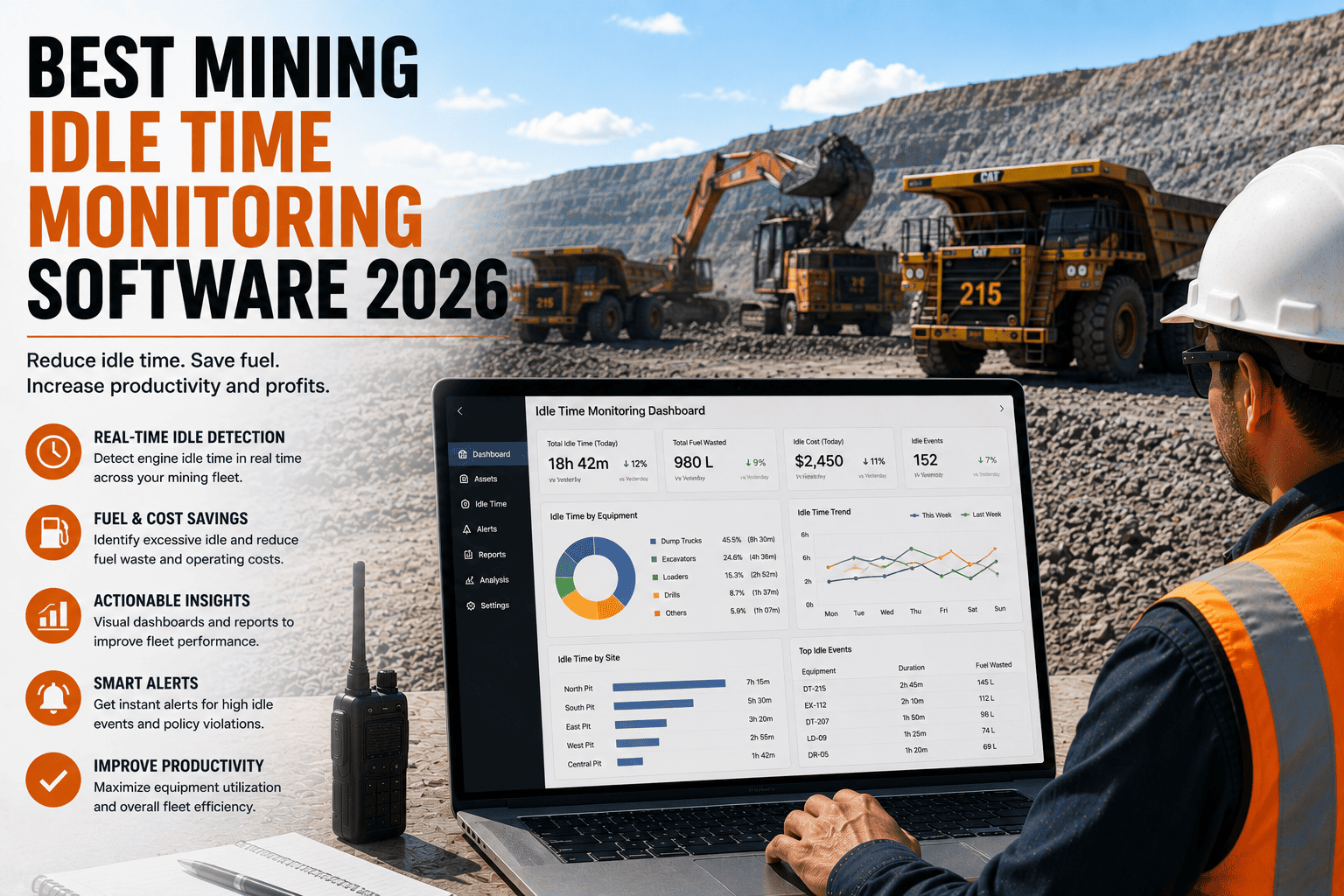
On equipment-heavy fleets, idling alone can consume 15 to 25 percent of total fuel usage, burning fuel and adding engine hours without moving a single tonne of material. Heavy equipment typically idles at 1 to 2 gallons an hour, and across a fleet running multi-hour idle windows every shift, that adds up to a substantial line item that never shows up as a single obvious cost.
Theft and Unverified Deliveries
Fuel theft, siphoning, and short deliveries are among the hardest losses to catch with manual dip-stick checks and end-of-month reconciliation, because by the time a discrepancy appears, the fuel is already gone and the pattern has already repeated. Unverified deliveries against bills of lading compound this further, since a short delivery looks identical to normal consumption unless tank readings are checked in real time.
Inefficient Routes and Speed
Haul routes that ignore terrain, traffic, or grade variation burn more fuel per tonne moved than necessary, and aggressive speed or acceleration patterns compound the loss further. These inefficiencies rarely get flagged because nobody is comparing route-by-route or operator-by-operator fuel performance in real time.
FleetRabbit monitors idle time, GPS-verifies every fuel transaction, and flags consumption anomalies in real time, so waste gets caught the same shift it happens instead of at month-end reconciliation.
What to Look for in Mining Fuel Management Software
Generic fuel card reporting was not built for the scale or terrain of a mine site. The right platform connects consumption data to location, engine hours, and operator behavior in one continuous stream.
| Capability | What It Catches | Why It Matters |
|---|---|---|
| Real-Time Idle Monitoring | Excessive idle time by machine, driver, and location | Turns the largest hidden fuel cost into a visible, coachable metric |
| GPS-Verified Transactions | Fuel purchases that don't match the vehicle's actual location | Catches card fraud and short deliveries within seconds, not weeks |
| Tank Level Sensors | Overnight fuel drops without a matching increase in engine hours | Flags siphoning the moment it happens instead of at the next fill |
| Route and Speed Analytics | Inefficient haul routes and aggressive driving patterns | Reduces fuel burned per tonne moved without cutting production |
| Consumption Trend Alerts | Gallons-per-hour jumps signaling mechanical issues or waste | Separates fuel waste from developing maintenance problems early |
Real-Time Idle Monitoring by Machine and Operator
Tracking idle time per machine, per shift, and per operator turns an invisible cost into a simple coaching conversation, and gives supervisors a clear before-and-after number to measure improvement against.
GPS-Verified Fuel Transactions
Matching every fuel transaction against the vehicle's GPS location and odometer reading in real time means a purchase recorded miles from where the machine actually was gets flagged immediately, not discovered after the invoice is already paid.
Route and Speed Optimization
Comparing fuel burned per tonne across similar routes and machines quickly surfaces which haul patterns, grades, or operator habits are driving cost higher than the rest of the fleet, without requiring a single change to production targets.
What Real Fuel Savings Actually Look Like
Once loss becomes visible, the improvement curve tends to follow a consistent pattern across mining fleets of different sizes.
| Fuel Loss Source | Before Real-Time Monitoring | After Real-Time Monitoring |
|---|---|---|
| Excessive Idling | Untracked, up to 15 to 25% of total consumption | Coached down through per-operator visibility |
| Theft and Fraud | Discovered at month-end reconciliation, if at all | Flagged within seconds via GPS-transaction matching |
| Overall Fuel Cost | 30 to 40% of total operating budget | Reduced 15 to 25% with sustained monitoring |
The gap between those two columns is not a hypothetical, it is the difference between a fleet that discovers fuel loss after it has already happened and one that stops it in progress. If you want to see exactly where your own fleet's fuel is leaking, you can book a free demo with FleetRabbit and review a live consumption breakdown for your equipment.
FleetRabbit connects idle data, GPS-verified transactions, and route analytics into one dashboard, so your fuel budget stops leaking silently across shifts, sites, and operators.
Building a Fuel Discipline Program That Sticks
Software alone surfaces the data. Turning that data into savings requires a consistent operational habit built around it.
Set a Fleet-Wide Idle Benchmark
Establish a maximum acceptable idle percentage per machine class and review performance against it weekly, so outliers get coached before the habit becomes culture across a shift.
Reconcile Fuel Daily, Not Monthly
Waiting for a monthly reconciliation means a full month of undetected loss before anyone notices a pattern. Daily review of flagged transactions and consumption anomalies catches problems while they are still small.
Every gallon burned on your mine site tells a story, whether it is a machine running efficiently, an operator idling too long, or a transaction that never should have been approved. The only question is whether your team can read that story in real time or has to reconstruct it weeks later from a stack of receipts. Fleets that close that gap turn their largest expense into their clearest opportunity.
FleetRabbit gives your team real-time idle monitoring, GPS-verified fuel transactions, and route analytics across your entire mining fleet. Start free with no credit card required, or see your own fuel data live.