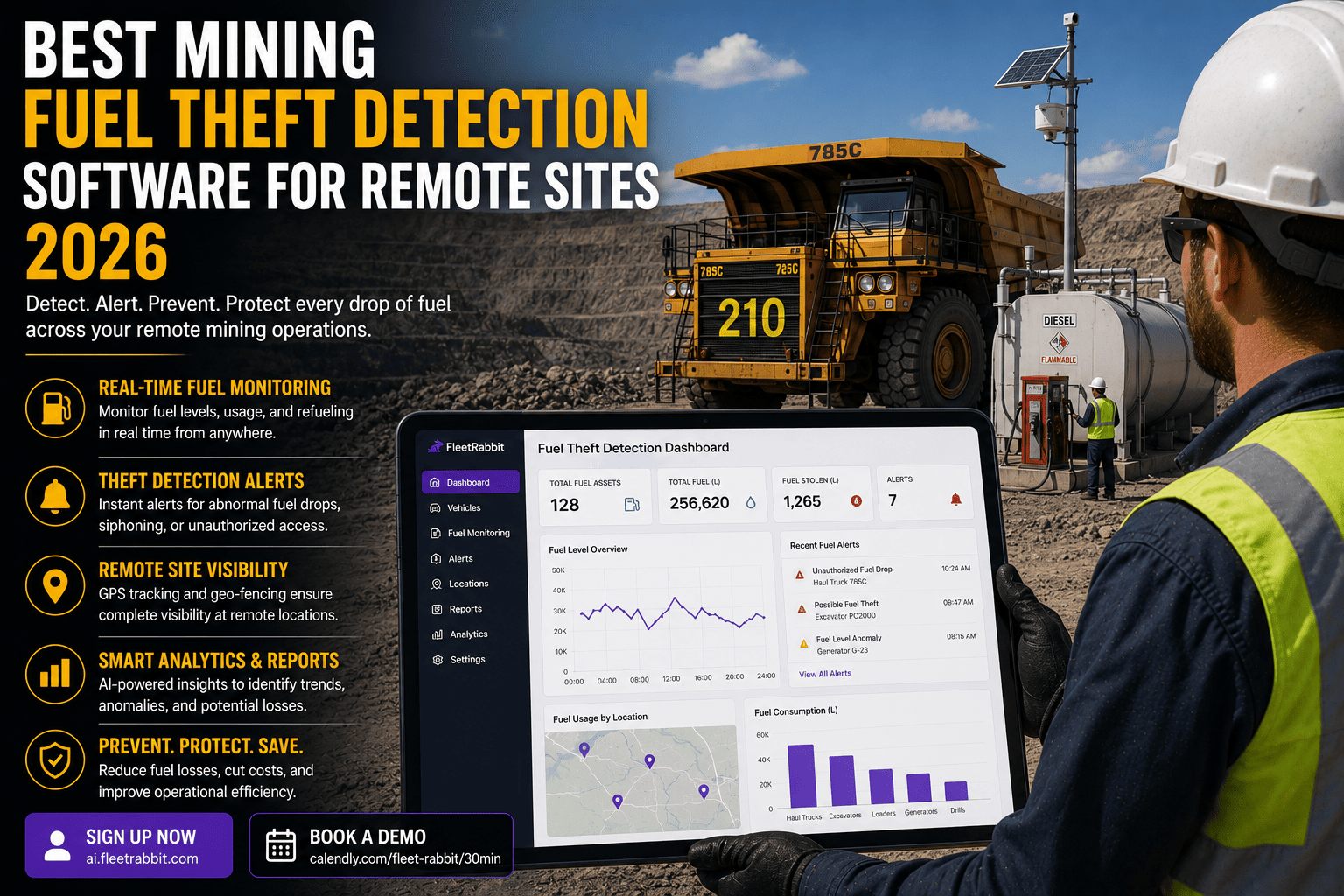
A single haul truck or generator running unsupervised for a 12-hour shift in a remote pit is exactly the kind of target fuel thieves look for. Large storage tanks, isolated equipment, and manual paper logs mean a mine can lose thousands of liters before anyone notices the numbers do not add up. Mining fuel theft detection software closes that gap by watching every tank level, every transaction, and every unusual drop in real time, so the loss gets caught in minutes instead of at month-end reconciliation. Sign up for FleetRabbit to put live fuel visibility over your entire remote fleet today.
Remote mining equipment loses fuel to siphoning, meter fraud, and phantom refueling entries at rates that manual logs almost never catch until the monthly reconciliation. Sites deploying real-time fuel theft detection typically cut fuel loss by 25 to 85 percent within the first few months, with some operations recovering more than 8,000 dollars a month in previously invisible losses.
Where Mining Fuel Actually Disappears
Fuel loss on a mine site rarely happens in one obvious place. It leaks out through several small, hard-to-see gaps that add up fast across a large equipment fleet spread over remote terrain.
How Fuel Theft Detection Software Catches It in Real Time
Modern detection systems replace end-of-month guesswork with continuous, sensor-driven visibility across every tank and every transaction on site.
Continuous Tank Level Monitoring
Capacitive or ultrasonic sensors installed in each tank stream fuel level data constantly. A sudden drop that does not match engine run-time or a scheduled dispensing event triggers an alert within minutes, even while the equipment is actively operating.
Transaction and Refill Verification
Every refueling event is matched against the actual increase in tank level. If a logged top-up does not correspond to a real fuel increase, the system flags the discrepancy automatically instead of relying on a driver's paper entry.
GPS and Geofence Cross-Checks
Fuel transactions are matched against the vehicle's actual GPS location at the time of the claimed fill. A transaction logged for a truck that was nowhere near the bowser at that moment is flagged as a potential fraud instantly.
Built For Sites With Poor Connectivity
Remote pits often sit in cellular dead zones. Store-and-forward hardware keeps recording tank and transaction data locally, then syncs automatically the moment signal returns, so there are no blind spots even in the most isolated parts of a site.
| Detection Method | What It Monitors | Theft Pattern Caught | Typical Response Time |
|---|---|---|---|
| Real-Time Level Tracking | Continuous tank level via ultrasonic or capacitive sensors | Siphoning, sudden drains, unauthorized draining during operation | Within minutes of the drop |
| Refill Verification | Actual fuel increase versus logged refueling amount | Phantom entries, under-delivery from bowsers | Immediately at time of entry |
| GPS Transaction Matching | Vehicle location against fuel purchase or dispensing record | Card fraud, off-site diversion, unauthorized dispensing | Instant flag on mismatch |
| Idle and After-Hours Monitoring | Engine run-time against scheduled work hours | Unauthorized use, unnecessary idle burn overnight | Same-shift alerting |
FleetRabbit tracks tank levels, verifies every refueling event, and cross-checks transactions against GPS location across your entire fleet, flagging suspicious activity the moment it happens instead of at month-end.
What To Look For Before You Choose A Platform
Fuel theft detection claims are common in fleet software marketing, but only a handful of capabilities actually stop theft rather than just reporting it after the fact.
Site-Wide Visibility From One Dashboard
A mine running multiple pits, mobile bowsers, and stationary generators needs one centralized view. Switching between separate systems for tanks, transactions, and vehicle tracking creates the exact blind spots thieves exploit.
Alerting That Reaches The Right Person Instantly
A theft alert sitting unread in a dashboard prevents nothing. The system should push notifications by SMS, email, or in-app alert the moment an anomaly is detected, so someone can respond within minutes rather than discovering the loss at reconciliation.
Consumption Analytics Beyond Just Theft
The best platforms also compare fuel usage across excavators, dumpers, and generators to surface inefficiency, not just theft, giving operations teams a complete picture of where fuel dollars are actually going.
Book a demo through FleetRabbit's scheduling page to see exactly how these checks run against your own fleet before you commit to a platform.
Calculating What Fuel Theft Is Costing Your Site Right Now
Start by comparing fuel purchased against fuel actually consumed based on engine hours and manufacturer burn rates for each asset class. Most sites running on manual logs discover a 10 to 20 percent gap between the two figures once they connect real sensor data for the first time. For a mid-size mining fleet spending 40,000 dollars a month on diesel, even a 15 percent unexplained gap represents 6,000 dollars in monthly loss, or roughly 72,000 dollars a year sitting outside anyone's visibility. Real-time detection systems typically close most of that gap within the first 60 to 90 days of deployment.
Key Takeaways On Mining Fuel Theft Detection
Remote mining equipment sitting unsupervised for hours at a time is exactly the environment fuel theft thrives in, and paper logs almost never catch it until the numbers stop matching at month-end. Real-time tank monitoring, refill verification, and GPS transaction matching turn that blind spot into a monitored, alertable event the moment it happens.
Sites that deploy detection software typically cut fuel loss by 25 to 85 percent within months and recover thousands of dollars a month in previously invisible losses, often paying back the platform cost within the first billing cycle. The fuel is already there. What changes is whether your site can see where it is actually going.
FleetRabbit gives your remote mining sites real-time visibility into every tank, every transaction, and every truck, so theft gets caught in minutes instead of at reconciliation. See where your fuel is actually going before another shift runs unmonitored.