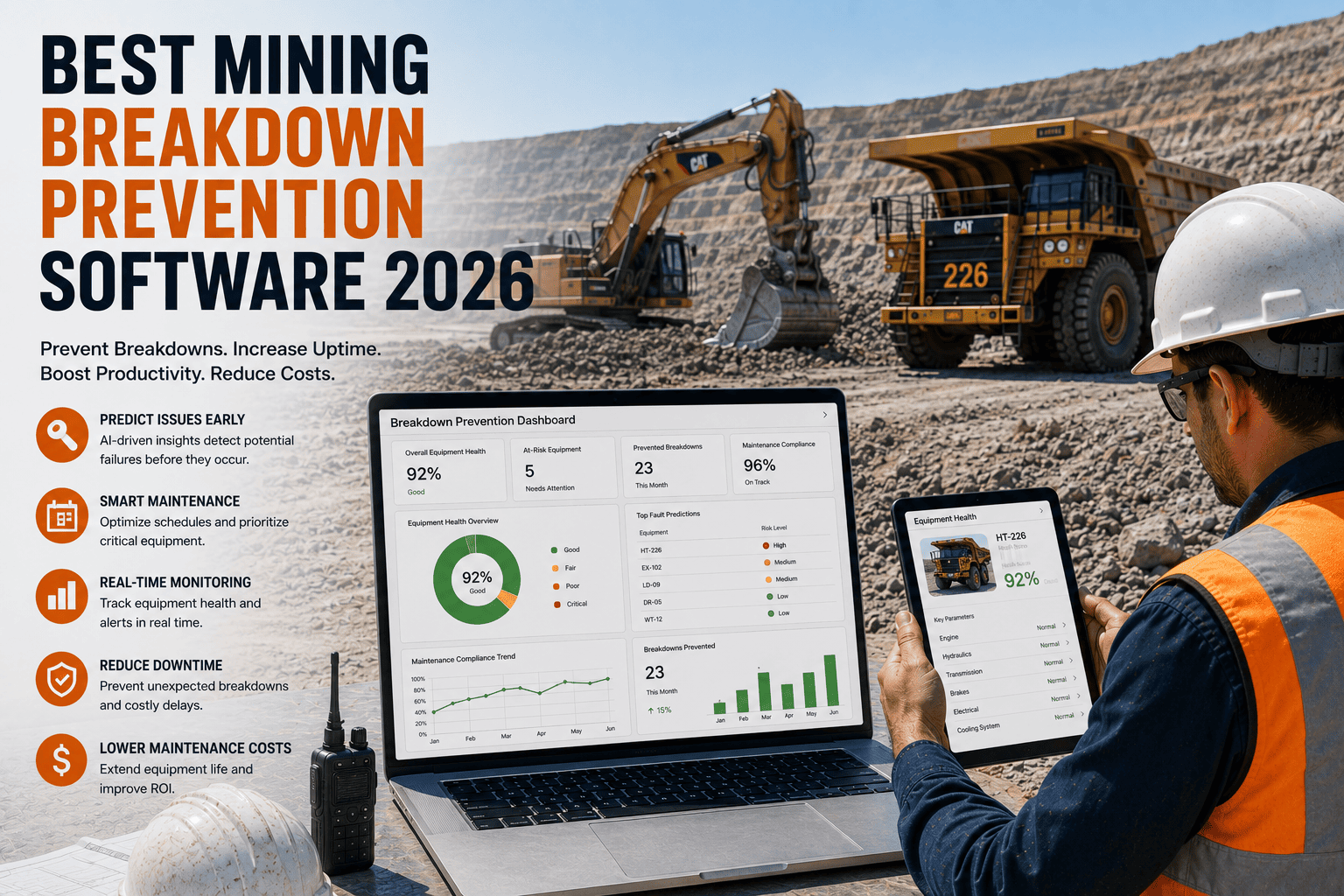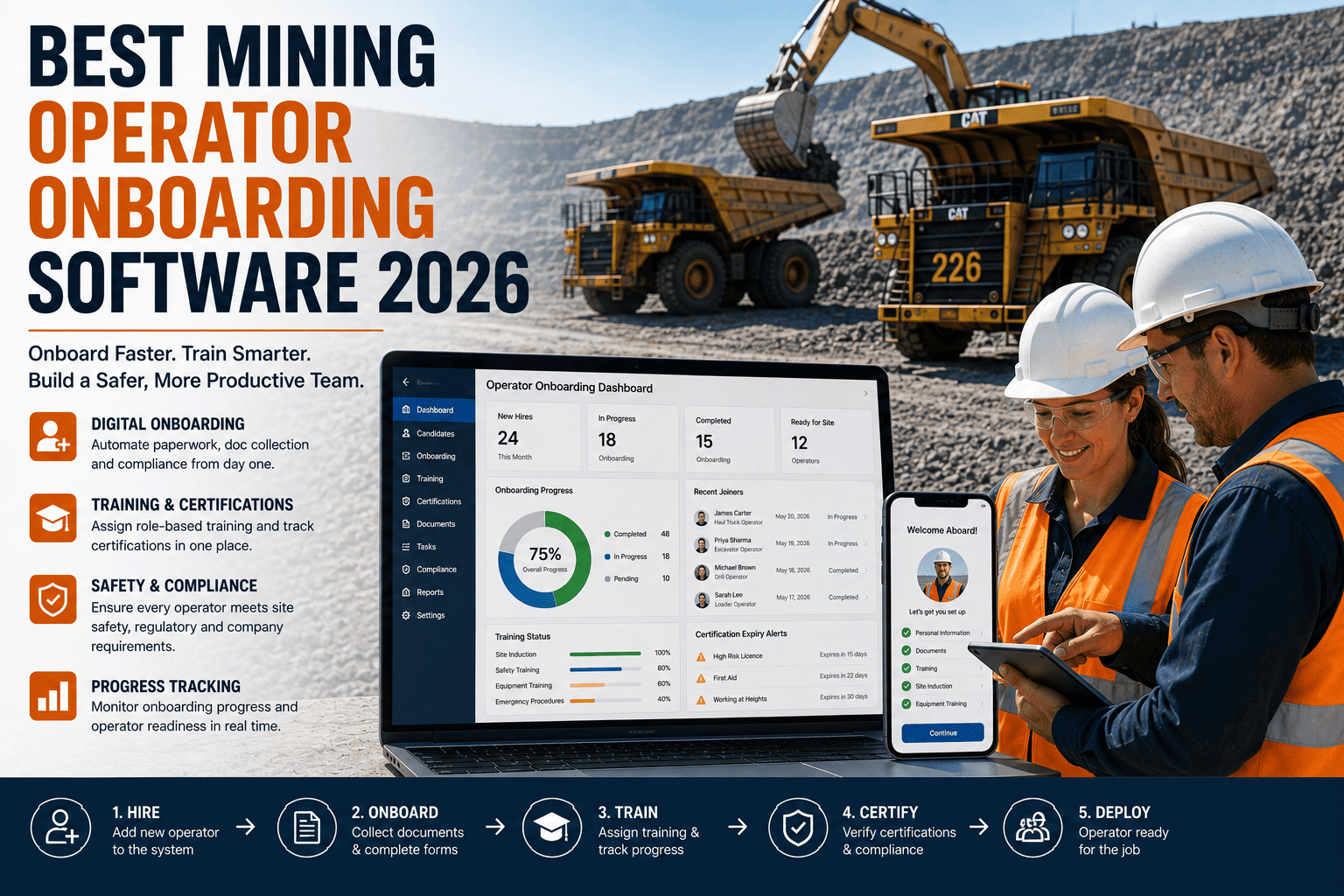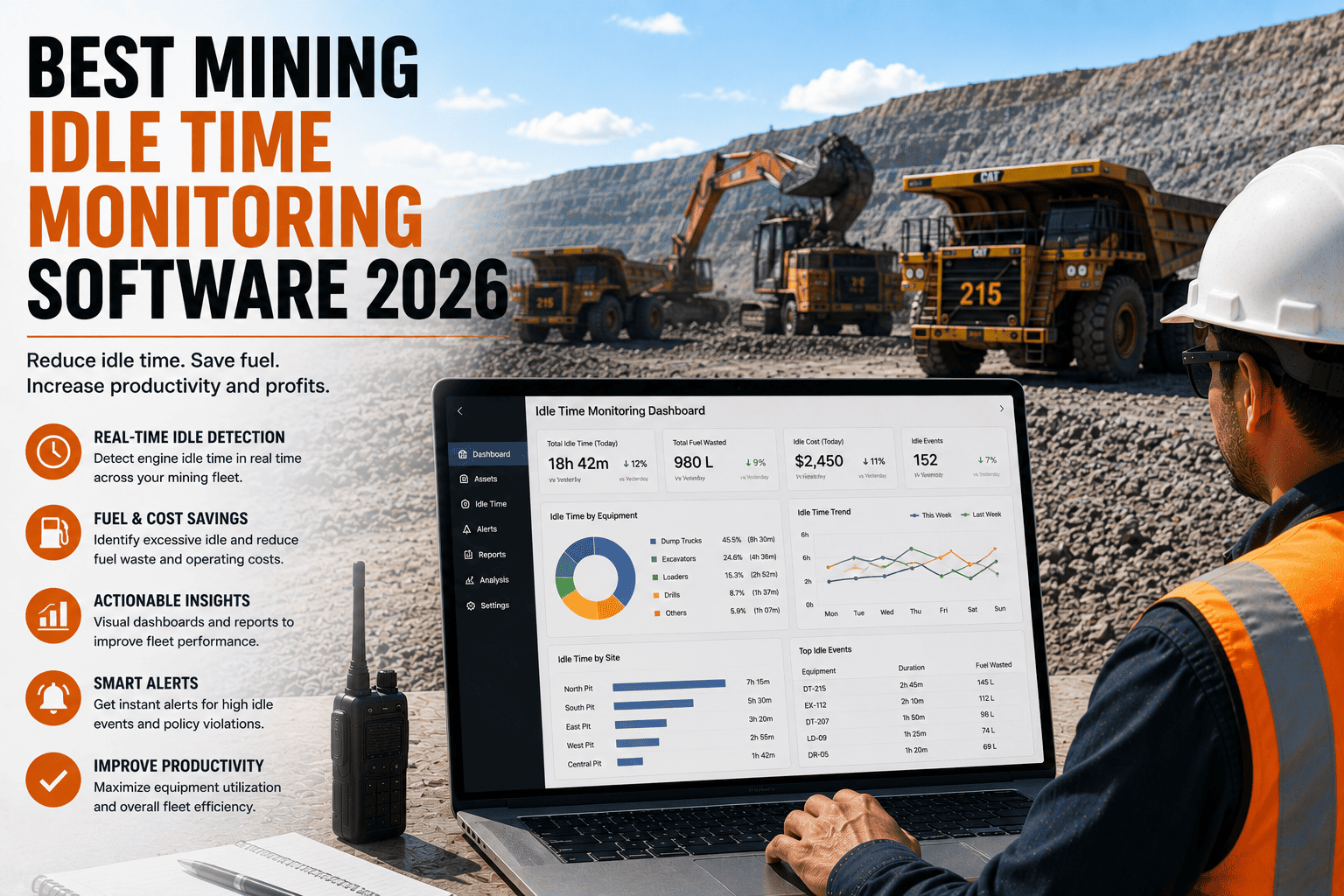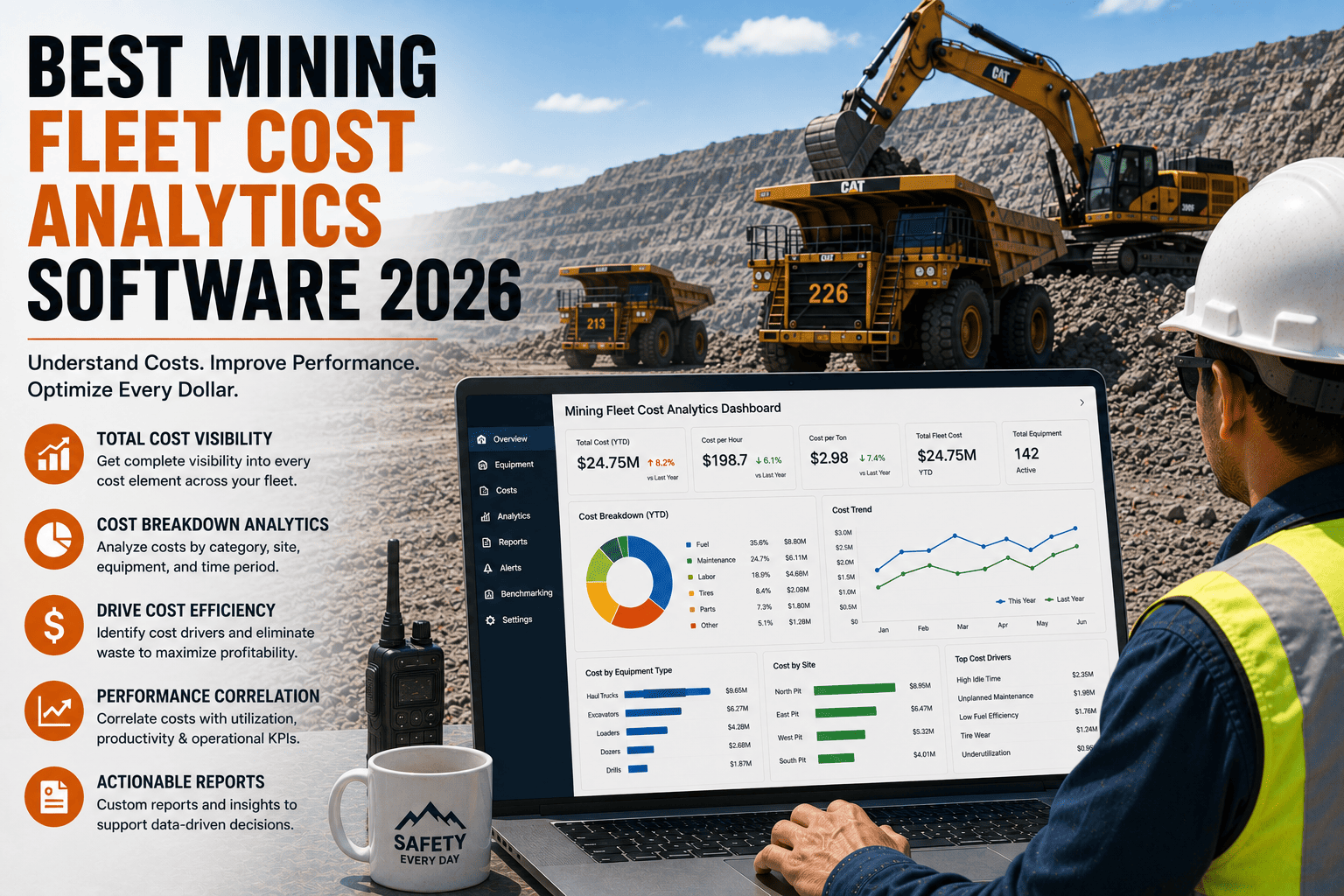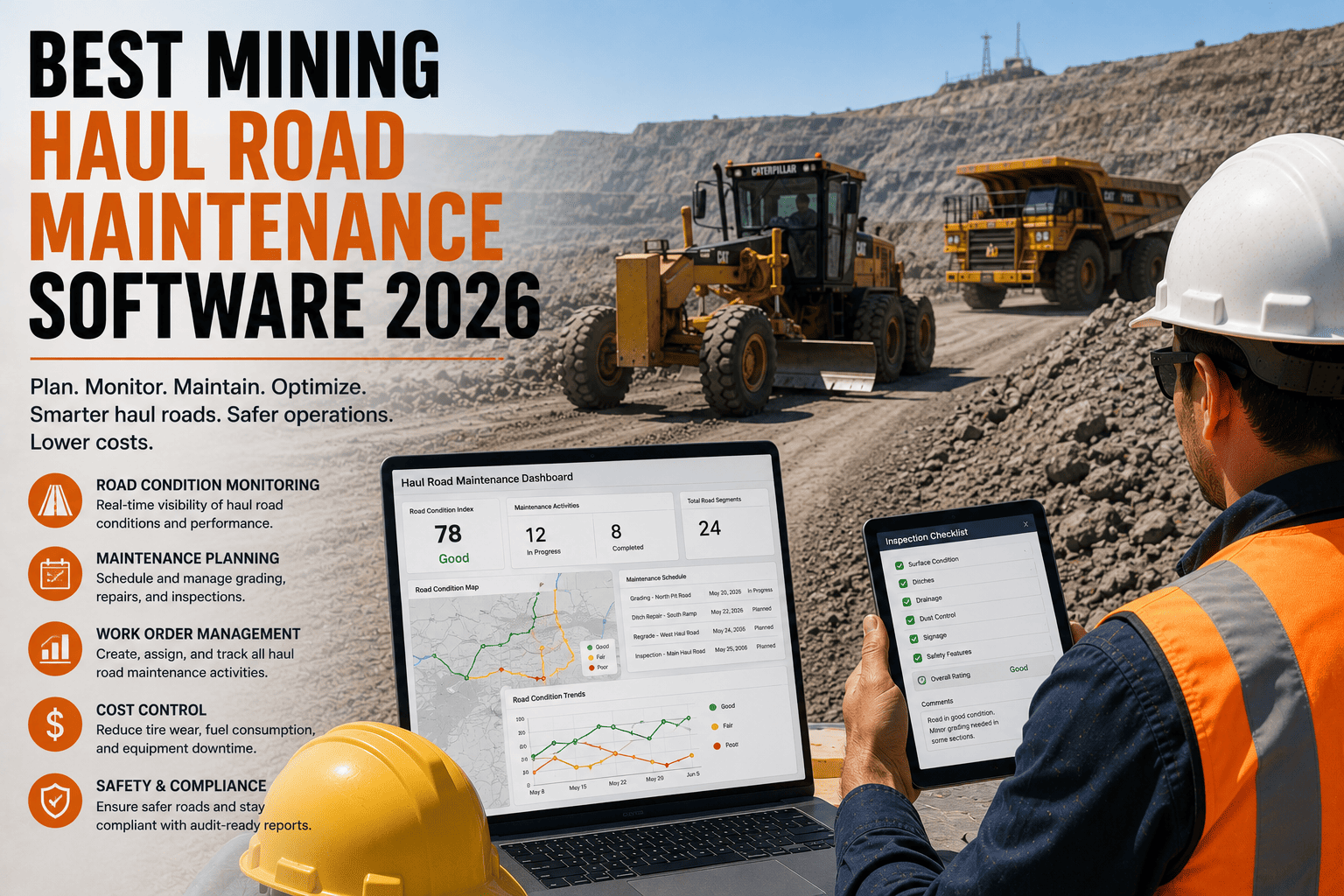
Haul roads carry every dollar a mine makes. When they wear down, tires split open early, trucks slow their cycles, fuel burn climbs, and graders end up firefighting problems instead of preventing them. Most operations still manage road condition on gut feel and paper logs, which means the first sign of a bad section is usually a blown tire or a truck limping back to the shop. Mining haul road maintenance software changes that by turning road condition, tire stress, and grading activity into data you can act on before it becomes a six-figure repair bill.
The best mining haul road maintenance software combines real-time road condition monitoring, tire stress tracking, and grader dispatch scheduling in one platform. Operations using structured haul road management typically cut tire-related costs by 20 to 30 percent, reduce cycle times by up to 15 percent, and lower fuel consumption by 7 to 13 percent through better rolling resistance control.
Why Haul Road Condition Quietly Controls Mining Costs
Haulage often accounts for close to half of total operating cost on a surface mine, yet the road itself rarely gets the same attention as the trucks running on it. A road surface that develops ruts, loose rock, or slurry after rain forces drivers to slow down, shift gears more often, and put extra stress on frames, suspension, and tires with every cycle. That stress doesn't show up as a single dramatic failure most of the time. It shows up as tires that wear out a year early, fuel bills that creep upward, and haul trucks that need premature drivetrain work.
Mining haul road maintenance software closes the gap between what's happening on the road and what maintenance and grading teams actually know. Instead of waiting for a driver complaint or a tire failure report, the platform pulls frame stress, strut pressure, and location data straight from the trucks, flags the specific stretches of road causing damage, and routes grading crews to those exact spots. Teams that want to see this kind of targeted road intelligence in action can book a demo and walk through it on their own site data.
The Hidden Chain Reaction of a Bad Road Section
A single neglected loading pocket or haul ramp doesn't stay isolated. Trucks slow down to protect tires, cycle times stretch, dispatchers reshuffle routes, and fuel consumption rises across the fleet to compensate for lost throughput. What started as one rough patch of road ends up touching productivity, maintenance budgets, and safety all at once.
Why Manual Road Inspections Fall Behind
Walking or driving inspections can only cover a fraction of a haul network in a shift, and conditions change fast with weather, traffic volume, and blasting activity. By the time a manual inspection catches a problem, trucks may have already been running over it for days, absorbing damage the whole time.
FleetRabbit pulls stress and condition signals straight from your haul trucks and shows exactly which sections need attention first. Fleet managers use it to cut reactive grading, protect tire life, and keep trucks moving at full speed. Try it with your own fleet data.
What Haul Road Maintenance Software Actually Tracks
The strongest platforms don't just log grader hours. They connect road condition to the equipment and cost data that actually move a mine's bottom line, so managers can see cause and effect instead of guessing at it.
| Tracked Element | What It Measures | Why It Matters | Typical Impact When Managed |
|---|---|---|---|
| Tire Stress Zones | Frame rack and strut pressure data linked to GPS position | Pinpoints the exact 100-meter sections causing tire and structural damage | 20 to 30 percent reduction in premature tire replacement |
| Rolling Resistance | Grade, surface roughness, and moisture affecting truck effort | Directly drives fuel burn and cycle time on every haul route | Up to 13 percent lower fuel consumption |
| Grader Dispatch | Real-time prioritization of which sections need crews first | Replaces reactive, complaint-driven grading with targeted intervention | Up to 70 percent fewer unnecessary grading passes |
| Loading Pocket Condition | Spillage, loose rock, and surface debris near shovels and crushers | These zones cause the highest concentration of sudden tire cuts | Fewer sudden tire losses worth tens of thousands each |
| Cycle Time Trends | Route-by-route truck speed and travel time history | Flags degrading sections before drivers start reporting problems | Up to 15 percent faster average cycle times |
How the Right Platform Fits Different Mining Operations
Haul road demands look different depending on the type of operation, and the right maintenance software should flex to match.
Open Pit and Surface Mines
Large haul networks with long ramps and multiple pits benefit most from route-level rolling resistance tracking, since even a small grade change across a long haul adds up to significant fuel and cycle time cost.
Quarries and Aggregate Sites
Shorter, high-frequency routes mean loading pocket condition and spot maintenance near crushers matter more than long-distance grading, since trucks pass the same tight zones dozens of times a day.
Contract and Multi-Site Operators
Fleets managing several sites need cloud-based visibility so head office and site teams can compare road condition, tire spend, and grading efficiency across locations from one dashboard.
What to Look for in Mining Haul Road Maintenance Software
Not every platform on the market goes beyond basic grading logs. A few capabilities separate the tools that genuinely reduce cost from the ones that just record activity.
Real-Time Condition Alerts
The software should flag deteriorating sections as data comes in, not after a weekly report is compiled, so grading crews can respond the same shift.
Integration With Existing Telematics
Look for platforms that pull directly from your current haul truck telematics and OEM systems rather than requiring separate hardware, which keeps rollout fast and data consistent.
Offline Reliability in Remote Pits
Signal is unreliable in most pit locations, so the platform needs to work offline and sync automatically once crews are back in range.
Clear Cost Reporting
Road condition data is only useful if it ties back to tire spend, fuel cost, and downtime in a report a site manager can act on quickly. Fleet teams evaluating options can start a free trial to see how this reporting looks against their own numbers.
FleetRabbit works offline in remote locations, integrates with your existing telematics, and turns raw stress data into a prioritized grading plan. See how much of your tire and fuel spend is tied to a handful of road sections.
Measuring the Return on Haul Road Software
ROI on haul road maintenance software is usually easier to prove than most mining technology investments, because tire cost and cycle time are already tracked closely at most sites. Start by pulling the current cost of premature tire replacement and comparing it against the 20 to 30 percent reduction operations typically see once road stress zones are actively managed. On a fleet running a handful of ultra-class trucks, avoiding just two or three early tire replacements a year can cover the cost of the platform many times over.
Fuel and cycle time gains add a second layer of return. Even a one to two percentage point improvement in rolling resistance across a haul network translates into meaningfully lower fuel spend and faster load cycles, which compounds across every truck and every shift. Combined with fewer unplanned grading passes, most sites see a positive return within the first several months of use.
Frequently Asked Questions
FleetRabbit shows you exactly which parts of your haul network are costing you tires, fuel, and speed, and helps your team fix them before the next failure. Start your free trial or book a demo to see it running against your own site data.