A single haul truck tire can run 30,000 to 50,000 dollars or more, and a large rigid dump truck rides on six of them. Tires have historically accounted for 10 to 30 percent of total operating costs at an open-pit mine, ranking second only to fuel, and tire maintenance costs alone commonly exceed engine maintenance costs on the same truck. With numbers like that, tire management stops being a maintenance afterthought and becomes one of the largest controllable line items on a mine's entire operating budget.
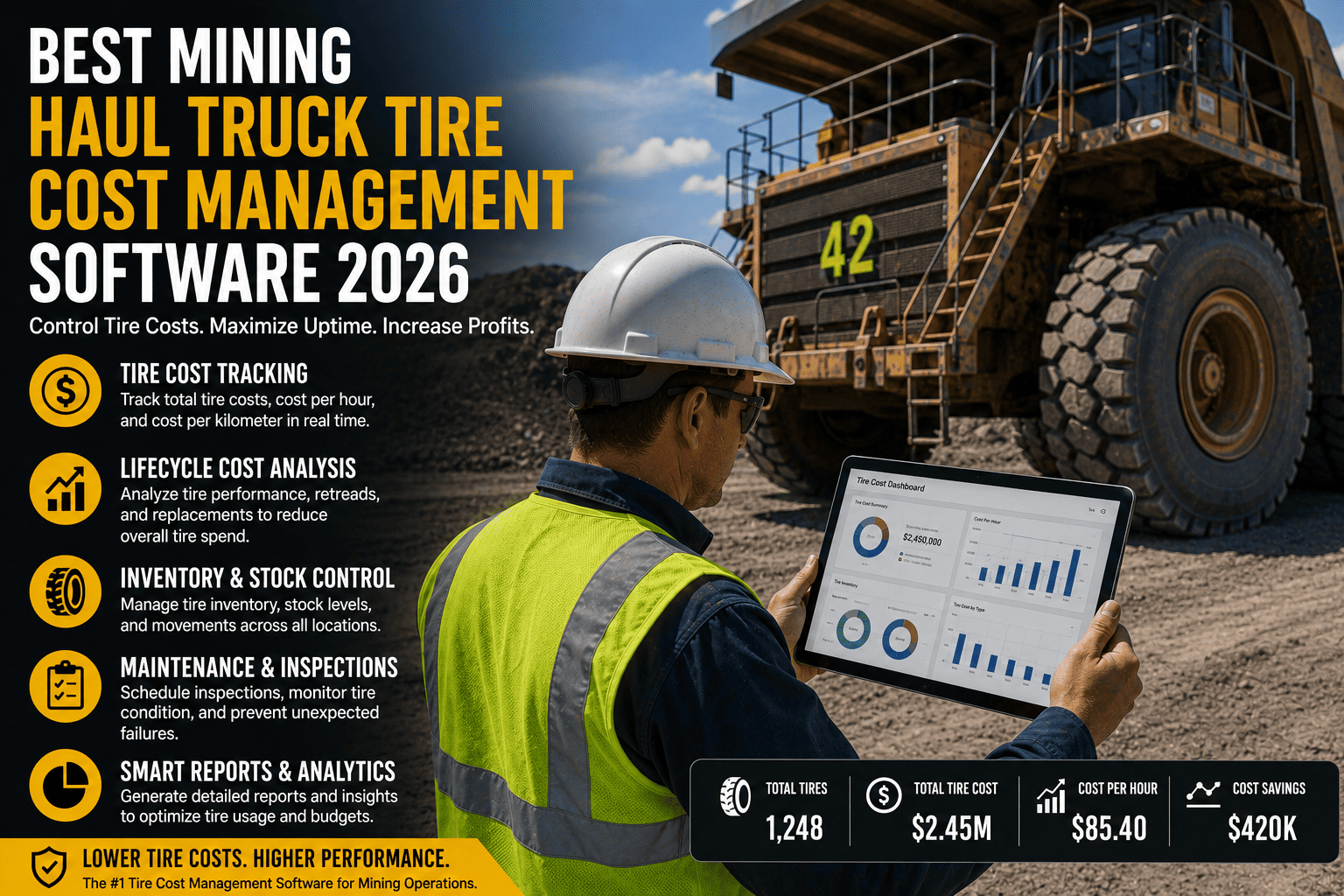
Effective haul truck tire management software tracks each tire individually from mount to removal, monitors pressure and temperature in real time, calculates cost per hour by tire and by route, and flags TKPH violations before heat damage destroys a tire early. Mines using this kind of tracking commonly extend tire life significantly and avoid the six-figure cost of a single catastrophic tire failure on a large haul truck.
Why Tires Are a Bigger Cost Problem Than Most Budgets Show
Total tire cost for a haul truck over its operating life has been estimated as comparable to the truck's own capital cost. That figure rarely shows up clearly on a monthly maintenance report, because tire spend gets buried across purchase, mounting labor, downtime, and premature replacements that each look like a separate, unrelated expense. Once you add them up per truck, tires are frequently the single largest controllable operating cost after fuel — and unlike fuel prices, tire life is something your own operating decisions directly control.
The TKPH Problem Most Fleets Don't Track
TKPH, or ton-kilometers per hour, measures the load-speed-time factor that determines whether a tire is running within its temperature limits. Every tire has a maximum TKPH rating, and running above it builds heat inside the tire that leads to early failure, often with no warning until the tire is already destroyed. Most fleets choose a single tire spec for the whole haul route mix to keep logistics simple, which means the tire is chosen for the worst-case route and ends up overworked and prematurely worn everywhere else. Without route-level TKPH tracking, that mismatch is invisible until the tire budget reveals it months later.
Track Cost, Pressure, and TKPH by Tire and by Route
FleetRabbit tracks every tire's cost per hour, pressure, temperature, and TKPH exposure against its route assignment, flagging heat risk before it turns into a six-figure failure. You can start a free trial to see your tire cost breakdown by truck and route, or book a demo to walk through your fleet's tire program with our team.
The Tire Lifecycle a Good System Should Track
Every stage generates data worth capturing. A tire tracked from its mount date through every rotation and pressure check builds a cost-per-hour figure that's actually accurate, instead of an estimate averaged across the whole fleet. Retreading alone can save 60 percent or more on tire operating cost when a tire's casing condition qualifies, but that decision is only possible if the software has been tracking that specific tire's full history to know it's a candidate.
Core Features That Separate Real Tire Cost Software From a Spreadsheet
Why Route-Level Data Changes the Buying Decision
Once cost per hour is visible by route, it becomes clear that a single tire spec chosen for the worst-case haul route is quietly overpaying on every shorter, gentler route in the mix. Fleets that match tire types to specific routes, rather than standardizing on one spec for logistics convenience, have documented tire consumption reductions in the high single digits with proportional cost savings, without changing a single truck.
Haul Road Conditions Matter As Much As Tire Spec
Grade, curves, and underfoot rutting all accelerate wear independent of tire choice. A rutted haul road stresses sidewalls and casings regardless of how well-matched the tire is to the route, which is why the best tire programs pair software tracking with basic haul road maintenance rather than treating tire cost as a tire-only problem.
What Proactive Tire Tracking Is Actually Worth
A large haul truck can represent 1,200 to 1,500 dollars or more in operating value per hour. A single tire failure that takes that truck out of service for even a few hours, on top of the tire replacement cost itself, adds up fast across a fleet running dozens of trucks. Mines using real-time pressure and temperature monitoring have caught failing tires early enough to save the tire and avoid extended downtime entirely, turning what would have been a costly incident into a routine swap.
The math holds up at scale: tire tracking technology typically pays for itself well within its first year once it prevents even one avoidable catastrophic failure, and every additional percentage point of extended tire life compounds across a fleet where each unit costs tens of thousands of dollars. If you'd like to see what this looks like against your own fleet's current tire spend, you can book a demo and bring a recent tire budget to compare.
Frequently Asked Questions
Get Control Over Your Biggest Hidden Operating Cost
Tires are quietly eating into your margin at 10 to 30 percent of operating cost, and most of that spend is invisible until a tire fails unexpectedly. FleetRabbit tracks every tire's cost, pressure, temperature, and route exposure in one place, so you catch the problem before it costs six figures. Sign up to see your tire cost breakdown, or book a demo to walk through your fleet's tire program with our team.