A hydraulic excavator doesn't fail because a seal blows out of nowhere. It fails because oil that should be clean has been carrying metal particles for weeks, because a pressure reading has been creeping past its normal range on every dig cycle, because a boom cylinder has been seeping fluid slowly enough that nobody logged it as urgent. None of that shows up on a walk-around. By the time a hydraulic failure actually stops a machine, the warning signs have usually been sitting in the fluid and the pressure data for days, sometimes weeks, waiting for something to read them.
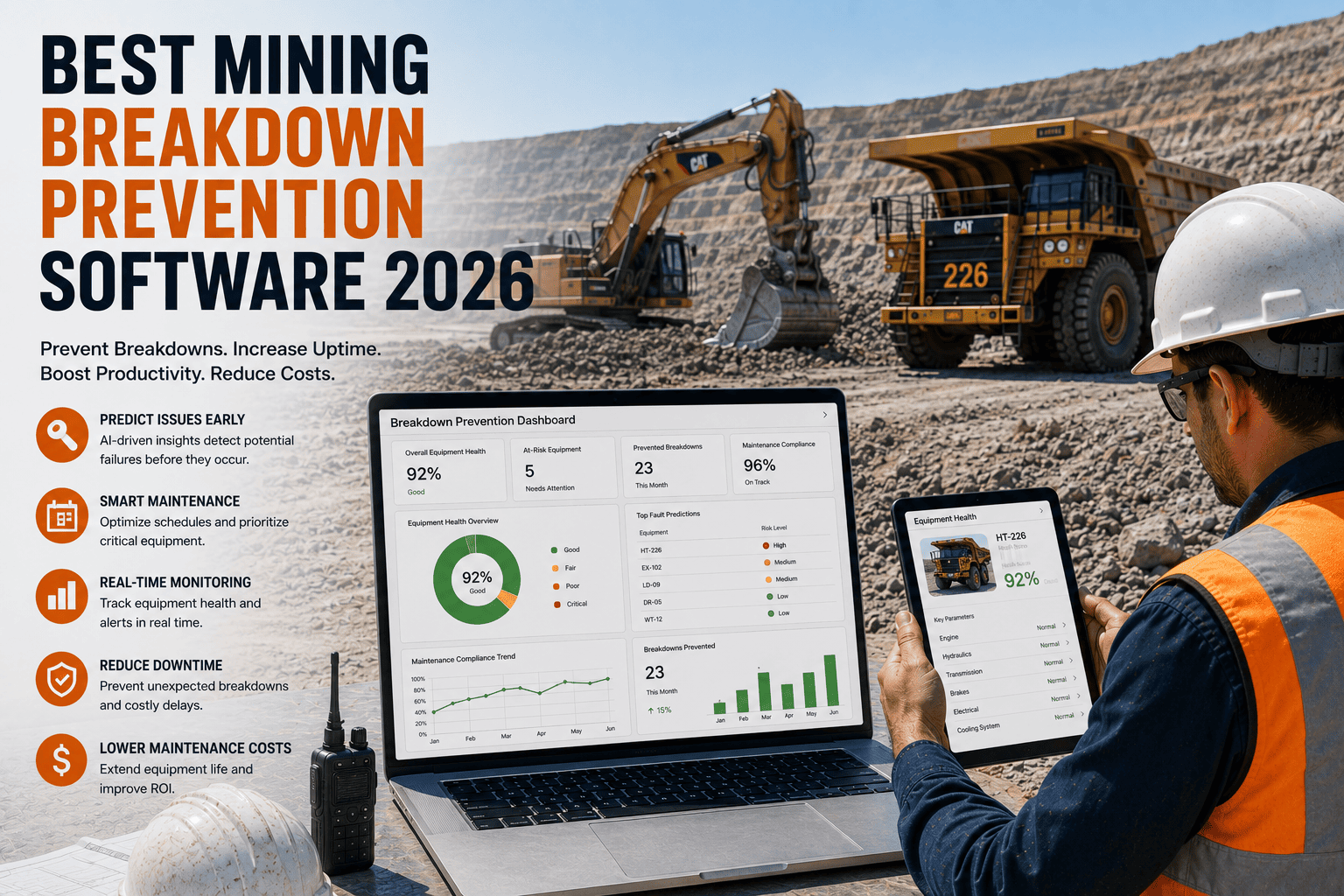
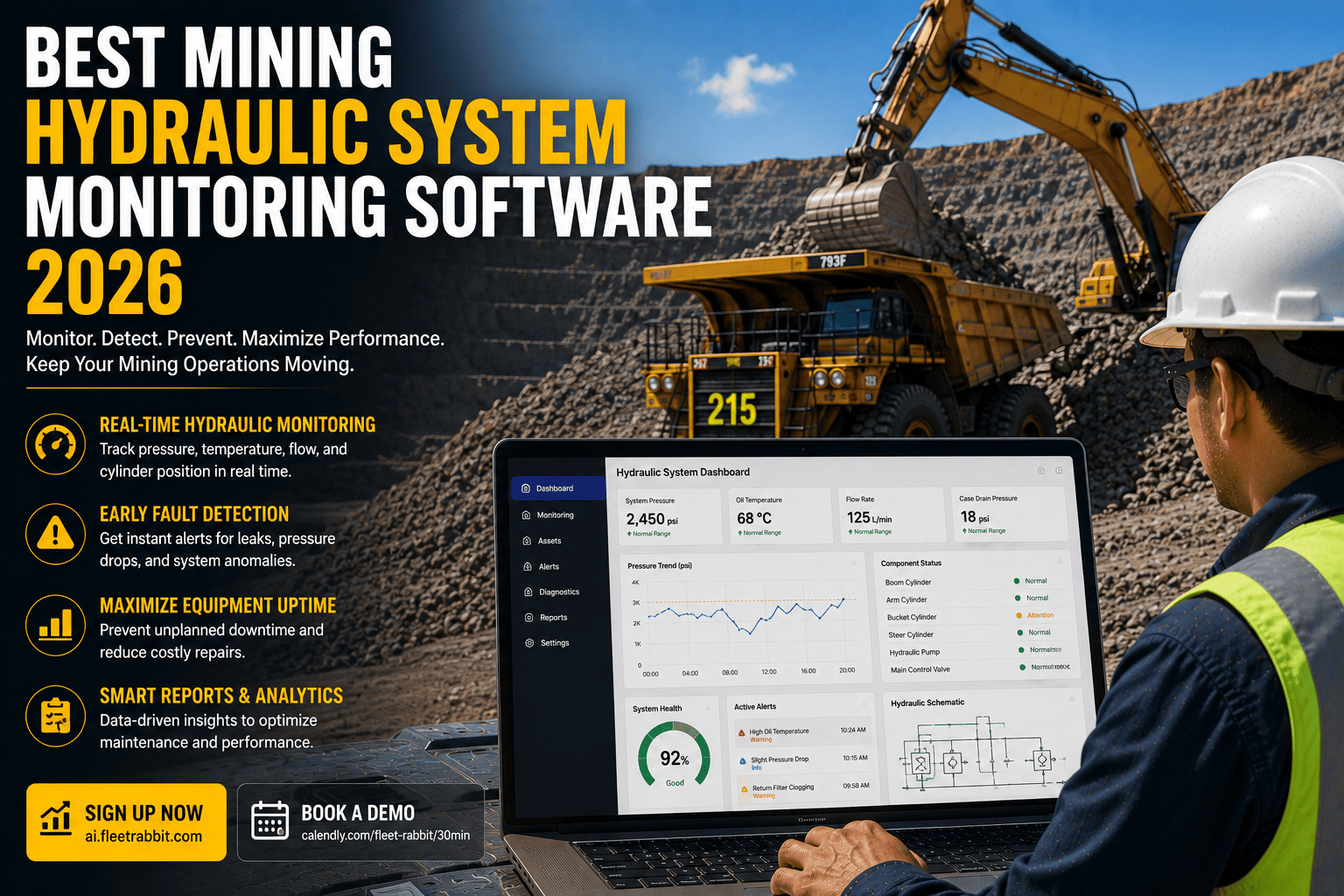
Mining hydraulic system monitoring software tracks fluid contamination, pressure fluctuations, temperature trends, and seal condition across excavators, loaders, and haul truck hydraulics in real time, flagging developing faults 2 to 4 weeks before failure. Unplanned hydraulic failures on mining equipment cost 50,000 to 150,000 dollars per event in lost production and emergency repair. Mines using predictive hydraulic monitoring cut related downtime by 20 to 30 percent and extend component life by 15 to 20 percent. FleetRabbit brings hydraulic health data into the same dashboard as the rest of your mining fleet's maintenance record.
Why Hydraulic Failures Are So Hard to See Coming
Hydraulic systems are the muscle behind almost every high-force movement on a mine site — the boom on an excavator, the bucket on a loader, the retarder and suspension on a haul truck. They operate at high pressure, move constantly under load, and run in some of the most abrasive, contaminated environments any mechanical system faces. That combination makes them extremely reliable when they're clean and correctly pressurized, and extremely unforgiving when they're not.
The Silent Buildup Before a Breakdown
Seal wear doesn't announce itself. It shows up first as a fractional drop in cylinder efficiency, then as a faint trace of metal in the oil, then as a pressure curve that takes a little longer to reach target on every cycle. None of these signs are dramatic enough for an operator to notice mid-shift, which is exactly why hydraulic failures are so often described as sudden — the equipment wasn't hiding the problem, nobody was watching the right data.
The Four Signals Hydraulic Monitoring Software Tracks
Effective hydraulic monitoring doesn't rely on a single data point. It fuses several signals together so a real developing fault stands out clearly instead of getting lost in normal operating noise.
Fluid Cleanliness and Contamination Trends
Regular fluid sampling, either through lab analysis or inline sensors, tracks particle counts against ISO 4406 cleanliness codes. A pump running on fluid that's even a few codes dirtier than target wears dramatically faster, and catching that drift early is often the single highest-value warning a hydraulic monitoring system provides.
Pressure and Flow Consistency
Software that logs pressure across every cycle, not just a periodic snapshot, can spot the small inconsistencies that precede a pump or valve failure — a cycle that takes a fraction of a second longer to reach pressure, a flow rate that dips slightly under the same load it handled cleanly a month ago.
Temperature Trends
Hydraulic oil running hotter than its normal baseline usually points to internal friction, a restriction, or a developing seal issue. Temperature is one of the earliest and most reliable indicators because it changes before efficiency loss becomes obvious in output.
Structural Strain on Booms and Cylinders
On excavators and loaders, strain gauges and accelerometers on boom and stick assemblies detect the early fatigue signatures that come from sustained high-pressure, high-load duty cycles, catching structural stress long before a crack becomes visible on inspection.
FleetRabbit fuses contamination, pressure, and temperature data into one clear view, so a developing hydraulic fault becomes a scheduled repair instead of a breakdown. Start your free trial and see your fleet's hydraulic health today.
Reactive vs. Calendar-Based vs. Predictive Hydraulic Maintenance
Most mines run some mix of these three strategies today, often without realizing how much of their maintenance budget still sits in the most expensive category.
| Strategy | How It Works | Typical Cost Impact | Failure Warning Time |
|---|---|---|---|
| Reactive Maintenance | Repairs happen after a visible failure or leak | 50,000 to 150,000 dollars per unplanned event | None — failure is the first signal |
| Calendar-Based Maintenance | Fluid changes and inspections on a fixed schedule regardless of condition | Wastes budget on healthy components, still misses faults between service windows | Inconsistent, tied to schedule not condition |
| Predictive Monitoring | Contamination, pressure, and temperature sensors flag developing faults continuously | Repairs planned during scheduled downtime windows | 2 to 4 weeks advance notice on developing faults |
What Predictive Hydraulic Monitoring Software Should Deliver
A platform built for mining hydraulic systems needs to do more than collect sensor readings. It has to turn those readings into a prioritized alert that reaches a technician's work order, not just a chart that sits unread in a dashboard.
Fleet-Wide Trend Comparison
The strongest signal often isn't a single reading — it's how one machine's hydraulic data compares to the rest of the fleet running the same duty cycle. A pump running hotter or dirtier than its peers on identical work stands out immediately when the software compares across the fleet instead of evaluating each machine in isolation.
Direct Routing to Work Orders
Programs don't fail from a lack of sensors. They fail because the findings never reach a work order in time. Software that automatically converts a flagged contamination trend or pressure anomaly into a scheduled repair task closes the exact gap where good data gets lost between the sensor and the shop.
Combined Signal Fusion
No single data point tells the whole story. The value comes from fusing fluid analysis, pressure trends, temperature, and structural strain data together with operator inspection notes, so a real developing fault stands out clearly against normal operating variation rather than drowning in noise.
Calculating the ROI of Hydraulic Monitoring
The return on hydraulic monitoring software becomes clear once a mine puts a number against its current failure rate. If a single unplanned hydraulic failure costs 50,000 to 150,000 dollars in lost production and emergency repair, preventing even two or three of these events a year across a fleet more than covers the cost of a monitoring program. Add in the compounding benefit of 15 to 20 percent longer component life from cleaner fluid and more stable pressure cycles, and the deferred capital cost of pump, valve, and cylinder replacement becomes a second layer of savings on top of the avoided breakdowns.
Where the Savings Show Up First
Mines typically see contamination-related savings first, since fluid cleanliness alerts are the fastest signal to act on and the cheapest to correct through a filter change or fluid swap. Pressure and temperature-based fault prevention tends to show measurable downtime reduction within the first two to three months of consistent monitoring.
The Bottom Line on Hydraulic Monitoring
Hydraulic systems don't fail without warning — they fail without anyone watching the warning. The contamination trend, the pressure inconsistency, the seal that's seeping slightly more than it did last month are all there in the data long before a boom cylinder locks up mid-shift or a pump seizes on a loaded haul road. Monitoring software doesn't change how hydraulics work; it changes how much of that early evidence actually reaches a technician before it becomes an emergency.
If your hydraulic maintenance program is still running on quarterly oil samples and calendar-based filter changes, the gap between that approach and a fleet where every cylinder, pump, and valve is being watched continuously is exactly where the next avoidable breakdown is hiding. You can start a free trial to see what your fleet's hydraulic data is already telling you.
Every unplanned hydraulic failure costs thousands in lost production and emergency repair that earlier warning could have prevented. FleetRabbit fuses contamination, pressure, and temperature data into one prioritized view so real faults reach your maintenance team weeks before failure. Start your free trial or book a 30-minute demo to see it in action.