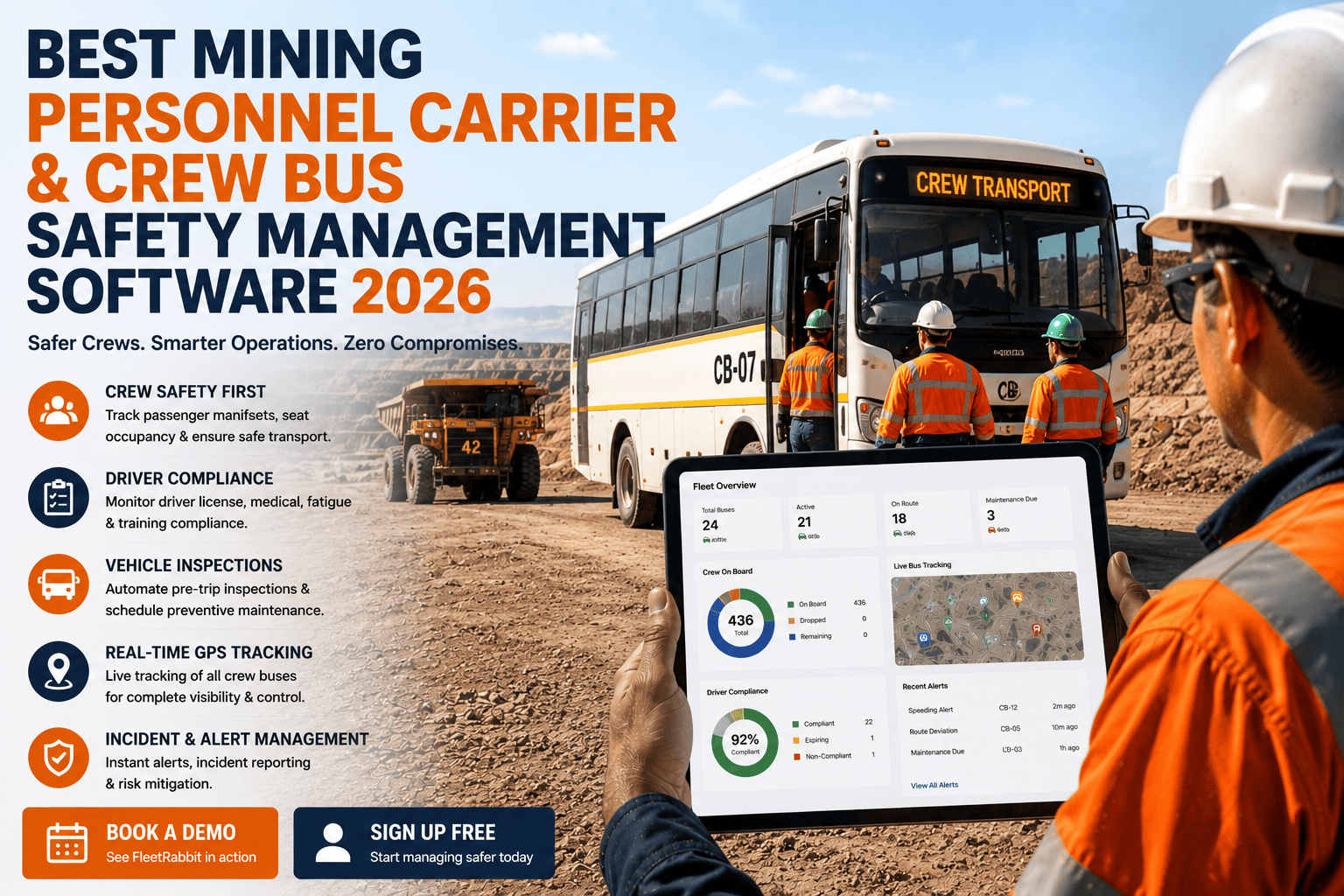
A loaded haul truck weighs hundreds of tons and the driver's blind spot can swallow a bus whole. Every shift change at a mine site sends dozens of personnel carriers and crew buses down the same haul roads those giants use, carrying workers who trusted a headcount sheet and a seatbelt to get them to the pit safely. When that trust is misplaced, the results are catastrophic, and yet many mine sites still manage personnel transport with paper manifests, radio check-ins, and a driver's memory of who boarded where.
Interactions between light passenger vehicles and haul trucks remain one of the leading causes of serious mining incidents worldwide. Sites that digitize headcount reconciliation, proximity detection, and driver fatigue monitoring for crew transport report meaningfully fewer near-miss events and faster, more accurate emergency accountability during evacuations.
What Makes Personnel Transport Different From Haul Fleet Safety
Most mine site safety programs are built around haul trucks, loaders, and drills, and rightly so given their size and operating hazards. Personnel carriers and crew buses get treated as an afterthought, yet they carry the highest concentration of people per vehicle anywhere on site. A single rollover or collision involving a full crew bus can affect more workers in one incident than almost any other equipment failure on a mine. Passenger transport safety deserves its own dedicated management approach rather than a smaller version of haul truck monitoring.
The operating environment adds further complexity. Personnel carriers travel the same haul roads as production equipment, cross active blast exclusion zones during shift changes, and often operate in the lowest-visibility hours of the day. A safety platform built for personnel transport needs to account for road-sharing risk, exact passenger accountability, and driver fatigue in a way that generic fleet tracking tools were never designed to handle.
Core Capabilities A Mining Personnel Carrier Platform Needs
Not every fleet safety tool translates well to passenger transport at a mine site. The right platform brings together a specific set of capabilities built around people, not just vehicles.
Real-Time Passenger Manifest Tracking
Digital boarding records tied to worker ID badges replace paper sign-in sheets, so the system always knows exactly who is on which bus, at which pit, at any given moment during the shift.
Proximity And Collision Awareness
Location-based alerts warn both the crew bus driver and nearby haul truck operators when a personnel carrier enters a blind zone or an active haul road segment, giving both parties time to react.
Driver Fatigue And Hours Monitoring
Shift length, rest breaks, and driving pattern data flag a shuttle driver approaching fatigue thresholds before a lapse in attention becomes a road incident.
Digital Pre-Trip Vehicle Inspections
Seatbelt function, tire condition, roll-over protection structure integrity, and emergency exit access get checked and logged before every shift, closing the gap paper checklists routinely leave open.
| Management Approach | Headcount Accuracy | Haul Road Awareness | Emergency Response Speed |
|---|---|---|---|
| Paper Manifests And Radio | Depends on manual updates, frequently out of date | Relies entirely on driver visibility and radio calls | Slow, headcounts must be reconciled by hand |
| Basic GPS Tracking Only | Shows vehicle location, not who is inside | Position visible, but no proximity alerts to drivers | Faster location, headcount still manual |
| Purpose-Built Personnel Safety Platform | Live, badge-linked manifest updated automatically | Real-time proximity alerts shared between vehicles | Instant, verified headcount available to responders |
FleetRabbit connects live passenger manifests, driver fatigue tracking, and haul road proximity alerts into one dashboard built specifically for crew transport, not adapted from generic fleet software. Safety leaders ready to see exact headcounts in real time can start a free trial today.
How To Evaluate A Personnel Carrier Safety Platform
With every provider claiming to be mining-ready, the evaluation should center on how a platform performs in the specific conditions crew transport actually operates in, not on how long its feature list is.
Test Field Usability, Not Just The Sales Demo
A driver checking in passengers through a badge scan or a tablet screen needs the process to take seconds, not minutes, or drivers will quietly skip steps once supervisors stop watching closely.
Confirm Offline Reliability In Remote Pits
Personnel carriers frequently travel through zones with poor or no signal. A platform that only works with a live connection will silently fail exactly when accurate headcounts matter most.
Check Integration With Existing Haul Fleet Systems
Proximity alerts only work if the personnel carrier platform can talk to the collision avoidance systems already running on haul trucks and loaders, rather than operating as a separate, disconnected layer.
Review Reporting For Regulatory And Audit Needs
Inspection records, fatigue logs, and manifest history should generate audit-ready reports automatically, since reconstructing this data manually after an incident wastes time regulators and investigators do not have.
Metrics That Show Your Personnel Transport Program Is Working
Mine site safety leaders who want to see exactly how these metrics look across their own crew fleet can book a personalized demo and walk through a live personnel safety dashboard.
Frequently Asked Questions
Paper manifests and radio calls were never built to protect a full crew bus sharing a haul road with a loaded truck. FleetRabbit brings live headcounts, proximity alerts, fatigue monitoring, and digital inspections into one platform made for personnel transport at mine sites. Start free and give your crew transport program the visibility it has been missing.