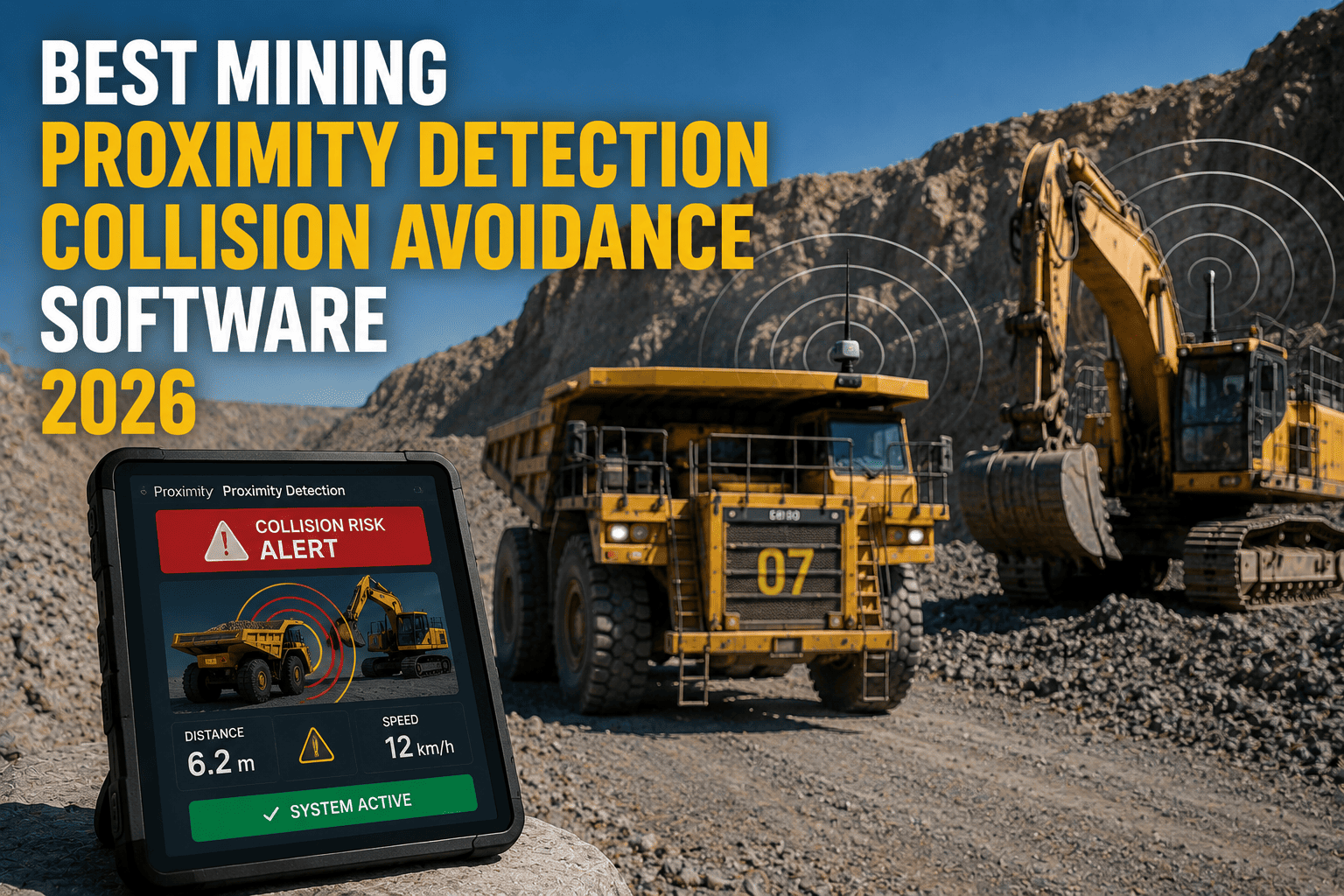
Every year, miners are struck, pinned, and crushed by equipment that had no idea they were there. Proximity detection and collision avoidance software exists to close that gap — transforming haul trucks, excavators, and underground machines from blind, reactive giants into situationally aware systems that protect workers before physics makes the decision. In 2026, MSHA now mandates proximity detection systems on continuous mining machines in underground coal mines, and the agency actively encourages their deployment across all surface and metal/nonmetal operations. If your mine is still relying on spotter flags, mirrors, and radio calls, you are behind — and the consequences are measured in lives. FleetRabbit's mining safety platform integrates proximity detection, collision avoidance, and real-time fleet monitoring into one system built for the realities of modern mine sites.
What Is Mining Proximity Detection Software?
A proximity detection system (PDS) uses electronic sensors — radar, ultrasonic, GPS, RF, or camera-based — to continuously monitor the distance between mining vehicles and nearby workers, equipment, or fixed infrastructure. When an object enters a predefined danger zone, the system triggers alerts to the operator and, at higher intervention levels, takes automatic control of the machine. Unlike traditional safety measures such as berms, spotters, and traffic signs, proximity detection software works in real time, responds in milliseconds, and creates a complete digital record of every near-miss and event. Book a demo with FleetRabbit to see how the system performs on your specific equipment mix and mine layout.
PDS vs. CAS: Understanding the Difference
These terms are often used interchangeably but they describe different layers of protection. A Proximity Detection System (PDS) detects and warns. A Collision Avoidance System (CAS) detects, warns, and intervenes. In practice, best-in-class 2026 platforms integrate both — delivering tiered protection from situational awareness through to automated machine control depending on how close a hazard is and how fast the situation is developing.
- Detects personnel and vehicles in defined zones
- Delivers visual and audible operator alerts
- Displays real-time maps in-cab
- Logs all proximity events and near-misses
- Works in GPS-denied underground environments
- EMESRT Levels 7–8
- All PDS capabilities plus automated intervention
- Trajectory prediction using AI path analysis
- Automatic speed reduction on hazard detection
- Emergency braking without operator input
- Dynamic detection zones (adjust for speed/direction)
- EMESRT Level 9 — highest standard
- Layered safety from awareness to intervention
- Works across mixed OEM fleets
- Integrated with fleet management data
- MSHA and ISO 21815 compliant documentation
- Surface and underground mine ready
- FleetRabbit delivers all layers in one platform
The EMESRT Framework: Which Level Does Your Mine Need?
The Earth Moving Equipment Safety Round Table (EMESRT) framework defines nine levels of hazard control, with Levels 7, 8, and 9 directly covering proximity detection and collision avoidance. Understanding these levels is essential when evaluating software vendors — because "collision avoidance software" can mean anything from a cab-mounted camera to a system that brakes a 200-tonne haul truck autonomously. Sign up with FleetRabbit to explore which EMESRT tier is right for your fleet composition and operational risk profile.
Notice to the Operator
Cameras, real-time proximity maps, mirrors, and lights provide the operator with improved situational awareness around the vehicle. The system detects and displays — the operator decides and acts. Entry-level protection suitable for low-traffic surface areas and light vehicles.
Alert Controls
Proximity alerts, overspeed warnings, and fatigue monitoring advise the operator on immediate actions to avoid a collision. The system escalates the urgency of warnings as the hazard closes in. Dynamic detection zones adapt based on vehicle speed, direction, and gear — reducing false alarms that cause operators to ignore alerts.
Automated Intervention Controls
When a dangerous trajectory is detected and human reaction time is insufficient, the system intervenes directly — reducing speed and applying braking without waiting for operator input. This is the highest level of collision protection, required where pedestrian-vehicle interaction risk is highest. MSHA mandates Level 9-equivalent systems for continuous mining machines in underground coal operations.
Core Capabilities to Demand from Any Mining Proximity Detection Platform
The market in 2026 includes dozens of vendors making proximity detection and collision avoidance claims. The real differentiators are not marketing features — they are the operational capabilities that determine whether a system actually prevents incidents in your specific mine environment. Here is what to require before signing any contract. You can also book a live demo with FleetRabbit to evaluate these capabilities against your own fleet and site.
Real-Time Zone Detection
Three-zone safety field (Attention, Danger, Emergency) continuously updating around each machine. Detection must respond in under 3 seconds — any slower and the physics of a moving haul truck make intervention meaningless.
GPS and RTLS Sensor Fusion
Surface operations benefit from high-precision GPS updating 50 times per second. Underground environments require Real-Time Location Systems (RTLS) using RF or UWB technology that operates without satellite coverage.
Dynamic Detection Zones
Fixed-radius alerts generate constant false alarms in busy mine environments, training operators to ignore them. Dynamic zones that adapt to vehicle speed, direction, and gear maintain genuine alertness by flagging only real threats.
Automated Incident Logging
Every proximity event, near-miss, speed alert, and zone breach logged automatically with timestamp, GPS coordinates, vehicle ID, and operator identity — creating the audit trail MSHA expects and litigation requires.
OEM-Agnostic Integration
Most mines run mixed fleets — Caterpillar haul trucks, Komatsu excavators, Sandvik underground equipment, and service vehicles from multiple manufacturers. Your PDS/CAS must integrate across all of them without bespoke installation for each OEM.
Personnel Tag Integration
Worker-worn tags communicate with vehicle-mounted sensors to create a machine-to-person detection layer. This closes the blind-spot gap that cameras and radar alone cannot cover — particularly critical for underground development headings and surface loading zones.
Offline Operation Capability
Underground mines and remote surface operations have intermittent or zero connectivity. The system must operate autonomously on each vehicle without requiring network connectivity — with synchronization occurring when connection is available.
Fleet-Wide Safety Analytics
Individual proximity alerts are tactical. Fleet-level analytics — which haul roads generate the most near-misses, which operators trigger the most alerts, which time-of-shift sees the highest risk — are strategic. Both are required for a genuinely effective safety program.
FleetRabbit Proximity Detection + Collision Avoidance
Real-time zone detection, dynamic alerts, automated intervention, personnel tag integration, and ISO 21815-aligned compliance documentation — in one platform that works across your entire mixed fleet. See exactly how it maps to your mine in a live demo.
How FleetRabbit's Proximity Detection Works: Step by Step
Understanding the detection-to-intervention chain helps mine safety managers evaluate what is actually happening inside the system — and verify that the claims vendors make translate to real protection on your haul roads and headings. Sign up to explore FleetRabbit's full technical specifications for your mine environment.
Sense
Vehicle-mounted sensors (GPS, RF, radar, ultrasonic) and worker-worn tags continuously broadcast location and movement data. The system tracks every tagged asset within the defined detection radius in real time — updating position data up to 50 times per second for high-speed surface equipment.
Analyze
AI path prediction algorithms evaluate whether current trajectories will result in intersection. Dynamic zone boundaries adjust based on the vehicle's current speed, direction, load status, and grade — filtering out stationary equipment that would otherwise generate constant false alerts during normal operations.
Alert
As a hazard enters the Attention zone, the operator receives a visual display update. Entering the Danger zone triggers audible and visual alerts with escalating urgency. The in-cab display shows the relative position, direction, and speed of the approaching hazard — giving the operator precise context for their response.
Intervene
At Level 9, when the system calculates that operator reaction time is insufficient to avoid collision, machine intervention activates — reducing speed and applying controlled braking. The machine stops safely without relying on the operator. This happens in milliseconds, not seconds.
Record
Every event — including near-misses where no intervention was required — is logged automatically with vehicle ID, operator, GPS coordinates, timestamp, and event classification. This creates the tamper-evident record chain that MSHA inspectors expect and that your safety team uses to identify pattern risks before they become incidents.
Where Proximity Detection Matters Most: High-Risk Mining Zones
Not every zone on a mine site carries equal collision risk. Software that delivers blanket alerts across the entire operation generates nuisance alarms that operators learn to ignore. The best platforms allow mine safety managers to configure zone-specific detection sensitivity and intervention thresholds — concentrating the highest protection where the highest risk actually exists. Book a demo to see zone configuration for your specific site layout.
| Mine Zone | Primary Hazard | Recommended Level | Key Software Feature |
|---|---|---|---|
| Crusher Dump Points | Vehicle-to-pedestrian strikes during tipping | Level 9 — Auto Intervention | Personnel tag detection + automated stop |
| Haul Road Intersections | Vehicle-to-vehicle broadside collisions | Level 8–9 — Alert + Intervention | Trajectory prediction + speed zone enforcement |
| Pit Ramps and Grades | Runaway, rollback, and tailgate strikes | Level 8 — Advisory Alerts | Grade-aware dynamic zones + brake monitoring |
| Underground Development | Confined space pedestrian-equipment interaction | Level 9 — Auto Intervention | RTLS (no GPS) + emergency stop |
| Maintenance Bays | Low-speed pinning and crushing during service | Level 7–8 — Awareness + Advisory | Short-range proximity maps + speed limiting |
| Open Pit Bench Faces | Operator blind spots on excavator swing arcs | Level 8 — Advisory Alerts | 360-degree zone coverage + in-cab display |
Regulatory Landscape: MSHA, ISO 21815, and What Compliance Means in 2026
The regulatory picture around proximity detection has sharpened considerably. MSHA now requires PDS systems on continuous mining machines in underground coal — and the agency's technical support team actively tracks and evaluates collision warning systems across all mine types. ISO 21815 establishes the interoperability standard that allows third-party PDS systems to integrate with OEM-supplied equipment across mixed fleets. When evaluating software, insist on ISO 21815 alignment — not just vendor claims of "compliance." FleetRabbit's platform generates MSHA-aligned documentation automatically — eliminating the manual assembly burden from your compliance team.
Mine Safety and Health Administration
Mandates PDS on underground continuous mining machines. Identifies proximity detection and collision warning as critical controls for powered haulage. Requires operators to evaluate and test systems against site-specific conditions. Automatic incident logging satisfies MSHA's documentation requirements.
ISO 21815 Standard
Defines the interoperability protocol between third-party PDS providers and OEM-supplied equipment. Ensures that systems from different manufacturers communicate using a common data format — enabling true mixed-fleet PDS coverage without per-OEM bespoke integration work.
Earth Moving Equipment Safety Round Table
Provides the Level 7–9 framework for evaluating PDS and CAS intervention capability. Level 9 represents automated machine intervention — the highest standard. EMESRT alignment is the benchmark for procurement decisions and regulatory justification across international mining operations.
Frequently Asked Questions
Protect Every Worker on Your Mine Site with FleetRabbit
Real-time proximity detection, AI collision avoidance, EMESRT Level 7–9 coverage, ISO 21815-aligned documentation, and integrated fleet safety analytics — all in one platform built for the complexity of modern mining operations. Start with a free trial, or sit with our mining safety team and walk through your specific site risk profile in a 30-minute live demo.