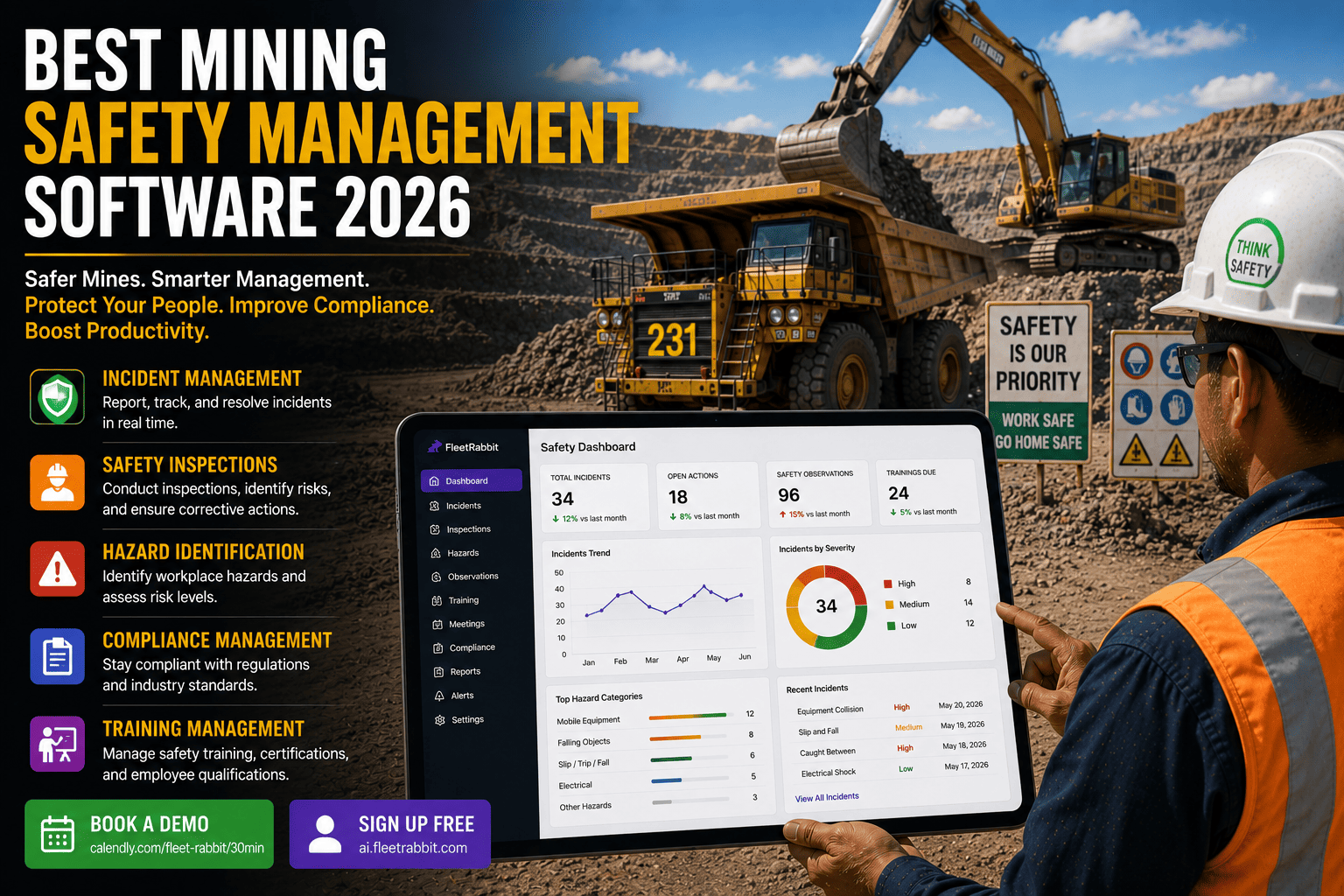
Most mine sites don't have a safety data problem, they have a safety data speed problem. Incidents get logged after the fact, near misses get mentioned in a shift handover and forgotten, and training records live in three different spreadsheets that nobody trusts. By the time patterns become visible, they usually show up as an actual injury or a citation instead of a warning sign someone could have acted on weeks earlier. Mining safety management software exists to close that gap, turning scattered paperwork and gut instinct into a live, connected picture of risk across your entire workforce and fleet.
Mining safety management software centralizes digital inspections, incident and near-miss reporting, training compliance, and hazard tracking into one real-time platform. Sites using digital safety systems typically cut recorded safety incidents by around 40 percent and reduce inspection and reporting time by 40 to 60 percent, freeing safety teams to work on prevention instead of paperwork.
Why Safety Problems Are Almost Always Slow, Not Sudden
A serious incident is rarely the first sign something was wrong. It's usually preceded by a string of smaller warnings, a near miss that never got reported, a hazard flagged verbally but never logged, an equipment defect that got a shrug instead of a work order. Paper-based and spreadsheet-driven safety programs are structurally slow to surface these patterns because the data lives in disconnected places and nobody has time to cross-reference it manually.
Every near miss you catch early is an incident you never have to report. Sign up for a free FleetRabbit trial and see how quickly hazard patterns surface once your safety data lives in one place.
Reactive Safety vs. Proactive Safety
The difference between a site that constantly reacts to safety events and one that prevents them usually comes down to whether the data arrives before or after something goes wrong. Here is what that shift actually looks like in practice.
What Belongs in a Modern Mining Safety Platform
A genuinely useful safety platform for mining needs to reflect how mine work actually happens: in the field, across shifts, often without reliable signal, and involving contractors as much as direct employees.
Digital Incident and Near-Miss Reporting
Workers should be able to log a hazard or near miss from a phone in the field in under a minute, with photos attached, so reports actually get filed instead of forgotten by the end of shift.
Training and Certification Tracking
Annual refreshers, task-specific certifications, and contractor credentials all expire on different schedules, and manual tracking tends to miss renewals until an inspector or an incident finds the gap first.
Corrective Action Follow-Through
A hazard report that never gets closed out is just a paper trail, not a fix. The platform needs to route defects and hazards to the right owner and track them until resolved.
Real-Time Safety Analytics
Dashboards that show incident trends, open corrective actions, and inspection completion rates by crew or site let safety leaders spot a developing pattern in weeks instead of at the annual safety review.
Offline-Capable Field Tools
Underground zones and remote pits lose signal constantly, so reports and inspections need to save locally and sync automatically the moment connectivity returns, with nothing lost in between.
| Capability | Problem It Solves | Impact |
|---|---|---|
| Digital Incident Reporting | Near misses going unreported or logged too late to act on | Around 40 percent reduction in recorded incidents |
| Mobile Inspection Forms | Slow, paper-based checklists that delay data by hours or days | 40 to 60 percent faster completion and reporting |
| Certification Tracking | Expired training discovered only after an inspection | Automatic alerts before certifications lapse |
| Corrective Action Routing | Hazards flagged but never formally closed out | Full audit trail from hazard to resolution |
| Safety Analytics Dashboard | Trends invisible until the annual safety review | Weekly visibility into developing risk patterns |
FleetRabbit connects digital inspections, incident reporting, and training records into one live dashboard built for how mine sites actually operate. Start a free trial and see your first safety report today.
Building a Safety Culture That Actually Sticks
Software alone doesn't create a safety culture, but it removes the biggest excuse workers have for not reporting: that it's slow, inconvenient, or feels pointless. When a near miss takes 30 seconds to log from a phone and workers can see that reports lead to real fixes, reporting rates climb, and a rising near-miss report count is actually a good sign, not a bad one. It means people are catching problems before they become injuries.
Safety leaders who want that shift need visibility their team trusts. Book a demo to see how a connected safety platform changes reporting behavior on real mine sites.
What This Means for Cost and Compliance
Beyond the human cost, unmanaged safety gaps carry a direct financial exposure. A single serious citation can run into the tens of thousands of dollars, but the pattern a regulator notices, incomplete records, gaps in training logs, reactive rather than proactive reporting, is what triggers heavier scrutiny and repeat inspections. A platform that keeps every inspection, incident, and certification documented automatically removes that pattern before it ever forms, and produces audit-ready records in minutes instead of days when a regulator asks for them.
Turning Safety Into a Leading Indicator
The mines that reduce incidents year over year aren't the ones with the most paperwork, they're the ones where reporting is fast enough and trusted enough that small problems surface long before they become serious ones. Connecting inspections, incident reports, training records, and corrective actions into one live system is what makes that possible at scale, across every shift and every crew.
Ready to see what your safety data would look like connected in one place? Sign up for a free FleetRabbit trial or book a demo with our team.
FleetRabbit brings digital inspections, incident reporting, training compliance, and real-time analytics into one platform built for the way mine sites actually operate. Give your team the visibility to prevent problems, not just document them.