Somewhere on every mine site there is a storeroom holding thousands of parts, and almost every fleet manager can tell you two things about it without looking: it is too full of things nobody needs, and it is somehow still missing the one part that just shut down a haul truck. That contradiction is not a staffing problem or a bad warehouse layout. It is the predictable result of running spare parts on memory and spreadsheets instead of a system built to track criticality, consumption, and lead time together. The right inventory management software fixes both sides of that problem at once.
Why Mining Storerooms Get Stockouts and Overstock at the Same Time
Unplanned downtime caused by missing spare parts is far more common than most fleet managers assume, accounting for a meaningful share of all unplanned downtime industry-wide. At the same time, a large portion of the average maintenance storeroom sits as excess or obsolete stock that has not moved in years and likely never will. These two failures look opposite, but they share one root cause: nobody is connecting which parts actually matter to which parts are actually being ordered.
The Real Cost of Getting It Wrong
When a critical spare is missing, the wait is rarely quick. Remote mine locations mean parts often have to be sourced, expedited, and flown or trucked in at a premium, frequently at three to five times the standard procurement cost, while the asset sits idle and production losses stack up by the hour. Overstocking carries its own quieter cost, tying up working capital and storeroom space in parts that will likely outlive the equipment they were bought for.
The ABC Framework Every Mining Storeroom Should Run On
The single most effective fix for both stockouts and overstocking is classifying every part by how critical it actually is, rather than treating a 30,000 dollar gearbox the same way as a box of bolts. This is usually called ABC or ABC-VED classification, and it turns a flat parts list into a tiered stocking strategy.
| Class | What It Covers | Stocking Approach |
|---|---|---|
| Class A: Critical | High-value parts on critical assets with long lead times, where a stockout stops production | Minimum stock held at all times, regardless of holding cost |
| Class B: Essential | Moderate-value parts on important but non-critical assets, with manageable lead times | Lower minimums with faster, more frequent reorder cycles |
| Class C: Routine | Common, low-cost, fast-moving consumables with short, reliable lead times | Simple reorder points, bulk ordering, occasional stockout acceptable |
Why a Flat Stocking Policy Always Fails
Applying the same minimum stock rule to every part wastes money on low-criticality items while leaving the parts that matter most under-protected. A spare that only fails once every two years but takes four months to procure deserves a permanent home on the shelf, while a fastener available locally within a day does not need to occupy any shelf space at all.
Reorder Points and Safety Stock: The Math Behind Not Running Out
Once parts are classified, the next layer is calculating exactly when to reorder and how much buffer to carry. A reorder point factors in how fast a part is consumed and how long the vendor takes to deliver it. Safety stock adds a buffer on top of that to absorb the unpredictable: a sudden spike in demand or a supplier shipment that runs late.
Critical Parts Need a Higher Buffer
Class A parts should be calculated with a higher service-level target, since the cost of carrying one extra unit is nothing compared to the cost of the downtime it prevents.
Routine Parts Can Run Leaner
Class C parts with short, reliable lead times can run on tighter reorder points, since an occasional short wait costs little and frees up capital elsewhere.
Reorder Points Need Revisiting
Thresholds calculated once during setup and never revisited drift out of sync with real consumption as equipment ages and usage patterns shift.
Every Part Should Tie to a Work Order
Parts consumption disconnected from the maintenance work order that used it makes forecasting and root-cause tracking nearly impossible.
Calculating this by hand across thousands of SKUs is exactly the kind of repetitive, error-prone work software is built for. You can sign up for a free trial and see your own parts catalog classified and given working reorder points within a day.
How FleetRabbit Manages Spare Parts Across a Mining Fleet
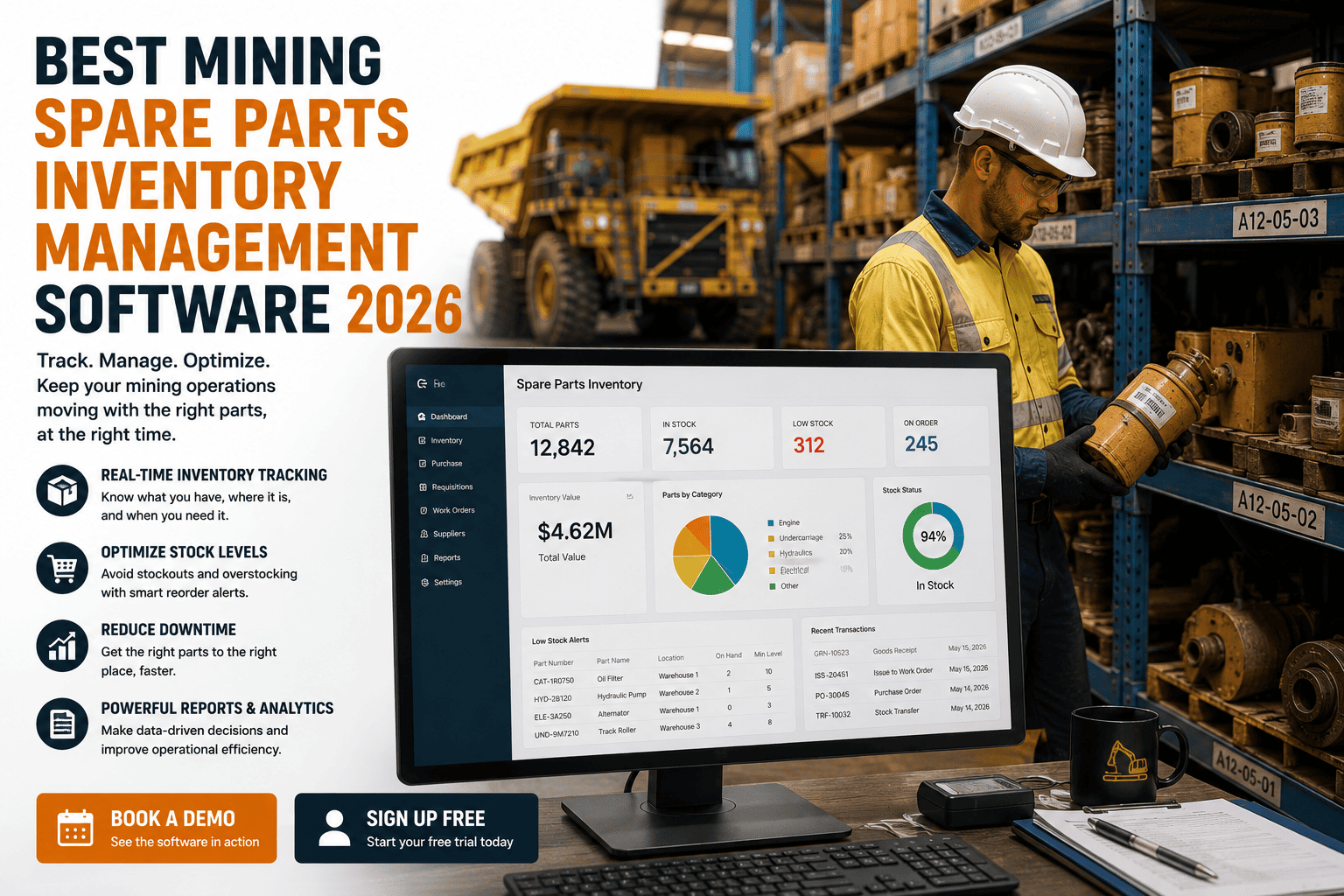
FleetRabbit was built to close the gap between what a storeroom shows on a spreadsheet and what is actually sitting on the shelf. Every part is tied directly to the assets it serves, so a technician opening a work order can see immediately what is compatible, what is in stock, and what needs to be ordered.
Real-Time Stock Visibility Across Every Site
Instead of checking a separate spreadsheet for every storeroom, FleetRabbit shows live stock levels across all locations at once, so a part sitting unused at one site can be transferred instead of reordered from scratch at another.
Automated Reorder Triggers Tied to Real Usage
Reorder points are calculated from actual consumption history and vendor lead times rather than a number guessed once at setup and never touched again, so purchasing decisions stay accurate as usage patterns shift.
Every Part Connected to Its Work Order
When a part is consumed on a repair, that usage is logged against the specific asset and work order automatically, building the consumption history that makes future forecasting and criticality decisions accurate.
Stop Choosing Between Stockouts and Dead Stock
FleetRabbit connects your spare parts catalog to asset criticality, real consumption history, and automated reorder points, so the right part is on the shelf when a truck needs it and capital isn't tied up in parts that will never move. Sign up for a free trial and load your parts catalog today, or book a demo to see your specific inventory classified and modeled on the call.
Building the Business Case for Inventory Software
The financial argument for proper spare parts software is rarely a hard sell once the numbers are laid out side by side. Spare parts and maintenance materials typically account for 30 to 40 percent of a maintenance budget, which means even a modest reduction in carrying costs and emergency procurement premiums translates into real money freed up for other priorities.
Where the Payback Actually Lands
Sites that move from gut-feel stocking to a classified, software-driven system typically see carrying costs drop by 20 to 35 percent while simultaneously reducing the stockout-driven downtime that used to force emergency orders at premium pricing. The win is not one side of the ledger or the other. It is both at once, because the root cause being fixed is the same.
Frequently Asked Questions
Your Storeroom Already Has the Data. It Just Needs a System.
Every part movement, every consumption pattern, and every near-miss stockout is already happening on your site. FleetRabbit turns that history into a classified, automatically managed parts inventory, so the next breakdown does not turn into a multi-day wait for a part that should have already been on the shelf. Get started with a free trial or talk through your specific fleet and storerooms with our team first.