A stockpile looks simple from a distance, just a pile of material waiting to be reclaimed. Underneath that simplicity sits one of the trickiest numbers in mining, how many tons are actually in it, and where every one of those tons came from. Get that number wrong and the errors ripple straight into inventory valuation, mill feed planning, and financial reporting, often without anyone noticing until a survey and a ledger stop agreeing with each other.
A five percent tonnage variance between mine and mill records is common at sites still relying on periodic surveys and manual reconciliation. Ground-based surveys typically carry accuracy errors of 5 to 10 percent, while combining continuous haul truck movement data with modern survey methods narrows that gap dramatically and turns rehandling and material flow into numbers you can actually trust.
The Real Cost Of Untracked Material Movement
Stockpile and material movement problems rarely show up as one dramatic failure. They show up as a slow accumulation of small inefficiencies and small discrepancies, each one easy to explain away individually, until an audit or a mill reconciliation forces the whole picture into view at once.
Rehandling Costs More Than It Looks Like
Every time material is loaded, hauled, and dumped again without adding value, the site pays for fuel, equipment wear, and operator time on a truckload that produced nothing new. Sites without real-time visibility into stockpile location and composition tend to default to caution, rehandling material that could have gone straight to its final destination the first time.
Why Visibility Prevents Unnecessary Moves
When dispatch can see exactly what is already stockpiled where, and what grade or material type it contains, trucks get routed directly to the right destination the first time, cutting out the guesswork that leads to material being moved twice.
Reconciliation Gaps Undermine Financial Confidence
The reconciliation calculation is simple in theory: opening tonnage plus material loaded in, minus material reclaimed, should equal closing tonnage confirmed by survey. In practice, gaps between that expected number and the surveyed reality are common, and tracing exactly where the discrepancy originated, in the mine, the stockpile, or the mill, becomes difficult without continuous movement data tying every truckload to a specific location and time.
Where Discrepancies Usually Hide
Density assumptions, survey timing gaps, and untracked rehandling moves are the three most common sources of reconciliation variance, and each one requires a different fix once it is actually identified rather than lumped together as unexplained loss.
| Tracking Method | How Material Movement Is Captured | Typical Accuracy | Rehandling Visibility |
|---|---|---|---|
| Periodic Manual Survey | Ground-based survey conducted at set intervals, gaps filled by estimation | 5 to 10 percent variance typical | None between survey dates |
| Survey Plus Weighbridge Records | Survey volumes reconciled against weighbridge tonnage after the fact | Improved, but density and timing errors persist | Visible only in aggregate, not per load |
| Continuous Fleet-Linked Tracking | Every truckload tracked by location, source, and destination in real time | Near real-time accuracy, discrepancies traced to the specific load | Full, every rehandle visible as it happens |
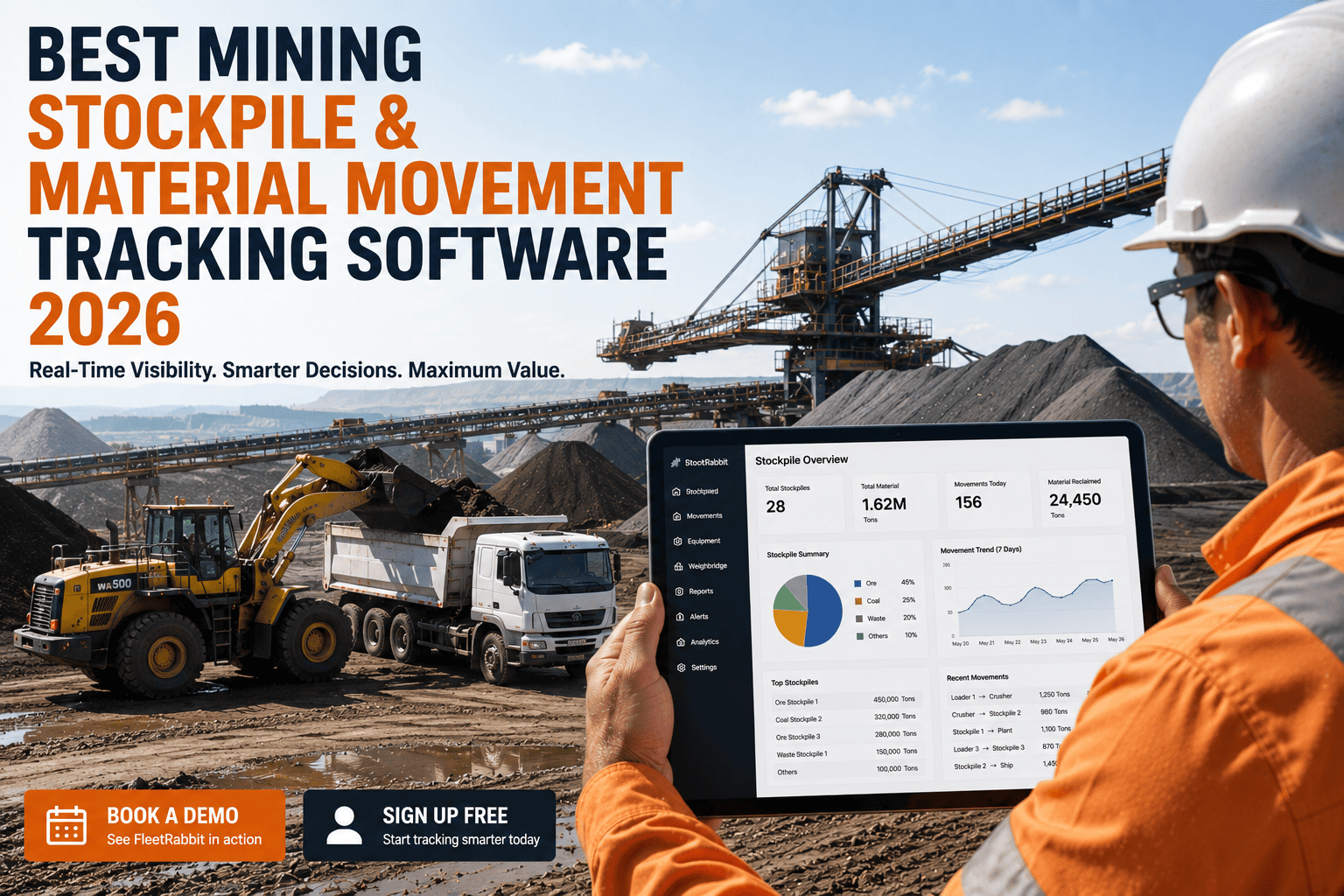
FleetRabbit ties every haul truck movement to its source, destination, and stockpile automatically, so rehandling and reconciliation gaps show up immediately instead of at the next audit. Operations teams ready to see material flow with real clarity can start a free trial today.
What To Look For In A Stockpile Tracking Platform
Plenty of tools promise stockpile visibility, but only a few actually connect fleet movement data to stockpile inventory in a way that holds up under a real audit. The evaluation should focus on how the platform performs with your actual haul fleet and your actual reconciliation cycle, not on a generic feature list.
Real-Time Load Tracking Tied To Destination
Every haul truck load should log its source and destination automatically, building a live picture of what has moved where without relying on drivers to manually record each trip.
Automatic Rehandling Detection
The platform should flag when material is loaded from a stockpile it was recently dumped onto, surfacing unnecessary rehandling in the moment instead of leaving it buried in aggregate tonnage totals.
Reconciliation Reporting By Stockpile
Expected tonnage based on movement records should be compared automatically against the latest survey figure for each individual stockpile, so variance gets traced to a specific location rather than reported as one confusing sitewide number.
Integration With Survey And Density Data
Connecting movement tracking to survey results and density assumptions closes the loop, letting a manager see immediately whether a tonnage shift came from an actual movement or simply an updated density figure.
Metrics That Show Your Material Tracking Program Is Working
Production and reconciliation teams who want to see this tracking running against their own stockpile layout can book a personalized demo and walk through a live material movement dashboard.
Frequently Asked Questions
Stockpiles do not have to stay a mystery between survey dates. FleetRabbit connects haul truck movement directly to stockpile inventory, flagging unnecessary rehandling and closing reconciliation gaps before they reach an audit. Start free and see exactly how your material is really flowing across the site.