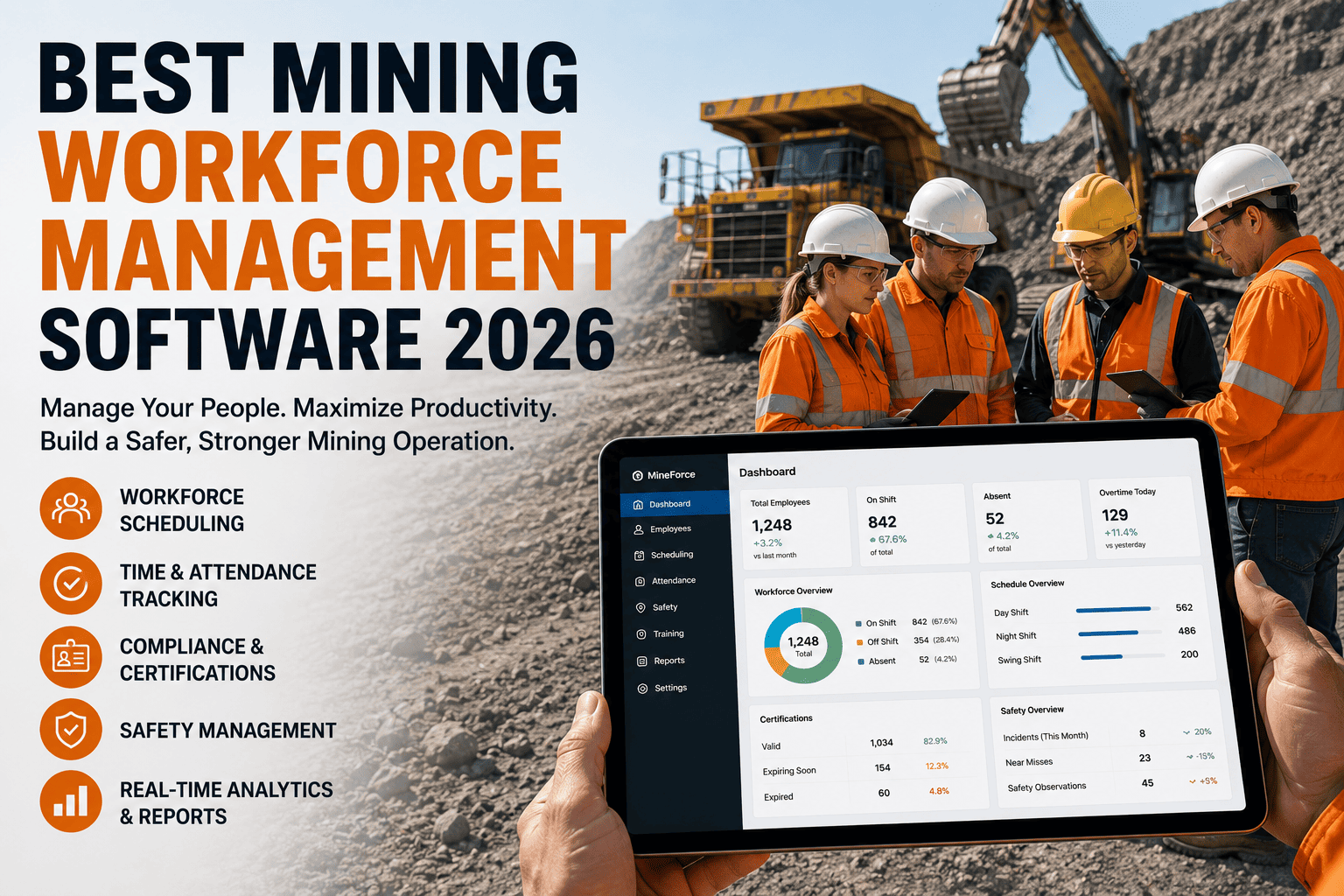
Mining operations run on people, not just machines, yet most sites still schedule crews on spreadsheets and radio calls. When a shift roster is wrong, a certification lapses unnoticed, or a fatigued operator gets sent back out for another haul, the cost shows up in safety incidents, missed tonnage targets, and operators who quit within their first year. The right mining workforce management software fixes this by giving supervisors live visibility into who is qualified, who is available, and who is due for rest, before problems reach the pit floor.
The best mining workforce management software combines shift and FIFO/DIDO rostering, skills and certification tracking, fatigue and compliance monitoring, and mobile field tools operators actually use. Sites that adopt purpose-built workforce platforms report 20 to 35 percent fewer scheduling errors and meaningfully lower first-year operator turnover. Sign up free or book a demo to see how FleetRabbit brings workforce visibility into your existing fleet operations.
Why Mining Workforce Management Deserves Its Own Software
Generic HR tools were not built for drive-in, drive-out rosters, twelve-hour shift swaps, or certification rules that vary by pit, permit, and piece of equipment. Mining workforce management software is purpose-built for that complexity, connecting crew scheduling, compliance, and site communication into a single operational view instead of scattered spreadsheets and text threads.
What to Look For in Mining Workforce Management Software
Not every workforce tool built for general industry survives contact with a remote mine site. Before you commit budget, it helps to know which capabilities actually move the needle on safety, cost, and operator satisfaction.
Shift, FIFO, and DIDO Rostering
Look for software that handles rotating shift patterns, camp and travel logistics, and last-minute swaps without breaking the whole roster. The best platforms let planners adjust one shift and automatically flag downstream conflicts across crews and equipment.
Skills, Licenses, and Contractor Tracking
A single unqualified operator on the wrong machine can shut down a site. Strong workforce platforms maintain a live register of certifications, licenses, and contractor mobilization status, and block scheduling anyone whose credentials have lapsed.
Why This Matters for Multi-Site Operations
Sites running several pits or contracts need one shared source of truth. Without it, HR, safety, and operations teams end up working from different versions of the same roster, which is exactly where compliance gaps start.
Fatigue and Safety Monitoring
Fatigue-related incidents remain one of the biggest risk factors in remote mining. Platforms that track hours worked, rest periods, and shift patterns against regulatory limits catch fatigue risk before it becomes a safety event.
FleetRabbit connects operator schedules, certifications, and fatigue data with your vehicle and equipment operations, so workforce and fleet decisions happen from the same screen. Explore what it looks like with a free trial or a short walkthrough.
Comparing Core Capabilities Across Mining Workforce Platforms
The table below breaks down the capabilities that separate a genuinely useful mining workforce management platform from a repurposed generic scheduling tool.
| Capability | What It Solves | Why It Matters On Site |
|---|---|---|
| Rotating Shift Rostering | Complex FIFO, DIDO, and swing shift patterns across multiple crews | Prevents under-staffed shifts and last-minute scramble to cover gaps |
| Certification Tracking | Expiring licenses and training going unnoticed | Keeps every operator legally and safely qualified for the equipment assigned |
| Fatigue Monitoring | Overworked crews being scheduled again without adequate rest | Reduces fatigue-related incidents and associated liability |
| Mobile Field App | Operators relying on paper or verbal shift confirmations | Gives crews instant access to rosters and swaps from the pit floor |
| Workforce Analytics | No visibility into turnover drivers or productivity trends | Helps leadership spot retention risks and staffing gaps early |
How Workforce Software Improves Operator Retention
Turnover among mining operators is expensive to replace and disruptive to production continuity. Most of it is preventable. Operators leave when rosters feel unfair, when shift changes arrive with no notice, or when nobody tracks whether they are being scheduled for back-to-back fatigue-risk shifts. Mining workforce management software addresses all three directly.
Fair Rotation Builds Trust
When rotation patterns are visible and consistently applied, operators stop feeling singled out for the worst shifts. Transparent scheduling is one of the simplest, highest-impact retention levers a mine site has.
Fewer Surprises, Fewer Resignations
Automated notice periods for shift changes and swap requests reduce the last-minute disruptions that push operators toward better-organized competitors. Sites that give crews more control over swaps, within safety limits, consistently see better first-year retention.
Benchmarks Worth Tracking
A handful of metrics tell you whether your workforce management approach is actually working. Roster accuracy measures how often the published schedule matches who actually shows up qualified and rested. Most well-managed sites target 95 percent or higher. First-year operator turnover is a lagging but critical signal; sites using purpose-built workforce software often see it fall by 10 to 20 percent within the first year of adoption. Time to fill a vacant shift, and the ratio of planned versus emergency contractor call-ins, round out the picture of whether workforce planning is proactive or reactive.
When operator schedules, certifications, and equipment assignments live in one platform, supervisors stop cross-referencing three systems before every shift change. FleetRabbit puts that visibility in one dashboard your team will actually use daily.
Frequently Asked Questions
Key Takeaways
Mining workforce management software earns its place by fixing the problems that spreadsheets and radio calls cannot: fair and transparent rostering, live certification and fatigue tracking, and mobile tools operators will actually open on shift. Sites that adopt the right platform typically see fewer scheduling errors, better compliance, and meaningfully lower first-year turnover. The gap between a site running on manual processes and one running on purpose-built workforce software usually shows up first in retention, then in safety, then in the bottom line.
If your team is still coordinating crews through spreadsheets and text messages, it is worth seeing what a connected workforce and fleet platform looks like in practice. You can sign up for a free trial to explore it yourself, or book a short demo and walk through your specific rostering challenges with the FleetRabbit team.
FleetRabbit brings shift rostering, certification tracking, and fatigue compliance into one connected platform alongside your fleet operations. See fewer scheduling errors and stronger operator retention within weeks of getting started.